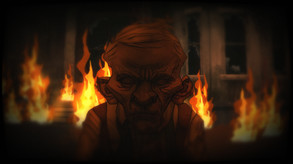
A young man discovers through a series of hallucinations that he will grow up to become a violent psychopath. How will he respond to these revelations? Can he change his fate? Can you even... change fate...
Modeled estimate, not a reported figure. How we estimate →
Media
About
Genres
Stats
All-time low is the lowest price we've recorded for this game since we started tracking it.
Languages: English
Engagement
Hours played at review time, across 40 reviews with recorded playtime.
Reviews
Themes across 40 recent reviews and how positive each mention is. A keyword signal, not full sentiment analysis.
positive critical· bar length = how often the theme comes up
Reviews
An actually good psychological horror game. I’m not easily squeamish, but some parts genuinely made me uncomfortable, which is a strong point for a game of this type. Warning: Please take the content warnings seriously. The game deals with mental illness, psychosis, child abuse, child murder, graphic gore, themes of unreality, loss of free will, and religious trauma. Edit: I initially didn’t pay much attention to the “based on a real story” tagline, but I’ve since realized this game is truly based on real events, not just using that as a marketing tool, but actually depicting a real-life serial child killer from the 1920s. It even uses the real names and likenesses of two of his victims. This revelation lowers my rating a bit because I don’t think the game handles the subject matter with enough sensitivity. While I appreciate the gore and unsettling nature from a media perspective, involving real victims makes it feel somewhat in poor taste. That said, the game is well-crafted, and I still recommend it but if you think playing something based on such tragic real events might cause you moral discomfort, it might be best to skip this one.
Before jumping in to this one fair warning as it contains Child Abuse and torture. Masochisia immerses players into a disturbing narrative that delves deep into the darkest corners of the human psyche. Released in 2015, Masochisia continues to stand out among the plethora of horror titles for its unapologetically bleak atmosphere and thought-provoking themes. The game's storyline revolves around a troubled adolescent named Hamilton, whose life is marred by harrowing visions and a dysfunctional family dynamic. As players navigate through Hamilton's tortured existence, they are confronted with a series of morally ambiguous choices that shape the outcome of the narrative. Masochisia doesn't shy away from tackling sensitive subjects such as mental illness, abuse, and the cyclical nature of trauma, making it a psychologically taxing experience from start to finish. Visually, Masochisia adopts a minimalist art style that effectively amplifies its oppressive atmosphere. The use of stark contrasts and muted colors enhances the game's sense of unease, while the occasional splashes of vivid imagery serve to punctuate key moments in the narrative. Combined with a haunting soundtrack that perfectly complements the game's themes, Masochisia succeeds in creating an immersive horror experience that lingers long after the credits roll. However, Masochisia is not without its flaws. Some players may find its pacing to be slow and its gameplay mechanics somewhat repetitive. Additionally, the game's reliance on shock value and graphic imagery may prove to be too much for more sensitive players. Despite these drawbacks, Masochisia remains a standout title in the horror genre for its willingness to push boundaries and explore the darker aspects of the human condition. In conclusion, Masochisia is not a game for the faint of heart. It is a challenging and often distressing experience that forces players to confront uncomfortable truths about the nature of existence. While it may not appeal to everyone, those who are willing to brave its depths will find themselves rewarded with a thought-provoking journey into the abyss of the human psyche. Overall I would rate Masochisia a solid 8 out of 10. While it excels in its narrative depth, atmosphere, and thematic exploration, it may not appeal to all players due to its slow pacing and graphic content. Nonetheless, for those who appreciate psychological horror and are willing to engage with its challenging themes, Masochisia offers a uniquely immersive and memorable experience.
scare
point click bulmaca oyunu mini bir gerilim de sunuyor keyifli
Masochisia is not a game that tries to entertain in the conventional sense, and it makes that clear almost immediately. Developed and published by Oldblood, it presents itself as an experimental psychological horror experience, but even that label feels insufficient. It is closer to an interactive descent into a fractured mind, one that places the player in an uncomfortably intimate position with its protagonist. Rather than relying on external threats or traditional horror structures, it builds its impact through subject matter, tone, and the unsettling feeling of being complicit in what unfolds. The narrative follows Hamilton, a young man growing up in a deeply dysfunctional and abusive household. From the beginning, the game establishes an environment defined by instability—an oppressive father, a fragile and erratic mother, and a family dynamic that feels irreparably broken. These elements are not presented with distance or abstraction; instead, they are direct, raw, and often difficult to process. As the story progresses, Hamilton’s mental state begins to deteriorate, and the game increasingly blurs the line between reality and hallucination. What the player sees and experiences becomes less reliable, creating a constant sense of unease that does not rely on traditional horror devices but instead emerges from the psychological weight of the narrative itself. What makes Masochisia particularly effective is how it positions the player. You are not simply observing Hamilton’s descent—you are moving through it, interacting with the world as it shifts and distorts around you. The game rarely offers moral clarity or emotional distance, instead forcing you to remain close to a perspective that is deeply unsettling. This proximity is where much of its power lies, but it is also what makes the experience difficult. It asks the player to engage with uncomfortable themes without offering relief or resolution in the traditional sense, and that can be both impactful and exhausting depending on the individual. Gameplay is minimal and intentionally so. The structure resembles a point-and-click adventure, with simple interactions, light puzzles, and environmental exploration guiding progression. There are no complex systems to master and very little in the way of challenge beyond navigating the space and understanding what is happening. This design keeps the focus squarely on the narrative and atmosphere, but it also means that the experience can feel passive at times. The player’s role is largely to witness and move forward, rather than to influence or shape outcomes in meaningful ways. For some, this reinforces the intended sense of helplessness; for others, it may feel like a lack of engagement. The visual design plays a significant role in conveying the game’s themes. The art style is deliberately distorted, with exaggerated proportions, unsettling character designs, and environments that feel unstable and fragmented. Faces appear hollow or unnatural, and spaces shift in ways that reflect the protagonist’s deteriorating perception of reality. This approach creates a constant sense of discomfort, even in moments where nothing explicitly threatening is happening. The world feels wrong in subtle but persistent ways, and that unease builds over time rather than relying on sudden shocks. Sound design complements this atmosphere with a mix of ambient noise, distorted audio, and abrupt changes that reinforce the sense of disorientation. Dialogue often feels fragmented or unnatural, further blurring the boundary between what is real and what is imagined. At times, the game introduces elements that seem to extend beyond the immediate environment, creating moments that feel intrusive in a way that enhances the psychological tension. These techniques are used sparingly but effectively, contributing to the overall sense that the experience is not entirely contained within the game itself. The game’s length is relatively short, typically lasting only a few hours, which works both for and against it. On one hand, the brevity ensures that the experience remains concentrated, delivering its themes without unnecessary padding. On the other, it limits the depth with which certain ideas are explored, leaving parts of the narrative feeling underdeveloped or abrupt. The lack of gameplay variety also becomes more noticeable over time, as the experience remains largely consistent from beginning to end. Ultimately, Masochisia is defined by its intent rather than its structure. It is not trying to be a polished, system-driven game or a traditional horror experience. Instead, it functions as a piece of interactive storytelling that uses discomfort as its primary tool. Its strengths lie in its willingness to confront difficult subject matter directly and in the way it uses its audiovisual design to create a cohesive, oppressive atmosphere. Its weaknesses—limited interactivity, short length, and a reliance on its themes to carry the experience—are significant, but they are also closely tied to its design philosophy. For players who are open to experimental narrative experiences and willing to engage with heavy, unsettling themes, Masochisia offers something distinctive and memorable. For others, it may feel too narrow in scope, too emotionally demanding, or too limited in its gameplay to fully resonate. It is not a game that seeks broad appeal, but within its niche, it succeeds in creating an experience that is difficult to forget. Rating: 8/10
[h1] FAVOURITE GAME OF ALL TIME [/h1] [h2] Overall description and appreciation [/h2] This is my favourite game of all time that I have ever played. The playthrough is not extremely long, however I have played this over 5 times at this point. Despite the story remaining the same every time it still gets me and I still love it every time. I wish the developer of this game would do more of these games, the graphics, the story telling everything is perfect for me. Even if you know the real life story of [spoiler] Albert Fish [/spoiler] you will still not be spoiled by this game. [spoiler] the killing of Billy is an amazing rendering, and Grace is so beautiful in her own way in this game [/spoiler] that I can't ever be disappointed. [h3] PROS [/h3] - Art style is magnificent - Storytelling is impeccable and someone who doesn't know the background of this story will never assume the ending. - Extremely cheap for what you get. [h3] CONS [/h3] - Short playthrough - Themes can be harsh for certain people (I am personally fine with it) - Puzzles are slightly too easy
One of the worst attempts at an edgy game I've ever had the misfortune of experiencing. Despite the incredibly dark story, this game was too dull to care about. Characters are painfully bland and the dialogue is the most cliche, predictable ♥♥♥♥♥♥♥♥ you could think to write. Maybe I shouldn't judge since I couldn't even bother to complete it, but I was losing my sanity as I slogged through every awful line of cringe inducing text. It got to the point where I was just clicking to skip everything, at which point I came to terms with having zero reason to continue. Thankfully, I managed to set myself free from this game-equivalent of attending a timeshare presentation because watching paint dry or maybe even grass grow might be more entertaining. I went in knowing nothing about this game, except that it was supposed to be highly disturbing. Somehow, I'm only disturbed knowing that people actually enjoyed playing this. On a positive note, the music and sound effects gave very nice and immersive vibe at times.
TLDR: This is a very dark game, with some heavy themes, but it's also a game that pushes the boundaries of what a game can be. It's a shame more developers don't take chances like this - it's not a game for everyone, but if you want a truly unique experience, seek this out. Even though I play a lot of AAA games (sometimes paying too much for them - though I've weened myself off that particular habit), I also do my best to seek out smaller games that are a bit different. Since I'm also a fan of the horror genre, Masochisia peaked my interest. As such, this is the only game, thus far, released by Jon Oldblood, a developer out of Texas who created the game on his own, not really expecting many people to play it. I see why - Masochisia is a very unsettling game, full of disturbing images, dark themes and based on a very real (and very evil) person. Yet it expects you to somewhat empathize, with a faint glimmer of hope, but never letting you escape the horror. It's not super popular on Steam, but I found it to be a truly memorable game - even if it left me a bit shaken. Presentation: The game has an excellent design - and by that I mean it's creepy as hell. The characters are very much cartoons, but seem to be based on early Americana paintings. The design is the first disturbing thing you notice - all the eyes are hollow, the various artwork scattered around the game features portraits with no eyes - just black, endless voids. Likewise, the music is suitably dark and sinister. There are a few jump scares that, while cheap, are still effective and though the game isn't fully voiced at all, there are a few instances of vocals that are truly well done and just makes your hair stand on end. The look of the game perfectly matches up to its story and once you see it, it will forever stay with you. Story: So, so very dark and uncomfortable. The games starts off with a warning about people who suffer from depression or mental illness to maybe skip this one - and though you may think it's kind of facetious, it's actually pretty accurate. You play as Hamilton a teen/young man who is trapped in a hopeless situation - his alcoholic father beats him, his brother and his mother. His mother has her own issues, as she goes from doting and kind to hellish and screaming at the drop of a pin and also suffers from hallucinations. Speaking of his brother, he is kept locked in his room in a straight jacket and Hannibal Lector-like mask, because, you see, is a super masochist, who enjoys the beatings he receives while thinking of novel ways to self-mutilate himself. As if this wasn't enough, he soon meets another boy, Walter, who introduces him to an angel, Michael, who can see the future. Michael looks an awful lot like a demon, and he instructs Hamilton to do terrible things. The only one who seems to provide any hope of escape is a faceless girl named Grace who never speaks, but expresses emotions in his mind. Hamilton is stuck between trying to change the person he is predestined to become, only to face situations he cannot seem to control - and you must decide whether to embrace his madness or fight in seeming futility against it. Things take an even darker turn if you dig a little to realize the story is based (partially) on the life of real-life serial killer Albert Fish, with several elements (including some of his real-life victims) taken in to account. Believe me, though, as dark as this experience can get, it's nothing compared to what Fish really did. If you choose to try to chance the outcome, the game ends - but not in the way you think it will, providing one last little twist. Oldblood also scatters ciphers throughout the game, giving more insight into Fish for those who choose to dig deeper. Finally, he also provides one, last creepy surprise in the form of txt files that show up on your desktop (or folder depending on your operating system). Supposedly he wanted to go even further with messing with your computer (and your mind) but ultimately decided it was too invasive and dropped it. Still, kudos for going through with such a devastating story. Gameplay: A simple adventure game setup. You move from place to place simply by clicking on the edges of the screen. Likewise, you talk to the various characters by clicking on them, choose dialogue by clicking on the choices and pick up a few items by clicking on them. You can select items to use them, thought it doesn't often come into play. There are a few simple puzzles to solve as well. The game is short - I completed it in just over an hour, but don't worry, it has plenty of impact. It's pretty standard and not very exciting, but this is not the game's strength - it's the story and atmosphere that stand out. Replayability: The "good" ending is such a twisted experience, I can't imagine at this time wanting to go back to get the "bad" ending (that is, giving in to your supposed destiny). That being said, if you want to know the full story, or solve some of the numerous ciphers, you could go back for another go. Presentation: 4/5 Story: 5/5 Gameplay: 3/5 Replayability: 3/5 Overall (not an average): 4/5
Masochisia is one of those games that lingers with you long after you’re done not because it’s fun, but because it’s deeply unsettling in a way very few games dare to be. It absolutely pushes you into some of the darkest corners of the human psyche and then forces you to sit there, uncomfortably, with no hand holding and no easy way out. In that sense, it succeeds as a piece of psychological horror more than most games ever could. That being said, it does feel like it overstays its welcome just a bit. The experience is so heavy, so oppressive, and so emotionally draining that by the end, I was more relieved than satisfied just because I was getting a bit bored. I’m glad it ended when it did not because it was bad, but because it’s the kind of game that demands an emotional limit. Mechanically, there isn’t much to sink your teeth into gameplaywise and the narrative, while thematically powerful, doesn’t always feel as compelling or cohesive from start to finish as the horror surrounding it does. Still, it’s impossible to deny what this game achieves. It’s not “enjoyable” in a traditional sense, but it is affecting and that matters. Masochisia isn’t a game you play for fun. It’s a game you experience, process, and carry with you.
It's a nice artwork, but I can't really count it as a game. There's really only one riddle appearing in this whole "game", the story is finished after 3 hours (I've wasted a bit more time with trying out unnecessary things) and it would have disappointed me even more if I would have paid the full price for it. So if you wish to pay for a short story-time, go ahead! But if you are looking for a game, then better check for something else. The fact that the confusing game-bug is still not removed yet counts to me as another minus point.
Related
Related
Trends
Concurrent players on Steam, sampled daily since tracking started.
Momentum
Pace estimated from the game's recent review growth (our daily snapshots) at its own sales-per-review ratio — a momentum signal, not booked sales.
Audience
Estimated from the language of this game's reviews — a proxy for where players are, not official Steam demographics.
Related
| Echoes of Aetheria | $65.9K | 185 | 83% | $14.99 |
| Duck Life 9: The Flock | $65.9K | 203 | 83% | $9.99 |
| There Exists Nobody | $65.9K | 903 | 93% | $4.99 |
| Under: Depths of Fear | $65.9K | 302 | 68% | $9.99 |
| Treasure 'n Trio | $65.9K | 246 | 100% | $14.99 |
| Palmyra Orphanage | $65.9K | 712 | 89% | $5.99 |