Modeled estimate, not a reported figure. How we estimate →
Media

About
Genres
Stats
All-time low is the lowest price we've recorded for this game since we started tracking it.
Languages: English
Engagement
Hours played at review time, across 40 reviews with recorded playtime.
Reviews
Themes across 40 recent reviews and how positive each mention is. A keyword signal, not full sentiment analysis.
positive critical· bar length = how often the theme comes up
Reviews
I grew up playing this game on PC with my dad as a bonding exercise. We'd figure out the puzzles together, side by side, each of us with a pen and notepad. We screamed when Nurse Edna found us, and screamed more when a power outage made the CRT monitor smoke and ignite while she was chasing us. What I mean to say is that this game is a nostalgia machine for me. It is also still fantastically entertaining and fun. I replay it as a Halloween gift to myself every year.
As a teenager, I stumbled upon Maniac Mansion, and it completely changed my gaming journey. The leap to Day of the Tentacle was mind-blowing and cemented my lifelong love for PC gaming. While it might not be the most user-friendly by today's standards, it remains a true gem.
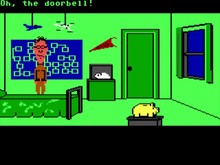
Review originally published at https://www.thecerebralbore.com/2025/02/maniac-mansion-pc1987.html Maniac Mansion is the original comic graphic adventure game from Lucasfilm Games, designed by Ron Gilbert and Gary Winnick. I’ve never been a fan of Point & Click Adventure games. I like the idea of them, especially the comedy ones that LucasArts were known for, but I just can’t get on with the pace and the puzzles (and to be fair to me, some of them have a reputation for being obtuse …to put it kindly.) Maniac Mansion is available on Steam today (running through ScummVM), and comes with both Original and Enhanced versions, the latter being a 1989 re-release with updated graphics and more save slots. It’s nothing very “modern”, Maniac Mansion not having received the “remaster” treatment that other genre stalwarts like Day of the Tentacle or Monkey Island have in recent years (either because it is too basic or for preservation reasons.) The closest it has come is the 2004 “Deluxe” fan-made remake, updating the graphics further, condensing the SCUMM interface and adding a visual (rather than text) item inventory, slipping in more music, sounds and dialogue …basically, bringing it more on par with Day of the Tentacle. This is the version I ended up playing, grasping for any quality of life improvements I could get. The story goes, local mad scientist, Dr. Fred Edison, has kidnapped Dave’s girlfriend, Sandy. As Dave, you’re required to enter the (expansive) house of the Edisons, a family of weirdo’s in the vein of The Addams Family or the Klopeks from The 'Burbs, to rescue poor Sandy. You can bring 2 other characters in with Dave (from 6 available), each with different proficiencies that affect the solutions to some of the puzzles and ultimately how easy or not the game is to finish (not that it makes this obvious!) The game has you methodically exploring the different rooms of Dr. Fred's mansion, clicking everything you can and picking up any items that aren’t nailed down to add to your inventory. The bottom section of the screen is populated with the words /verbs of 16 selectable actions (streamlined to 9 in Deluxe), like ‘Open’, ‘Use’ and ‘Pick Up’. You click on a “word” and then click on a “thing” on the playscreen, and if the combination makes sense (or should I say, if the combination made enough sense to the programmers that they put a response in) then the action will be performed or at least you will receive some (often witty) feedback. In Deluxe, with the cursor positioned over something interactable, it will illuminate corresponding verb options on the UI to help you out, which I appreciated. You can then right-click to perform the highlighted action rather than having to drag the mouse down to select the action then back up again to click the thing. It streamlines things. You can also talk to your 2 other characters in Deluxe, who will provide (varying degrees of) hints on how to progress if you get stuck. I got so far working through the rooms, then I hit a wall where the path forward wasn’t obvious anymore. And so, I started (the inevitable) going back through all of the rooms again, searching for anything I’d overlooked, again …which (unsurprisingly) was less fun. After an hour of making zero progress, I resorted to a walkthrough. Some of the solutions to solving puzzles in these Adventure games are infamously (yet paradoxically celebrated for being) illogical. They do, mostly, make a kind of sense in Maniac Mansion (in hindsight) but I still had trouble putting a lot of it together. It might just be me? Occasionally, you’ll be interrupted by cutscenes showing the Edison’s going about their weird business. These are a combination of scripted (based on your actions) and timed events. The Edisons will typically apprehend any of your characters they encounter and throw them directly into the family dungeon. Being able to switch between characters allows you a means of escape, having someone hold in a specific brick, opening the door so that your other character(s) can get out. At points, you may have to intentionally get caught, using the time which it takes for your character to be frogmarched to the basement to switch to another and quickly explore the room before the Edison family member gets back. As mentioned, the different characters you can choose at the start to accompany Dave have different abilities that he doesn’t, for example a couple of them are good with electronics, so can do things like repair the broken telephone. There are different solutions and ways to progress depending on who you bring in. Your path through the house is largely non-linear already, and this just adds more variety, and I guess replayability. Loosely following a guide, I got to the end-ish of the game, only to find out that due to the characters I’d picked (Syd and Razor) and certain actions I’d taken (like using the obvious ‘Open’ command on an envelope I’d found) I couldn't actually finish the game… Indeed, it seems that there are several of these “dead ends” designed into Maniac Mansion, which is great fun isn’t it! Well done!! Maybe 20-30 years ago, I might have seen the funny side of this outcome and been happy enough to start again, trying different things to see what changes. Today, not so much. Having said that, some of the hoops the game makes you jump through, like all the back and forth needed to record different things onto tape cassettes, I felt was just the developers trying to show off how clever they are. For me, the player, it just felt like a chore. Maniac Mansion doesn’t have the voiced dialogue that future Lucas comic graphic adventure games would, and bgm is used sparingly. It feels quite dated as a result. I also didn’t find the script to be “amazing” (personally). Some personality still comes through in the dialogue and scenarios, but you (probably) aren’t going to wet yourself laughing. I’m glad I went for Deluxe, but even so, I didn’t have much “fun” playing it. Sorry Maniac Mansion (and the entire Point & Click genre), I think you’re still just not for me. 4/10

Maniac Mansion heute zu spielen erfordert schon ein wenig Eingewöhnungszeit. Im ersten Moment fühlt sich die Verbensteuerung und das Rätseldesign doch etwas kantig an. Jedoch gelingt es dem Klassiker aus 1987 von u. A. Ron Gilbert schon nach kurzer Zeit, dass das Knobeln richtig nett von der Hand geht, jedoch das Rätseldesign wirkt aus heutiger Sicht bis zum Schluss etwas sperrig. Natürlich darf man Maniac Mansion nicht beurteilen, ohne es zeitgenössisch zu betrachten. 1987. Damals war Genrestandard noch die Parsersteuerung, in der Verben händisch ins Spiel eingegeben werden mussten, selbst die Grafikadventures an sich sind noch nicht besonders alt, Textbasierte Ursprünge des Genres a la ZORK noch nicht verdrängt. Damaliger Platzhirsch der Adventures war sicherlich Sierra mit seinen Quest-Games und irgendwo im Hintergrund fand sich eine kleine Spieleschmiede mit großem Bruder: Lucasfilm Games. Während ihr Erstlingswerk Rescue on Fractalus! Zwar technisch recht beeindruckend war, und durchaus positiv besprochen wurde gelang Lucasfilm Games erst mit Maniac Mansion so richtig der Durchbruch und legte den Grundstein für absolute Meisterwerke und Klassiker, die wir bis heute noch lieben. Maniac Mansion schaffte dies nicht nur durch den finanziellen Erfolg, sondern vor allem durch die Etablierung eines technischen Meilensteins: der SCUMM-Engine. Wenn auch nicht das erste Point and Klick der Geschichte, konnte Maniac Mansion mithilfe dieses technischen Grundgerüsts eine Stabilität und Spielerfreundlichkeit an den Tag legen, die bis dahin unerreicht waren. SCUMM erlaubte nicht nur sauberes Scrolling, sondern etablierte die Verbensteuerung als massentaugliche Eingabemethode für sämtliche zukünftigen Genrevertreter. Somit war die Basis für Zak McKraken, Indiana Jones, Monkey Island, Sam & Max, Day oft he Tentacle usw. gelegt. Aus diesem Grund war es für mich auch heute noch eine Freude Maniac Mansion zu spielen. Und das trotz teils etwas absurder Rätsel. Ich finde die Grafik Charmant und erstaunlich gut gealtert, die ursprüngliche und die Enhanced-DOS- Version geizen leider im Vergleich zu der NES-Version etwas mit musikalischer Untermalung, aber wenn Musik eingesetzt wird, habe ich mich stets über coole Chiptune-Tracks gefreut. Der pseudo-Horror-film Charm und der dezente Humor haben auch meinen Geschmack getroffen. Maniac Mansion ist aus heutiger Sicht alles andere als eines der besten Adventures aller Zeiten, aber ich denke ich darf behaupten, dass es eines der bedeutsamsten und wichtigsten Spieler seiner Zeit war und sein Einfluss reicht bis heute. Genreliebhaber und historisch interessierte können definitiv noch ihren Spaß mit diesem Werk haben!
EXCELLENT!! SUPERB!! Best game ever, and after almost 35 years, now I can play it in my new computer...AMAZING!
Maniac Mansion, developed by Lucasfilm Games and now published under the stewardship of Lucasfilm and Disney, remains one of the foundational works of the graphic adventure genre. Even decades after its original 1987 release, it stands out as a pioneering blend of interactive storytelling, inventive humor, and emergent gameplay. The premise is deceptively simple: Dave Miller’s girlfriend, Sandy, has been kidnapped by a mad scientist and taken to a mysterious mansion on the edge of town. But what unfolds is far more complex than a straightforward rescue. The mansion is a living puzzle box filled with eccentric inhabitants, secret rooms, strange experiments, and a constant sense of comedic danger, all stitched together by a tone that embraces horror tropes while mocking them at every turn. One of the most remarkable aspects of Maniac Mansion is its groundbreaking interface. Before its release, adventure games often required players to guess typed commands through text parsers, leading to frustration when the game didn’t recognize phrasing. Maniac Mansion introduced the SCUMM engine, which replaced guesswork with a clean, clickable verb-and-object system. This intuitive layout made adventuring accessible to newcomers and set the standard for point-and-click adventures for years. The interface wasn’t just a convenience — it transformed gameplay, allowing players to experiment freely with verbs and objects to uncover solutions, secrets, and alternate outcomes. Equally innovative was the ability to choose two additional characters from a roster of six to accompany Dave. Each character brought unique skills, personalities, and puzzle-solving pathways. Some were artistic, some technically gifted, and some seemingly useless until a specific situation proved otherwise. This choice fundamentally shaped the experience: certain puzzles became solvable only with a particular character, while others opened entirely different story branches or endings depending on who was present. Because of this system, Maniac Mansion was not a single linear game but a flexible structure encouraging replay. Strategies changed, solutions varied, and outcomes diverged, giving the game a level of freedom that was exceptionally rare at the time. The tone of Maniac Mansion is another defining strength. Though it borrows heavily from B-movie horror imagery — secret labs, lurking monsters, villainous scientists, and sentient tentacles — the game treats these elements with a comedic absurdity that undercuts their menace. The mansion’s residents range from sinister to silly, and many encounters balance tension with humor. Vivid personality saturates every corner of the mansion, from the eccentric Edison family to the bizarre alien tentacles wandering the halls. The writing leans into slapstick, sarcasm, and unexpected twists, ensuring the narrative never feels predictable. This blend of horror aesthetics and comedic irreverence gives Maniac Mansion a distinct identity that still feels fresh and charming. Despite its many achievements, Maniac Mansion retains design quirks that reveal its age. Some puzzles rely on trial-and-error or operate on unconventional “adventure-game logic,” requiring leaps of intuition rather than clear reasoning. Early graphics, while iconic, are limited by the hardware of their time, and the slow verb-driven interaction — though revolutionary then — can feel cumbersome to players accustomed to modern streamlined interfaces. The game also includes red herrings, such as items that serve no purpose, and possible dead-ends if certain characters are incapacitated or if players make irreversible mistakes. These frustrations, however, reflect the experimental nature of early adventure design, a period when developers were still discovering how to balance freedom with fairness. Looking beyond its dated elements, Maniac Mansion’s legacy is undeniable. It laid the foundation for some of the greatest adventure titles ever created, many of them powered by the very SCUMM engine devised for this game. It introduced cinematic cutscenes, puzzle flexibility, multi-character design, and a level of player agency that helped shape the evolution of narrative gaming. Its influence stretches far beyond Lucasfilm Games’ later works: the ideas it pioneered became part of the DNA of the entire genre. Maniac Mansion remains a captivating experience for those willing to embrace its retro charm. Its branching structure, eccentric humor, and clever design still offer something unique, even to modern players. It is not just a relic from an earlier era but a creative milestone — a strange, funny, imaginative house of puzzles that continues to inspire curiosity. For anyone interested in the origins of adventure games or simply looking for a quirky, character-filled journey into one of gaming’s most influential haunted mansions, Maniac Mansion retains its place as an essential and memorable classic. Rating: 8/10
I played the original on my old Commodore 64 back in the day. This really made me feel like a kid again. And since I played it so long ago, all the puzzles are basically fresh to me. This is an excellent and intuitive point &click graphic adventure set in the 1980s but incorporating a lot of tropes from old 1950s sci-fi/horror movies. In a lot of ways, it feels like "The Rocky Horror Picture Show" meets "Scooby Doo, Where Are You?" but with no talking dogs and not as much kinky stuff.
Brings back nice memories. I actually never finished the game when I was younger. The fact you can't save progress is the reason, plus I'm kind of dumb. Anyway, I wish the re-release of game would have had option to save progress. I guess that would've required time and money that the "big whigs" weren't willing to dish out money for. Oh well. Still a classic game.
sweet
Das waren noch Zeiten damals am C64 😄
Related
Related
Trends
Modeled estimate over time, reconstructed from Steam's monthly review histogram.
Momentum
Pace estimated from the game's recent review growth (our daily snapshots) at its own sales-per-review ratio — a momentum signal, not booked sales.
Audience
Estimated from the language of this game's reviews — a proxy for where players are, not official Steam demographics.
Related
| Roblox | $2.5B | 50.1M | 84% | Free |
| Pokémon GO | $839.2M | 15.4M | 73% | Free |
| Black Myth: Wukong | $794.9M | 1.2M | 97% | $59.99 |
| PK XD: Fun, friends & games | $538.2M | 6.4M | 94% | Free |
| DayZ | $531.7M | 465.7K | 78% | $49.99 |
| DARK SOULS™ III | $467M | 437.9K | 94% | $59.99 |
Related
| 富甲天下W | $21.4K | 118 | 50% | $7.99 |
| Farm Frenzy: Heave Ho | $21.4K | 134 | 89% | $4.99 |
| Maid for Loving You | $21.4K | 69 | 94% | $19.99 |
| Super Toy Cars Offroad | $21.4K | 54 | 61% | $19.99 |
| It's A Wipe! | $21.4K | 126 | 77% | $4.99 |
| Furry Sex: Pirates 🏴☠️ | $21.4K | 148 | 72% | $6.99 |