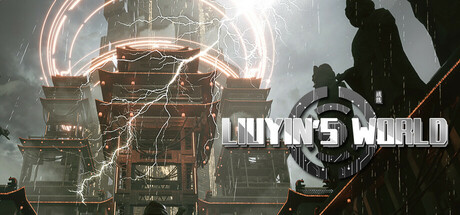
This latest installment in the Liuyin series takes the formula fans already know and propels it into a futuristic setting.
While the backdrop and themes are noticeably different, the core mechanics remain intact from the previous game. Assets are reused, gameplay foundations are familiar, and the biggest changes arrive in the form of new environments, redesigned enemy appearances, and small tweaks that slightly alter the way combat unfolds.
From the very beginning, the controls are instantly recognizable to anyone who has played the earlier game. You still rely on a single main attack, which can be chained into a flowing combo simply by holding down the attack button. Movement is supported by a responsive dash that doubles as both an offensive gap-closer and a defensive tool for escaping danger.
The parry button remains just as demanding as before, requiring razor-sharp timing to succeed, and of course, you have access to skills that expand your offense. The main distinction this time around is the replacement of the old throwing daggers with a gun. Functionally, it isn’t a dramatic departure; the weapon is still bound by limited uses and a short cooldown before it can be fired again.
How you deal with enemies hasn’t changed. Each attack chips away at both their health bar and their posture gauge, with successful parries contributing additional posture damage. Combat revolves around reading the color-coded telegraphs of incoming attacks: those accompanied by a white glow can be parried or dodged, while those highlighted in red are entirely unblockable and must be avoided through distance or timely repositioning.
A staggered opponent becomes vulnerable to devastating finishers, sometimes even instant kills if conditions are favorable. These moments are most easily triggered when an enemy has already been knocked to the ground or backed into a wall. Certain enemies raise the stakes further by unleashing special moves that are signaled by bold Chinese characters. If the letters flash in white, the correct counter is to dash directly into the attacker. If they appear in red, however, that is your cue to retreat immediately or risk being crushed by an unblockable strike.
Skills are divided into two categories. The first set revolves around kung fu techniques and sword abilities. These can be used freely so long as you have stamina, and since stamina regenerates rather quickly, you can pretty much spam them. You can assign up to four of these skills to quick-access slots, though it’s a good idea to use one of those slots for healing potions. The overall selection of kung fu abilities is not particularly vast, which simplifies decision-making but also means there is less room for experimentation.
The second category of skills demands perception points. Unlike stamina, perception points cannot be regenerated naturally. Instead, you earn them only by dealing damage and filling up a special meter. Each time the bar fills, you receive a point, but stronger skills may cost multiple points to activate. As such, perception-based abilities are best saved for clutch situations, like a tough boss phase or a sudden swarm of enemies.
Both skill types are unlocked by purchasing them from the in-game merchant. Acquiring new techniques requires energy crystals, which you’ll find scattered in treasure chests, as well as experience points collected from slain enemies. But there’s a catch. Unlocking a skill also requires you to sacrifice unique boss rewards. Every such reward is tied to two potential skills, yet you can only choose one of them.
Boss battles, as expected, are the highlights of the game, though they can also be sources of frustration. Success often comes only after observing and memorizing attack patterns. A tried-and-true strategy is to dart in, land a few quick hits, and then retreat before the boss retaliates. The flashy animations of your character’s attacks can obscure subtle tells in the boss’s movement, so you need to know when to pull back.
For those who want a safer alternative, the so-called “dagger trick” from the earlier title returns, only now it uses the gun. The method is simple: charge the gun by holding the button for a few seconds, fire, dash away until the cooldown finishes, then repeat. Once you begin unlocking special bullet effects, such as poison or lightning, this tactic becomes even more efficient.
The gun proves useful against ordinary foes as well. A quick tap inflicts posture damage, making enemies easier to stagger, while a charged shot delivers heavy direct damage. Once staggered, executing an insta-kill on one enemy has the added bonus of pushing nearby enemies backward, sometimes into walls where they too can be dispatched instantly.
Not all encounters are equally enjoyable, however. Balance issues and sudden difficulty spikes remain a recurring problem. Some bosses crumble quickly once their patterns are mastered, while others turn into near-endless slogs thanks to bloated health pools and absurd defenses. These “damage sponge” fights ruin some fun.
Outside of combat, experience points feed into four distinct spirit levels. Each level features three tiers of upgrades, though they must be unlocked sequentially and become increasingly costly in terms of experience. The final upgrade in each tier requires a special item hidden somewhere in the world. Each upgrade provides three perks, though their descriptions vary in clarity. Some are straightforward, like boosting health or stamina, while others are annoyingly vague about what they actually improve.
Shrines return as the primary hub for saving progress and restoring health. They are generously scattered across the world, and saving at them respawns enemies, allowing easy grinding for additional experience. Shrines also function as fast-travel nodes, letting you move between previously unlocked shrines. On top of that, they serve as gear-swapping points, where you can switch weapons and cloaks. Each piece of equipment offers its own unique perk, but the main sword is still good enough to carry you through the entire game.
Progression through the game world mirrors the linearity of past entries. Corridors and environments often look repetitive, and multiple doors in a given area usually funnel you down only one viable path. Locked shortcuts and occasional keys open new routes, but the overall design feels like you’re being guided on a specific path.
One area where the game shines, however, is technical performance. Load times are impressively short, often nearly instantaneous after saving or dying. And speaking of death, you don’t drop currency or items upon defeat. Instead, you simply respawn at the last shrine, losing only the unsaved progress you made since your last save.
Narrative beats and encounters echo familiar rhythms as well. The first stage pits you against an ape and a spider boss, followed by an elderly warrior and a duo of siblings. The central merchant’s chamber is once again a hub you can revisit from any shrine, complete with collectible records to listen to. Returning characters from earlier games provide side quests, though these can be missed if you rush forward without exploring thoroughly.
In the end, this entry in the Liuyin series is a solid but safe addition. For newcomers, it works well as a compact, stylish indie action-adventure, offering flashy combat and multiple endings to encourage replayability. For veterans, though, it may feel overly familiar and somewhat short, with recycled assets and mechanics.