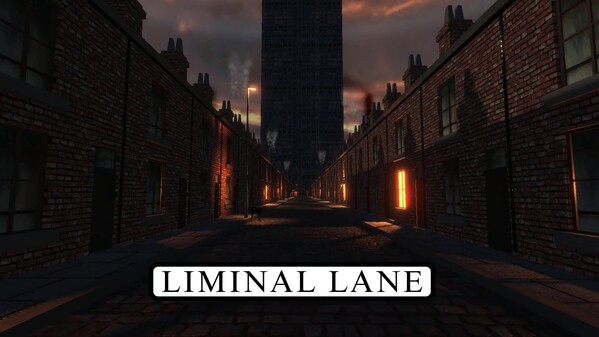
Welcome to Liminal Lane. A short, single player, first person, atmospheric walking simulator. A nostalgic, surreal experience exploring Liminal Spaces. Uncover the secrets of Liminal Lane and escape the Lucid Dreams and Haunting Nightmares.
Modeled estimate, not a reported figure. How we estimate →
Media

About
Liminal Lane is a short, single player, first person, atmospheric walking simulator.
A nostalgic, surreal experience exploring Liminal Spaces.
Uncover the secrets of Liminal Lane and escape the Lucid Dreams and Haunting Nightmares.
The Game features many different linear and unique Liminal levels with some puzzles and escape areas.
Explore themes of Childhood Nostalgia, Teenage Years, The Office Grind, Family Holidays and being alone.
Each level is either a trip down memory lane or a fall into madness.
Why not just relax in some areas and watch tv?
The game features some very old 1920s and 30s public domain cartoons and movies.
There may also be a classic movie reference or two.
The game has an emotional narrative that will reveal itself once the player has completed their journey.
The Game also features many of my original Oil paintings throughout.
Alex Kerr Painting
Liminal Lane has No Save System but is a short experience.
As a solo developer this is my first game, for anyone who follows my channel Ravenhome knows my huge interest in the Backrooms and Liminal spaces, so I'm very excited to have developed my own Liminal Space themed game:) Many thanks
Genres
Stats
All-time low is the lowest price we've recorded for this game since we started tracking it.
Languages: English**languages with full audio support
Engagement
Hours played at review time, across 41 reviews with recorded playtime.
Reviews
Themes across 41 recent reviews and how positive each mention is. A keyword signal, not full sentiment analysis.
positive critical· bar length = how often the theme comes up
Reviews
I walked through a woman's bosom and ended up in space.
Liminal Lane is a psychological horror walking simulator that builds its entire identity around nostalgia, emotional isolation, and the unsettling atmosphere of liminal spaces. Rather than relying on traditional horror mechanics like combat, monsters, or constant jump scares, the game focuses on creating discomfort through empty environments, distorted memories, surreal architecture, and eerie sound design. The result is a short but surprisingly effective experience that feels less like a conventional horror game and more like wandering through a fragmented dream filled with forgotten places and emotional unease. The game places players inside a collection of strange interconnected environments inspired by abandoned suburban locations, office buildings, schools, entertainment areas, and other spaces that feel oddly familiar yet deeply unnatural. Every level is designed around the concept of liminal horror, where ordinary places become psychologically disturbing simply because they are empty, silent, and disconnected from normal human activity. The game constantly creates the sensation that these spaces should be alive with people and noise, but instead exist in complete isolation. One of the strongest aspects of Liminal Lane is how effectively it captures the emotional side of liminal spaces. The environments are not traditionally frightening in a direct sense, yet they constantly create feelings of discomfort and unease. Long hallways stretch endlessly, rooms feel unnaturally oversized, and familiar locations appear subtly distorted in ways that make them feel dreamlike rather than real. The game understands that the fear associated with liminal horror comes from emotional disconnection and nostalgia rather than immediate danger. The visual presentation contributes heavily to the atmosphere. The game combines retro-inspired low-poly graphics with modern lighting and surreal environmental design, creating environments that resemble faded memories from the late 1990s and early 2000s. Some locations feel like forgotten shopping centers, abandoned schools, suburban neighborhoods, or old recreational spaces viewed through distorted childhood memories. The simplistic visuals actually strengthen the experience because they leave room for imagination while reinforcing the nostalgic quality of the environments. Each level introduces different emotional tones and visual themes. Some areas initially feel peaceful or strangely comforting because of their familiarity, while others slowly descend into psychological chaos through distorted architecture, unsettling imagery, and environmental shifts. The transitions between comfort and horror often happen gradually, allowing tension to build naturally over time rather than relying on sudden shocks. This slower pacing helps the game maintain a consistent feeling of emotional instability throughout the experience. Sound design is one of the game’s greatest strengths. Ambient noises, static interference, distant echoes, muffled voices, alarms, and subtle environmental sounds constantly reinforce the feeling that reality itself is unstable. The game frequently uses silence just as effectively as sound, creating moments where simple exploration becomes deeply uncomfortable despite almost nothing happening visually. Audio cues often feel detached and unnatural, giving the impression that the environments are alive in ways that cannot be fully understood. The inclusion of vintage cartoons, old media clips, and nostalgic imagery adds another interesting layer to the atmosphere. These sequences create a strange contrast between childhood comfort and psychological discomfort, making familiar media feel uncanny when placed inside the game’s surreal environments. Combined with the dreamlike level design, these nostalgic elements strengthen the overall sensation that players are wandering through corrupted memories rather than physical locations. Gameplay itself remains intentionally simple. Most of the experience revolves around walking through environments, observing details, and occasionally interacting with light puzzle elements or progression triggers. There are no survival mechanics, combat systems, or complex gameplay loops. The game is clearly designed around emotional immersion and environmental storytelling rather than mechanical depth. Players expecting more traditional horror gameplay may find the interactivity minimal, but the simplicity allows the atmosphere to remain the central focus. The short runtime is one of the game’s most divisive qualities. Liminal Lane can usually be completed in under an hour, making it feel closer to an interactive art project or atmospheric experiment than a full-length horror title. Some players may appreciate the concise structure because it prevents the concept from overstaying its welcome, while others may feel disappointed that the intriguing environments and themes are not explored more deeply. Technical roughness is also noticeable throughout the experience. Certain areas feature impressive lighting and atmosphere, while others feel visually simplistic or unfinished. Some transitions between environments can feel abrupt, and occasional asset repetition slightly weakens immersion. The game’s smaller budget and experimental nature are visible throughout, though these rough edges do not completely undermine the atmosphere it creates. What ultimately makes Liminal Lane memorable is how successfully it recreates the strange emotional sensation associated with forgotten places, nostalgia, and dream logic. The game transforms ordinary environments into psychologically oppressive spaces simply through emptiness, sound, and subtle visual distortion. Many of its most effective moments involve nothing more than quietly walking through silent hallways or staring into empty rooms that somehow feel emotionally wrong. Despite its limited gameplay systems and short length, the experience leaves a surprisingly strong impression because of how fully committed it is to atmosphere and emotional discomfort. Liminal Lane understands that horror does not always require direct threats. Sometimes fear comes from isolation, memory, and the unsettling feeling of existing inside a place that no longer makes sense. For players who enjoy atmospheric horror, surreal walking simulators, and psychologically driven exploration games, Liminal Lane offers a uniquely strange and immersive experience. Its minimalist structure and experimental presentation will not appeal to everyone, but its dreamlike atmosphere, nostalgic unease, and emotional approach to horror make it an intriguing addition to the growing liminal horror subgenre. Rating: 7/10
Crap
Наверное это можно считать игрой для детей, которым запретили играть во всякие backrooms, но на самом деле им и не надо много, чтоб испугать или побродить в игре. Наверное только для таких случаев и существует эта игра.
This game feels like its been quickly slapped together with not much quality checks. Linux User with AMD Redeon cards should run this game with Proton GE otherwise you will not be able to see the in-game videos and some textures will not render. Also the game will lock up at a certain point and the only thing that can be done is quit the game. Rather the game developer intended the game to end that way or it being intentional, I read it as a major bug. Bottom line. I do not recommend this game especially if you are Linux user.
clunky poorly made roblox game
This game hit me with a wave of nostalgia. The rooms are filled with things that felt instantly familiar from growing up. It's eerie without relying on constant jump scares, and it perfectly captures the feeling of wandering through places that feel oddly familiar but just... off.
Для начала, потенциальный покупатель должен знать, что это не совсем игра. Автор — рефлексирующий художник, а игра представляет собой интерактивную выставку его картин и образного представления маленькой истории под личиной бэкрумсовских лиминалок (без уровня 0). То есть, это буквально выставка, всё прибито к полу и подразумевает созерцание, а не взаимодействие (кроме дверей). Несмотря на простой геймплей симулятора ходьбы, проходить было интересно. Картины крутые, атмосфера вайбовая, навевает лёгкую меланхоличную и ностальгичную тоску (и даже может вызвать слезу). И вот здесь я напоследок должна отметить техническое исполнение: автор, он же художник, делал игру в одного, и игра всё ещё довольно неказистая. Получше, чем «The Lost Painter», но всё ещё слабо. Настроек нет, небрежные швы в текстурах там-сям, полное отсутствие скриптов и анимаций, где их, всё-таки, хотелось бы видеть, и т.д., что свидетельствует об очень малом опыте именно как разработчика. Но знаете, ругать за это не хочется. Мне понравилось всё равно. И вам может понравиться, если вы готовы просто бродить по артхаусному визуальному ряду и интерпретировать его в сюжет, заодно наслаждаясь атмосферой и картинами.
少しホラーな雰囲気のある場所(後述※)もありつつ、レトロアンティークな街並み、オフィス、プール、スライダー、教室、トレーラーハウス、※地下シェルター及びディストピアを通過した先に、アメリカンドリームみたいな空気感の街並みがあり、非常に興味深い旅となった。 作中にある絵画やキャラ絵がとても趣があり、コカ・コーラみたいなレトロな絵も作品によく合っていた。
I can see that the developer has some interesting ideas, but the game is way too unpolished and lacks cohesion. Crashed a couple of times for me, so I had to run through everything from the beginning, since there are no save points. The game also doesn't have any settings, so I limited the frame rate via a 3rd party tool, and this seems to have helped with the crashes and allowed me to finish it.
Related
Related
Trends
Modeled estimate over time, reconstructed from Steam's monthly review histogram.
Audience
Estimated from the language of this game's reviews — a proxy for where players are, not official Steam demographics.
Related
| Astra And The New Constellation | $4.6K | 50 | 82% | $4.89 |
| Sex Counselor | $4.6K | 84 | 82% | $3.49 |
| Fish on the desktop | $4.6K | 175 | 96% | $0.99 |
| Puzzling Wild IQ Test | $4.6K | 56 | 91% | $4.99 |
| POSTWORLD | $4.6K | 92 | 53% | $2.45 |
| Cavern Escape Extremely Hard game!!! | $4.6K | 460 | 40% | $0.49 |