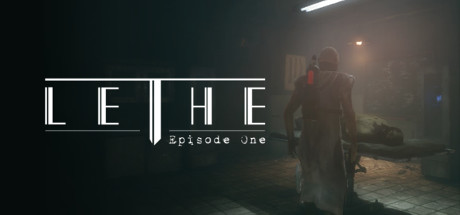
Lethe – Episode One, developed by KoukouStudios in collaboration with Faber Interactive and published by Faber Interactive, is a first-person psychological horror game that attempts to blend traditional survival horror tension with a more introspective narrative. It tells the story of Robert Dawn, a journalist weighed down by financial struggle and personal regret, who ventures to a remote island to investigate an old mining settlement. What begins as a mundane investigation quickly descends into something far darker. The abandoned facilities and ominous tunnels conceal not only physical dangers but also echoes of a mysterious experiment that intertwines with Robert’s own fragmented past. The game’s title, referencing the Greek mythological river of forgetfulness, is an apt metaphor for its story—a journey through the shadows of memory and self-deception.
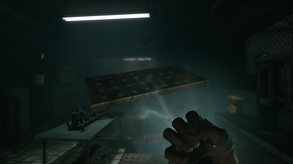
From the moment you step onto the island, Lethe establishes a foreboding atmosphere that never loosens its grip. The visual presentation is hauntingly detailed, with decaying wooden bridges, labyrinthine tunnels, and rusted machinery all contributing to an oppressive sense of decay. The game’s lighting design does much of the heavy lifting, balancing pitch-black darkness and the faint glow of lanterns to create a constant feeling of unease. Shadows move subtly, corners feel alive, and the narrow pathways amplify a sense of claustrophobia that keeps players tense. The environmental storytelling is deliberate and restrained—rather than relying on exposition, it lets the surroundings tell the story. Notes scattered throughout the mines hint at failed experiments and human desperation, while the eerie silence of the caverns suggests that something unseen still lingers there. The sound design complements the visuals perfectly: the echo of distant drips, the moan of metal under strain, and the sudden hush before an encounter all create a rhythm of fear and anticipation.
Gameplay in Lethe leans heavily toward exploration and environmental interaction rather than direct combat. For much of the experience, you are unarmed, forced to sneak past threats or flee outright. This vulnerability evokes the spirit of early survival horror, where resourcefulness and awareness are your only defenses. Midway through the game, Robert gains the ability to manipulate objects through psychokinesis, adding a supernatural twist to the otherwise grounded mechanics. This power allows you to move obstacles, solve physics-based puzzles, and occasionally defend yourself against enemies. It’s a creative mechanic that offers moments of empowerment amid the helplessness but never undermines the horror—energy use is limited, and carelessness can leave you exposed. The puzzles themselves are well-integrated into the environment, often revolving around activating machinery or restoring power, and they help to pace the tension without breaking immersion.
The pacing of Lethe is deliberate, sometimes bordering on slow, but this works in the game’s favor when it comes to building dread. The absence of constant jump scares allows the atmosphere to take center stage, letting unease accumulate naturally. However, the same pacing can feel sluggish during backtracking or traversal through longer sections of tunnels. Movement speed is intentionally slow, which adds realism but can occasionally frustrate when the tension wanes. The enemy encounters, while not overly frequent, are well-timed and effective. Rather than swarming the player, they appear sporadically, emphasizing the importance of caution and sound. The creatures themselves are unsettling—distorted silhouettes that feel human enough to trigger empathy yet monstrous enough to inspire fear. Their design reflects the game’s underlying themes of corruption and loss of identity.
Narratively, Lethe walks the line between mystery and ambiguity. Robert’s journey is not only a physical one through abandoned industrial spaces but also an internal exploration of guilt and suppressed memories. The story unfolds through environmental clues, journal entries, and brief flashes of the protagonist’s recollections. Rather than providing a clear explanation, it invites players to interpret events for themselves, tying the supernatural elements to the psychological. The concept of “forgetfulness,” central to the myth of Lethe, becomes an allegory for denial and self-erasure—Robert’s descent mirrors a man being forced to remember what he tried so hard to bury. While the storytelling is understated, its emotional undertones give the game depth beyond its scares. There are moments where silence and isolation speak louder than any dialogue could, creating a haunting introspection that lingers after the credits roll.
The game is not without flaws. Its length is modest, typically running four to six hours, and the ending feels abrupt, a result of its episodic structure that never received a true continuation. Certain design elements, such as the save system and enemy AI, reveal the limitations of its indie origins. Checkpoints can feel inconsistently placed, forcing repetition after death, and some encounters rely more on trial and error than skill or strategy. The psychokinesis mechanic, while inventive, isn’t fully explored and sometimes feels underutilized beyond simple object manipulation. Despite these shortcomings, the game’s presentation and sense of mood carry it through. It doesn’t overreach its ambition; instead, it commits to delivering a focused, atmospheric horror experience rooted in immersion rather than spectacle.
Lethe – Episode One ultimately stands as a strong example of psychological horror done with care and restraint. It doesn’t bombard players with cheap scares or overwhelming combat, but instead lets its tension simmer through subtle cues, meticulous world-building, and an undercurrent of personal tragedy. The combination of isolation, mystery, and supernatural dread makes it feel like a lost relic of classic horror design, reminiscent of Amnesia or early Silent Hill. Even with its pacing issues and abrupt ending, it succeeds in creating an experience that feels both intimate and unnerving. It’s a reminder that horror can be quiet and reflective, that fear can arise not from what leaps out at you, but from what hides in your memory. For players seeking an atmospheric, story-driven descent into the darkness of the human mind, Lethe – Episode One is a haunting and worthwhile journey that leaves its mark long after you emerge from the mines.
Rating: 8/10