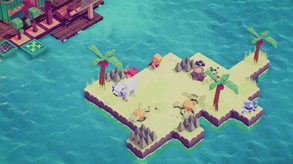
In Last Wood, it is an oceanic world after the Fall. You will guide several survivors in the ocean from pieces of rafts, survive, build rafts, defense the threats, explore the unknown world, even have their offsprings, and find the truth of the world.
Modeled estimate, not a reported figure. How we estimate →
Media

About


Genres
Stats
All-time low is the lowest price we've recorded for this game since we started tracking it.
Languages: English, French, Portuguese - Brazil, Simplified Chinese, Traditional Chinese
Engagement
Hours played at review time, across 40 reviews with recorded playtime.
Reviews
Themes across 40 recent reviews and how positive each mention is. A keyword signal, not full sentiment analysis.
positive critical· bar length = how often the theme comes up
Reviews
Si lo recomiendo, pero.... Lo bueno: - Es entretenido. - Si esta en español, aunque alguna frase que otra no. Lo malo: - El rendimiento no es lo mejor. Al inicio va todo de 10, pero cuando tenes muchos avances se caen los FPS asquerosamente. - Parece que hace rato que ya no tiene mantenimiento, hay algunos bug chiquitos. - Al entender como funciona enseguida ganas. - Hay algunas cosas que NO son intuitiva como donde poner las minas en las islas, o como seleccionar una pared para eliminarla, por ejemplo. - Hay muchas mecánicas que no son necesarias y le quita gracia al juego. Como poner el timón, y después no necesitas remar. o los comerciantes se vuelven irrelevantes después de un tiempo de juego. - Se termina poniendo repetitivo porque es muy predecible todo. Esperas que te ataquen, les ganas, te moves a una isla con materiales y así sucesivamente.
바다위를 무대로한 생존 어드벤처 게임으로 물위를 떠다니는 폐품들[때론 사람]을 수집하며 배를 넓혀간다. 일부 아이템을 사용해 새로운 물건들을 배우고, 랜덤으로 등장하는 상인과 물물거래를 할 수 있다. 아쉬운 점은 일부 잔 버그가 존재하며, 공간이 커질수록 프레임드랍이 생긴다는 점이다. 무엇보다 한글이 안되어있어 일부 뜻을 모르는 미션들이 존재한다.
Es un juego interesante, intentar mantener vivos a los personajes, es relajante y estresante al mismo tiempo.
本来买了等优化bug后再玩的,然而我忘了这个游戏,就连开发者也忘了这个游戏。想起来退款但是超时了,于是硬着头皮玩。 80+小时后,我感觉这个游戏的玩法我还是挺喜欢的。开局一棵树,装备全靠捡(不是)。但是中后期优化问题就出现了,卡顿&某些物品会产生bug,导致物资消失&游戏交互不太智能。而且根据制作商这个情况吧,不太推荐游玩……
The game is still to clunky and needs lots of work . The game feels like a knock off of Raft or something.
Last Wood is an ambitious indie survival and colony-management hybrid developed by JustUsGameLab and published by JustUsGameLab in collaboration with Gamirror Games. Set in a post-apocalyptic world where rising seas have swallowed civilization, the game places players in command of a small group of survivors clinging to life atop a fragile wooden raft drifting across an endless ocean. From this deceptively simple premise emerges a layered experience that blends resource management, base building, character simulation, exploration, and emergent storytelling into a slow-burn survival sandbox. Rather than focusing on fast-paced action, Last Wood leans heavily into planning, adaptation, and incremental growth, challenging players to turn a patchwork raft into a sustainable floating colony. The core gameplay revolves around maintaining the delicate balance between immediate survival needs and long-term development. Food and water are constant concerns, requiring fishing, farming, cooking, and water purification systems to be carefully managed. Survivors must gather floating debris, harvest materials from islands, and craft tools and structures to expand the raft tile by tile. Every expansion decision carries weight, as space is limited and each new structure must justify its footprint. Storage, sleeping quarters, workstations, farms, and defensive installations all compete for room. The satisfaction comes from watching a once-meager platform gradually transform into a multi-level floating settlement complete with organized production chains and specialized work areas. One of the game’s most compelling aspects is its survivor system. Each character comes with distinct traits, attributes, and skill proficiencies that influence how effectively they perform tasks. Assigning the right person to farming, crafting, combat, or research can significantly impact efficiency. Over time, survivors develop skills through practice, reinforcing the colony-sim element. Relationships can form, families can grow, and the population can expand, giving the raft a sense of continuity and generational progress. This system adds emotional stakes; losing a skilled or well-developed survivor to starvation, illness, or a monster attack can feel genuinely devastating. The colony begins to feel less like a collection of units and more like a fragile community whose survival depends on careful stewardship. Exploration plays an equally important role in shaping each playthrough. As the raft drifts across procedurally generated waters, players encounter islands, mysterious structures, and random events. Islands offer opportunities to gather rare materials, rescue additional survivors, or uncover relics of the lost world. However, these expeditions often involve risk, including hostile wildlife or environmental hazards. Random events such as storms, drifting wreckage, or unexpected visitors keep the experience unpredictable. These moments contribute to emergent storytelling, where each session can unfold differently depending on the sequence of discoveries and disasters encountered. The game’s survival mechanics are uncompromising at times. Weather systems, hunger, morale, disease, and monster attacks can quickly spiral into crisis if not properly managed. The difficulty curve encourages careful planning rather than reactive scrambling. Resource shortages can cascade into larger problems—lack of food affects morale, poor morale reduces productivity, and reduced productivity delays essential infrastructure. This interconnected design gives Last Wood a strategic depth that rewards foresight. However, it can also create frustration for players who prefer more forgiving systems or clearer guidance. The game expects patience and methodical thinking, and mistakes can be punishing. Visually, Last Wood adopts a pixel-art aesthetic that complements its indie roots. The graphics are clean and readable, with simple but expressive character sprites and environmental details that convey the loneliness of open-sea survival. The ocean backdrop, shifting weather effects, and ambient sound design contribute to a subdued but immersive atmosphere. While it does not aim for high-end realism, its presentation effectively supports the tone of quiet endurance and isolation. The user interface, while functional, can feel dense and occasionally unintuitive, especially for newcomers. Learning the various menus, crafting trees, and management panels takes time, but familiarity gradually smooths the experience. Despite its strong conceptual foundation, Last Wood carries the marks of a smaller development team. Some players may encounter rough edges in balancing, occasional technical issues, or areas that feel less refined than the core mechanics. Certain systems can appear underexplained, leaving players to experiment or consult external resources. Yet for those willing to engage deeply with its mechanics, these imperfections often fade behind the larger appeal of building a thriving colony from nothing but scattered driftwood. Ultimately, Last Wood stands as a distinctive entry in the survival and colony simulation genre. Its combination of raft-based construction, character-driven management, and oceanic exploration gives it a unique identity among sandbox survival games. It prioritizes steady growth, strategic resource planning, and emergent narrative over spectacle. For players who appreciate methodical colony builders and survival sandboxes with meaningful systems interaction, Last Wood offers a rewarding and immersive journey across a drowned world. It may not deliver polished AAA refinement, but it compensates with depth, ambition, and the quiet satisfaction of watching a fragile raft become a floating testament to human resilience. Rating: 6/10
Очень хороший был проект, жаль что разработчики его забросили.
Güzel oyun ancak buglar çok can sıkıyor.
好玩 就是不知道怎么玩
no está en español
Related
Related
Trends
Modeled estimate over time, reconstructed from Steam's monthly review histogram.
Momentum
Pace estimated from the game's recent review growth (our daily snapshots) at its own sales-per-review ratio — a momentum signal, not booked sales.
Audience
Estimated from the language of this game's reviews — a proxy for where players are, not official Steam demographics.
Related
| DOKAPON! Sword of Fury | $273.7K | 395 | 86% | $24.99 |
| Robber Knight | $273.7K | 301 | 65% | $39.99 |
| Foul Play | $273.6K | 650 | 80% | $14.99 |
| Beastro | $273.5K | 532 | 92% | $19.99 |
| Dude Simulator 3 | $273.4K | 2.1K | 68% | $4.99 |
| Heat Death: Survival Train | $273.4K | 703 | 78% | $10.79 |
Related
| 7 Days to Die | $425.3M | 403.6K | 87% | $44.99 |
| Euro Truck Simulator 2 | $421.6M | 932.3K | 97% | $19.99 |
| Mount & Blade II: Bannerlord | $309.8M | 294K | 88% | $49.99 |
| The Forest | $254.8M | 678.6K | 96% | $19.99 |
| Project Zomboid | $239.1M | 461K | 94% | $19.99 |
| No Man's Sky | $230.9M | 412.2K | 85% | $23.99 |