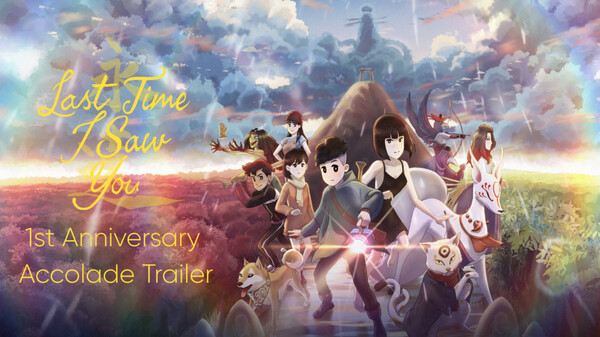
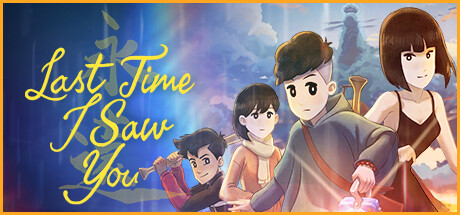
First loves. Family issues. Yokai. 'Last Time I Saw You' is a coming-of-age adventure set in 1980s Japan. Explore a haunted forest hiding a terrible secret, and interact with a vast cast of friendly and deceitful characters in this beautifully hand-drawn story with some light action elements.
Modeled estimate, not a reported figure. How we estimate →
Media
About
Stats
All-time low is the lowest price we've recorded for this game since we started tracking it.
Languages: English, Spanish - Spain, Japanese, French, German, Simplified Chinese, Traditional Chinese
Engagement
Hours played at review time, across 42 reviews with recorded playtime.
Reviews
Themes across 41 recent reviews and how positive each mention is. A keyword signal, not full sentiment analysis.
positive critical· bar length = how often the theme comes up
Reviews
This game feels like a childhood summer you can’t fully remember, but never forgot. Soft visuals, gentle music, and a story that says more with silence than with words. Played it entirely on the Steam Deck, and it honestly felt like the intended way. Not a long journey, but one that stays with you.
[h1]Le Vent Se Lève[/h1] [url=https://www.tumblr.com/miyakuli/803658821968003072/last-time-i-saw-you?source=share]English review here[/url] 6,5/10 Mesdames, messieurs, bonjour. Sortez les parapluies, la pluie va s'inviter dans notre Japon cette semaine, avec des températures plus fraiches et quelques rafales. Une alerte au typhon a également été déclenchée : il va surtout traverser la petite ville d'Amatsu donc prenez bien vos précautions. Il semblerait d'ailleurs qu'il prenne une ampleur inhabituelle, et à entendre Ayumi, l'un des enfants du village, on parlerait presque de colère divine. Faut-il alors s'abriter de cette tempête ou tenter de la traverser ? ❤ Avant que le cyclone ne frappe, profitez des environs d'Amatsu avec ses magnifiques paysages et ses décors aux couleurs chaudes, baignés par une lumière chaleureuse qui persiste malgré ces temps de pluie. Vous croiserez des habitants tous aussi charmants les uns que les autres, et dotés d'une identité visuelle propre à chacun. Aussi, entre les cinématiques 2d dessinées à la main et les petites animations environnantes, le quartier ne manque pas de vie. L'ambiance générale se révèle très nostalgique et à mesure que vous vous aventurez dans les forêts alentours, elle bascule progressivement vers quelque chose de plus onirique. En guise de bonus, le menu propose également des illustrations spéciales réalisées par différents artistes, comme des petites cartes souvenir qui feront bien plaisir à voir. https://steamcommunity.com/sharedfiles/filedetails/?id=3628285549 ❤ Si l'on est plongé dans le Japon des années 80 de par ses décors et ses détails folkloriques, les musiques suivent le même cours en accompagnant l'exploration avec ses sonorités nippones apaisantes. Le sound design participe aussi à cette sérénité en imbibant l'environnement de sons naturels (les feuilles, les gouttes de pluie...) ainsi que de petits effets de gameplay particulièrement agréables à l'oreille ; j'ai d'ailleurs plusieurs fois sauvegardé ma partie juste pour profiter de son rendu sonore. Je m'interroge toutefois sur le choix de la chanson de crédit en espagnol, car bien que le studio soit en effet hispano-japonais, elle détone légèrement avec toute cette immersion japonaise installée jusque là... mais c'est du chipotage, car le morceau reste agréable à écouter. ❤ Sous des airs de tranche de vie, le récit aborde avec justesse des thématiques du quotidien comme les premiers amours, les tensions familiales ou encore le deuil. Ces sujets évoluent d'ailleurs en parallèle de l'intensité du typhon, symbolisant les bouleversements qui viennent chambouler les personnages, laissant parfois des dégâts derrière eux, mais qui peuvent ouvrir à des accalmies salutaires, car comme le dit le dicton, après la pluie vient le beau temps. La dimension fantastique s'infiltre de manière cohérente, les créatures rencontrées amenant un nouveau regard sur les évènements et plus de profondeur sur l'histoire des lieux. On exhume alors des reliques d'un passé marqué par la guerre, dont les cicatrices sont encore visibles si l'on y prête attention. +/- Il est facile d'apprécier le jeune Ayumi tant sa curiosité enfantine et sa bonne volonté le rendent attachant. Suivre son quotidien et ses émois permettent de compatir rapidement avec ce qu'il traverse, d'autant plus que son petit carnet, consultable à tout moment, offre un aperçu plus poussé de ses ressentis et renforce notre attachement à lui. Les personnages secondaires, habitants ou yôkai, se montrent tout autant attendrissants dès lors que l'on prend le temps d'aller à leur rencontre. En effet, le monde ne reste pas figé autour d'Ayumi : chacun réagit à ce qu'il se passe différemment, et cela pousse à poursuivre ces échanges au fil de l'histoire pour en observer les changements. En revanche, si Ami incarne la fille de ses rêves, littéralement, elle peine à se démarquer malgré son rôle central. Sa personnalité assez fade et son alchimie trop timide avec Ayumi la rendent presque froide, atténuant l'impact émotionnel que le duo est censé former, un peu comme un pétard mouillé... la pluie doit y être pour quelque chose. +/- Les quêtes secondaires permettent de mieux connaître les habitants d'Amatsu, et de s'immerger d'avantage dans la vie du quartier, approfondissant les relations entre chaque personnage. Cependant, elles sont peu nombreuses et ne concernent qu'une poignée d'individus ; on aurait aimé être un peu plus actif à ce niveau là. +/- Le gameplay repose sur de l'exploration mêlant interactions et plateforme, plutôt simples et légèrement évolutives, les pouvoirs grandissant d'Ami permettant petit à petit d'atteindre de nouvelles zones. Cependant, le jeu n'exploite pas assez cet aspect en restant trop basique, on s'égare entre walking simulator et platformer, donnant un équilibre plutôt bancal. ✖ Alors que comme dit plus tôt, l'histoire s'attarde sur l'évolution de la vie, qu'elle soit humaine ou naturelle, cette progression ne se ressent étonnamment pas chez Ayumi ; entre le début et la fin du jeu, on ne perçoit aucun véritable changement dans sa façon d'appréhender les choses. Alors peut-être s'agit-il d'un choix délibéré, préférant montrer l'évolution du monde autour de lui plutôt que d'avoir vent de sa maturité grandissante... Personnellement, j'y vois une occasion manquée. ✖ Lors des cinématiques, l'écran se réduit laissant apparaitre des chiffres et des symboles sur ses bordures noires. Une esthétique un peu étrange. ✖ Les déplacements de notre protagoniste se font au pas de course, ce qui n'est pas problématique en soit, mais le devient lorsqu'il faut interagir avec des éléments de l'environnement. En effet, il est souvent difficile de se positionner correctement et l'on dépasse fréquemment la zone cible. Le vent ne souffle pourtant pas encore si fort... ✖ La dernière illustration déblocable est liée au succès du mini-jeu rétro optionnel, qui est franchement difficile comparé au reste de l'aventure. Une petite frustration non négligeable. Le typhon est maintenant passé, et le calme revient peu à peu. Si les bourrasques ne nous auront pas trop secoués émotionnellement, cet évènement orageux aura réussi à apporter un peu de mouvement aux plus aventureux et soudé chacun un peu plus humainement. Et qu'il s'agisse du temps qu'il fait ou de celui qui s'écoule, il faut maintenant apprendre à vivre avec et avancer... ou se laisser emporter par le vent à votre tour.
The entire game feels like a fleeting autumn dream. A boy meets an older girl who turns his world upside down, and he has to save his village from a catastrophe. Symbolically, it is almost perfect in how it captures that transitional phase between childhood and adulthood, where everything feels much larger, much more imposing, and every emotion is experienced with overwhelming intensity. This process of growing up is something the game portrays very well. At the same time, Ayumi is never belittled by the game as a child, but is genuinely taken seriously. Children understand much more than is often assumed, and the same applies to Ayumi. At the same time, he is of course also allowed to have emotional outbursts, as one would naturally expect from a child. At the same time, it immediately creates a sense of warmth and familiarity — a feeling of childhood. From the home to the village, the game world feels nostalgic and comforting. It depicts a rural town in 80s Japan very well. This is then contrasted with the forest, which carries a certain coldness, also because many disasters have taken place there. The game’s presentation strongly supports this, especially its emphasis on weather — sunlight and rain. There is a high level of cohesion here, which I really appreciate. The characters are charming and create a strong sense of village life. Even though many of them only have small side stories, everyone has something distinctive, and some of these stories are genuinely powerful — like the ghost girl or the two friends whose paths drift apart. But best girl remains, of course, gaming mom! The Metroidvania gameplay is more of a thematic hook, meant to better express Ayumi’s sense of adventure and the break from his normal life. There are neither many combat encounters nor particularly deep platforming sections. Still, without this element, the game would definitely feel like something is missing. However, if you come here specifically for that aspect, you might want to steer clear. It’s honestly a shame that Last Time I Saw You seems to have gone relatively unnoticed compared to A Space for the Unbound and Until Then. Because in terms of quality, it is in no way inferior. It is a beautiful game about growing up and relationships — a game that leaves you with a deep sense of melancholy. But in the end, there is still the rain.
Es un juego relajante de exploración 2D, con algo de plataformas y acción, pero focalizado en la experiencia narrativa (que es sobresaliente). La historia está centrada en un chico que vive en un pueblo pequeño del Japón de los años 80, y trata temas como la adolescencia, la relación con sus amigos y familia, y todo ello con toques de mitología japonesa que recuerdan a Miyazaki. Gráficamente es una pasada también, con una ambientación y unos dibujos excelentes. En lo jugable es simple, en general es aventura narrativa, hablar y leer, aunque hay algo de plataformas y acción, que ayudan a que sea más ameno. En resumen, si buscas algo relajado y con una buena trama, con un poco de nostalgia y mitología, es perfecto. ✪✯ 7.8 ✯✪ https://steamcommunity.com/sharedfiles/filedetails/?id=3753767119 https://steamcommunity.com/sharedfiles/filedetails/?id=3753767052 https://steamcommunity.com/sharedfiles/filedetails/?id=3753767001
Almost as magical as a ghibli movie adventure.
BUEN JUEGO ESPAÑOL Last Time I Saw You es un videojuego creado por el Estudio español “Maboroshi Artworks”, que nos cuenta la historia de Ayumi, un chico de pueblo del Japón, de la década de los 80. El se encuentra con un espíritu de una chica del bosque, con la cual lleva tiempo soñando, que le pide ayuda, y a partir de ahí, comienzan a vivir aventuras. La jugabilidad que ofrece el juego es una combinación entre plataforma, exploración, y estilo narrativo. Donde el protagonista deberá pasar por distintas zonas, usando su agilidad, para llegar a su destino. Durante el recorrido del camino se encontrará con varios personajes, que aparte de contar su historia, le plantearan peticiones mayoritariamente no obligatorias en modo misión secundaria. Su labor de realizarlas, ayudara a conocer más a estos habitantes, y que la aventura sutilmente se desarrolle un poco diferente, y desbloquees diseños artísticos de la sección contenido extra del menú principal. Ira acompañado de un bate, para usarlo como arma de defensa contra escasos espíritus oscuros, e abrir lugares taponados, y como protección una pulsera que le aportara tres puntos de vida, esta se recargara al cambiar de zonas o rezar en un santuario. Tienes acceso a un diario, donde viene un registro completo de todo aquello que vas conociendo, de los objetos conseguidos, y las misiones secundarias que puedes realizar. (Hay que destacar, que hay una sección de coleccionables. Objetos que cuenta un poco la cultura japonesa, y que sueles encontrarlos en momentos y zonas muy concretas. Asi que estate atento y explora bien. Y como no, recolectarlos te aporta un logro.) Su amiga “la espíritu”, le seguirá en gran parte de la historia, para ayudarle alcanzar zonas altas, y abrirle el camino en algunas zonas bloqueadas. La aventura ofrece algunos contados minijuegos no obligatorios, que sirven como desafíos, para desbloquear contenido extra en el arte conceptual y obtener logros. DEBO DECIR que el juego retro “Los cinco dragones”, HA SIDO SUPER DIFICIL, llevándome horas para superarlo, y al terminar, ME HE ACORDADO DE LOS ANTEPASADOS DE SU CREADOR. (Juan, si estas leyendo esto, que pasada con el minijuego, pedazo de desafío, estuve a punto de tirar la toalla. Menos mal, que no es obligatorio) El videojuego ofrece una jugabilidad mínima de 8 horas. En mi caso me tarde casi 20, ya que entre que me lo tome con calma, y sufrí con el minijuego “Ninja Hero Retro Gaming”, podéis haceros una idea. Su diseño grafico es 2D, mostrando el aspecto ochentero de los pueblos de Japón, y un estilo muy detallado de los paisajes de sus bosques. La verdad, que disfrute mucho de los paisajes, no solo por sus colores, si no, por los pequeños detalles. Ejemplos: Los pájaros de las ramas de los arboles como se van si te acercas a ellos, los gatos de las casas, como caen y se mueven las hojas de los arboles o las plumas de los cuervos, o los objetos interactivos y decorativos que puedes encontrarte y destruir. Cada estilo de personaje que te encuentras es único, con muy buen detalle, y con personalidades llamativas, que hace que se diferencien, y no se repita. Que no falte las vecinas cotillas XD . Esta claro que todo el concepto artístico, esta influenciado por las vivencias de su director y equipo creativo, durante su vida en Japón. He tenido a veces la misma sensación buena, que tuve cuando jugué a la saga Shenmue. Respecto a la banda sonora, me ha gustado su música, acompaña muy bien en toda la aventura, y ayuda incentivar los momentos claves de la historia. La verdad, es que no he sufrido el efecto de que fuera cansina, tal como me ha ocurrido en juegos como Final Fantasy. Aquí, ha estado bien. Sobre los efectos sonoros, muy bien creados e insertados, dando una connotación de realismo. Como mencione el juego ofrece logros, algunos solo obtenibles superando desafíos, y debo decir que me encanto el estilo dibujado de cada uno de ellos. El videojuego viene traducido en varios idiomas, entre ellos español, realizado por el propio director. Ofrece compatibilidad con mando y guardado en la nube. Si tengo que mencionar algo negativo seria: 1) Mas acción. Hubiese venido bien más presencia de enemigos para enfrentarse, ya sea más fantasmas, otros adversarios como cuervos, o jefes finales [spoiler] (como el monstruo de las minas, un coronel de cuervos, el fantasma del baño de las chicas, o la Diosa en versión oscura). [/spoiler] No se si este aspecto, fue debido por falta de presupuesto, o por una decisión creativa de la visión que ya tenia en mente su director. 2) Poner el minijuego de “Los 5 dragones” como contenido desbloqueado en la sección “Extras” del menú. Esta entretenido, pero es difícil, y aunque no fuera necesario superarlo para continuar con la historia, hubiera estado bien, poder acceder a este en cualquier momento desde el menú, para conseguir desbloquear su arte conceptual, y el logro Steam que le acompaña. 3) Cromos Steam. Soy consciente que debido a las políticas Steam, el juego al ser Indie, tardara un tiempo en poder insertarlos, pero en cuanto puedan, que lo hagan. Ya que el juego esta muy bien, sus diseños son fantásticos, y estoy seguro que todo el estudio podrá aportar unos artes conceptuales para cada cromo, fondos y emoticonos, que sean para quitarse el sombrero. Y a muchos de la comunidad Steam, estaremos encantados de obtenerlos. En definitiva “Last Time I Saw You”, es un buen videojuego español, apto para todos los públicos, y si te va lo plataformero, con exploración, y estilo narrativo, donde estaca la importancia de las relaciones humanas, esta claro que es tu juego. Puedes también encontrarlo disponible en otras plataformas de videojuegos (PlayStation 5, PlayStation 4, Nintendo Switch, Xbox One y Xbox Series X/S). El juego ronda normalmente los 8´4€, pero en periodo de oferta en tiendas de keys Steam, puedes encontrarlo por 3´4€. Posdata> Mensaje para su director Juan y su equipo. Habéis realizado un gran trabajo, sentiros muy orgullosos. Mucha suerte en vuestro próximo juego “SOMBRAS: negative frames” https://store.steampowered.com/app/4553370/SOMBRAS_negative_frames/
Quite simply one of the most beautiful games that I have ever played. I'm an Autumn vibes kind of guy and this is very much an Autumn vibes kind of game. Weather plays a big part in this game. I just found it to be a really well told story that was backed up by an incredible cast of characters, all whilst boasting stunning visuals that really drew you into the whole thing. Ultimately, it's predominantly a game of fetch quests with some light platforming and action elements, but the setting never felt too big, so getting from one end to the other didn't take too long. I didn't care though, because each time I transitioned to the next screen I got to enjoy the visuals all over again and was genuinely excited to see what all the NPCs would have to say next. I can sometimes struggle with games that aren't voice acted, but not this one. It's like they were each so well designed that I could almost hear their different voices in my head. I think anyone playing this game will be reminded of their own childhood in places and the innocence of life during a bygone era, if like me you grew up in the 80's, which is when the game is set. Maboroshi Artworks delivered an absolute masterpiece slice of life meets fantastical. I imagine that most people who like Studio Ghibli, will enjoy a game like this. Even if you don't, but just like a good narrative, then this is a strong recommendation from me. Had I played this back when it first released in 2024, it would have been up there on my GOTY list for sure ❤️
this game was a mix between sad and wholesome its one of the first indie story games ive played in a while and i really enjoyed it i really reccomend this to anyone who likes a good story
Very sweet, short story. While it didn't resonate with me personally as much as the other 2 in the bundle did, I think it deals with some cool and unique ideas in a very fun way
Last Time I Saw You is a beautifully crafted narrative adventure developed by Maboroshi Artworks and published by Chorus Worldwide Games. Set in a small Japanese town during the late 1980s, the game delivers a heartfelt coming-of-age story that blends youthful romance, supernatural folklore, and personal discovery into a memorable experience. Rather than focusing on combat-heavy gameplay or complex systems, it prioritizes storytelling, atmosphere, and emotional connection, creating a journey that feels both intimate and magical. The adventure follows Ayumi, a young boy navigating the confusing transition from childhood to adolescence. His life becomes increasingly complicated as strange supernatural events begin affecting his hometown, all while he struggles with feelings surrounding his first crush. The narrative successfully captures the uncertainty, excitement, and vulnerability of growing up. What initially appears to be a simple story about young love gradually develops into a richer tale about family relationships, self-acceptance, friendship, and the challenges of facing change. The writing handles these themes with sincerity, allowing the emotional moments to feel genuine rather than overly dramatic. One of the game's greatest strengths is its visual presentation. Every location is brought to life through expressive hand-drawn artwork and fluid animation that gives the world a distinct personality. The developers have created an environment that feels nostalgic and inviting, with detailed streets, lush forests, and charming townscapes that encourage exploration. The late-1980s setting adds an additional layer of authenticity, while the inclusion of traditional Japanese folklore helps the world stand out from many other narrative adventures. The combination of ordinary daily life and supernatural mystery creates an atmosphere that remains engaging throughout the experience. The cast of supporting characters further enriches the adventure. Players encounter a variety of townspeople, classmates, family members, and mythical creatures inspired by Japanese legends. These characters are more than simple quest givers, as many contribute to the game's central themes and help shape Ayumi's understanding of himself and the world around him. The interactions feel natural and often carry emotional weight, making the town feel like a living community rather than a collection of disconnected story elements. Gameplay focuses primarily on exploration, light puzzle-solving, and story progression. Players travel through interconnected environments, uncover secrets, complete objectives, and interact with both human and supernatural residents. The puzzles are generally approachable and designed to complement the narrative rather than interrupt it. While the gameplay systems are not particularly deep or challenging, they serve their purpose effectively by supporting the overall pace of the story. Those looking for intense action or highly demanding mechanics may find the experience somewhat simplistic, but players who appreciate narrative-focused adventures will likely find the design choices appropriate. The game's use of Japanese folklore deserves special recognition. Yokai and other mythical elements are woven naturally into the world, providing both mystery and charm. These supernatural encounters are not merely decorative additions; they play an important role in shaping the story's themes and atmosphere. The result is a setting that feels unique and culturally rich, allowing players to experience a blend of fantasy and reality that remains consistently captivating. Another standout aspect is the game's emotional tone. Last Time I Saw You excels at portraying the small but meaningful moments that define adolescence. Whether it is the excitement of a first crush, the discomfort of uncertainty, or the comfort of familiar places and people, the game captures these experiences with warmth and authenticity. Combined with its relaxing pace and appealing soundtrack, the adventure creates a strong sense of nostalgia that resonates long after the story concludes. Although some players may wish for more complex gameplay systems or greater challenge, the game's strengths lie elsewhere. Its focus on storytelling, artistic direction, character development, and atmosphere allows it to deliver a memorable experience that feels distinct within the adventure genre. By combining emotional storytelling with folklore-inspired mystery, it creates a world that is both comforting and intriguing. Last Time I Saw You succeeds as a heartfelt narrative adventure that celebrates youth, imagination, and personal growth. Its beautiful art style, engaging cast, charming setting, and emotionally driven story come together to form an experience that is easy to recommend to fans of story-focused games. While its gameplay remains relatively simple, the quality of its presentation and narrative more than compensates, making it a rewarding journey from beginning to end. Rating: 9/10
Related
Related
Trends
Modeled estimate over time, reconstructed from Steam's monthly review histogram.
Momentum
Pace estimated from the game's recent review growth (our daily snapshots) at its own sales-per-review ratio — a momentum signal, not booked sales.
Audience
Estimated from the language of this game's reviews — a proxy for where players are, not official Steam demographics.
Related
| Peace, Death! 2 | $53.2K | 898 | 95% | $4.99 |
| Wer weiß denn sowas? - Das Spiel | $53.2K | 79 | 71% | $19.99 |
| Island of Hearts | $53.2K | 92 | 59% | $14.99 |
| The Adventures of MICOCO | $53.2K | 367 | 81% | $6.99 |
| Office Simulator | $53.2K | 149 | 85% | $9.99 |
| Baby Hands | $53.2K | 84 | 79% | $19.99 |