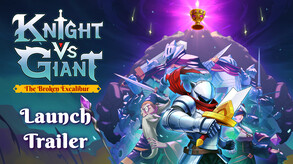
Step into the greaves of King Arthur in this fantasy action roguelite and wield the Broken Excalibur in a quest to rescue the scattered citizens of Camelot, vanquish the calamitous Void Giant, and escape from the Astral Dimension once and for all.
Modeled estimate, not a reported figure. How we estimate →
Media

About

Genres
Stats
All-time low is the lowest price we've recorded for this game since we started tracking it.
Engagement
Hours played at review time, across 40 reviews with recorded playtime.
Reviews
Themes across 40 recent reviews and how positive each mention is. A keyword signal, not full sentiment analysis.
positive critical· bar length = how often the theme comes up
Reviews
Ich würde gerne neutral bewerten. Das Spiel ist weder gut noch schlecht. Wenn man 100% machen möchte ist die Story sehr eintönig, Immer wieder die selben lvl mit millionen gegner kloppen. Im Späteren verlauf kann man vor dem start dann noch einstellen wie viel leben, stärke gegner haben sollen, ob man selber weniger leben hat und wie die shop preise sind und natürlich muss man den ultra hart mode einstellen um die letzte errungenschaft zu bekommen. Ich überlebe nichtmal den ersten gegner raum. So macht es 0 spaß und hunderte runs spielen nur um genug kristalle zu haben damit ich dann nach gefühlt weiterten 20 stunden endlich mal eine reale chance im ultra hard mode habe. Nein Danke. Ich hätte gerne 100% gehabt, aber auf sowas unfaires kann ich verzichten
Jeux sympathique avec des contrôle qui réponde très bien personnellement La partie roguelike est bonne même si j'aurai bien voulue que tu se qu'on débloque soit utile pour la progression du personnage ou du run mais bon ce n'est pas freinant. Pour le moment je suis me tapent sur le boss de la seconde zone donc j'ai pas encore tout découvert. En tout cas pour un premier roguelike en vu isométrique est une bonne porte d'entrée.
Knight vs Giant: The Broken Excalibur, developed by Gambir Studio and published by PQube, reimagines Arthurian legend through the lens of fast-paced roguelite action, blending mythic storytelling with modern design sensibilities. Rather than presenting the familiar tale of Camelot at its height, the game begins in ruin. The legendary sword Excalibur is shattered, the Knights of the Round Table have fallen, and a towering Void Giant has plunged the kingdom into chaos. Players assume the role of a resurrected King Arthur, returned not to rule in glory but to rebuild from devastation. This premise provides a strong narrative hook that frames each run not merely as another attempt at survival, but as a step toward restoring a broken realm. At its core, the game is an action roguelite built around repeatable runs through procedurally structured environments. Each expedition sends Arthur into hostile regions overtaken by the Void, ranging from enchanted forests to scorching deserts and volcanic wastelands. These environments are segmented into combat arenas filled with enemy swarms, elite foes, and imposing bosses that demand quick reflexes and situational awareness. Combat is fluid and responsive, emphasizing dodging, timing, and aggressive positioning. Arthur wields a variety of weapons and magical abilities that can be enhanced during a run, creating builds that lean toward raw melee damage, elemental effects, or hybrid strategies. The immediacy of battle is one of the game’s strongest aspects; encounters are hectic but readable, and victories feel earned rather than handed out. What distinguishes Knight vs Giant from many action titles is its balance between temporary power and long-term progression. Like most roguelites, death resets the majority of acquired abilities, sending Arthur back to Camelot to begin anew. However, the hub city functions as more than a respawn point. Throughout runs, players rescue scattered citizens who gradually repopulate Camelot. Each rescued individual unlocks new facilities, upgrades, or services that persist across attempts. Blacksmiths improve weapon capabilities, trainers expand Arthur’s skillset, and merchants provide additional strategic options. This city-rebuilding mechanic creates a tangible sense of growth that offsets the sting of repeated defeats. Camelot slowly transforms from a desolate ruin into a functional stronghold, mirroring the player’s increasing mastery of the game’s systems. The roguelite structure ensures variability, but it also introduces familiar genre challenges. While the procedural layouts offer some unpredictability, repeated runs can reveal patterns in enemy composition and room design. The variety of enemies, though thematically appropriate, may not always feel expansive enough to keep later attempts entirely fresh. Much of the game’s longevity relies on experimenting with different weapon combinations and ability synergies rather than discovering dramatically new scenarios. For players deeply invested in roguelite experimentation, this can still provide meaningful engagement. For others, the repetition may begin to surface more noticeably over extended sessions. Visually, the game adopts a stylized, almost storybook-like aesthetic that complements its mythic tone. Characters and enemies are designed with exaggerated features and bold silhouettes, ensuring clarity during chaotic combat sequences. The environments, though not hyper-detailed, are colorful and distinct enough to give each region its own identity. This art direction strikes a balance between accessibility and atmosphere, maintaining readability without sacrificing the fantasy setting. Sound design reinforces the sense of scale, with impactful combat effects and music that swells during boss encounters, heightening tension at critical moments. Boss battles, particularly those involving giants, serve as the game’s major highlights. These encounters demand more than simple button-mashing; players must read attack patterns, exploit openings, and manage resources carefully. The scale of these foes reinforces the narrative stakes, reminding players that they are confronting world-ending threats rather than routine adversaries. Success in these fights often feels like a milestone achievement, especially after multiple failed attempts. The sense of progression here is psychological as much as mechanical, as familiarity with enemy behavior gradually transforms frustration into competence. Knight vs Giant: The Broken Excalibur ultimately positions itself as an accessible yet engaging entry in the action roguelite genre. It may not reinvent the formula, but it executes its core loop with confidence and thematic cohesion. The rebuilding of Camelot provides a satisfying meta-progression layer, and the fast, responsive combat delivers consistent bursts of adrenaline. Its limitations—repetition in structure and occasional pacing slowdowns—are common to the genre, but they rarely overshadow the strength of its combat system and narrative framing. For players drawn to heroic fantasy settings and iterative progression systems, the game offers a compelling journey of restoration and resilience. It thrives on the rhythm of defeat and return, reinforcing the legend of a king who refuses to stay fallen. While it may not stand as the most revolutionary roguelite on the market, it succeeds in carving out its own identity through mythic storytelling, solid mechanics, and a persistent sense of rebuilding hope from ruin. Rating: 7/10
章節太小了、-85% 才買吧
玩法像勇貓 一直刷錢跟水晶強化 直到破關 最終BOSS創世神比較難打而已 因為血多 不好閃 破關配置:武器-蘭斯洛特 技能-鮑斯
It's not as brilliant as Enter the Gungeon, The Binding of Isaac or Hades, but a solid game of this kind.
很有趣的roguelike类游戏,武器种类丰富,可以自由搭配主副武器,凑出不同的组合与战术,但是需要继续平衡
玩起来还不错,难度适中, 唯一的缺点就是不能和小伙伴一起玩了吧
Don't buy this fraud. In 4 hours, I unlocked everything there was to unlock and beat the final boss. All my runs are exactly the same, 0 diversity, 0 surprises, you build your castle and unlock all the bonuses saying “great the game will start soon with lots of different paths, multiple final bosses” and well no the game stops there and ends. Only one path, always the same bosses, always the same percs/powerup. For the same price (sometimes less) you'll get roguelikes with 100/200h+. To be avoided.
Knight vs Giant: The Broken Excalibur delivers brutal, skill‑oriented combat mechanics that make every encounter feel tense and rewarding. Its systems emphasize timing, spacing, stamina management, and strategic offensive choices — and they work together in a way that turns fights into satisfying mechanical puzzles rather than button‑mashing chaos. Combat is measured and deliberate. Each weapon has clearly defined reach, wind‑up, and recovery frames, so success often comes down to reading enemy tells and responding with precision rather than sheer aggression. Your character’s attacks feel weighty and impactful, and timing your strikes to exploit openings becomes deeply satisfying. Stamina is a meaningful resource. Every swing, block, and dodge consumes it, so you can’t just mash attacks — you must plan action sequences and decide when to retreat or regroup. Pulling off a perfect dodge or block at the right time isn’t just flashy — it directly affects your survival and spacing. Positioning and spacing are core mechanical pillars. Giants and larger foes aren’t just bigger targets — they have attack arcs and reach that punish poor positioning, forcing you to stay mobile, read patterns, and capitalize on openings. You learn to circle, bait, and counter, turning movement into a tactical system as much as combat. Enemy design reinforces mechanical depth. Smaller foes pressure you to juggle priorities, while bigger enemies turn battles into timing‑based puzzles where patience and observation are rewarded. There’s a satisfying risk‑reward loop: the closer you get without getting hit, the faster and more effective your strikes become. Progression and weapon upgrades are meaningful without being overwhelming. New gear changes timing windows, reach, and damage potential, and experimenting with them changes how you approach encounters — not through numbers alone, but through actual shifts in combat rhythm. 10/10 — deliberate, skill‑based combat mechanics that make each fight feel earned.
Related
Related
Trends
Modeled estimate over time, reconstructed from Steam's monthly review histogram.
Momentum
Pace estimated from the game's recent review growth (our daily snapshots) at its own sales-per-review ratio — a momentum signal, not booked sales.
Audience
Languages: English*, French, German, Spanish - Spain, Japanese, Simplified Chinese, Traditional Chinese, Indonesian*languages with full audio support
Estimated from the language of this game's reviews — a proxy for where players are, not official Steam demographics.
Related
| Lifeslide | $67K | 377 | 92% | $9.99 |
| Dark Fairy Tale: Dreamland Survivors | $67K | 589 | 89% | $4.99 |
| Euphoria: Supreme Mechanics | $67K | 239 | 77% | $9.99 |
| A Planet Full of Cats | $67K | 547 | 91% | $6.39 |
| SPOOKWARE | $67K | 797 | 79% | $4.99 |
| Ultimate Hero | $67.1K | 227 | 70% | $9.99 |