2 часа изучал документацию, чтобы понять, что есть короткое 5-минутное обучение, которого более чем достаточно, так как игра очень простая. Дальше, что скажу... интерфейс сомнительный, но сложностей не вызвал, привык моментально. Музыка и звуки прекрасны! Игра стоит каждой потраченной копейки!
Играл так и победил за 5 часов:
Налоговая ставка 30% и налоговый сбор дворян тоже 30% сделал, до конца игры не менял и бед не знал. Шкала «престижа» постоянно росла и быстро стала 100%, так как денег всегда хватало на богатое содержание дворца и роскоши.
Шкалы «Асабийя» и «Общественное удовлетворение» держались на среднем уровне, прокачал сразу производство мяса, что давало медленное их повышение, также механика «Посетителей» неплохо поднимала все шкалы, достаточно всем всё одобрить за копейки.
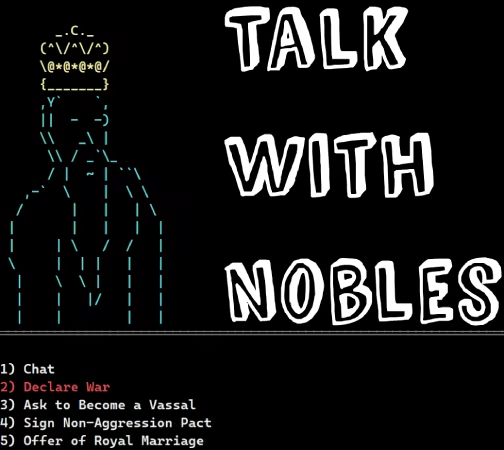
В игре есть очень сложная механика дипломатии и взаимоотношений, но как показала практика, нужна всего 1 кнопка: задабриваешь короля чужого государства подарками до посинения, и он почти на всё готов.
Ещё хочу сказать, что игре очень сильно не хватает визуальной карты государств, чтобы на ней отображались города и деревни, границы с маркерами отношений между государствами — торговля, война, мир, союз, вассалитет. А сейчас почти невозможно отслеживать даже, кто с кем воюет, видно только отношения с тобой.
Как работают отечественные и иностранные торговые гильдии, так и не понял. Я понимаю, что это такое в реальной жизни, но как они влияют на экономику игры, я хрен знаю. Просто держал баланс 50 на 50 и вроде норм.
В целом игре очень не хватает контента, но основа-фундамент очень интересная, над балансом тоже надо поработать, многие действия стоят копейки — что позволяет абузить их. Кстати, механика вассалитета показалась бесполезной, у меня было 2 вассала, у которых было по 1 городу, и чёт пользы я от них не заметил, мороки больше, проще сразу додавить их и забрать всё. А ещё не совсем понял, зачем нужно оставлять возможность взаимодействовать с правителями государств, у которых нет городов и деревень, типа по логике это уже уничтоженные государства, но король их всё равно остаётся королём, с которым можно взаимодействовать, что странно. А убить его нельзя, в бой он не идёт, игра пишет, что он прячется от меня, а тратить силу на дипломатию с ним никакого желания нет, типа зачем? Он никто без городов и земель.
По поводу войн, у первого врага сначала отвоевал все деревни, что лишило его города снабжения, что привело к голоду, из-за чего он начал распадаться на повстанческие королевства. Вражеский король мне угрожал, но толком ничего мне так и не сделал. Кстати, а почему я не вижу, как на мои земли нападают? Типа нет анимации боёв, как при атаке. Вместо этого просто уведомление, из которого непонятно, чья деревня была завоевана, так как все названия хрен запомнишь. Типа пишет: «Была завоевана такая-то деревня», но хрен его знает, чья и кто её получил, враг или свои. Тупо это не помечается, хорошее или плохое это событие. Что сильно затрудняет отслеживание карты в голове, открывая список всех 22 деревень, я ничего не пойму из этого, куда что было завоевано. Но вроде мне это не помешало по интуиции играть. Ещё я даже не заметил, как моего дворянина посадили в тюрьму, после того как он проиграл где-то свою войну, я это не заметил по вышесказанным причинам. Так как игра явно не говорит, что происходит по окончании хода, просто сухая статистика с незапоминающимися именами неких дворян, деревень и городов — и это всё не помечается, вражеское или дружественное. Из которой ничего не разберешь, если ты не знаешь наизусть всех своих дворян поимённо и все свои деревни с городами.
И ещё, слова: («руда» в контексте ресурса) и («Отпустить» в контексте выпустить вражеского дворянина из тюрьмы) - это на русский переведены совсем не правильно и только вводят в замешательство.
///
I spent 2 hours studying the documentation only to realize there’s a short 5‑minute tutorial, which is more than enough because the game is very simple. Moving on… the interface is questionable, but it didn’t cause any trouble — I got used to it instantly. The music and sounds are wonderful! The game is worth every penny spent!
I played like this and won in 5 hours:
Set the tax rate to 30% and the noble tax collection also to 30%, didn’t change them until the end of the game and had no problems. The “Prestige” bar kept growing and quickly hit 100%, because I always had enough money to maintain a lavish palace and luxury.
The “Asabiyyah” and “Public Satisfaction” bars stayed at a medium level; I immediately upgraded meat production, which gave a slow increase to both, and the “Visitors” mechanic also raised all the bars quite nicely — just approve everything for everyone for pennies.
The game has a very complex diplomacy and relationship mechanic, but as it turned out in practice, you only need one button: shower the foreign king with gifts until he’s blue in the face, and he’ll agree to almost anything.
I also want to say that the game desperately lacks a visual map of the realms, where cities and villages would be displayed, along with borders and relationship markers between states — trade, war, peace, alliance, vassalage. As it is, it’s nearly impossible to even track who is at war with whom; you can only see their relationship with you.
I never figured out how domestic and foreign trade guilds work. I understand what they are in real life, but I have no damn clue how they affect the game’s economy. I just kept a 50/50 balance and that seemed fine.
Overall, the game sorely lacks content, but the core foundation is very interesting. The balance also needs work — many actions cost pennies, which lets you abuse them. By the way, the vassalage mechanic seemed useless. I had two vassals, each with one city, and honestly I didn’t notice any benefit from them; it was more hassle. It’s easier to just crush them and take everything. Also, I didn’t quite understand why you can still interact with rulers of states that have no cities or villages. Logically, those should be destroyed realms, yet their king remains a king you can interact with, which is strange. And you can’t kill him — he doesn’t go into battle, the game says he’s hiding from me, and I have zero desire to spend influence on diplomacy with him. Like, what’s the point? He’s nobody without cities and lands.
Regarding wars: with the first enemy, I first took all his villages, which cut off his city’s supplies and caused a famine, leading it to break apart into rebel kingdoms. The enemy king threatened me, but never actually did anything to me. By the way, why can’t I see when my own lands are being attacked? There’s no battle animation like when you attack. Instead, there’s just a notification, and from it you can’t tell whose village was conquered, because it’s impossible to remember all the names. It says something like: “Such‑and‑such village has been conquered,” but hell knows whose it was and who got it — enemy or ally. The event isn’t marked as good or bad. This makes it extremely hard to keep a mental map; if I open the list of all 22 villages, I can’t make any sense of where something was conquered. Still, it didn’t stop me from playing by intuition, I suppose. I didn’t even notice when one of my nobles was thrown into prison after losing a war somewhere, for all the reasons mentioned above. The game clearly doesn’t tell you what happened at the end of a turn — just dry statistics with forgettable names of some nobles, villages, and cities, and none of it is marked as enemy or friendly. You can’t make sense of it unless you know every single one of your nobles by name and all your villages and cities by heart.
Also, the concepts of “ore” (as a resource) and “release” (as in letting an enemy noble out of prison) are completely mistranslated in Russian and only cause confusion.