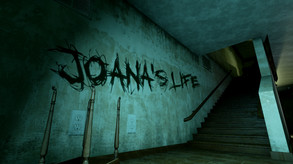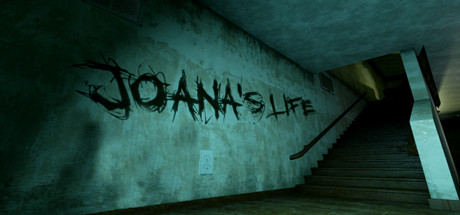
In a peaceful part of the town, a series of deaths occur, seemingly random at first, but gruesome in their nature. One day, you find an object that doesn't belong in your house. An old, worn-out, stained mirror. You'll come to discover that the simple mirror isn't the only thing that is out of place.
Modeled estimate, not a reported figure. How we estimate →
Media
About
Stats
All-time low is the lowest price we've recorded for this game since we started tracking it.
Languages: English
Engagement
Hours played at review time, across 40 reviews with recorded playtime.
Reviews
Themes across 40 recent reviews and how positive each mention is. A keyword signal, not full sentiment analysis.
positive critical· bar length = how often the theme comes up
Reviews
Lixo eletronico
good
good
Joana’s Life by Old Shack Studio is an indie first-person horror experience that tries to combine psychological unease, environmental storytelling, and light puzzle-solving into a cohesive narrative-driven game. Set in what initially appears to be a quiet suburban neighborhood plagued by unexplained deaths, the game quickly shifts into something far more surreal, using a mysterious mirror as its central device to blur the line between reality and a darker, distorted dimension. It aims to create a sense of dread not just through direct scares, but through disorientation and the gradual unraveling of its world. The gameplay is primarily built around exploration and interpretation. Rather than guiding the player with clear objectives, the game expects you to move through environments, interact with objects, and piece together what to do next based on subtle cues. The mirror mechanic is at the center of this design, allowing players to see alternate versions of spaces or uncover hidden elements that are otherwise invisible. In its stronger moments, this system creates a compelling sense of tension, as players are never entirely sure whether what they’re seeing is safe or threatening. It encourages careful observation and adds a layer of psychological unease that goes beyond simple jump scares. As the game progresses, it expands beyond its initial setting into a broader collection of locations, including streets, buildings, and abstract environments that feel detached from reality. This shift gives the experience a slightly larger sense of scale than many indie horror titles, but it also introduces a degree of inconsistency. The transitions between locations can feel abrupt, and the logic connecting them is often unclear. While this surreal structure may be intentional, it can make the overall experience feel disjointed, as if the game is moving between ideas rather than building toward a cohesive narrative. The story itself follows a fragmented approach, relying heavily on environmental details and scattered clues rather than direct exposition. Players are left to interpret events and piece together the underlying mystery on their own. While this can be engaging for those who enjoy ambiguous storytelling, it also means that the narrative lacks clarity and emotional impact. Key plot elements feel underdeveloped, and the lack of a strong throughline makes it difficult to stay invested in what is happening. Instead of building tension through a clear progression, the game often feels like a sequence of loosely connected scenarios. In terms of horror design, Joana’s Life delivers mixed results. There are moments where the atmosphere becomes genuinely unsettling, particularly when the game leans into its more abstract or surreal elements. Certain visual sequences and environmental changes can create a lingering sense of unease, showing that the developers had a good instinct for psychological horror. However, these moments are inconsistent, and much of the game falls back on less effective techniques that fail to maintain that tension. The pacing of scares is uneven, which prevents the game from sustaining a strong sense of dread over time. One of the most significant issues lies in how the game handles progression. Objectives are often unclear, and players can easily become stuck without understanding what is required to move forward. This lack of direction turns exploration into guesswork, and progress frequently depends on triggering specific events that are not well communicated. Instead of feeling like a natural extension of the gameplay, these moments can feel arbitrary and frustrating, breaking immersion and slowing the overall pace. Technical shortcomings further impact the experience. The game shows signs of being under-polished, with occasional bugs, awkward transitions, and general instability. These issues can range from minor visual glitches to more disruptive problems that affect gameplay flow. Even when functioning correctly, the game often feels rough, lacking the refinement needed to fully support its ideas. This gives the impression of a project that was released before it was fully ready. Visually, the game is functional but not particularly striking. The environments are capable of conveying the necessary mood, but they lack the detail and cohesion needed to make them memorable. The suburban setting, in particular, feels somewhat generic, and the more surreal areas, while occasionally interesting, are not developed enough to leave a lasting impression. The audio design does a better job of supporting the atmosphere, with ambient sounds and subtle cues that help reinforce the sense of unease, though it is not enough to carry the experience on its own. In terms of content, Joana’s Life is relatively short, offering a brief experience with multiple endings that suggest some replay value. However, the frustration caused by unclear progression and technical issues may discourage players from revisiting it. The game’s ideas are intriguing, but they are not explored deeply enough to sustain multiple playthroughs. Ultimately, Joana’s Life is a game defined by ambition that exceeds its execution. It introduces a number of interesting concepts, particularly with its use of the mirror mechanic and its attempt at psychological horror, but it struggles to bring these elements together into a polished and cohesive experience. There are glimpses of creativity and moments where the game hints at something more compelling, but they are overshadowed by uneven design and a lack of refinement. For players who enjoy experimental indie horror and are willing to tolerate rough edges, it may offer a few memorable moments. For most, however, it will feel like a promising idea that never fully comes together. Rating: 4/10
Desculpe a franqueza mas... foi uma das piores experiências que já tive em jogos de terror até hoje. E olha que eu já joguei muito jogo ruim. Uma das coisas que cagou nesse game é a falta de direcionamento, a falta de efeito sonoro, o terror em si também não tava bom, os objetivos não faziam sentido com nada, o fato de ter um mundo aberto com trocentas casas idênticas e simplesmente te jogar pra andar por aí sem nenhuma direção, a história... tipo... tudo nesse jogo poderia ser melhorado... até se fosse gratuito custaria caro na minha opinião.
kötü
Словами не описать какая же это ужасная игра - не логичная, примитивная... пройдено, но с большим сожалением о потраченном времени.
У Джона жизнь интересней моей это факт но побывать в этом цифровом аду дважды я не хочу! кибермусор
scheiss spiel
trash
Related
Related
Trends
Concurrent players on Steam, sampled daily since tracking started.
Momentum
Pace estimated from the game's recent review growth (our daily snapshots) at its own sales-per-review ratio — a momentum signal, not booked sales.
Audience
Estimated from the language of this game's reviews — a proxy for where players are, not official Steam demographics.
Related
| Pythagoria | $7.9K | 232 | 74% | $1.99 |
| 12 HOURS | $7.9K | 71 | 52% | $3.99 |
| The Butterfly Sign | $7.9K | 199 | 63% | $4.99 |
| The Preposterous Awesomeness of Everything | $7.9K | 147 | 97% | $3.14 |
| Epic Car Factory | $7.9K | 279 | 64% | $0.99 |
| Paper Monsters Recut | $7.9K | 52 | 75% | $7.99 |
Related
| 7 Days to Die | $425.3M | 403.6K | 87% | $44.99 |
| Euro Truck Simulator 2 | $421.6M | 932.3K | 97% | $19.99 |
| Mount & Blade II: Bannerlord | $309.8M | 294K | 88% | $49.99 |
| Palworld | $279.6M | 447.5K | 94% | $20.99 |
| The Forest | $254.8M | 678.6K | 96% | $19.99 |
| Project Zomboid | $239.1M | 461K | 94% | $19.99 |