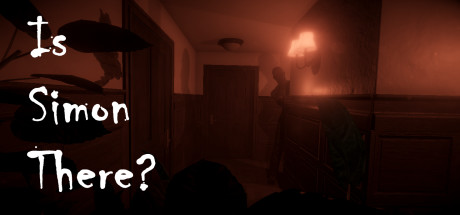
A few months have passed since the death of my son, Simon. Ever since that tragic day, I find myself falling into the darkest emotions I could ever imagine. I am haunted everyday with what I have done; But sometimes, I am haunted by more than just my emotions...
Modeled estimate, not a reported figure. How we estimate →
Media
About


Stats
All-time low is the lowest price we've recorded for this game since we started tracking it.
Languages: English*, Italian, German, Japanese, Korean*languages with full audio support
Engagement
Hours played at review time, across 41 reviews with recorded playtime.
Reviews
Themes across 41 recent reviews and how positive each mention is. A keyword signal, not full sentiment analysis.
positive critical· bar length = how often the theme comes up
Reviews
A boring walking sim (the shift to sprint doesn't seem to work) with a nonsensical story (your son got eaten by wolves but you had time to take ap hoto of him seconds prior..?) with a gimmick to unlock the 'true' ending that is outrageously convoluted - counting the flashing lights in a hallway is so opaque and obscure almost nobody is going to get it. The door with the blood to the bathroom is so glitchy with triggering the jumpscare (if you can even call it that) that I had to wander around in frustration and then try to ram myself into the space. This one wasn't fun, creepy, or mysterious. The author has better games with Suite 776 and finding skerry etc.
Крутая игра за свои деньги, правда не нравится слишком медленное передвижение
3.2 At it's core I find this gameplay quite weak, just a bunch of occasional jumpscares that didn't really 'hook' me. Outside of those it was just wandering around trying to find what the trigger was, generally leading to just walk back and forth from one end to the other each time. Narratively I found a part of it quite interesting but I don't feel that it properly went in on the topic as much as it could especially when instead it felt like instead the choice was to use almost unrelated asset pack monsters. Especially one near the end it felt completely out of place, especially considering the core story which could have instead lead or had other kinds of trauma, that I just don't feel were represented or if so was done in a different avenue that I felt missed a bit of the mark.
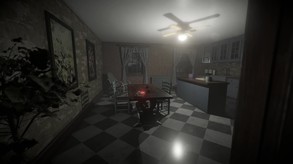
Is Simon There?, developed by Stanislaw Truchowski and published by TurnVex, is a short but unsettling psychological horror game that transforms a seemingly ordinary domestic setting into a place of quiet dread and emotional unease. It is one of those tightly crafted experiences that focuses less on jump scares and more on atmosphere, building its tension through subtle environmental storytelling and an expertly sustained sense of anticipation. You begin inside a modest suburban home on a rainy night, where the phone keeps ringing with a haunting question: “Is Simon there?” What starts as an eerie annoyance soon becomes a descent into grief, guilt, and haunting memories, turning the house into a reflection of both loss and fear. The game’s brevity is deceptive because, in its short span, it manages to create an overwhelming sense of presence. The setting feels lived-in yet sterile, and every corner of the house radiates melancholy. The lighting is subdued, and familiar household sounds—a door creak, the hum of an appliance, the buzz of the phone—become instruments of dread. The developer understands that true horror often lies in what we recognize; nothing about this house should feel dangerous, yet it does. The longer you explore, the more wrong everything feels, as small details shift without warning—doors move slightly ajar, shadows flicker where they shouldn’t, and photographs seem to change. The effect is cumulative rather than explosive; it’s horror through erosion, where reality wears away bit by bit until nothing feels solid anymore. Mechanically, Is Simon There? keeps things simple but effective. The gameplay revolves around first-person exploration, light puzzle solving, and environmental interaction. You uncover fragments of a tragic story while navigating a house that subtly transforms with each loop. The puzzles themselves are minimal, often relying on observation or timing rather than complex logic, which keeps the pacing tight and ensures that the focus remains on atmosphere rather than mechanical challenge. The lack of overt instruction enhances the tension; players must rely on intuition and environmental cues to progress, mirroring the protagonist’s confusion and dread. The minimalist design allows for near-constant immersion—there’s no HUD, no objective markers, just you and the house that keeps whispering a name you’d rather forget. What elevates the experience is its use of sound. Every audio detail in Is Simon There? feels intentional. The phone’s ring cuts through silence like a wound, and the distant thunder or faint tapping amplifies the loneliness that defines the setting. There are no orchestral stingers or predictable crescendos; the horror here comes from the unnatural quiet between sounds. The voice acting—limited but well-placed—adds emotional texture, grounding the supernatural occurrences in human grief. The way the game uses the recurring question, “Is Simon there?” as both literal and symbolic, becomes the emotional anchor. Each call is a reminder of something unresolved, forcing the player to confront the possibility that Simon may never have existed—or perhaps never truly left. Visually, the game achieves a striking realism within its indie constraints. The house feels authentic and tactile, its textures detailed enough to evoke a sense of intimacy. The lighting design is particularly effective, using dim bulbs and pockets of darkness to manipulate the player’s focus and imagination. Unlike many horror games that rely on gore or monsters, Is Simon There? weaponizes normalcy itself—the horror comes from realizing that nothing overtly terrifying needs to happen for fear to take hold. The shifts in environment, though subtle, are executed with such precision that even a small movement or flicker of light can feel like a major event. Each progression through the house blurs the boundary between dream, memory, and haunting, leaving players unsure of what is real. Thematically, the game is about absence as much as it is about fear. Simon becomes a symbol rather than a character—a representation of loss, guilt, or a fractured psyche. The player’s journey through the house feels like a ritual of remembrance and denial, a confrontation with the parts of the past that refuse to stay buried. The alternate endings reinforce this interpretation, offering multiple emotional resolutions that shift the meaning of the story depending on what clues the player uncovers. This ambiguity works in the game’s favor; rather than explaining every detail, it allows players to interpret their own version of what “Simon” represents. The narrative lingers after completion, less because of explicit plot revelations and more because of the psychological residue it leaves behind. Despite its strengths, the game’s short length may frustrate players seeking a more expansive experience. Clocking in at around forty minutes, it’s more of an interactive short story than a full-length title. While this brevity contributes to its focus and pacing, it can also make the ending feel abrupt. Some players may find the puzzles too simple or the exploration too linear, but this simplicity seems deliberate—it’s designed to maintain immersion and avoid breaking the tension with unnecessary distractions. The limited interactivity also means that replay value comes primarily from discovering alternate endings rather than dramatically different gameplay outcomes. Yet within its small frame, the game achieves a level of emotional precision that many longer titles struggle to reach. Is Simon There? succeeds because it understands the essence of psychological horror: the fear of the unseen, the guilt of what’s lost, and the slow collapse of the familiar. It’s a restrained and haunting experience that uses atmosphere, sound, and implication to build tension rather than cheap scares. The game doesn’t want to shock you—it wants to stay with you, to make you think about what Simon represents long after the credits roll. For players who value mood and storytelling over complexity, it’s a concise but powerful example of how minimalism, when handled with purpose, can create some of the most memorable and unnerving horror in gaming. Rating: 8/10
아 야발 꿈;;
story's okay, washer jump scare is the only thing that made me flinch a little bit
ㅤ
simon was NOT there
Fun short game that for sure scared me a bit but had fun playing
ЭТОТ САЙМОН AXYEL, он мне заколотил окна, переставил мебель, поронял цветы, заколотил двери, убил женщину, пожалуйста, купите у меня этого xyesosa я молю, я ebnyc
Related
Related
Trends
Concurrent players on Steam, sampled daily since tracking started.
Momentum
Pace estimated from the game's recent review growth (our daily snapshots) at its own sales-per-review ratio — a momentum signal, not booked sales.
Audience
Estimated from the language of this game's reviews — a proxy for where players are, not official Steam demographics.
Related
| Reconnecting | $25.7K | 185 | 93% | $4.99 |
| 真空战姬 | $25.7K | 152 | 94% | $6.99 |
| Chronicles of 2 Heroes: Amaterasu's Wrath | $25.7K | 62 | 77% | $19.99 |
| Pill Baby | $25.7K | 132 | 89% | $9.99 |
| Chloé’s Requiem -encore- | $25.7K | 176 | 91% | $9.99 |
| Azoove | $25.7K | 58 | 91% | $8.99 |