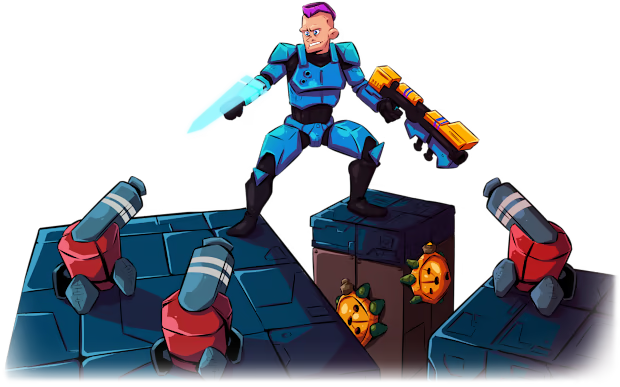
Iron Dungeon combines a twin-stick shooter, a 2d platformer and a roguelite. Explore a dangerous underground complex in search of dozens of weapons, gadgets and upgrades to find a way to the surface and find out if there is still life on Earth!
Modeled estimate, not a reported figure. How we estimate →
About

Stats
All-time low is the lowest price we've recorded for this game since we started tracking it.
Languages: English, Russian
Reviews
Iron Dungeon is a science-fiction action roguelite developed and published by R_Games that combines twin-stick shooting mechanics, platforming movement, and randomized dungeon progression into an experience built around skill and persistence. Rather than relying heavily on cinematic storytelling or permanent progression systems, the game creates tension through challenge-driven design where improvement comes from player mastery rather than automatic upgrades. Every run becomes an opportunity to learn enemy behavior, improve movement precision, and adapt to increasingly dangerous situations inside a hostile underground facility. The setting introduces a bleak futuristic world where players awaken within a military complex buried beneath the surface of a ruined civilization. Automated systems continue functioning long after disaster has reshaped the world above, producing dangerous combat clones and transforming the underground structure into a deadly maze filled with enemies and hidden dangers. Players assume control of one of these clones, fighting to survive while gradually uncovering what remains of humanity and whether anything still exists beyond the facility itself. One of the strongest aspects of Iron Dungeon comes from how naturally it blends different gameplay systems together. Combat relies heavily on twin-stick shooting fundamentals where movement and accuracy become equally important. Enemies apply consistent pressure, forcing players to remain mobile while carefully balancing offense and defense. Standing still rarely becomes an option because combat situations evolve rapidly, demanding constant awareness and quick reactions. Movement systems contribute heavily to maintaining momentum throughout progression. Platforming mechanics become more than simple traversal tools. Jumping challenges, environmental navigation, and mobility-focused sections force players to think carefully about positioning and timing. The combination of shooting and platforming creates encounters that feel more dynamic than traditional dungeon crawlers because success depends on multiple skill sets working together. The combat pacing remains one of the game's most satisfying qualities. Encounters move quickly without becoming chaotic to the point of frustration. Enemy patterns gradually grow more dangerous as progression continues, creating a learning curve that rewards patience and repetition. Each failed run teaches something valuable, whether it involves understanding attack patterns more effectively or discovering better ways to manage positioning during larger encounters. Replayability becomes another major strength because dungeon progression incorporates procedural elements that keep individual attempts unpredictable. Different runs create different opportunities and obstacles, encouraging players to remain adaptable rather than memorizing a single optimal route. Randomized layouts and changing upgrade opportunities help maintain variety while ensuring repeated attempts continue feeling rewarding. Weapon variety strengthens experimentation considerably. Different combat tools influence how runs develop and allow players to shape approaches according to preferred playstyles. Some weapon combinations encourage aggressive engagement while others support more careful tactical positioning. The freedom to experiment helps maintain long-term engagement because players constantly discover stronger combinations and more effective strategies. One particularly interesting design decision comes from the progression philosophy itself. Unlike many modern roguelites that rely heavily on permanent upgrades after failure, Iron Dungeon places stronger emphasis on individual improvement. Losing progress after defeat creates higher tension because advancement depends far more on player understanding than long-term accumulation systems. The design encourages mastery rather than relying entirely on permanent unlocks. Exploration also plays an important role beyond simple combat survival. Hidden rewards and optional discoveries encourage players to move beyond direct objectives while investigating dangerous corners of the underground complex. Valuable equipment and upgrades often reward curiosity, reinforcing the feeling that survival depends equally on observation and combat skill. Visually, Iron Dungeon embraces pixel-art presentation that complements its gameplay structure effectively. The darker science-fiction setting creates atmosphere without sacrificing readability during combat-heavy situations. Enemy attacks remain visible during more chaotic moments, helping maintain fairness even when encounters become increasingly difficult. The retro-inspired visual approach also strengthens the arcade influence running throughout the experience. Audio design reinforces tension effectively. Weapon sounds carry impact while environmental ambience strengthens immersion throughout exploration and combat. Music supports the pacing without overwhelming it, helping maintain consistent energy during longer play sessions. Combined with visual presentation, the sound design contributes significantly toward creating a hostile environment where danger constantly feels present. The difficulty naturally creates a barrier for some players. Those unfamiliar with roguelike progression or precision-focused action games may initially struggle with the demanding structure and limited forgiveness surrounding mistakes. Certain sections require patience and repeated practice before improvement becomes noticeable. However, players willing to embrace challenge will likely discover satisfaction in overcoming obstacles through personal growth rather than convenience systems. Iron Dungeon succeeds because it fully commits to challenge-driven gameplay built around repetition and mastery. R_Games delivers an experience where improvement feels earned and experimentation remains rewarding throughout progression. The combination of twin-stick combat, platforming precision, randomized progression, and skill-focused design creates an experience that rewards determination while remaining consistently engaging. For players who appreciate difficult roguelites, arcade-inspired action games, and progression systems built around mechanical improvement rather than permanent advantages, Iron Dungeon offers a rewarding experience that respects player skill and rewards persistence. Rating: 6/10
Excelente roguelike plataformas inspirado en clásicos del género. Tendrás una muy buena dosis de acción desenfrenada y lluvia de balas que te harán saltar de tu asiento. La jugabilidad es buena, pero se puede mejorar bastante. Me deja una muy buena impresión. Link de mi gameplay: https://www.youtube.com/watch?v=ZZWq9EOTHlY Sígueme en mi página de mentoría: https://store.steampowered.com/curator/43996683/
比起前一部资源给得束手束脚,枪的性能很多都很折磨人,到手质变的技能倒是有一些,但因为整体容错有所降低,还没拿几个技能呢关卡强度就先上去了;每关后只有固定的提升补给而没有N选1,每一个区域玩起来都要小心再小心,拿骷髅打一关看起来钱很多其实不经花,要么就是BOSS给一堆却很难决定把固定升级拉满还是留着给每关续航,且死了也没有局外成长。 小兵基本特定几个模组,看起来行动逻辑简单,其实打得太激进纷纷钟血条蒸发,要是碰到低级垃圾枪模+高级兵又臭又硬的励志局那真的是会打得跟蛆一样。按按钮后刷出的敌人有时本身就不太容易看清,而最讨厌的是打几个怪后莫名铺满地板的废铁贴图会完全遮住一部分敌人、射弹、地形伤害等视觉效果,这叫我怎么打?完全没有之前作品的爽感 考虑到之前的作品对比,以及并不稀奇的该类型游戏之间对比,无论是内容质量还是价格都显得有些不太行,仅以个人意见表示不推荐
Related
Related
Trends
Concurrent players on Steam, sampled daily since tracking started.
Related
| 101 Cats in Paris | $846.8 | 50 | 90% | $0.99 |
| The Purge Day | $847.7 | 54 | 61% | $0.69 |
| Shadow of Fear | $845.4 | 61 | 66% | $0.99 |
| 生人症候群 | $845.4 | 61 | 74% | $0.99 |
| Bliss | $844.3 | 50 | 60% | $0.99 |
| Drusilla Dreams | $844.3 | 50 | 52% | $0.99 |