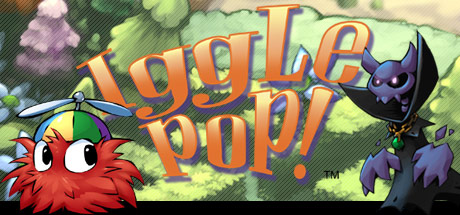
Journey to the Land of Fuzz to collect colorful Iggles and deliver them to their color-coded destinations. But look out for the nasty Zoogs - they're dying to get their grubby hands on those adorable Iggles.
Modeled estimate, not a reported figure. How we estimate →
Media
About
Genres
Stats
All-time low is the lowest price we've recorded for this game since we started tracking it.
Languages: English
Engagement
Hours played at review time, across 40 reviews with recorded playtime.
Reviews
Themes across 40 recent reviews and how positive each mention is. A keyword signal, not full sentiment analysis.
positive critical· bar length = how often the theme comes up
Reviews
Nostalge
-
This is a nice, calm game One of my 1st childhood games, I had a fun time playing this game when I was a kid I absolutely recommend playing this game!
Do not play this game...... their is a hallucinogen in the code that makes you go crazy. It happened to my friend. I don't remember the last time they even used the word "human". They refer to everything as an "Iggle" or a "Pop", and constantly try to save me from "Zoogs". I don't know what Zoogs are. I don't know what I'm being saved from. Please remember when you purchase this game, you might not be yourself by the end of it. I don't want to know what will happen when they finish the game. It is all they can play, it is all they can think about. To them, the world is an Iggle Pop, and their enemies are the Zoogs. I'm afraid if I confront them I will become one of these "Zoogs". My friend is no longer someone I know anymore. You may lose yourself if you open this game.
español porfavor
[u]Recommendation[/u]: A fun variant on Snake gameplay executed in Pac-Man levels. [u]Critique[/u]: Writing this so many years later, it's feels strange to talk about how this game feels. For a lot of people, this game might just feel [i]old[/i]. But what's fascinating to me is that it felt old when it was released: it exudes nostalgia for previous eras of video games. [u]Iggle Pop Deluxe[/u] successfully evokes the feeling of playing a shareware game from 1992, from the tiny sprites to the keyboard controls to the weird font used for the text. At the same time, the gameplay is even older: you're playing a combination of [u]Snake Byte[/u] (1982) and Pac-Man (1980). It's a brilliant blending of the two games.
W childhood game, haven't played this in over a decade.
A classic game
Iggle Pop! Deluxe, developed and published by PopCap Games, Inc., represents a particular moment in casual gaming history—when accessible, colorful, mechanically elegant titles dominated desktops and captured wide audiences without relying on multiplayer hooks, microtransactions, or sprawling narratives. It is unmistakably a PopCap creation: cheerful, polished, instantly understandable, and built around a core gameplay concept refined to near perfection. Though not as widely recognized as Bejeweled, Zuma, or Peggle, it remains one of the studio’s most endearing releases, offering an experience that balances arcade reflexes, puzzle-like planning, and lighthearted charm. The premise is intentionally simple yet compelling, making it easy to start playing and surprisingly difficult to stop. At its core, the game combines maze navigation with a rescue-and-return loop that gradually increases in complexity and urgency. Players guide a bouncing Iggle—an expressive, spherical creature—through interconnected levels filled with wandering enemies and scattered baby Iggles. Every rescued Iggle forms a trailing chain behind the player, visually representing both progress and vulnerability. The longer the chain, the more thrilling each movement becomes, since one wrong turn or enemy collision puts the entire rescue at risk. Returning safely to the home portal releases the rescued Iggles and awards points, completing the stage. This dynamic creates a satisfying tension between caution and ambition—players can choose multiple quick drop-offs or a risky all-in run for maximum rewards. What elevates the experience is PopCap’s talent for gradually layering challenge without compromising accessibility. Early levels function like warm-up exercises, teaching movement rhythm, enemy patterns, and maze geometry. As players progress, the game introduces faster enemies, more unpredictable movement behavior, environmental hazards, locked passages, portals, and specialized map layouts that require observation before action. None of these additions feel overwhelming, because each appears naturally within the progression curve, giving players space to adapt and develop strategies. The game rewards spatial awareness, pattern recognition, and route optimization, but never excludes players who prefer instinctive, reactive play. Its difficulty sweet spot allows casual audiences and completion-driven players to enjoy it simultaneously. The presentation reinforces the playful nature of the design. The visuals are bright, rounded, and welcoming, with lively animations that give personality to even the smallest characters. Worlds are visually themed, offering varied colors, backdrops, and tones while maintaining consistency in clarity and readability. Nothing feels cluttered or visually noisy, which is critical for a game where quick navigation and awareness determine success. The music and sound effects enhance the upbeat tone—successful rescues, near misses, and enemy encounters are punctuated with charming audio cues that maintain energy without becoming irritating over long play sessions. Even brief failure states feel softened by the game’s optimistic aesthetic, encouraging players to immediately try again rather than walk away frustrated. Replayability, a hallmark of PopCap’s early catalog, is subtly built into the structure. Players can chase higher scores, attempt perfect rescues, replay levels with more aggressive strategies, or compete against their personal bests. Optional achievements and performance-based rankings offer long-term goals beyond simple completion. The short, self-contained stages also make it easy to revisit the game in small bursts—an attribute that contributed to PopCap’s longstanding appeal among office workers and casual players looking for brief but engaging breaks. The game never pressures players to commit large chunks of time, but it always leaves room for deeper mastery. Its simplicity, however, may limit appeal for those seeking evolving mechanics or narrative-driven progression. The core loop remains consistent throughout the game, and while the level design and enemy variety keep things interesting, the experience doesn’t transform into something drastically different by the end. Iggle Pop! Deluxe was never intended to be a genre-expanding puzzle epic—it is content with being delightfully focused. For some players, that clarity of purpose will feel refreshing; for others, it may feel too lightweight. But the game’s confidence in its identity is one of its strengths, and it succeeds precisely because it knows what it wants to be. Looking back, Iggle Pop! Deluxe also serves as an example of a design philosophy that has largely disappeared. It predates free-to-play monetization, battle passes, and psychologically engineered retention systems. Nothing is gated behind payment or grind—everything unlocks naturally through play. The experience feels complete, self-contained, and respectful of the player’s time. In an era where many games demand ongoing attention, Iggle Pop! Deluxe remains comfortable being something you can return to whenever you want, without obligation or penalty. Ultimately, the game endures because it captures the timeless appeal of arcade-style challenge wrapped in warmth, personality, and careful craftsmanship. It invites players of all ages to enter its world, teaches them everything they need to know within minutes, and continues offering satisfying victories long after the tutorial fades. Whether approached as a nostalgic return to PopCap’s peak or discovered for the first time, Iggle Pop! Deluxe still delivers an experience defined by joy, rhythm, and cheerful momentum. It is proof that a simple idea, executed with care and imagination, can outlast countless trends. Rating: 8/10
my name was a funny word and looking at it with the red highscore text was the funniest ♥♥♥♥ ever. thanks popcap for making video games.
Related
Related
Trends
Modeled estimate over time, reconstructed from Steam's monthly review histogram.
Momentum
Pace estimated from the game's recent review growth (our daily snapshots) at its own sales-per-review ratio — a momentum signal, not booked sales.
Audience
Estimated from the language of this game's reviews — a proxy for where players are, not official Steam demographics.
Related
| Candy Crush Saga | $2.3B | 38.9M | 93% | Free |
| My Talking Tom | $1.3B | 17.4M | 86% | Free |
| My Talking Tom 2: Pet Game | $1.1B | 6.7M | 86% | Free |
| My Talking Angela | $1.1B | 14M | 83% | Free |
| My Talking Tom Friends | $824.4M | 4.1M | 86% | Free |
| Talking Tom Cat | $647.3M | 2.9M | 81% | Free |
Related
| Mutant Fighting Cup 2 | $10.1K | 80 | 79% | $5.99 |
| Ashley Clark: The Secrets of the Ancient Temple | $10.1K | 64 | 62% | $9.99 |
| Pure Logic | $10.1K | 99 | 95% | $6.99 |
| SUPER ALICE DOLLS | $10.1K | 55 | 95% | $7.99 |
| Backyard Boxing | $10.1K | 50 | 52% | $7.99 |
| Battle Simulator: Counter Stickman | $10.1K | 542 | 49% | $0.71 |