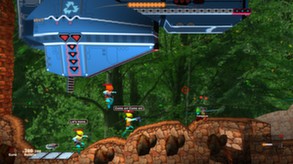
Humanity Asset is a Metroid-style 3D platformer that pays homage to the traditional retro classic shoot ‘em up genre. Aliens have invaded Earth to strip the planet of its resources, to save their own dying planet. As in all classic shoot 'em ups, only you can save the day - now there’s a surprise!
Modeled estimate, not a reported figure. How we estimate →
Media

About
Stats
All-time low is the lowest price we've recorded for this game since we started tracking it.
Languages: English
Engagement
Hours played at review time, across 40 reviews with recorded playtime.
Reviews
Themes across 40 recent reviews and how positive each mention is. A keyword signal, not full sentiment analysis.
positive critical· bar length = how often the theme comes up
Reviews
<3
my god this would have to be one of the worst game you could ever buy you only get 3 frames per second in the gameplay, how this is still on steam has me stumped. Really hope the game dev did not quit their day job, come to think of it the way they made this game I would hate to see how they would be in a real job they would be completely useless just like they were useless with the making of this game
Nem joguei só fiz a análise pra ganhar xp na insignia de votação steam, massa né galera?
♥~ ჱܓ♥ ჱܓ •●♥ Ƹ̵̡Ӝ̵̨̄Ʒჱܓ♥ ჱܓ ((¯`•♥•´¯)Ƹ̵̡Ӝ̵̨̄Ʒჱܓ♥ ჱܓ __`•.¸.•´_*●♥ Ƹ̵̡Ӝ̵̨̄Ʒჱܓ♥
5fps...
0/10
⠀⠀⠀⠀⠀⠀⠀⠀⠀⠀⠀⠀⠀⠀⠀⠀⠀⠀⠀⠀⢎⠱⠊⡱⠀⠀⠀⠀⠀⠀ ⠀⠀⠀⠀⠀⠀⠀⠀⠀⠀⠀⢀⡠⠤⠒⠒⠒⠒⠤⢄⣑⠁⠀⠀⠀⠀⠀⠀⠀⠀ ⠀⠀⠀⠀⠀⠀⠀⢀⡤⠒⠝⠉⠀⠀⠀⠀⠀⠀⠀⠀⠀⠉⠲⢄⡀⠀⠀⠀⠀⠀ ⠀⠀⠀⠀⠀⢀⡴⠋⠀⠀⠀⠀⣀⠀⠀⠀⠀⠀⠀⢰⣢⠐⡄⠀⠉⠑⠒⠒⠒⣄ ⠀⠀⠀⣀⠴⠋⠀⠀⠀⡎⠀⠘⠿⠀⠀⢠⣀⢄⡢⠉⣔⣲⢸⠀⠀⠀⠀⠀⠀⢘ ⡠⠒⠉⠀⠀⠀⠀⠀⡰⢅⠫⠭⠝⠀⠀⠀⠀⠀⠀⢀⣀⣤⡋⠙⠢⢄⣀⣀⡠⠊ ⢇⠀⠀⠀⠀⠀⢀⠜⠁⠀⠉⡕⠒⠒⠒⠒⠒⠛⠉⠹⡄⣀⠘⡄⠀⠀⠀⠀⠀⠀ ⠀⠑⠂⠤⠔⠒⠁⠀⠀⡎⠱⡃⠀⠀⡄⠀⠄⠀⠀⠠⠟⠉⡷⠁⠀⠀⠀⠀⠀⠀ ⠀⠀⠀⠀⠀⠀⠀⠀⠀⠹⠤⠤⠴⣄⡸⠤⣄⠴⠤⠴⠄⠼⠀
Humanity Asset, developed by Browny Application and published by KISS Ltd, is an ambitious attempt to merge the spirit of classic 2D side-scrolling action games with modern 3D visuals and mechanics. At its core, it is a sci-fi action-platformer that aims to deliver a blend of exploration, shooting, and puzzle-solving in a Metroidvania-style structure. Set in a distant future where humanity faces extinction at the hands of an alien invasion, players are thrust into the role of a lone soldier tasked with repelling the extraterrestrial threat and uncovering the secrets behind the attack. The game’s premise, while familiar, carries the promise of large-scale exploration and high-paced action reminiscent of titles like Metroid, Contra, or Turrican. Unfortunately, despite its ambition, Humanity Asset struggles to fully realize its potential due to technical shortcomings, uneven design choices, and a lack of polish that undermines its creative vision. From the beginning, Humanity Asset establishes itself as a throwback to the golden era of exploration-based platform shooters. Players are dropped into sprawling, interconnected levels composed of dozens of rooms filled with enemies, traps, and collectibles. The game boasts an impressive number of stages—over 400, according to its description—spread across sixteen main levels. The structure encourages backtracking and experimentation, with hidden areas and upgrade items that reward thorough exploration. Movement and combat are at the heart of the experience: players run, jump, and shoot their way through enemy-infested corridors, acquiring new weapons and enhancements that gradually increase their power. The gunplay is straightforward but serviceable, offering a range of firearms with different rates of fire and damage outputs. There is also a light progression system that allows players to strengthen their abilities as they advance. At times, the combination of freedom and firepower succeeds in delivering satisfying bursts of arcade-style action. However, these moments of excitement are often diluted by inconsistent design and technical issues. The most immediate challenge comes from the game’s control responsiveness and level pacing. While Humanity Asset attempts to emulate the fluid movement of classic platformers, its physics feel floaty, and the collision detection can be unreliable. Jumps that should be precise often end in frustration, and certain sections of the environment appear poorly aligned with the player’s hitbox, leading to unintentional deaths or clipping errors. The platforming sequences are further hindered by visual clutter and unclear environmental cues, making it easy to misjudge distances or miss platforms altogether. Enemy placement is another frequent complaint; instead of being strategically designed to challenge the player, enemies are often scattered haphazardly, creating moments that feel unfair rather than skill-based. These design flaws interrupt the sense of rhythm that is so essential to action-platformers and make the experience feel disjointed. Technically, the game reflects both its indie roots and its limited production resources. While it aims for a full 3D presentation, the visual quality varies wildly from one area to another. Some environments have a nostalgic, polygonal charm, while others appear flat or unpolished, with repetitive textures and inconsistent lighting. The art direction struggles to establish a cohesive aesthetic—neither retro enough to feel deliberate nor modern enough to be immersive. Performance can also be problematic, with players reporting stuttering, frame drops, and occasional crashes, particularly in areas with multiple enemies or particle effects. These issues are exacerbated by a lack of optimization and a menu interface that feels clunky and outdated. For an action-heavy title, smooth responsiveness is critical, and Humanity Asset too often falls short in this regard. The story, while serviceable as a framing device, never rises above functional. The alien invasion premise sets the stage for a series of missions that string together loosely connected objectives, such as rescuing scientists or recovering lost technology. Dialogue and cutscenes are sparse, and when they do appear, they are often awkwardly translated or poorly paced. This lack of narrative clarity makes it difficult to invest emotionally in the protagonist or the world being defended. While the intention may have been to evoke the minimalist storytelling of early action games, the result instead feels unfinished and confusing. The world-building lacks the cohesion that might have given context to the player’s journey, leaving the game feeling more like a sequence of levels than a unified experience. Despite its flaws, there are glimpses of potential scattered throughout Humanity Asset. The sheer scale of its level count, the inclusion of multiple weapon types, and the attempt to combine 3D environments with 2D gameplay all point to genuine creative ambition. When the mechanics align, moments of frantic combat and exploration can feel rewarding, particularly for players who enjoy old-school challenge and experimentation. The soundtrack, though simple, complements the sci-fi atmosphere with an energetic tone that adds a layer of momentum to the action. These flashes of inspiration reveal the developer’s intent to create something meaningful, even if the execution falls short of the vision. Ultimately, Humanity Asset is a game defined by its ambition and its shortcomings in equal measure. It reaches for the legacy of the great 1990s action-platformers but struggles to achieve the same sense of balance and refinement. The desire to offer massive content and complex systems is admirable, yet the uneven level design, weak polish, and technical instability weigh it down. For players nostalgic for the days of experimental indie action games and those willing to overlook its many rough edges, it can still provide a few hours of retro-style fun and curiosity-driven exploration. For most others, however, the experience is likely to feel frustrating and inconsistent. Humanity Asset stands as an example of creative enthusiasm constrained by limited resources—a reminder that ambition, while vital, must be matched by execution to create something truly enduring. Rating: 4/10
Despues de hacerlo funcionar los defectos son pasables al principio, luego te das cuenta que este juego se esfuerza en que no lo recomiendes. [list] [*]No funciona correctamente en windows post win10 a menos que añadas archivos DXVK para poder jugarlo con vulkan en ves de directX [*]El juego, aun arreglando los FPS (punto anterior), sigue siendo de un ritmo algo lento salvo con los bosses, donde el lento es tu personaje [*]Los controles no son tan responsivos, sobre todo el dash, que a veces dice "no creooo" [*]La historia es cliche, pero no importa basicamente ni te enteras que pasa [*]Tiene buena variedad de armas, pero terminas buscando usar las mismas 2 o 3 siempre [*]Hasta el nivel que llegue, los boses igual se vencian con la misma tactica (skill level de mi parte igual) [*]Al menos hasta el mundo 6 que llegue, la variedad de ambientación y personajes era minimo, no se si después mejore, [spoiler] pues me atore gracias al dash [/spoiler] [/list] Pros? La musica aunque algo generica tiene suficiente personalidad para darle un ambiente diferente a cada mapa. Lo único rescatable Si ya lo tienes, checa la guia para solucionar los bajos fps y dale una oprtunidad. Si no lo tienes, [b] no te pierdes de nada [/b] , pero si te da curiosidad, esta barato, pero aun así mejor en oferta (o gratis) La guia de los fps: https://steamcommunity.com/sharedfiles/filedetails/?id=2963617196
Bad Game!
Related
Related
Trends
Modeled estimate over time, reconstructed from Steam's monthly review histogram.
Momentum
Pace estimated from the game's recent review growth (our daily snapshots) at its own sales-per-review ratio — a momentum signal, not booked sales.
Audience
Estimated from the language of this game's reviews — a proxy for where players are, not official Steam demographics.
Related
| De-Void | $21.7K | 143 | 62% | $7.99 |
| Ankh - Anniversary Edition | $21.7K | 143 | 81% | $7.99 |
| Warm Monkey | $21.7K | 57 | 91% | $14.99 |
| Trapped Dead | $21.6K | 789 | 41% | $0.99 |
| Tomb of the Bloodletter | $21.7K | 113 | 88% | $6.39 |
| FORGE SIMULATOR | $21.6K | 57 | 89% | $10.99 |