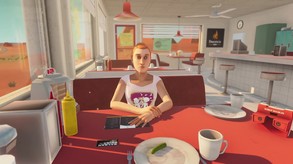
Hitchhiker is a mystery game set along lost highways, where your goal is to solve the puzzle of your own backstory.
Modeled estimate, not a reported figure. How we estimate →
Media
About
Genres
Stats
All-time low is the lowest price we've recorded for this game since we started tracking it.
Languages: English*, French, Italian, German, Spanish - Spain, Arabic, Dutch, Japanese, Korean, Portuguese - Brazil, Russian, Simplified Chinese +3 more
Engagement
Hours played at review time, across 40 reviews with recorded playtime.
Reviews
Themes across 40 recent reviews and how positive each mention is. A keyword signal, not full sentiment analysis.
positive critical· bar length = how often the theme comes up
Reviews
TL;DR: Enjoyable! This is a really fun game. The graphics are super cool and unique, the music is immersive but doesn't draw all your attention, and the plot line is engaging with great pacing. The puzzles aren't hard, but they do make you think. And it's got a lot of little silly moments and stories that I loved. It's not perfect. The dialogue can be a little stilted and sometimes objects clip each other and look funky. But these don't impact the game's functionality, so it didn't even bother me. The replayability of mystery games usually isn't great, and I'm pleased to say that I'd happily play this one again. The ending is open enough that I'll keep thinking and reinterpreting it. The puzzles aren't so simple that I necessarily remember all the answers to them. And the little stories spaced throughout are fun! Overall, a highly engaging game that's visually interesting too.
HitchHiker, developed by Mad About Pandas and published by Versus Evil, is a narrative-driven adventure game that transforms the ordinary act of traveling into a surreal meditation on memory, identity, and loss. The player takes on the role of a mysterious hitchhiker who awakens on the side of a rural highway with no recollection of who he is or where he’s going. All he knows is that he has a toothbrush in his pocket and a strange feeling that he’s searching for something—or someone. From there, the game unfolds as a road trip across the American heartland, told through a series of five rides with different drivers. Each ride becomes a self-contained story, but all are connected by the same haunting mystery at the center of the protagonist’s amnesia. The game doesn’t follow the usual rules of adventure storytelling; instead, it invites players to sit back, observe, and reflect, letting conversation, tone, and atmosphere guide the experience rather than conventional puzzles or action. Each of the five drivers you meet on your journey serves as a mirror to some aspect of the protagonist’s forgotten past. There’s Vern, the talkative raisin farmer whose laid-back charm masks an air of melancholy; Hops, a philosophical waitress whose cryptic insights begin to unravel the player’s memories; and other characters who shift between kindness and eeriness as the journey progresses. The writing and voice acting are consistently engaging, giving each encounter a weight and texture that elevates the narrative beyond simple dialogue exchanges. Conversations unfold naturally, often starting with mundane small talk before slipping into something deeper and stranger. The game excels at creating tension through tone rather than conflict—something as simple as a pause in the driver’s voice, or a glance in the rearview mirror, can feel loaded with meaning. Each encounter feels intimate, almost uncomfortably so, as if you’re confessing secrets to a stranger on an endless drive through nowhere. The visual and atmospheric design of HitchHiker plays a huge role in shaping its emotional impact. The game’s art direction combines realism and abstraction in a way that evokes both familiarity and dreamlike dissonance. Long stretches of winding highway stretch out into hazy sunsets, while the interiors of cars are rendered with subtle detail that reflects the personalities of their drivers. The world outside the car windows feels alive but slightly off, with recurring symbols and distorted scenery that hint at the instability of the protagonist’s mind. Light, color, and weather shift to match the tone of each conversation, giving the game a sense of emotional dynamism even as its pacing remains deliberately slow. The sound design amplifies this atmosphere beautifully—the hum of tires on the asphalt, the murmur of the radio, the faint echo of voices—creating a sense of immersion that is both calming and unnerving. Every ride feels suspended in time, existing somewhere between the real and the imagined. Gameplay in HitchHiker is minimal but purposeful. Most of the interaction takes place through conversation choices, light exploration of objects within the car, and occasional simple puzzles that serve to break up the dialogue. These puzzles are not designed to challenge the player but to reinforce themes or symbolize the protagonist’s psychological state. Turning a dial, flipping a switch, or manipulating objects often has metaphorical significance rather than mechanical weight. It’s less about solving and more about connecting—each small action builds a rhythm that mirrors the introspective pacing of the story. While some players may find the lack of interactivity limiting, this design choice reinforces the central concept: you are a passenger, not a driver. The game makes you surrender control, allowing the story to unfold at its own speed, much like the slow miles of a long road trip where thought and memory intertwine. What makes HitchHiker particularly compelling is how it weaves the ordinary and the surreal into a seamless experience. The dialogue and setting feel grounded in Americana, yet strange and dreamlike events constantly creep into the periphery. Radios seem to broadcast messages meant for you, objects disappear and reappear, and conversations loop in on themselves. Time doesn’t move linearly, and reality seems to warp the closer you get to uncovering the truth. The game uses these subtle distortions to explore themes of grief, guilt, and the unreliability of memory. It’s never heavy-handed about its storytelling; instead, it lets you interpret events at your own pace. By the time the protagonist begins to recover fragments of his past, the player realizes that the journey isn’t about reaching a destination but about understanding how the mind reconstructs truth after trauma. The game’s ambiguous ending leaves much open to interpretation, emphasizing reflection over resolution. Technically, HitchHiker bears the hallmarks of an indie production, with modest graphical fidelity and a few rough edges in animation and pacing. However, its visual limitations rarely detract from the overall experience. The focus on storytelling and atmosphere ensures that the minimalist presentation feels deliberate, even poetic. The pacing is slow and contemplative, and while that may alienate players looking for a more conventional narrative arc, it suits the mood perfectly. The game invites you to slow down, listen, and think—to engage with the narrative not as a puzzle to be solved but as a story to be absorbed. The entire playthrough lasts only a few hours, but it lingers in the mind far longer, its imagery and dialogue echoing like half-remembered dreams. HitchHiker is a rare kind of interactive fiction that values emotional engagement over action or complexity. It’s a quiet, haunting, and deeply human story about memory, identity, and the strange intimacy that can form between strangers. It asks you to consider how we define ourselves through the stories we tell and the people we encounter, and how the act of remembering can be both painful and redemptive. Though its pacing and minimal gameplay won’t appeal to everyone, it stands as a powerful example of how games can convey emotion through restraint and atmosphere. It’s not about where the road leads but about what you discover along the way. HitchHiker is less a mystery to solve than an experience to feel—a meditative journey that reminds us that sometimes, the most profound truths emerge when we stop trying to steer and simply let the road take us. Rating: 7/10
Dull & Boring. Like my neighbour who lives in the basement.
I wouldn't say it's a bad game, but it definitely isn't for everyone-- know what you're in for before buying it. The beginning felt slow and boring and I took a break from playing, but I came back and did the final chapters and I found them to be much more interesting. The gameplay is minimal, but it's a very calm and thought-provoking game. The overall narrative is very interesting and leaves a lot up for interpretation. It felt more like a movie than a game, so if you're looking for adventure, don't expect much. If you're looking for a chill game to sit and hear an interesting storing, Hitchhiker does a pretty good job.
Игра полностью пройдена на Steam Deck. Игра была куплена по хорошей скидке и в целом мне заходит интерактивное кинцо, но при прохождении данной игры у меня осталось кучу вопросов. Итак, игра разделена на пять глав, и в каждой из них мы путешествуем автостопом в автомобиле разных водителей. Но в течение первых нескольких минут первой поездки становится ясно, что это будет не совсем обычное дорожное путешествие. Мы не можем вспомнить, куда направляемся и кто мы на самом деле. И единственная вещь в сумке, которая осталась с главным героем, — это одна зубная щетка. Сюжет я так и не понял до конца, увидев финальные титры, задался вопросом: и что это было такое!? В целом игра затягивает именно мистической тайной, но возможно я до конца не погрузился и не понял, что по итогу хотели донести разработчики. В целом рекомендую игру для ознакомления исключительно по скидке. Плюсом можно отметить приятную визуальную часть, звуковое сопровождение и бонус в виде простых ачивок.
Despite the great ambiance at certain parts, I found myself being bored despite the short length.
[h1] Hitchhiker [/h1] ---{PC Requirements}--- ☐ Check if you can run paint ☑ Potato ☐ Decent ☐ Fast ☐ Rich boi ☐ Ask NASA if they have a spare computer ---(Proton)--- ☐ Steam Linux Runtime 1.0 ☑ Latest Proton (9.0-4) ☐ Other Proton (version) ☐ Latest Proton Custom GE (version) ☐ Other Proton Custom GE (version) ☐ Played on Windows ---(Protontricks)--- ☐ Protontricks used ☑ Protontricks not used ---[Development]--- ☑ Done ☐ Done (comes in Episodes) ☐ Done (Further DLC, expansions planned) ☐ Early access (regular updates) ☐ Early access (rare updates) ☐ Early access (dead) ❤ Audience ❤ ☐ Beginner ☐ Casual Gamer ☐ Normal Gamer ☐ Expert ☑ Everyone ---{Grind}--- ☑ Nothing ☐ Only if you care about leaderboards, ranks, or unlocking and upgrading everything ☐ Isn't necessary to progress ☐ A bit grindy sometimes ☐ Average grind level ☐ A bit grindy ☐ Insanity ☼ Graphics ☼ ☐ MS-DOS ☐ Bad ☐ Alright ☐ Good ☑ Beautiful ☐ Fantastic ☐ You forget what reality is ♬ Music ♬ ☐ Bad ☐ Alright ☑ Good ☐ Beautiful ☐ Fantastic ☠ Difficulty ☠ ☑ Easy ☐ Average ☐ Thinking is Key ☐ Easy to learn / Hard to master ☐ Hard ☐ Unfair § Bugs § ☐ Bugs destroy the game ☐ Lots of bugs ☐ Few Bugs ☐ You can use them for speedrun ☐ E.T (1982) ☐ The Game is a terrarium for bugs. ☐ You could also just burn your Money ☑ Nothing encountered ☯ Story ☯ ☐ There is none ☐ Bad ☐ Alright ☑ Good ☐ Fantastic ☐ Lovely ⚔ Gameplay ⚔ ☐ Frustrating ☑ Chill ☐ It´s Ok ☐ Boring ☑ Fun ☐ Strange ☐ Challenging ☐ Repedetive ☐ Better watch paint dry ۞ Game Time/Length ۞ ☑ Really short (0-3 hours) ☐ Short (4-8 hours) ☐ Few hours (10-20 hours) [if you focus on the main story] ☐ Long (40-60 hours) [if you complete everything] ☐ Very Long (61-100 hours) ☐ Extremely Long (101+ hours) ☐ To Infinity and Beyond ☐ Don't know, don't care ---(Played on)--- ☑ PC ☐ Deck ☐ Both $ Price / Quality $ ☑ Full price ☑ Wait for Sale ☐ Don't buy ☐ Refund it if you can ☐ It's Free [h1] Personal Opinion [/h1] Hitchhiker is a nice and visually pleasing game that challenges everything between memories and your own condition, as in do we really exist, or are we just the sum of the stories other people tell about us ? The Game also questions, are our memories really as reliable as we think? It sure is a food-for-thought kind of game. [h1] Achievement unlocked [/h1] Remember Copernicus !
If you're looking for a hitchhiking game, do yourself a huge favor and go play Road: 96 instead. It's way better in every possible way. I recently played this game, and I've already forgotten how it ended. The game is split into 5 sequences with 5 different drivers. You're supposed to piece together your own backstory, but it's quite hard when the sequences are dreamlike and not realistic. There is barely any interaction, except from choosing some dialogue and clicking on a couple of objects. The visuals are good, but it doesn't save the story from not making sense in my opinion.
In this interactive mystery experience, you play a hitchhiker meeting new people as you travel across American highways. With no idea where you are going, or where you came from, you will slowly unravel the mystery that defines your past. The game revolves around five “Rides”, each from a different character. During the conversations you have with the characters, things start to get surreal. The narrative is driven by the conversations you have, and the well-written characters keep the story engaging. The dialogue features branching choices, giving players a sense of agency despite the game’s linear nature. This makes uncovering the game’s secrets feel personal and immersive. As you progress through the game, you learn more about both the characters and the protagonist. It’s a story with many twists that work very well, pushing you to slowly come up with a theory that you don’t want to be true. The story sticks the landing in the final ride, delivering a conclusion that is both satisfying and inevitable. The game’s presentation is simple yet effective, with cars and highways rich with subtle details that enhance its surreal atmosphere. Though you are trapped in various passenger seats for most of the game, there is always something to pick up on or investigate as the world passes you by, with many subtle clues as to what is coming. The surreal nature of the game reminded me of Richard Linklater’s Waking Life, as they both have a feeling of wandering from scene to scene, having conversations that are linked together yet don’t fully make sense. They both invoke a dreamlike state, leaving the player (or viewer) wondering if they are experiencing a dream. This dreamlike structure is reinforced by the game’s mechanics, though not always in a positive way. While the puzzles add some gameplay, many of them feel like they weren’t well thought out. Many puzzles rely more on trial and error than logical reasoning, and one even left me completely stumped, forcing me to look up a solution. Unfortunately, if you are looking for some logic- or puzzle-based gameplay, this probably isn’t the game for you. What can be said for the puzzles, however, is that they are immersive. They have a strange nature, as you have to figure out how a random dial or item affects scarecrows, the weather, or the colour of a light. Rather than interrupting the narrative flow, they add to the surreal, dreamlike nature of the game. If you’re drawn to surreal mysteries and thought-provoking conversations, this is a journey worth taking – one that lingers long after the final ride.
Это не игра, это повествование истории, суть которой выясняешь в ходе диалогов с мнимым выбором. Карточки и все достижения порадуют больше чем геймплей. Жаль потраченных средств.
Related
Related
Trends
Modeled estimate over time, reconstructed from Steam's monthly review histogram.
Momentum
Pace estimated from the game's recent review growth (our daily snapshots) at its own sales-per-review ratio — a momentum signal, not booked sales.
Audience
Estimated from the language of this game's reviews — a proxy for where players are, not official Steam demographics.
Related
| Puddle Knights | $48K | 234 | 98% | $9.99 |
| Masks of the Void: Origins | $48K | 117 | 98% | $14.99 |
| WebCum Secrets 🔞💦 | $48K | 139 | 76% | $9.99 |
| Legitimate Space Corp Simulator LLC | $48K | 90 | 73% | $12.99 |
| Geometry Arena 2 | $48K | 444 | 89% | $4.67 |
| Amphora | $48K | 181 | 76% | $13.99 |