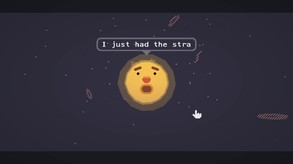
A fictional universe sandbox/exploration game. 🪐☄️✨ Shape your own solar system by terraforming planets. Find new species and make beautiful ecosystems . . . or breed destruction with volcanos, lightning storms and wildfires!
Modeled estimate, not a reported figure. How we estimate →
Media

About

Genres
Stats
All-time low is the lowest price we've recorded for this game since we started tracking it.
Languages: English
Engagement
Hours played at review time, across 40 reviews with recorded playtime.
Reviews
Themes across 40 recent reviews and how positive each mention is. A keyword signal, not full sentiment analysis.
positive critical· bar length = how often the theme comes up
Reviews
It's janky like you'd expect from Sokpop games but this one is one of their better games.
O jogo não te deixa fazer nada.
Really cool
Fun game. I would like to see more like this
[h1] Cute, Reasonably Educational, Great for all ages [/h1] Fun, calming, and a safe game to play with or around small children. Heliopedia is a great addition to anyone's library, whether you have a Doctorates in Biology or are just old enough to grasp the idea of chemistry.
its so nice, i even got all the achievements in the game!, but the game is soooo short, and sadly, also crashes easily, if you put ice on orbit and let it melt, i can crash the game, and many more other stuff. aside all'at, the game is great, you should play!!1!
i lost all my progress on terra du to a stupid ass volcano and the first save i lost my astronaut even tho he was safe
Heliopedia is a quietly ambitious sandbox experience that distills planetary creation, ecology, and experimentation into a compact but surprisingly deep simulation. Developed and published by Sokpop Collective, the game reflects the studio’s signature approach: deceptively simple presentation layered over systems that reward curiosity, patience, and playful tinkering. Rather than offering a structured campaign or explicit goals, it invites players to become cosmic gardeners, shaping entire worlds and observing how life emerges—or collapses—based on the smallest decisions. The premise places you in control of a miniature solar system anchored by a sentient star. By feeding the star various resources, you generate new planets—blank slates ready to be transformed. From there, the experience becomes one of guided experimentation. You adjust atmospheres, seed land and oceans, introduce plants and animals, and manipulate elemental balances, all while trying to coax a planet toward stability. The game doesn’t overwhelm with tutorials; instead, it gently nudges players to learn through cause and effect, turning every success or failure into a lesson about how its systems interlock. What makes Heliopedia compelling is how it frames ecology as a living, reactive network rather than a checklist of upgrades. Oxygen levels, carbon cycles, water distribution, terrain types, and species populations all influence one another in ways that can be intuitive at times and frustratingly opaque at others. A thriving forest might boost oxygen but also alter soil composition, which in turn affects what animals can survive. Push one variable too far and the entire ecosystem can spiral into collapse, forcing you to rethink your approach. This delicate balancing act gives each planet a sense of personality and makes successful stabilization genuinely satisfying. Discovery is formalized through the in-game encyclopedia, which logs every new element, organism, and interaction you uncover. Filling out this catalog becomes a quiet meta-goal, encouraging experimentation for its own sake rather than for rewards or progression. There’s a distinct pleasure in stumbling upon a new biome or lifeform not because the game told you to, but because you happened to combine conditions in just the right way. Over time, this encyclopedia becomes a record of your personal understanding of the game’s systems, reflecting how your mastery has evolved. Visually, Heliopedia is clean, colorful, and functional. The art style avoids realism, opting instead for clear shapes and readable effects that make it easier to understand what’s happening on a planetary scale. Changes to terrain, weather, and life are immediately visible, reinforcing the feedback loop between player action and system response. The audio design complements this with a calm, almost meditative atmosphere, encouraging slow, thoughtful play rather than constant intervention. That openness, however, can also be a hurdle. Because the game offers little explicit direction, players who prefer structured objectives may feel lost or unsure of what success looks like. Some mechanics—particularly around maintaining long-term equilibrium—can feel unintuitive, leading to repeated trial and error without clear feedback on what went wrong. Interface limitations can also make managing complex planets slightly cumbersome as systems grow more layered, reinforcing the sense that this is an experimental sandbox rather than a polished management sim. Despite these rough edges, the game’s compact scope works in its favor. Heliopedia doesn’t overstay its welcome, instead offering a few hours of focused experimentation that feel dense with ideas. It’s a game best enjoyed in a reflective mindset, where failure is part of the learning process and curiosity is its own reward. Rather than chasing optimization or victory conditions, it encourages players to ask “what happens if…?” and follow that thread wherever it leads. Ultimately, Heliopedia succeeds as a thoughtful, system-driven sandbox that captures the wonder of worldbuilding on a miniature scale. It’s not about mastering a rigid set of rules, but about developing an intuition for how complex systems behave when left to evolve. For players who enjoy experimentation, emergent behavior, and the quiet satisfaction of watching life take hold on a world they shaped themselves, it offers a distinctive and memorable experience that embodies Sokpop Collective’s talent for turning small ideas into rich playgrounds. Rating: 8/10
yes
Good to relief stress and fatigue
Related
Related
Trends
Modeled estimate over time, reconstructed from Steam's monthly review histogram.
Momentum
Pace estimated from the game's recent review growth (our daily snapshots) at its own sales-per-review ratio — a momentum signal, not booked sales.
Audience
Estimated from the language of this game's reviews — a proxy for where players are, not official Steam demographics.
Related
| 7 Days to Die | $425.3M | 403.6K | 87% | $44.99 |
| Mount & Blade II: Bannerlord | $309.8M | 294K | 88% | $49.99 |
| The Forest | $254.8M | 678.6K | 96% | $19.99 |
| Stardew Valley | $258.9M | 881.6K | 99% | $14.99 |
| Project Zomboid | $239.1M | 461K | 94% | $19.99 |
| Garry's Mod | $228.7M | 1.3M | 97% | $9.99 |
Related
| Machine Learning: Episode I | $12.6K | 112 | 77% | $4.99 |
| QbQbQb | $12.6K | 111 | 90% | $4.99 |
| Shadowcrypt | $12.6K | 111 | 59% | $4.99 |
| Secret Agent | $12.6K | 111 | 86% | $4.99 |
| HouseWarming | $12.6K | 55 | 87% | $5.94 |
| Them Bombs | $12.6K | 79 | 92% | $10.99 |