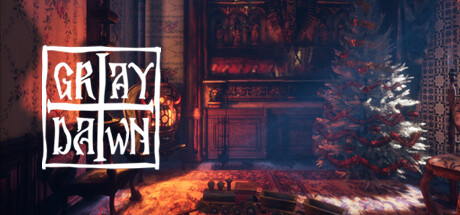
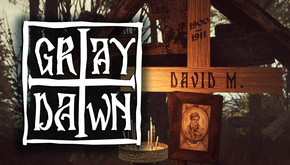
Embark on a terrifying adventure of a priest accused of murdering an altar boy. Gray Dawn is a psychological thriller infused with religious elements and combines story-driven quests with an artistic experience.
Modeled estimate, not a reported figure. How we estimate →
Media

About
Genres
Stats
All-time low is the lowest price we've recorded for this game since we started tracking it.
Languages: English*, German, Hungarian, Romanian, Russian, Spanish - Spain, Spanish - Latin America, Turkish, Ukrainian*languages with full audio support
Engagement
Hours played at review time, across 40 reviews with recorded playtime.
Reviews
Themes across 40 recent reviews and how positive each mention is. A keyword signal, not full sentiment analysis.
positive critical· bar length = how often the theme comes up
Reviews
This game has a lot of potential that I just don't think it reaches. It's a bit all over the place, but a lot of its visuals and themes are quite compelling. This is coming from someone who loves issues of religion and the imagery that comes with it. It falls short with its bad voice acting and messy story (which I don't hate, I just think it needed a bit more work to make it more cohesive). I'd say try if if you're interested, just don't pay full price. It's gorgeous, don't get me wrong, but I would wait to grab it until it's on sale for a couple of dollars.
I played this game with my wife, we could not stop from playing it in one go. It's a great game, intriguing - leaves you wanting to unravel the mystery of the story. It has fun easter(n) eggs - [spoiler] we've read all the crosses in the cemetery (real life location Cimitirul Vesel) [/spoiler] and were excited to find pieces of Romanian lore and texts in it. Visually it's beautiful, amazing scenery which creates a beautiful atmosphere - both the dark reality and David's wonder land. It has creepy moments -[spoiler] like that possessed doll and Aleksandra popping behind you sneakily during a phone call [/spoiler]. It has good mechanics - we have encountered a few issues, but nothing a reload did not fix, the character and camera movement are fluid and look natural and very cinematic. I hope they make more games like this, I'd love to know that it reaches more players because it's an underrated gem. Mult succes in continuare, continuati sa creati jocuri pentru ca sunteti talentati (translated : Best of luck in the future, keep creating game because you're very talented).
Цікава коротенька бродилка, з дуже гарним візуалом та атмосферою. Сюжет присутній, але як на мене трішки скомканий і не розкритий до кінця. Геймплейно це прямий "нащадок" Амнезії, навіть фізика взаємодії з предметами схожа, хоча очеивдно скромніша. Також приєно для ока, те що події гри проходять в селі десь в Румунії, і це дуже знайомий східно європейський сільський вайб. Але одразу поперджу на всякий випадок, у грі основа сюжету це смерть дитини і для когось це може викликати не приємні відчуття. Плюс тут досить багато релігї(це основна тема).
pros ✅ semi-open, immersive world environments with atmospheric settings and stunning visuals ✅ An intriguing and poignant story about a priest accused of murder and the disappearance of several orphaned children from an orphanage, focusing particularly on one child named David, whose story stands out and is closely connected to the priest. Throughout the gameplay, the narrative also reveals the priest's troubled past ✅ religious and Christian-themed psychological narrative rich in Romanian mysticism, beliefs, and funeral rites. ✅ nice variety and enjoyable puzzles ✅ decent length ✅ there are steam achievements and cards ✅ wide variety of voice acting is featured, most of which is good cons ❌ clunky WASD controls ❌ story can be difficult to follow due to its highly symbolic and contrived narrative ❌ subject matter is highly adult and features flashing religious images that are quite intense; therefore, it may be disturbing to devout, sensitive and epileptic individuals Overall, this is a decent walking simulator and exploration game featuring some enjoyable light puzzles.
I have so many thoughts about this game. Most of them, almost all of them, are good; for example, the scenery was gorgeous. Regardless of which world I was in, whether it was springtime in one world or hellfire thunderstorms in another, I was constantly looking around and just soaking in the view. I thought I was going to be really turned off by all of the religious visuals, but it's all viewed through the lens of a questionable priest so it's actually pretty rad. The grotesque things were actually really gross, and the brothel level was particularly so (which was perfect). Visually, this game was stunning. Emotionally, it threw some punches, and I'm here for it. But then there's the story. I'm not going into too much detail to avoid spoilers, but that was not the ending I expected -- and to be honest, I'm not sure what ending I expected. In the cemetery, there were a couple of gravestones that indicated that the story was based on real people and real events. Since we're in Romania and dealing with orphans and the church, I was prepared for Sad Ending About How Horrible People Are. But then it starts to lean into David being...the anti-antiChrist? Like, he's not the proper Christ, nor the Second Coming, but he's also probably(?) not the devil. He's Special, regardless. Okay, so we're going with the Golden Child ending, cool. BUT THEN. Out of nowhere, we get our Good and Bad endings, which have the audacity to question themselves. Like. How should I feel about the last 10 hours I've spent with this game? I did enjoy this game. I would definitely recommend it, even to people who might be all "ugh, Jesus stuff" like I was at first. But this game reinforces, to me, why I don't enjoy those unreliable-narrator thrillers everybody else seems to be into. Like, obviously don't spoon feed me the context and narrative, but also don't leave me with so many questions that I'm left confused (and maybe also slightly grumpy because harrumph).
heretical
FPP/walking Sim donde seguiremos a un sacerdote de moral cuestionable en un periplo terrorífico que incluye satanismo, herejía, exorcismos, niños muertos, ritos diabólicos y profanación de todo tipo de iconos religiosos. El juego podría considerarse de terror, pero quizá porque soy “Ateo gracias a Dios” lo encontré mucho mas liviano que otros exponentes del genero. En gran medida quizá se deba a su apartado artístico y visual que es mucho mas colorido y amigable que otros exponentes del genero. No hay pasillos oscuros, algo persiguiéndote, Jumpscares, tensión ni nada por el estilo. Si sos muy religioso podes sentirte perturbado u ofendido por las constantes referencias diabólicas o profanaciones a símbolos religiosos, o si lo ve tu Tía que canta en el coro de la iglesia, o tu abuela que duerme con la estampita de San Benito junto al rosario en la mesita de luz puede llegar a traerte problemas también; de lo contrario, es interesante por su temática, que se sale un poco de la norma tan trillada de sustos baratos, música tétrica y sobresaltos constantes… acá la Teología es el centro y se siente fresco.
Gray Dawn is a somber, atmospheric horror experience that places narrative weight and symbolism above conventional scares. Developed and published by Interactive Stone, the game casts players as Father Abraham, a troubled priest in 1920s England whose life unravels after the mysterious disappearance of a young altar boy on Christmas Eve. Rather than focusing on monsters or combat-driven tension, Gray Dawn leans into psychological unease, moral ambiguity, and religious imagery, inviting players to navigate a story shaped as much by guilt and memory as by supernatural forces. From the outset, the game establishes a heavy, introspective tone. Exploration unfolds in a first-person perspective, encouraging slow, deliberate movement through environments that range from grounded locations—such as churches, village streets, and modest interiors—to surreal dreamscapes that feel untethered from reality. These transitions are seamless and often disorienting by design, blurring the line between the external world and Father Abraham’s fractured inner state. The lack of traditional combat reinforces vulnerability, making every step feel exposed and heightening tension through anticipation rather than direct threat. Narrative delivery is the centerpiece of the experience. The story is revealed gradually through environmental details, audio recordings, symbolic imagery, and fragmented memories that surface as you progress. Father Abraham is portrayed as a deeply flawed protagonist, burdened by past decisions and wavering faith, and the game never offers easy answers about his innocence or guilt. Instead, it presents events and visions that challenge the player to interpret what is real, what is supernatural, and what may be the result of psychological collapse. This ambiguity is one of the game’s defining strengths, encouraging reflection long after individual scenes conclude. Visually, Gray Dawn makes strong use of contrast. Realistic environments are rendered with muted palettes and heavy shadows, while nightmare sequences burst into stark, often unsettling imagery filled with religious symbolism and distorted forms. Churches loom with oppressive grandeur, graveyards feel suffocating rather than serene, and dreamlike realms twist familiar iconography into something threatening. While character animations and some assets reveal the limitations of a small studio, the environmental art direction is consistently evocative and carries much of the game’s emotional weight. Sound design plays a crucial role in sustaining immersion. Subtle ambient noises—creaking wood, distant wind, echoing footsteps—fill long stretches of exploration, creating an atmosphere of isolation and quiet dread. Music is used sparingly, often swelling during key moments to underline emotional or narrative shifts rather than to telegraph danger. Voice acting varies in quality but generally supports the somber tone, particularly in Father Abraham’s internal monologues, which add depth to his psychological struggle and frame the unfolding events. Puzzle design in Gray Dawn is intentionally restrained. Most challenges involve observation, item interaction, or simple logic tied directly to the environment. These puzzles rarely stall progression for long, serving more as pacing tools than intellectual roadblocks. This approach keeps focus on story and atmosphere, though players seeking complex or mechanically demanding puzzles may find them underwhelming. The simplicity ensures that narrative momentum remains intact, allowing themes and symbolism to take precedence. Replay value is modest but present. The game features multiple endings influenced by whether players discover hidden religious artifacts scattered throughout the journey. These collectibles deepen the lore and provide additional context for the story’s conclusion, rewarding thorough exploration and attentiveness. While this structure encourages at least a second playthrough, the experience remains primarily narrative-driven rather than systemically varied. Overall, Gray Dawn stands as a distinctive entry in the psychological horror genre, one that prioritizes mood, symbolism, and introspection over spectacle or constant threat. Its strength lies in its willingness to explore uncomfortable themes—faith, guilt, and moral uncertainty—through a slow-burning, atmospheric lens. Though it shows rough edges in mechanics and polish, it delivers a memorable and unsettling journey for players drawn to story-focused horror that invites interpretation rather than providing clear answers. Rating: 8/10
Рекомендую к прохождению. Интересный сюжет с постепенно открывающимися деталями. Хорошие головоломки, местами долгие хождения туда-сюда.
Dini ve spiritüel garip bir oyun. Dolaşıp etrafı inceleyip sona varıyorsunuz zaman geçirmeye oynanır.
Related
Related
Trends
Modeled estimate over time, reconstructed from Steam's monthly review histogram.
Momentum
Pace estimated from the game's recent review growth (our daily snapshots) at its own sales-per-review ratio — a momentum signal, not booked sales.
Audience
Estimated from the language of this game's reviews — a proxy for where players are, not official Steam demographics.
Related
| Indie Game: The Movie | $374.2K | 1.9K | 92% | $9.99 |
| Sail Forth | $374.1K | 640 | 93% | $19.99 |
| Home Sheep Home: Farmageddon Party Edition | $374K | 1.6K | 94% | $9.99 |
| Paper Trail | $373.9K | 698 | 95% | $19.99 |
| Garten of Banban 8: Anti Devil | $374.6K | 1.6K | 88% | $9.99 |
| Goat Simulator: Remastered | $374.7K | 1.1K | 88% | $29.99 |