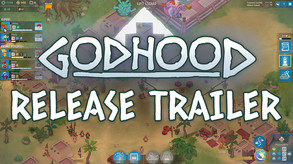
Create your Religion, raise your Disciples, and guide them to bring you glory! Inspire growth in your Disciples so they may challenge the false gods and convert their followers. Defeat your rivals, and become the One Truth!
Modeled estimate, not a reported figure. How we estimate →
About
Genres
Stats
All-time low is the lowest price we've recorded for this game since we started tracking it.
Languages: English, Simplified Chinese
Engagement
Hours played at review time, across 41 reviews with recorded playtime.
Reviews
Themes across 41 recent reviews and how positive each mention is. A keyword signal, not full sentiment analysis.
positive critical· bar length = how often the theme comes up
Reviews
Gameplay loop is painfully dull. The rock-paper-scissors system is split into five factors instead of three, but with most just ignoring one another. Level grinding is punishing and forces you to repeat auto-battler simulators over and over again. The abilities you can unlock for characters are arbitrary and there's no way to manipulate the game so certain abilities are/are not more likely to be triggered. For how simplistic the game is, the cause seems to be too much content in the game. The characters having innate talents is largely pointless, the classes are quickly redundant, and the buildings are arbitrary. Despite this, you're expected to feel like +0.5 on a single attribute is a reward relative to the grind-fest necessary to get through the first few levels. The different religions and traditions are largely arbitrary filler. The game stripped away most of the choices available to you and then makes the few choices available to you entirely unimportant. Here's what the player can do: [list][*]place buildings in any one of the arbitrary building slots. there are no synergies for placements. [*]recruit characters whose only distinction is either a massive stat boost to three major stats or a meager boost to one [*]send dreams to a single character of your party with middling effects before the mission [*]slightly improve one character's stats three times before a mission [*]use rituals that cost an absurd amount relative to their impact[/list] Characters age and die, which would be great it if it wasn't just an inconvenience. My religion went for an elder death veneration route just to see if there was anything interesting in this mechanic: there is not. Your characters just die to give an arbitrary sense of time progression and force you back to the beginning of the loop yet again. Most Abbey Games are simple and the mechanics are fairly limited, but the decisions you made felt impactful. There was an animation, characters reacted, it advanced the story, or at least was part of your tactics. Here, the decisions you make are purposefully arbitrary and presented as if it's part of the challenge. If the game was designed to test the patience of players, good work I guess? If it was meant to be fun, as I suspect it was, the package needs to be slimmed down and the gameplay loop needs to be made satisfying. If it's an auto-battler, then make class selection and customization worthwhile and drop all the unnecessary resource requirements outside it. If it's meant to be an RPG, then lean into the attributes and make character development matter instead of an obvious choice of two ability boosts and an HP boost before they become useless.
There is nothing inherently wrong with Godhood, but would I recommend a friend buy it? No. It starts out really interesting, but as it gets to the back levels, I find the "combat" kinda dull to watch, and losing one is just a boring road bump that only happened because I tried a martyrdom bonus and it didn't work out, so I re-load. I would have a lot more fun just seeing how the different combinations of beliefs and practices add up for different endings, but going through 12 hours of "okay" combat to see each ending sounds dreadfully dull. Great concept, but the execution ended up a little dull. I'd say give it a try if it's on sale.
All aspects of this game feel boring and unrewarding except for the writing, which is well done. For me this game falls short of it's great premise.
I really tried to like this game, i love Abbey games that have most if not all their games. But this one is a miss for sure. My critic of this game is its way to random and no way to overcome certain fights with certain play styles. The only way to manage the random was to go all offense to the point where fights end in 1 or 2 attacks. The problem then arises when trying to explore some of the other styles, that just feels awful to play and little to no way to avoid a game over. To the point where its not fun to explore the weaker ones (defensive) in my experience leaving me with a fealing that this game is not finished.
Godhood, developed and published by Abbey Games, approaches the god-game genre with a perspective that feels unexpectedly human. Instead of casting the player as an all-powerful architect of worlds, the game begins with humility—your divinity is young, unproven, and worshipped by only a small handful of hopeful disciples. The world does not revolve around you yet. You must earn devotion, shape belief, and guide followers with influence rather than direct command. This premise establishes a tone that is less about domination and more about cultural growth, spiritual identity, and the delicate relationship between faith and community. Abbey Games has always gravitated toward systems driven by personality and emergent storytelling, and here they extend that philosophy to something abstract, emotional, and deeply social: the evolution of religion. The heart of the game lies in its disciples, who function as both characters and strategic resources. Each has their own temperament, preferences, strengths, and limitations, and learning how to nurture them becomes the core gameplay loop. You’re not just increasing numbers—you are shaping people. Training sessions, blessings, ritual practices, and role assignments determine how they mature, what virtues they embody, and how they contribute to the larger faith. Over time, they gain experience, solidify identities, form bonds, falter, age, and eventually leave the world behind, forcing players to think generationally rather than transactionally. This slow, organic progression mirrors real cultural formation and emphasizes stewardship over control. Even minor choices—who leads prayers, who tends the farm, who participates in sacred battles—create ripple effects that redefine the faith’s future. Instead of traditional combat, Godhood frames conflict as “Sacraments,” dramatic spiritual confrontations against rival religions. These battles unfold automatically, and success depends entirely on preparation rather than in-the-moment execution. Before entering a Sacrament, players select participants, abilities, emotional stances, and symbolic strategies, hoping their disciples’ teachings will withstand opposing ideologies. The system reinforces the game’s guiding principle—gods influence, they do not micromanage. Watching a Sacrament play out feels like witnessing the culmination of dozens of quiet decisions made across generations. The battles themselves can be humorous, dramatic, or surprisingly touching depending on the doctrines chosen. Some religions fight with righteous fury, some convert through joy or seduction, and others rely on satire, shame, or holy wisdom. It is a playful, metaphorical depiction of belief systems clashing in ways that reflect cultural rather than physical warfare. City-building and resource management support these philosophical layers without overwhelming them. You expand sacred grounds, construct shrines, gardens, study halls, and ceremonial spaces, each reinforcing the cultural values of your faith. The settlement becomes a visual diary of your godhood—ascetic religions may be sparse and contemplative, while hedonistic or artistic doctrines burst with color, performance, and sensory indulgence. Abbey Games’ painterly art style ties everything together, creating a vibrant, almost mythic visual language. Characters move with exaggerated expression, environments feel intentionally handcrafted, and the UI carries a gentle warmth that encourages exploration rather than efficiency. The soundtrack—rhythmic drums, soft chants, uplifting melodies—Deepens the sense of spiritual growth and reinforces that the world is alive, listening, and changing with you. Like many experimental strategy games, Godhood shines brightest in its early and middle phases, when discovery, adaptation, and belief-shaping feel immediate and personal. As disciples grow strong and doctrines solidify, repetition can gradually creep in. Sacraments may feel predictable, and resource management begins to follow familiar rhythms. While the game offers a wide range of religious philosophies—warrior cults, nature worshippers, ecstatic celebration faiths, monastic scholars—the mechanical differences between them can sometimes feel cosmetic rather than transformative. This isn’t a flaw of concept, but a structural limitation of a system built on indirect influence rather than dynamic intervention. The pacing may feel slow or meditative to players seeking high-stress strategy or constant micro-adjustment, and some may want more narrative consequences when shaping belief. Yet Godhood’s lasting impact comes not from mechanical complexity, but thematic clarity. Abbey Games treats religion with curiosity, respect, and empathy—not as an object to parody, judge, or exploit. It recognizes that belief systems are built from stories, community needs, emotional longing, social competition, and cultural adaptation. It acknowledges the beauty and messiness of faith without assigning moral absolutes. In doing so, the game becomes less about winning and more about witnessing—the joy of watching a philosophy grow from a whispered prayer into a guiding worldview. Even in its quietest moments, Godhood invites reflection: What values would you want followers to carry into the world? What responsibilities come with influence? What happens when belief becomes identity? For players who enjoy thoughtful management sims, character-driven progression, and games that prioritize thematic expression over mechanical dominance, Godhood offers a generous and contemplative experience. It may not be the loudest or most complex strategy title, but it is among the most sincere, imaginative, and conceptually cohesive. It asks players not just to rule—but to inspire, nurture, and reflect. Godhood succeeds because it understands that power is not defined by force, but by the stories people choose to believe—and the legacies they leave behind. Rating: 7/10
I can't get into this game no matter how many times I try. It may be me, because it looks pretty and it plays pretty. But I find it boring and taxing.
It's an interesting offramp from Reus (excellent) towards a game something like Cultist Simulator. There are three main reasons to avoid this game unless you the defects interest you: 1) it becomes excel work, 2) XCOM RNG can be tough 3) too much lore to learn. I recommend playing Reus which is similar and superior. There really are too many stats in this game for the UI to sort meaningfully. This is not about hating stat-based games. This is about the structure of the game and how it presents the stats to you - poorly. Almost everything in this game is threshold based and stat based, meaning sometimes you'll just get crit and lose or crit and win. The XCOM effect is real here: 95% chance to hit, miss 2 in a row, oof gg. Now that Im getting old and have less time this sort of gameplay engages me less and less. The 'damage type' system seems really chinese 'five elements' inspired, i.e., a pentagonal rock-paper-scizzorz-earth-fire type of system. Fine. Fun. But I'm old and if I have to memorize a fake fantasy magic system that is only symbolic, I won't do it. 5/10. Spend your money on Reus, it's superior in substance and of similar style.
Great strategy game about creating your own religion with visuals based on meso america! Give it a chance!
so no one remembers huh?.......................................................................................
You know what's really immersive? Spending hours crafting your perfect deity only to have the game spontaneously combust before you can even smite or convert a single unbeliever. I booted up Godhood with dreams of becoming a celestial tyrant—perhaps a cosmic raccoon demanding tributes of shiny things and garbage. But the only offering this game wanted was my sanity. Crash #1: Launching the game. That’s right—sometimes Godhood treats opening itself like a moral dilemma. Should it work? Should it not? Schrödinger's executable. It's a roll of the divine dice every time I click “Play.” Steam says I'm playing, but my desktop says I'm definitely not. Crash #2: Character creation. Ah, the sacred rite of divinity, where I shape my godlike identity, choose my virtues, my commandments, and… poof. Desktop. Apparently, my theology was too spicy for the RAM. Crash #3: The intro cinematic. You know, the one that’s supposed to inspire awe and make you feel like you’re stepping into a mythic tapestry of belief and power? I wouldn’t know. I saw three seconds of some glowing stuff before the game decided it was tired and needed a nap. Permanently. To be fair, the concept of Godhood is cool. You're building a religion, shaping your followers, unleashing holy wars, the whole divine shebang. But it’s hard to start a religion when your divine presence gets obliterated by a memory leak every five minutes. I imagine this is what it felt like to be a prophet during a thunderstorm while writing on parchment with wet ink. I wanted to feel omnipotent. Instead, I feel like a tech support intern at Olympus trying to reboot Zeus’s Windows 95 machine. Final verdict: Godhood is a fun idea trapped inside a program that’s possessed by the vengeful spirit of a sloth bear. If you're into theology, divinity, and existential despair via crash reports, this game might just be your kind of heresy.
Related
Related
Trends
Concurrent players on Steam, sampled daily since tracking started.
Audience
Estimated from the language of this game's reviews — a proxy for where players are, not official Steam demographics.
Related
| Sky Rogue | $775K | 1.2K | 93% | $19.99 |
| Sky Haven Tycoon - Airport Simulator | $775K | 1.4K | 58% | $19.49 |
| Eastside Hockey Manager | $774.9K | 1.2K | 86% | $19.99 |
| Microcivilization | $775.5K | 1.4K | 79% | $17.99 |
| Far Cry® | $774.7K | 11.7K | 82% | $2.99 |
| No Umbrellas Allowed | $774.6K | 1.5K | 81% | $19.99 |
Related
| Heroes of Might and Magic: Olden Era | $28M | 20.8K | 88% | $39.99 |
| Stonehearth | $8.3M | 13.1K | 75% | $19.99 |
| ENDLESS Space™ - Definitive Edition | $3.8M | 9.6K | 81% | $9.99 |
| Esports Godfather | $2.7M | 4.5K | 91% | $19.99 |
| ENDLESS Legend™ 2 | $2.7M | 2.7K | 83% | $29.99 |
| MMORPG Tycoon 2 | $2M | 3.1K | 86% | $24.99 |