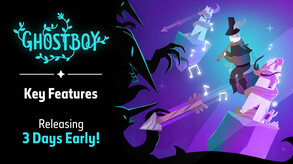
Would you return from death to help your loved ones through grief? Make fate turning decisions, micromanage the family’s relationships and defeat the negative thoughts on tower defense levels. Watch out, your job will be harder the more severe their mental disorder is.
Modeled estimate, not a reported figure. How we estimate →
Media

About
Ghostboy is here to challenge your heart and mind with action-packed challenges, while helping you to become a more balanced version of yourself.
Most games are about momentary pleasures without adding anything to your real life. In Ghostboy, we not only challenge your heart and mind, but if you're thoughtful and persistent in the most difficult moments, you'll be given tools that extend beyond the game to help you deal with your losses more effectively in real life.

You're in for a deep psychological journey into the world of mental disorders.
Ghostboy is not for everyone, but if you're interested in psychology and enjoy challenging games, look no further. Artists made it friendly, psychologists made it safe, and developers made it unputdownable with a constantly challenging gameplay.
As you accompany a grieving family through the loss and recovery, there's a lot to learn from them.
Ghostboy is not a therapeutic tool, but it is one of the first video games that not only delves into taboo subjects, but also shows you a way out of trauma by teaching you the tools to process it so you can use them in your own life later. However, it won't be easy, so don't expect to overcome all the obstacles on your first try.
Ghostboy is not " just another TD ".
Prepare your mind and your soul, because Ghostboy's heartbreaking narrative and captivating artwork will keep your emotions and logic at constant check. As the story unfolds, you'll have to make choices in the lives of family members that often lead to mental disorders, and micromanaging them will be essential to overcome negative thoughts. You'll face these in Tower Defense levels, where you'll encounter genre-bending solutions, intense action and challenges that evolve based on your previous decisions. But the number of attempts is not endless, so when one family member's emotional energy runs out, only the help of others can provide hope.
We're not hiding anything: the game is based on the developers' own fear of death.
But Ghostboy is not meant to merely deal with that. To guarantee an authentic portrayal of grief and mental health, a clinical psychologist and a child psychologist were both involved in the creation of every last detail. As you play you'll quickly see how mental disorders can make everyday life more complicated, but we've also provided easy-to-understand descriptions of each one if you want to know more details.

It wasn't us who said...
We could promise you anything, but what's more than our word is that it's been tested at international conferences by professional developers, and they all loved it. We saw for ourselves that Ghostboy really does deliver a lasting experience when a player tearfully expressed gratitude at how much easier it would have been for her to get through a difficult situation in her life if there had been more games like Ghostboy. Because there's a great need for games that make such taboo subjects more understandable and accessible.
8-10 hours of gameplay
42 TD levels including 9 boss fights
50 different tools including 12 towers, 12 special abilities and many more alternative options to defend the family members’ soul
20 mental disorders, 10 with unique gameplay changing mechanics
24 branches of storyline with different endings according to your choices, 8 for each family member (Important: you will only see 3 randomly picked storylines during your first gameplay to improve experience during replay)
4 Buddys to accompany you on TD levels, all allowing different strategies
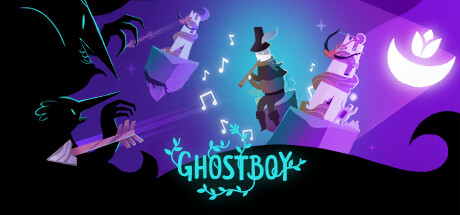
Stats
All-time low is the lowest price we've recorded for this game since we started tracking it.
Languages: English, Hungarian, French, Italian, German, Spanish - Spain, Czech, Polish
Engagement
Hours played at review time, across 32 reviews with recorded playtime.
Reviews
Special theme, beautiful design. The development team has chosen a surprisingly unique theme for the game. I'm not a fan of tower defense games, but I couldn't stop playing this one because of the drifting story and the beautiful artwork.
Ein sehr interessantes, und tiefgründiges Spiel. Keine Bugs gefunden, kein Spieldesign-Fehler und nicht künstlich in die Länge gestreckt. Daumen hoch!
A joy to play
After half an hour playing this game, I should say it's quite a good one. I reckon that the most tricky part is to understand each means at your disposal, but once you have got familiar with them, you can use the whole lot on your own advantage, to efficiently complete each levels. The most annoying issue about the game is that makes you lose your sense of time. I guess, I found another addiction.
Não sou muito do tipo que gosta de tower defense, mas esse realmente ganhou meu coração, as musicas são tranquilas e maravilhosas, as artes são lindas de olhar e o tema dele é realmente tocante, como ele fala sobre as fases do luto e transtornos mentais, eu só me apaixonei e espero que mais pessoas possam amar e se surpreender com esse jogo, não tem em português, mas quem sabe algum dia.
A wildly unique tower defense game with memorable art direction and an interesting storyline. In-between levels there is a storyline and choices to make that will alter what happens to your family as they carry on. I really like that there is some form of hands-on combat which is often equally as relevant as strategic placement. The writing could use some polish though every bit of it is understandable. One of the more intuitive minimalist UI I've come across. Absolutely worth the time.
"Pierwszą styczność z tą grą miałam podczas PGA 2023, gdy grałam w jakiś udostępniony kawałek na indykowym stoisku. Wówczas bardzo spodobał mi się niecodzienny koncept na grę o żałobie, gdzie ona jest faktycznie czymś fizycznym, z czym walczymy. Mianowicie dziesiątkami przeróżnych potworków, z którymi tytułowy Ghostboy, bohater niniejszej recenzji, musi sobie poradzić, aby uchronić serca najbliższych przed cierpieniem. Produkcja Two Blackbirds niby wygląda uroczo, ale w ogóle taka nie jest, więc nie dajcie się nabrać ślicznej oprawie, bo ten niebieski jest nie bez powodu." Pełna recenzja dostepna jest tutaj: https://grajmerki.pl/ghostboy-recenzja-gry/
Ghostboy, developed and published by Two Blackbirds, is a deeply emotional and thematically ambitious indie game that combines narrative-driven storytelling with tower defense mechanics in a way that feels both unexpected and powerful. Set in the aftermath of a tragic accident, the game follows a family struggling to cope with the loss of their young son. The twist is that you play as the ghost of that very boy, tasked with guiding his grieving loved ones through their pain, guilt, and denial. The story unfolds through a blend of strategic gameplay and branching narrative choices, where every decision shapes how each member of the family confronts their trauma. It’s a rare example of a game that treats grief not as a backdrop for drama, but as its central mechanic—a system to be understood, managed, and ultimately healed. From its opening moments, Ghostboy sets an intimate, melancholic tone. The game introduces the family—each member broken in different ways—and gives you the difficult task of helping them find balance while unable to interact with them directly. Instead, your influence manifests symbolically through the tower defense sequences, where waves of dark, amorphous enemies represent intrusive thoughts, self-blame, and despair. Each level becomes a metaphor for the mental battles taking place within the characters’ minds. The player must deploy defenses, manage limited resources, and adapt strategies as the emotional turmoil escalates. These battles are not merely mechanical; they reflect the inner states of the family. When a character’s anxiety rises, your defenses falter. When hope returns, the battlefield brightens and becomes more manageable. It’s a clever narrative device that makes the gameplay feel intimately connected to the story rather than existing as a separate system. The story unfolds across multiple branching paths, allowing you to influence how each family member copes with grief. Choices made during dialogue sequences and between missions determine their emotional arcs and relationships with one another. There are numerous endings, with each reflecting the family’s collective state of mind and your ability to guide them toward healing. Some endings offer reconciliation and acceptance, while others depict descent into bitterness or emotional numbness. This branching design adds replay value but also reinforces the game’s message that healing from loss is not linear—small actions and words can lead to vastly different outcomes. What sets Ghostboy apart from many other narrative games is its sensitivity to the subject matter. It avoids melodrama, choosing instead to portray grief as a quiet, lingering force that seeps into daily life. The writing feels authentic and empathetic, likely influenced by the game’s collaboration with psychologists to ensure its portrayal of trauma and recovery rings true. Mechanically, Ghostboy balances its heavy themes with approachable gameplay. The tower defense elements are straightforward but thoughtfully implemented, offering layers of complexity as the campaign progresses. Players place defensive towers and summon “claymen,” ethereal constructs representing resilience, compassion, and rational thought, to fend off waves of negativity. Each family member introduces new challenges: a father battling depression may cause waves to spawn faster, while a sibling struggling with guilt might make your resources fluctuate erratically. These mechanics turn emotional instability into gameplay variables, immersing players in the experience of managing an invisible but tangible mental battle. The learning curve is smooth, yet the emotional context ensures that every victory and defeat carries genuine weight. When you fail to defend the heart—symbolic of a character’s inner strength—the loss feels personal, not just mechanical. Visually, the game adopts a painterly, storybook aesthetic that perfectly complements its tone. The environments shift from cozy domestic spaces to surreal dreamscapes that blur the line between memory and imagination. The use of lighting and color is particularly effective; moments of despair are depicted with deep blues and greys, while progress toward acceptance is marked by warm light and gentle hues. The art style never overwhelms the story—it instead acts as a mirror for the characters’ emotions, drawing the player deeper into the world without resorting to spectacle. The sound design follows a similar philosophy, relying on soft piano motifs, ambient drones, and subtle crescendos that evoke melancholy without descending into melodrama. There’s an understated beauty in how the visuals and audio intertwine to create a sense of intimacy and vulnerability. While Ghostboy’s ambition is admirable, it’s not without flaws. The transition between story sequences and tower defense segments can sometimes feel abrupt, and the pacing occasionally struggles to maintain momentum. The strategic side, while conceptually interesting, may feel repetitive to players looking for greater mechanical depth. Some of the branching narrative choices also lack the clarity needed to fully understand their long-term consequences, leading to outcomes that might feel arbitrary. However, these shortcomings are outweighed by the sincerity of the experience. It’s clear that the developers aimed to create something more than a conventional game—they wanted to craft an emotional journey, and in that respect, they largely succeed. What makes Ghostboy stand out is its willingness to explore mental health and grief without resorting to clichés or sentimentality. It humanizes its characters, allowing them to be flawed, fragile, and occasionally unlikeable in their grief, yet it treats each of them with compassion. The metaphor of fighting emotional demons through gameplay isn’t new, but here it feels deeply personal and meaningful. Every tower placed, every decision made, and every conversation chosen carries a moral and emotional weight that lingers beyond the game’s end. It’s not just about saving characters—it’s about understanding them, accepting their pain, and learning that healing takes time. In the end, Ghostboy is a heartfelt and courageous exploration of loss, love, and redemption. Its fusion of emotional storytelling and strategic gameplay results in an experience that is as thought-provoking as it is moving. It dares to make players confront uncomfortable emotions while still offering a message of hope—that even in the darkest moments, connection and empathy can light the way forward. Though imperfect in execution, its vision and sincerity make it a memorable entry in the growing canon of games that treat emotional depth as seriously as gameplay challenge. For those open to introspective experiences that linger long after the credits roll, Ghostboy is a haunting and beautiful journey worth taking. Rating: 8/10
Huhh... Még nem fejeztem be, de azt mondhatom, hogy ez egy nagyszerű játék lett. Annyi érzelmet szabadít fel, hogy elmondani sem lehet. A gyász mindenkinek az egyik mumusa, hiszen bár nem akarjuk, mégis megtörténik az, hogy elveszítünk családtagokat, rokonokat, barátokat. Ez az élet rendje, mégis oly nehéz ezzel megbirkózni. Ez a játék segítséget nyújt benne... Csak ajánlani tudom.
Védd meg családod a negatív gondolatoktól. Segíts rajtuk, hogy könnyebben dolgozzák fel a hiányodat. Építs védelmet, tornyokat. Néhol elég súlyos döntéseket kell meghozz. [i]Ha nem akarsz lemaradni az értékeléseimről, akkor kövesd be a [url=https://l.yeahunter.hu/yeacurator]Kurátori oldalam.[/url][/i] https://www.youtube.com/watch?v=ZMgvvvB9Qj4
Related
Related
Trends
Modeled estimate over time, reconstructed from Steam's monthly review histogram.
Momentum
Pace estimated from the game's recent review growth (our daily snapshots) at its own sales-per-review ratio — a momentum signal, not booked sales.
Audience
Estimated from the language of this game's reviews — a proxy for where players are, not official Steam demographics.
Related
| 7 Days to Die | $425.3M | 403.6K | 87% | $44.99 |
| Mount & Blade II: Bannerlord | $309.8M | 294K | 88% | $49.99 |
| Factorio | $206.6M | 189.7K | 98% | $35.00 |
| RimWorld | $176.7M | 243.3K | 98% | $34.99 |
| Squad | $167.2M | 178.2K | 83% | $39.99 |
| Don't Starve Together | $164.7M | 539.5K | 95% | $14.99 |
Related
| Mars or Die! | $8.6K | 73 | 52% | $4.99 |
| Her 她 | $8.6K | 71 | 92% | $3.99 |
| Room: 405 | Love Beyond Reality | $8.6K | 63 | 78% | $3.99 |
| 侠客春秋 | $8.6K | 102 | 66% | $3.00 |
| Stowaway | $8.6K | 553 | 75% | $0.79 |
| imomushi | $8.6K | 246 | 87% | $1.99 |