《皇帝游戏》是一款将皇帝扮演与卡牌构筑相结合的roguelike游戏,在这款游戏中,在这里,您将穿越时空化身千古帝王,亲自执掌乾坤,打造您独一无二的能臣良将班底,亲自排兵布阵,合纵连横。运筹帷幄之中,决胜千里之外。是宵衣旰食开创盛世,还是酒池肉林沦为昏君,都在您的一念之间!
Modeled estimate, not a reported figure. How we estimate →
Media

About

《皇游天下》是一款以中国历史为背景的皇帝模拟+牌组构筑游戏。在这里,您将化身千古帝王,招募名臣良将,打造奇观伟业,运筹奇谋妙策,开创独属于您的太平盛世!

历朝历代的能臣良将皆听您调遣,辅以卡牌锻造、伟业建造、计策谋划,走出一条前所未有的帝王霸业之路!
30+位中国帝王——从秦皇汉武到唐宗宋祖,任君选择
150+位文臣武将——五虎上将、四大才子,打造最强班底
40+种计策谋略——合纵连横、暗度陈仓,智取天下
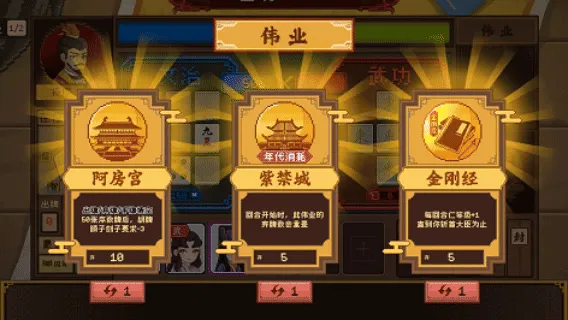
50+座奇观伟业——修建长城、开辟运河,功盖千秋
沉浸历史剧本——亲历真实事件,改写王朝命运

基础游戏模式,以坚持25个回合为目标,期间应对种种挑战
丰富的随机要素,每局都会带来全新体验
通关帝业模式,逐步解锁全新皇帝

历史玩法:亲历王朝兴衰,复刻经典历史图景
挑战玩法:扮演各色历史人物,打破既定宿命
幻想玩法:无双式快意征战,爽玩不受束缚
通关历史玩法,逐步解锁全新大臣

集齐五虎上将、四大美女等关联名臣,即可触发强力羁绊效果——哪一组传奇组合,将成为您问鼎天下的关键助力?

继承帝业模式全部配置
挑战更高统治分数
探索最强阵容极限

Stats
All-time low is the lowest price we've recorded for this game since we started tracking it.
Languages: Simplified Chinese**languages with full audio support
Engagement
Reviews
上手比较难,新手看不懂 ,引导不好,希望再细化一下。
刚好碰上正式版更新,比之前看视频里多了好多新皇帝和剧本,实机体验策略和羁绊搭配起来有深度,这皇帝当得真爽
正式版刚发售不久就大更了,之前就比较关注,皇帝和剧本都比demo增加了很多,平衡性也更好了
我是来当皇帝,玩爽文的,结果你丫的让我来组卡牌,玩卡组,出牌去连线就不能胡牌了 左右脑互搏,GUN!!!
Related
Related
Trends
Concurrent players on Steam, sampled daily since tracking started.
Hours played at review time, across 38 reviews with recorded playtime.
好玩,吕雉有点过于超模了,配合左慈,电表倒转,几回合就能把武将池抽完杀完了。
去年就开始期待正式版了,终究还是等到了,嘻嘻嘻,摸鱼的时候还挺喜欢玩这种肉鸽小游戏的。
之前就玩过demo,现在正式版上线了马上就来体验了,麻将加肉鸽的设计非常的不错,玩起来也很独特,体验还不错,不知道后续制作组还有什么新的想法呢?
皇帝游戏:天下-皇游天下 is a strategy roguelike that blends imperial management, card-based mechanics, and historical Chinese themes into a surprisingly deep and addictive experience. Developed and published by OTTOCOM, the game places players in the role of famous emperors attempting to build stable dynasties while managing ministers, policies, wonders, military affairs, and unpredictable political events. While many strategy roguelikes lean heavily into fantasy settings or abstract mechanics, this game builds its entire identity around Chinese imperial history and legendary historical figures, giving it a distinctive atmosphere that immediately separates it from more generic card battlers. At its core, the gameplay revolves around constructing powerful combinations of ministers, emperor abilities, national policies, wonders, and strategic cards while navigating a constantly changing series of events and challenges. Each run functions similarly to a roguelike deckbuilder, where players gradually assemble stronger synergies and adapt their strategy depending on what characters, upgrades, and events become available. However, instead of focusing purely on combat, the game emphasizes governance and political management just as much as warfare. Economic growth, internal stability, diplomacy, and court management all become important parts of long-term survival, creating a more layered strategic experience than many traditional card-based roguelikes. One of the game’s strongest aspects is how well it uses historical themes within its mechanics. Players can control dozens of emperors inspired by real Chinese dynasties while recruiting famous generals, scholars, ministers, and legendary personalities from history. Certain historical combinations unlock special bond effects and powerful synergies, encouraging players to experiment with different lineups and strategies. Famous alliances and legendary figures are not included simply for decoration; they actively shape gameplay through unique bonuses and interactions. Discovering particularly effective combinations becomes one of the most satisfying parts of the experience because strong political and military synergies can completely transform a struggling empire into a dominant force. The variety of strategic possibilities gives the game excellent replay value. Some runs naturally evolve into militaristic campaigns focused on conquest and expansion, while others reward economic development, cultural influence, or efficient political administration. Randomized events and card offerings constantly force adaptation, preventing players from relying on identical strategies every time. This unpredictability keeps the game engaging across long play sessions because every dynasty develops differently depending on available resources, recruited advisors, and emerging crises. The wonder-building system is another standout feature. Players can construct famous historical projects and infrastructure that provide significant advantages while reinforcing the fantasy of ruling a powerful empire. Building massive wonders not only strengthens gameplay systems but also contributes heavily to the atmosphere of imperial expansion and dynastic ambition. Combined with minister management and strategic policy decisions, the game succeeds at making players feel like rulers shaping the future of a vast kingdom rather than simply controlling cards in isolated battles. One of the most impressive aspects of 皇帝游戏:天下-皇游天下 is the sheer amount of content packed into the experience. Multiple gameplay modes, scenario variations, difficulty settings, and large pools of historical characters ensure that runs remain varied even after many hours. Some modes recreate famous historical periods with alternate outcomes, while others introduce more unpredictable roguelike-style progression systems. Unlockable emperors, advisors, and strategic options create a strong sense of long-term progression that encourages continued experimentation. The game also does a good job of balancing accessibility with complexity, although that balance is not perfect. Early runs introduce players to the basic mechanics gradually enough to understand core systems, but the strategic depth increases dramatically as more features become available. Managing ministers, policies, wonders, resources, military pressure, and event chains simultaneously can become surprisingly intense during later stages. The game constantly demands careful prioritization because poor planning in one area often creates larger problems elsewhere. Visually, the game adopts a clean 2D presentation with anime-inspired character portraits and traditional Chinese influences throughout its interface and artwork. The graphics are not technically advanced, but they remain functional and attractive enough to support the gameplay effectively. Character art gives historical figures personality, while the interface generally communicates important information clearly despite the large number of overlapping mechanics. The soundtrack complements the setting nicely with traditional-inspired music that reinforces the imperial atmosphere without becoming distracting during longer sessions. However, the game is not without flaws. One of the biggest issues is balance inconsistency. Certain combinations of ministers, policies, and abilities are noticeably stronger than others, which can eventually reduce strategic diversity once players begin discovering dominant strategies. Some builds become overwhelmingly effective compared to alternative approaches, making experimentation less rewarding during higher difficulty runs. On the other hand, unlucky early draws or poor event outcomes can occasionally make runs feel unfairly difficult before players have a chance to stabilize their empire. The complexity may also overwhelm new players. There are many interconnected systems operating simultaneously, and the game does not always explain them particularly well. Understanding how various ministers, policy effects, and historical bonds interact requires patience and repeated experimentation. Players unfamiliar with roguelike deckbuilders or historical strategy games may struggle during the early hours while learning the game’s mechanics. Another major limitation is accessibility outside Chinese-speaking audiences. The game relies heavily on text, historical references, and detailed system explanations, yet it currently only supports Simplified Chinese. This language barrier significantly limits its international reach because understanding the mechanics and historical context is essential for fully appreciating the experience. It is unfortunate because the underlying systems are strong enough to appeal to a much broader audience if proper localization support were added. Technical polish is also somewhat uneven. While the game generally functions well, some players have reported interface frustrations, balancing concerns, and occasional bugs during extended sessions. Longer runs can sometimes become slow and mentally exhausting due to the sheer amount of information players must process every turn. Certain late-game sequences feel more cumbersome than strategically exciting because of how many overlapping effects and calculations are happening simultaneously. For fans of strategy games, roguelike deckbuilders, and historical simulations, the game offers an impressive amount of depth and replayability. Its systems can be overwhelming at first, and the language barrier remains a significant obstacle, but players willing to invest time into understanding its mechanics will discover a highly rewarding strategy experience filled with meaningful decisions, powerful synergies, and strong thematic atmosphere. Rating: 8/10
小丑牌➕一点麻将的玩法 在deck上完美运行 除了右下角使用部分策略会误触外 像素风很适合在deck上休闲玩上一两把 教学关有点简单 repo给制作组的反馈都挺快的 期待之后的更新
关注了快一年了,终于等到正式版上了,相比测试版增加了不少皇帝,大大提高可游玩的时长,目前玩了两个多小时,没遇到BUG挺不错的,总体偏休闲适合打发碎片时间
Audience
Estimated from the language of this game's reviews — a proxy for where players are, not official Steam demographics.
Related
| Slay the Spire | $80.1M | 216.5K | 97% | $24.99 |
| The Scroll of Taiwu : Beyond The Dome | $62.3M | 69.6K | 66% | $29.99 |
| Tabletop Simulator | $42.2M | 73.8K | 96% | $19.99 |
| Coral Island | $20.8M | 27.3K | 89% | $29.99 |
| Volcano Princess | $14.6M | 48.5K | 98% | $10.99 |
| Peglin | $8.3M | 17.5K | 84% | $19.99 |