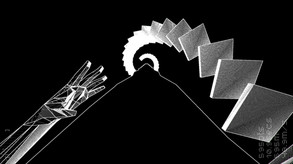
Ever wondered what running at 140mph feels like? FOTONICA is a first-person game about the thrill of speed and traveling flawlessly through complex environments.FOTONICA is simple, but is not easy: it follows a tradition of arcade games that are easy to pick up and almost impossible to master.
Modeled estimate, not a reported figure. How we estimate →
Discounts
Every price cut of more than 20% we have observed, in each market that quoted one, with this game's chart position on either side of it. These are episodes, not a model: a sale is one event, and one event cannot tell you what the next one will do.
Reviews, worldwide (the counter carries no country): 0.14/day in the week to Sep 1 → 0.14/day in the week after.
For scale, across Steam · Top Sellers · Brazil over the last 30 days: the 25 chart moves that followed a price cut of more than 20% went a median of 10 places towards #1, and the 2,413 moves with no price cut behind them went 2 away. One store, one chart, one country — it is the only place we have enough observations to say even that.
Prices outside the United States have been collected since 6 August 2026 and chart positions since 19 July 2026, so a cut older than that has no market to compare and a market that joined later has no history yet. Nothing here is converted between currencies.
About
Genres
Engagement
Reviews
Themes across 47 recent reviews and how positive each mention is. A keyword signal, not full sentiment analysis.
Reviews
I don't understand how this has very positive user rating on Steam. You always run straight ahead and there's only one button to use. Only eight very short levels of around 1 to 2 minutes each. The graphics are most often vector-like in black and white lines unless you go fast enough. Then the lines go yellow. The electronic musics are lame, repetitive and are not dynamic enough to motivate. You're much better off playing any other first-person parkour game, like Mirror's Edge which is great. I did not play 6 hours of Fotonica contrary to what time on record shows. I was idling for cards long ago. I played around 30 minutes and had enough. Plus to add insult to injury, Fotonica is way too expensive at regular price.
⣿⣿⡻⠿⣳⠸⢿⡇⢇⣿⡧⢹⠿⣿⣿⣿⣿⣾⣿⡇⣿⣿⣿⣿⡿⡐⣯⠁ ⠄⠄ ⠟⣛⣽⡳⠼⠄⠈⣷⡾⣥⣱⠃⠣⣿⣿⣿⣯⣭⠽⡇⣿⣿⣿⣿⣟⢢⠏⠄ ⠄ ⢠⡿⠶⣮⣝⣿⠄⠄⠈⡥⢭⣥⠅⢌⣽⣿⣻⢶⣭⡿⠿⠜⢿⣿⣿⡿⠁⠄⠄ ⠄⣼⣧⠤⢌⣭⡇⠄⠄⠄⠭⠭⠭⠯⠴⣚⣉⣛⡢⠭⠵⢶⣾⣦⡍⠁⠄⠄⠄⠄ ⠄⣿⣷⣯⣭⡷⠄⠄⢀⣀⠩⠍⢉⣛⣛⠫⢏⣈⣭⣥⣶⣶⣦⣭⣛⠄⠄⠄⠄⠄ ⢀⣿⣿⣿⡿⠃⢀⣴⣿⣿⣿⣎⢩⠌⣡⣶⣿⣿⣿⣿⣿⣿⣿⣿⣿⣿⣆⠄⠄⠄ ⢸⡿⢟⣽⠎⣰⣿⣿⣿⣿⣿⣿⢀⣾⣿⣿⣿⣿⣿⣿⣿⣿⣿⣿⣿⣿⣿⣦⠄⠄ ⣰⠯⣾⢅⣼⣿⣿⣿⣿⣿⣿⡇⣾⣿⣿⣿⣿⣿⣿⣿⣿⣿⣿⣿⣿⣿⣿⣿⡄⠄ ⢰⣄⡉⣼⣿⣿⣿⣿⣿⣿⣿⢸⣿⣿⣿⣿⣿⣿⣿⣿⣿⣿⣿⣿⣿⣿⣿⣿⣧⠄ ⢯⣌⢹⣿⣿⣿⣿⣿⣿⣿⣿⢸⣿⣿⣿⣿⣿⣿⣿⣿⣿⣿⣿⣿⣿⣿⣿⣿⣿⠄ ⢸⣇⣽⣿⣿⣿⣿⣿⣿⣿⣿⠸⣿⣿⣿⣿⣿⣿⣿⣿⣿⣿⣿⣿⣿⣿⣿⣿⣿⠄ ⢸⣟⣧⡻⣿⣿⣿⣿⣿⣿⣿⣧⡻⣿⣿⣿⣿⣿⣿⣿⣿⣿⣿⣿⣿⣿⣿⣿⣿⠄ ⠈⢹⡧⣿⣸⠿⢿⣿⣿⣿⣿⡿⠗⣈⠻⣿⣿⣿⣿⣿⣿⣿⣿⣿⣿⣿⣿⣿⡇⠄ ⠄⠘⢷⡳⣾⣷⣶⣶⣶⣶⣶⣾⣿⣿⢀⣶⣶⣶⣾⣿⣿⣿⣿⣿⣿⣿⣿⣿⠇⠄ ⠄⠄⠈⣵⣿⣿⣿⣿⣿⣿⣿⣿⣿⣿⢸⣿⣿⣿⣿⣿⣿⣿⣿⣿⣿⣿⣿⣿⠄⠄ ⠄⠄⠄⠸⣿⣿⣿⣿⣿⣿⣿⣿⣿⣿⠘⣿⣿⣿⣿⣿⣿⣿⣿⣿⣿⣿⣿⠇⠄⠄
Media

Related
Related
Price dynamics, follower growth, revenue and sales trajectories with interactive tooltips
This and every other Pro feature is free until October 20, 2026. A free account is all it takes.
Related
| Game | Estimated lifetime revenue | Reviews | Review score | Price |
|---|---|---|---|---|
| $314.8K | 4.9K | 82% | $3.99 | |
| $314.9K | 311 | 71% | $44.99 | |
| $314.7K | 1.7K | 82% | $7.99 | |
| $314.7K | 1.9K | 45% | $6.99 | |
| $314.6K | 1.3K | 54% | $9.99 | |
| $315K | 543 | 94% | $19.99 |
Related
Stats
All-time low is the lowest price we've recorded for this game since we started tracking it.
Languages: English, French, Italian, German, Spanish - Spain, Japanese, Korean, Portuguese - Brazil, Russian, Simplified Chinese
Hours played at review time, across 47 reviews with recorded playtime.
positive critical· bar length = how often the theme comes up
Let me preface this by saying I like this game's aesthetics and its absolutely OUTSTANDING music. I also enjoyed memorizing and optimizing my routes in stages to reach the coveted 10k point goals for each. It can be genuinely tough but also pretty fun nailing a run on higher difficulties. However, this game is not without its many, many issues. For one, its settings/options are incredibly vague and sometimes can prove detrimental in certain areas. If you select FLAT in QUALITY, then discerning where to jump in the game's final stage, ROMOLO, can be near impossible. Furthermore, using FLAT with the COMPLEX SKIN on, the first stage can give those with epilepsy headaches or eyestrain due to the train tracks below being a bright gray that contrasts with the dark background; so, when they move really fast below you as you run, it just looks like the lower-half of the screen is rapidly flashing black and white. Additionally, for me anyways, trying to lower the sound effects' volume didn't do anything, and just played them all at normal volume, save for setting it at 0, which muted them. Not to mention that the game tries to advertise itself as a game that can trigger a state of "flow" within the player, like an endless runner game similar to Subway Surfers. But this is nowhere close. After jumping you can press the jump button again to descend down more quickly. However, both it and the jump height fluctuate in how long you remain in the air, leading the player to over or underestimate landings frequently. Fotonica gradually increases how quickly you move both on the x and y-axes, compared to other endless runners, which only alter how quickly you move on the x-axis. A lack of consistency leads me to play worse and often blame the game due to it forcing me to adapt on the fly to physics literally changing as I play, all the while expecting intense precision. The sound effects can also be loud and incredibly distracting at times, yet I had to keep them on considering how helpful the audio cues are in telling the player when they land. But that's the only time they're useful. The golden sonic boom sound is annoying, distracting, and way too loud. The landing sound effect cycles between completely different genres to a distracting degree. The footstep loop that always plays when running pans left and right depending on which foot is hitting the ground, and yet they play in the left channel twice at one point in the audio and I couldn't unhear it. The most annoying part was my inability to disable the grunts, which cycle between male and female with, again, no options in selecting even a preference to your ear-based torture. There's no consistency in the sounds, and because of that, combined with their loudness and/or their lack of satisfaction, rarely could I ever just relax when playing, instead putting all of my focus into it like I was in an e-sports competition. I am considering learning Unity purely for the ability to edit this game's sounds because I have new ones on standby ready to go. However, if none of this deters you from buying and/or playing it, listen to my advice: - Take frequent breaks to reduce headaches, as even with better settings, the game can still cause eyestrain or headaches - Try to tune out the less important sound effects; focus on the sound effect that plays when landing most - Use a mouse, as that's what the game was made for - If you still want to use a controller, make sure to go to Steam Inputs, click D-Pad, and make sure the game registers the D-Pad as the left stick so you can navigate menus easier and faster Finally, look at the settings below for the best experience possible: QUALITY: FLUID HANDS: OFF (they're incredibly distracting since they divert your attention from the path in front of you) CONTROLS: NORMAL INPUT DELAY: -10 SKIN (when playing ARCADE stages): COMPLEX SKIN (when playing ENDLESS stages): PURE MUSIC (when playing ENDLESS stages): 0 (just play your own music in the background and save yourself the sanity loss) Good luck, game players.
Cool concept, but one simple "feature" of jerking your camera downwards every time you jump is both nauseating and frustrating in what is supposed to be a game about judging precision jumps over and over at a rapid pace.
arcade 1. şahıs koşu platform oyunu, hipnoz hissi bulantı yapabilir ışık patlamaları absürt renk geçişleri mevcut
A pop in and out focus tool. At least that's how I've been utilizing it lately. It's perfect for when you're feeling chaotic and spread out and need to hone back to a concentrated point. Strangely, the faster it is, the easier it is for me to anticipate when to jump. It's a singular button press that you can change to either hold and release to jump or press when you want to jump. The options menu does in fact have accessibility settings albeit they are named fancifully so you might miss that that's what they are. Change the visuals a bit and some other stuff. Click around and configure it, you know? lol Anyway, idk what else to say. I just really like the focus it gives me coupled with the stylized minimalism and music choice. It's good ♥♥♥♥!
Easy to understand, difficult to master. Cool visuals, cool game. 10/10
Fotonica is a minimalist first-person runner that’s basically “speed and focus” distilled into a game. You sprint across glowing wireframe architecture, jump impossible gaps, and try not to panic when the world drops away beneath you. It’s simple to understand in seconds, but it demands real precision once the levels start getting mean. The movement is the whole point, and it feels great when it clicks. Timing your jumps, maintaining momentum, and committing to lines at high speed creates that flow-state feeling where you stop thinking and start reacting. When you nail a section you’ve been failing for ten minutes, it’s pure dopamine. Don’t expect a story-heavy experience. The game is more like an arcade challenge with atmosphere: abstract spaces, clean geometry, and a sense of falling-forward into the next checkpoint. It’s surprisingly tense for something that looks so calm, because every mistake is immediate and usually fatal. Difficulty ramps quickly, and that’s both the charm and the warning label. Early stages teach you the basics, then later ones turn into “learn the route or die” obstacle courses. If you like chasing mastery and shaving seconds off runs, you’ll love it; if you hate repeating short sections to perfect them, you might bounce off. Modes and replayability are where it earns its keep. Time trials and score chasing push you to replay levels, and the game is built around improving your performance rather than just “seeing content once.” The best moments come from slowly building muscle memory until you’re flying through areas that used to feel impossible. Presentation is stylish and coherent: neon wireframe visuals, sharp contrasts, and a soundtrack that keeps the pace without becoming noise. It’s not flashy in a modern AAA way, but it’s memorable, readable at speed, and fits the whole “digital sprint” vibe perfectly. Overall, Fotonica is a short, intense, skill-based runner that rewards persistence. It won’t entertain you for hundreds of hours, but the hours it does offer are focused, challenging, and satisfying if you’re into mastery. Recommended for fans of time trials, precision platforming, and games that make you earn every clean run.
FOTONICA by Santa Ragione is a strikingly original experiment in minimalism and motion, transforming the simple act of running into a pure sensory experience. Rather than overwhelming the player with complex controls or narrative exposition, it strips everything down to a handful of inputs and an explosion of sensation. From the moment the player begins sprinting through its luminous wireframe landscapes, it becomes clear that the game’s goal is not to tell a story but to immerse you in a rhythmic, almost hypnotic flow where instinct and timing replace dialogue and strategy. The first-person perspective enhances this immediacy, creating a tangible feeling of speed and forward momentum that is both exhilarating and meditative. The visual design of FOTONICA is one of its most distinctive features. Rendered entirely in vector-style outlines and sharp contrasts, the game’s world evokes the abstract precision of early computer graphics while maintaining an almost poetic beauty in motion. Levels are constructed out of glowing lines that twist and dissolve into geometric voids, and as the player gains speed, the world blurs and folds around them in pulses of light and shadow. The art direction conveys motion as an aesthetic in itself—each run feels like gliding through a living wireframe structure, both stark and hypnotic. The electronic soundtrack complements this perfectly, syncing rhythmically with the gameplay and reinforcing the trance-like cadence that defines the experience. Every jump and dive feels connected to the beat, turning each level into a kind of interactive composition. The controls are deceptively simple yet demand precision. You hold to run, release to jump, and hold again in midair to dive toward the next platform. This minimalist system sounds almost trivial on paper, but in practice it requires an instinctive understanding of rhythm and timing. The game’s challenge lies not in complexity but in flow—maintaining uninterrupted momentum as the terrain shifts beneath you. Missing a jump or misjudging a landing breaks that rhythm, forcing you to rebuild the sense of speed that defines the entire experience. Each level becomes a dance between mastery and failure, with success measured not by points or combat victories but by the sustained feeling of forward propulsion. It is a design philosophy that values elegance and precision over excess, offering a distilled experience that demands focus and rewards flow. Despite its minimalist brilliance, FOTONICA is not without limitations. Its structure is brief, consisting of a handful of levels and a few endless modes that extend its replayability. While each course offers a unique rhythm and visual identity, the experience can feel fleeting once mastered. Some players might find the lack of traditional progression or variety limiting, especially those expecting more conventional mechanics or storytelling. The endless modes, while enjoyable, lack the intricate verticality and deliberate pacing of the handcrafted stages. The game’s beauty lies in its restraint, but that same restraint can leave one wishing for just a bit more to explore, more layers of complexity to sustain the high it creates. Yet it would be unfair to judge FOTONICA by the standards of larger, more content-heavy games. Its purpose is not to provide an epic journey but to distill gaming down to its most primal essence—movement, speed, and rhythm. It captures the sensation of running purely for the sake of motion, something rarely achieved with such precision in the medium. The hypnotic blend of visuals, sound, and control transforms each run into a meditative act, where reflex and perception align. It is a game that succeeds not through narrative or spectacle but through its ability to make something deeply physical out of something digitally abstract. FOTONICA ultimately stands as a piece of interactive art, a statement about the power of simplicity and style when handled with vision. It is a short experience but a memorable one, proof that video games can evoke emotion and exhilaration through rhythm and design alone. For players who appreciate minimalism and sensory immersion, it offers a rare and resonant thrill—a rush through space and light where every motion feels alive. Though it may not satisfy those seeking traditional depth or longevity, it remains a testament to the elegance of pure play, an experiment in motion that lingers in the mind long after the run has ended. Rating: 8/10
Not Recommended
Players by region
Where this game's players are, estimated from review languages.