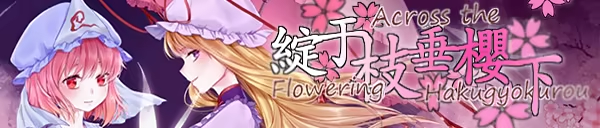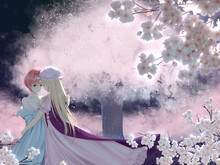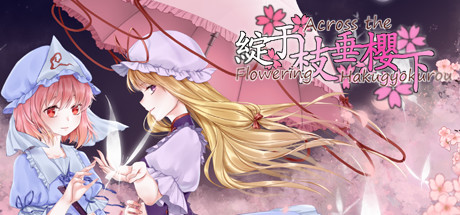
《Flowering Across the Hakugyokurou》is a short Vision Novel Touhou Project Fan Fiction game. The main story is about a love story of Yuyuko and Yukari. This game will tell a story that happened before Yuyuko died.
Modeled estimate, not a reported figure. How we estimate →
Media

About

Stats
All-time low is the lowest price we've recorded for this game since we started tracking it.
Languages: Simplified Chinese
Engagement
Hours played at review time, across 40 reviews with recorded playtime.
Reviews
Themes across 40 recent reviews and how positive each mention is. A keyword signal, not full sentiment analysis.
positive critical· bar length = how often the theme comes up
Reviews
成就通关了《绽于枝垂樱下~Flowering Across the Hakugyokurou》,这部作品是东方系列的同人作,主要讲述了八云紫和幽幽子在幽幽子还活着的时候的交往。如果这是一部视觉小说的话,我可以考虑给个好评,毕竟国产独立游戏本就艰难,LGBT题材更是罕见。但是作为游戏研究者,对于这样蹩脚的游戏创作风格,我实在是无法视而不见。 玩家除了点击对话之外,能做的就是操作幽幽子走来走去,比较主要的几次:封印西行妖、带八云紫参观、带八云紫登山、再次封印西行妖、再次带八云紫登山。其中最为可恶的就是两次封印西行妖,都要去往六个地点,而这六个地点基本没有剧情可言,操作非常机械。第一次封印的时候我就不耐烦了,居然还有第二次。幽幽子可是艺术家出身,受过良好教育的小姐,哪怕你让她吟诵几句诗句、欣赏几幅字画呢?更可怕的是每次封印都会造成光污染! 这里八云紫和幽幽子之间的关系十分可疑。在原著作品里,八云紫并不喜欢热闹繁华,朋友也不算多,主要是几个和她一样经历漫长岁月的存在,比如幽幽子。但是她们之间可以相互理解,主要是在于她们都经历和感受了沧海桑田、物是人非。在八云紫还青春年少的时候,并不是1200+岁的老妖怪,她可是四海遨游,随意穿梭。在这种情况下,考虑到在游戏中表现出来的温柔、好奇、忠贞的性格,美丽的面庞和婀娜的身段,是怎么把自己搞到“除了幽幽子,一无所有”的地步呢?
把~和...当逗号使是吧,还有游戏封面uuz和紫的立绘明明还不错,怎么游戏内画的那么唐...
No English language, and the game is buggy, dialogues are disappearing. But overall cute Touhou yuri story, what else do you need?
唉唉千年组 做的这么好吃干什么!!!
绽于枝垂樱下~Flowering Across the Hakugyokurou, developed and published by 凝冰剑斩, is a heartfelt fan-made visual novel rooted in the rich mythos of the Touhou universe. Rather than attempting to replicate the bullet-hell intensity that defines much of the franchise, this title shifts the focus entirely toward emotional storytelling, character intimacy, and reflective pacing. It unfolds as a compact narrative centered on the relationship between Yukari Yakumo and Yuyuko Saigyouji, presenting an imagined chapter of their shared past beneath the blossoms of Hakugyokurou. The story leans heavily into atmosphere and tone, constructing a quiet, contemplative mood that contrasts with the chaotic energy typically associated with Touhou’s gameplay-oriented entries. From the first scene, the setting of Hakugyokurou is portrayed as tranquil yet tinged with melancholy. The ever-present weeping cherry blossoms serve not only as a visual motif but as a symbolic anchor, reinforcing themes of impermanence, memory, and emotional restraint. The writing adopts a deliberate rhythm, allowing conversations to breathe and emotions to surface gradually rather than relying on dramatic twists or overt conflict. Structurally, the game is divided into a handful of linear chapters, each contributing to a cohesive emotional arc. There are no branching paths or player-driven choices; instead, the experience unfolds like a short illustrated novel. While this limits replay value in a traditional mechanical sense, it allows the narrative to remain tightly focused. The absence of divergent routes places emphasis on interpretation rather than decision-making, encouraging readers to reflect on subtext and unspoken tension between the protagonists. The intimacy of this structure feels intentional, framing the story less as an interactive game and more as a curated emotional vignette. Visually, the presentation is modest but effective. Character portraits and background illustrations convey the ethereal beauty of Hakugyokurou without overwhelming the narrative. The aesthetic simplicity aligns with the project’s scope, relying on expressive poses and subtle visual changes to enhance key moments. There is a softness to the art direction that complements the emotional tone, particularly in scenes set beneath the cascading sakura petals. Even with limited animation, the environment feels alive through its atmosphere and thematic cohesion. The writing itself is where the experience truly distinguishes itself. Dialogue between Yukari and Yuyuko captures a delicate balance of playfulness and underlying sadness, suggesting deeper feelings beneath their exchanges. Fans familiar with Touhou lore will recognize the significance of their bond, and the game builds upon that foundation with care. Rather than contradicting established canon, it explores the emotional spaces left unspoken within it. Themes of inevitability and loss are present throughout, handled with restraint rather than melodrama. This subtlety allows the story’s impact to linger beyond its brief runtime. Sound design further reinforces the reflective tone. Gentle background music underscores pivotal scenes, creating a serene yet bittersweet ambiance. The absence of bombastic tracks ensures that emotional beats remain intimate. Silence, too, is used strategically, allowing moments of pause to carry weight. The overall auditory experience supports immersion without drawing attention away from the dialogue-driven core. One notable limitation is language accessibility, as the game primarily supports Simplified Chinese. This may restrict its reach among international Touhou fans. However, for those able to engage with the text, the narrative depth and sincerity are apparent. Its concise runtime—typically around one to two hours—makes it a focused experience that avoids narrative padding. Every chapter feels purposeful, contributing directly to the thematic arc. Ultimately, 绽于枝垂樱下~Flowering Across the Hakugyokurou succeeds as an emotionally resonant tribute within the Touhou fan ecosystem. It does not aim to compete with large-scale visual novels or mechanically complex adaptations; instead, it embraces its identity as a character-driven exploration of affection, memory, and impermanence. For players who appreciate intimate storytelling and contemplative pacing, it offers a poignant and memorable glimpse into a relationship shaped beneath falling petals—an understated yet heartfelt addition to Touhou-inspired narratives. Rating: 8/10
幽幽子,两遍封印加参观,我比你还熟悉你家,眼睛都快被你的封印闪瞎了,怎么这么亮啊 人没死怎么还be,可恶 做朋友也需要告白,摘抄如下: 时而温柔,时而有趣的妖怪小姐啊… 眷恋着世界的妖怪小姐啊… 陪伴着这样的我的妖怪小姐啊… 请你…做我的朋友吧…!
这一部bug太严重了,两次都是参观完了显示还剩0个地方要参观,死档
纵使你变成亡灵,纵使你已不认识我,我也依然深爱着你直到千年
好香好香好香好香
It took me so long to translate every picture from Chinese to English using my phone camera. I thought the story would be similar to the previous games with Marisa and Reimu from the same developer, but I was surprised by the ending. It was a touching story—I even shed a tear after Chapter 5. It would have been easier if there was an official English translation, but I still rate the game very highly. The only downside is that I can't set the achievement icons in my Steam showcase.
Related
Related
Trends
Modeled estimate over time, reconstructed from Steam's monthly review histogram.
Momentum
Pace estimated from the game's recent review growth (our daily snapshots) at its own sales-per-review ratio — a momentum signal, not booked sales.
Audience
Estimated from the language of this game's reviews — a proxy for where players are, not official Steam demographics.
Related
| Battlerace | $3K | 81 | 83% | $1.99 |
| Deep Dark Dungeon of Anglaus | $3K | 54 | 83% | $1.99 |
| Crimson Song - Yuri Visual Novel | $3K | 54 | 91% | $1.99 |
| Space Bandit | $3K | 81 | 94% | $1.99 |
| Doodle Harmony Idle Merge | $3K | 59 | 69% | $3.49 |
| The Backrooms Regret | $3K | 156 | 61% | $0.99 |