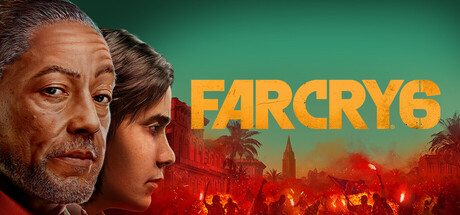
Enter the adrenaline-filled world of a modern-day guerrilla revolution. With stunning vistas, visceral gunplay, and a huge variety of gameplay experiences, there's never been a better time to join the fight.
Modeled estimate, not a reported figure. How we estimate →
About

Genres
Stats
All-time low is the lowest price we've recorded for this game since we started tracking it.
Languages: English*, French*, Italian, German*, Spanish - Spain, Arabic, Japanese*, Korean, Portuguese - Brazil*, Russian*, Simplified Chinese, Spanish - Latin America* +2 more
Updates
Build ids and update times come straight from Steam's PICS — the same source SteamDB reads. Patch history grows as we record new builds.
Engagement
Hours played at review time, across 638 reviews with recorded playtime.
Reviews
Themes across 634 recent reviews and how positive each mention is. A keyword signal, not full sentiment analysis.
positive critical· bar length = how often the theme comes up
Reviews
"The American dream doesn't come in our color." — No one ever. We get a female lead, a weak villain, and, oh yeah, the political enemy is "fascism." Look at almost any South American country right now—most are communist hellholes. People might argue that the cartels are the ones actually in charge, but they don't understand that the communists steal everything from the people and pay the cartels in food and medicine (much of which is given to the government by outside organizations like the UN or the US). The cartels and the communist governments are one and the same—robbing, stealing, and dominating compliant populations for their own wealth and power. Yet, instead of using the word "communist," the writers explicitly choose "fascist." This is absolute goyslop.
失败的人们没有回到家中,他们被枭首、腰斩、剜眼、流放;城市和村庄被掠夺,焚毁,他们再也没有家了。我可能到最后都没能理解迭戈最后对我讲的那句话,“没事的,丹尼,你才是那个幸运的人” 对不起蒙泰罗,本垒王,虎爷,还有身为孩子的迭戈... 晚安,迭戈·卡斯蒂约 ....晚安,克莱拉·加西亚
意识形态宣传、破铜烂铁造的武器,居然还能养鳄鱼当宠物,这游戏简直绝了!
Far Cry® 6 오픈월드 어드벤쳐 파크라이는 이제 점점 전체적인 때깔만 좋아보이는 척 하고 게임성은 그대로인 시리즈가 되어가고 있는것 같음. 계속되는 반복 퀘스트, 수집요소 등의 전형적인 유비식 오픈월드. 이제는 지도만 펴도 한숨 나오고 게임이 하기 싫어짐. 스토리도 그렇게 흥미롭지 않고 캐릭터들은 매력이 없다. 다만 그 전작에 비해서 총 쏘는 맛과 근접전은 좀 더 좋아진 것 같음 만약 파크라이 시리즈에 입문하고 싶다면 추천해볼 수 있겠지만 전작들 다 해봤고 조금 질린다는 느낌을 받았다면 그냥 비추함. 분명히 잠입, 총격전 등의 매력은 있기에 할 맛은 남. 그래서 여전히 파크라이 입문자에게는 추천할만하다는 생각은 듦. 다만 개인적으로 스토리 진행 방식에 대한 정비는 조금 더 손봐야 할듯 싶다. 각 지역에서 퀘스트를 진행하면서 수장들을 죽이는 방식의 스토리는 오히려 몰입도를 방해하고 메인 빌런의 존재감을 약화시킴. 파크라이3의 바스 급으로 메인 빌런을 잘 설정할 것이 아니라면 차라리 어느 정도 선형적으로 스토리를 진행시키는게 오히려 낫지 않을까 싶음 그리고 등장인물들의 텐션이 과도하게 높아서 몰입이 안되고 그냥 미친놈들 집단 같음. pc 때문에 강인한 여성 인물들을 등장시키고 싶었던건지는 모르겠지만 그냥 고집불통으로 밖에 안 보이는 인물들이 보임. 전체적인 전투는 재밌지만 크기만 크지 텅텅 비어있는 맵들 산으로 가는 스토리. 시리즈 역사상 존재감이 너무 없는 최악의 빌런 엔딩이 너무 별로라 엔딩 이후 오픈월드 특성인 맵 구석구석 탐험하고 싶은 욕구가 너무 떨어지며 오히려 더 손이 안간다.
Итак....мною все таки пройдены все части Far Cry которые есть на данный момент и если уж говорить про 6 часть, то лично мне не ясен хейт вокруг нее, да это все тот же Far Cry который мы уже играли видели и знаем, но блин, формула работает, и игра не заставила мне скучать ни на минуту. У нас есть новый злодей Кастильо, есть новый мир а-ля кое какая страна Карибского бассейна который мы должны спасти путем революции!!! Изменения присутствуют в геймплее хоть и небольшие, у нас теперь есть КПП, зенитные орудия которые надо уничтожать иначе не сможем летать в данном районе, теперь наши напарники это животные все, людей нету. И главное изменение, это у нас появилось супрэмо, такое подобие ульты нашей которое мы носим как рюкзак, думаю это понравиться многим. Да у нас все так же 3 подопечных главного злодея которых надо устранить и освободить регионы Яры прежде чем мы сможем свергнуть диктатора Кастильо. По стрельбе это все так же ощущается как 5 часть и это круто. Очень понравилось как разработчики перенесли и дают нам почуствовать весь этот вкус революции. Не обошлось и без пасхалок на предыдущие части, не буду спойлерить но они есть. Финал жестокий, но ожидаемый. За все время в игре мною были захвачены все аванпосты, зачищены все зенитки, все запасы, почти все перехваты, пройдены 50-60% ярансикх историй и найдено тайников. Игра огромна и мир Яры реально большой, часов до 50 можно спокойно наиграть. Во всем остальном это все тот же старый добрый Far Cry, поэтому всем ценителям рекомендую не пожалеете! P.S. Viva Revolution !!!
кал
Add the Motherland Bundle back in. If you removed it because of the war, just so you know- my great grandfather was a Ukrainian who proudly wore such a uniform when fighting side by side with Russians against fascism. It’s a horrendous act of erasure to equate the USSR with Russia when millions of people from over a dozen nations sacrificed themselves by the millions in WWII. If I'd known it'd been removed, I wouldn't have bought the game.
育碧罐头游戏,但是这个罐头属于很耐吃的,地图超大,而且战斗!爽!可以收集材料组装枪械,总的来说就是带领游击队解放雅拉(一个拉美小国)
Прошли с другом Марюсом! Кайфанули! Отличная игра! Джанкарло Эспозито хорошо сыграл! https://steamcommunity.com/sharedfiles/filedetails/?id=3186187140
I love video games. I dedicate every day of my life to them. To me, they are a sublime form of art and beauty: the highest level artistic expression has reached. But there comes a point in every cultural industry where repetition ceases to be an artistic strategy and becomes a pathological diagnosis of a deeper condition. It no longer signals continuity; it reveals exhaustion. Far Cry 6 must be read precisely in those terms: not as an isolated product with design flaws, but as a symptom of a broader transformation in the logic of contemporary video games. Since Far Cry 3, the series had built a recognizable identity around a simple yet powerful premise: "the fantasy of individual power within a hostile environment" Progression was not based on numerical abstractions, but on practical mastery-pattern recognition, precise execution, improvisation under pressure. The experience was grounded in a form of direct agency, where every action produced an intelligible consequence within the game world: "a sniper headshot was a sniper headshot!" Far Cry 6 breaks that foundational contract. Now, you may need four or more shots to kill a generic enemy in the head. I. The Quantification of Experience and the Loss of Meaning: The introduction of RPG systems-levels, weapon rarity, health bars-is not merely a mechanical expansion, but an ontological mutation of the ludic object. The enemy ceases to be an entity situated in the world and becomes a quantifiable magnitude: a reservoir of hit points to be depleted, a bullet sponge that absorbs headshots. The effect is not trivial! When a headshot ceases to be decisive, the game undermines its own internal coherence. Action loses its meaningful character and becomes procedure. It is no longer about acting correctly, but about accumulating sufficient damage. This shift can be understood within a broader framework: instrumental rationality applied to game design, where every experience must be measurable, scalable, and optimizable. Yet in this process, what is lost is precisely what gave action its meaning: its irreducible quality. It is important, however, to acknowledge a counterargument: these systems increase accessibility, allow for diverse playstyles, and broaden the player base. But this inclusivity comes at a structural cost. By homogenizing experience into quantitative terms, the game dilutes what once made the series distinctive. Inclusion is achieved at the expense of identity. II. Repetition, Variation and Simulation Without Progress: Repetition is not inherently a flaw; it is constitutive of video games as a form. The issue in Far Cry 6 is that repetition has been emptied of meaningful variation. Missions (eliminate targets, destroy infrastructure, burn crops) do not generate new experiential configurations but reiterate a closed structure. What emerges is a troubling phenomenon: a simulation of activity without real transformation. The player is constantly acting, yet these actions fail to produce qualitative novelty. Time invested does not translate into real experience, but into accumulation and consumption. This design responds less to an aesthetic logic than to an industrial one: maximizing player retention time. Thus, a form of entertainment is configured that seeks neither artistic intensity nor transcendental meaning, but quantitative duration: spending more time doing the same actions, now artificially prolonged-where one headshot once sufficed, now four are required. III. The Open World and the Reduction of Space to Interface: The world of Far Cry 6 is vast, but that vastness lacks density. It is expansive in metric terms, yet poor in phenomenological ones. Here, the distinction between scale and depth becomes crucial. An open world, in its fullest sense, should constitute a horizon of emergent possibilities. Instead, the space is presented as a matrix of predefined tasks. The player does not inhabit the world; they traverse it as one navigates an interface. Exploration is reduced to optimization. Freedom becomes the selection between pre-structured options. In this sense, the world ceases to be a space of experience and becomes a system for distributing repetitive, empty activities. IV. The Infiltration of the “Game as a Service” Model: Although Far Cry 6 is not formally presented as a live-service game, its internal architecture clearly reflects the influence of this model. Systems of cumulative progression, standardized interfaces, and structures designed to prolong interaction rather than intensify it. The reference to Destiny is not incidental. This design paradigm has redefined success in the industry, shifting the focus from closed experiences to continuous engagement. Yet in adopting these structures, Far Cry 6 becomes trapped in an intermediate state. It lacks the systemic depth of a service-oriented game while also losing the coherence of a self-contained narrative experience. The result is a structurally unstable hybrid, marked by a persistent sense of emptiness. V. Narrative, Politics and Symbolic Emptiness: The presence of Giancarlo Esposito suggests a narrative ambition the game ultimately fails to sustain. The antagonist does not structure the experience but appears sporadically, without generating sustained or meaningful tension. More significant is the treatment of its political dimension. A story about overthrowing a dictatorship necessarily implies a stance-clearly echoing Cuba. Yet the game systematically neutralizes its own content. Politics is reduced to empty aesthetics: recognizable signs without interpretive commitment or corporate willingness to take a clear ideological position. Once again, a kind of fragility emerges-a reluctance to challenge, to offend, to assert. This produces an effect of symbolic emptiness. The narrative does not construct meaning; it only simulates it. VI. Alienation and the Loss of Identity: All these transformations lead to a deeper conclusion: Far Cry 6 does not merely alter its design-it loses its identity. It becomes a product aligned with external forces-market trends, metrics, retention models-rather than responding to an internally coherent logic. In this sense, we can speak of alienation: the game no longer belongs to itself. Its form no longer expresses intention, but adaptation to market logic. Conclusion: From Experience to Consumption: Far Cry 6 does not fail due to technical shortcomings or lack of resources. Its problem is structural: it is an object designed under multiple incompatible logics, none of which fully prevails. What is at stake is not merely the quality of a single title, but a transformation in the very nature of video games as a medium. When design becomes primarily oriented toward maximizing consumption time, experience loses its meaningful character and approaches a form of repetitive occupation—one that produces not aesthetic enjoyment, but a kind of mechanical nausea. It would be inaccurate, however, to extend this critique indiscriminately across the entire industry. There remain spaces (particularly outside the AAA circuit) where video games continue to explore their potential as an artistic medium. Precisely for this reason, Far Cry 6 is significant: not as a universal rule, but as a paradigmatic case of a dominant trend. The question it leaves us with extends beyond this game: "What kind of experiences are we designing when the goal shifts from intensity and meaning to mere duration-empty, repetitive duration?" In this transition toward market-driven logic, the real risk is not simply that we stop playing as we once did, but that we stop finding in games something worth experiencing as art. We, as players, do not want to be turned into Sisyphus: Sometimes we just want something as simple as a sniper headshot being just a sniper headshot.
Related
Related
Trends
Modeled estimate over time, reconstructed from Steam's monthly review histogram.
Engagement
DAU/MAU are modeled from peak concurrent players (≈×8 and ×28) — Steam publishes no active-user counts, so treat these as rough estimates, not reported figures.
Audience
Audience
Estimated from the language of this game's reviews — a proxy for where players are, not official Steam demographics.
Games most often reviewed by the same players — an audience-affinity signal from our review sample, not full ownership data.
Related
| Call of Duty®: Modern Warfare® 3 (2011) | $39.1M | 39.6K | 89% | $39.99 |
| Middle-earth™: Shadow of Mordor™ | $39.5M | 96.6K | 93% | $19.99 |
| Ravenfield | $39M | 79.6K | 97% | $17.99 |
| Nioh 2 – The Complete Edition | $39M | 50.3K | 87% | $49.99 |
| Farming Simulator 22 | $39M | 92K | 93% | $19.99 |
| HUMANKIND™ | $38.8M | 28.6K | 69% | $49.99 |