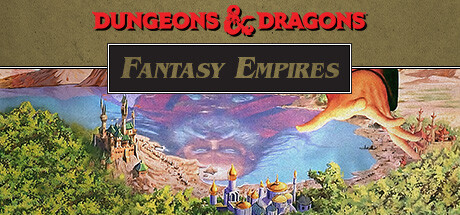
Create alliances, defeat enemy kingdoms and forge an empire in this Dungeons & Dragons game world! Under the computer Dungeon Master, you’ll interact with fantastic races, command dozens of troop types, send your heroes on quests and construct a variety of buildings and fortifications.
Modeled estimate, not a reported figure. How we estimate →
Every price cut of more than 20% we have observed, in each market that quoted one, with this game's chart position on either side of it. These are episodes, not a model: a sale is one event, and one event cannot tell you what the next one will do.
Reviews, worldwide (the counter carries no country): 0/day in the week to Sep 8 → 0/day in the week after.
For scale, across Steam · Top Sellers · Brazil over the last 30 days: the 26 chart moves that followed a price cut of more than 20% went a median of 7 places towards #1, and the 2,400 moves with no price cut behind them went 2 away. One store, one chart, one country — it is the only place we have enough observations to say even that.
Prices outside the United States have been collected since 6 August 2026 and chart positions since 19 July 2026, so a cut older than that has no market to compare and a market that joined later has no history yet. Nothing here is converted between currencies.
About
Genres
Sums Steam only; GOG publishes no volume signal, so the true total is higher by an unknown amount.
| Store | Price | Audience | Score | Chart | Est. revenue |
|---|---|---|---|---|---|
SteamYou are here | $4.99−50% | 37reviews | 84% | — | $11.4K |
| $4.99−50% | 35ratings | 86% | — | not modelled |
Matched by title — a reused name can pair the wrong games. * is a critic aggregate. Prices and positions are each store's United States storefront; Epic charts worldwide. Audience and Score too, except Steam's, which is worldwide.
Engagement
Reviews
In the very late 90's I found this game in a bargain bin at an outlet store. This is the same game I remember. I've looked for this one for a long time. Thanks!!
I was introduced to D&D as a child with my twin by my older brother in the 80s and this setting, Mystara, was were my first characters roamed. When these games were first published we got most of these games and sometimes came to near fights on who would have computer time to play them. I'm thrilled to have them available to me again even if I haven't had as much time to play them as I'd like. A warning to the younger generations: the game had a very different system that phased out when D20 came around.
Media

Related
Related
Price dynamics, follower growth, revenue and sales trajectories with interactive tooltips
This and every other Pro feature is free until October 20, 2026. A free account is all it takes.
Stats
All-time low is the lowest price we've recorded for this game since we started tracking it.
Languages: English
Hours played at review time, across 37 reviews with recorded playtime.
This game is great!! I played hours and hours of this when I was 13 years old in 1993 :D it's exactly the same as I remember it being, except this Steam version runs on my modern computer better than the old game ran on my 486 with Windows 3.1 and DOS back in the day! :D I've seen a few reviews saying the game didn't work for them but it works great for me, in the old days the battles were weirdly sped up and nearly unplayable (i got around this most battles I had a mage with my army of fighters, he'd stand back and just lob fireballs non-stop, which would destroy anything in its path anywhere on the board, including castle walls) Now the battles run at normal speed and strategy is possible :D Brings me back to being a child, I love it!!
Great game takes me waay back
What you see is what you get. Much as I would love an updated version of Fantasy Empires, this is exactly the same as running the original game with DOSBox and a bypass on all the annoying late 80s and early 90s copy protection. That said, Fantasy Empires is as fun today as it was then, so it didn't need much to make me want to play it again. An inspired marriage of Risk and D&D, there's not really another game that can quite scratch the same itch. The music has also stayed with me all this time, and I still get a rush from hearing the epic score. Some issues (with modern gaming conventions in hindsight): Character creation was novel at the time, but isn't much to write home about today. You pick your name, the classic six D&D stats, a class, an alignment, a brief description for flavor, and from about a couple dozen premade portraits that one of the other NPCs is probably already using. - Documentation on what exactly the stats bring to the table are sparse. From what limited information I've gathered, and I could be wrong, STR affects hero combat damage, DEX affects hero armor class, CON affects hero hitpoints, INT affects mage spells, WIS affects Cleric and Druid spells, and CHA affects how much income is generated. Just like classic D&D, some stats are more important than others, but that's assuming you don't just manually set them all to 18. A modernized version of this game would more likely use a point buy system and have better balance on each of their impact. (If someone can direct me to better information on how stats work, please do!) - Classes are based on classic D&D, including favorites like Fighter, Magic-User, Cleric, Dwarf, and Elf. That's right, Dwarves attack at melee range, can take a lot of punishment, and are obviously nothing like Fighters which... do the exact same thing. You start every campaign with each class of hero in your army, all of which are half your level except the one which matches your class. So if you're a level 4 Cleric, you'll start with level 2 Magic-User, Dwarf, Fighter, and Elf heroes, and a level 4 Cleric hero. If your level 4 Cleric dies during the campaign, not to worry, the campaign continues as if he were just another troop in your army and you can build a new one, or ten if you want. That's about the only relevance to your choice in class. A modern remake might include fifth edition classes and less fantasy racism. Bard or artificer heroes could be interesting if they don't impose too much bloat to combat. - Alignment is poorly implemented. Pretty much the only thing it affects is how much money you generate and what you can get away with during a campaign. That might seem like you're choosing between income or versatility, but there's a huge caveat. Your options are lawful, neutral, or chaotic - lawful generates the most income but you're penalized for casting Animate Dead or breaking treaties by having your alignment shifted toward chaotic. Behaving yourself doesn't seem to shift your alignment back toward lawful (correct me if I'm wrong), so pretty much all you can do is either behave yourself all the time or ultimately be chaotic. If you plan to cast Animate Dead and break treaties anyway, you might as well pick lawful and start with the better income. Honestly, though, it's better to just use your extra income from being a goody-two-shoes buying more armies than summoning undead minions, and don't even bother agreeing to in-game treaties. I don't think a modern remake really needs alignment, but if there's a need to include such a mechanic, I would hope it would be better implemented and balanced. Combat is fun, but for anyone who didn't grow up in the era this game was made, it may seem limited and janky. - First of all, automating battles is faster, but is calculated by seemingly mashing every attacker unit against every defender unit and subtracting the difference with maybe a little randomization involved. That means if your army is ten Orcs and two Elves, and your opponent's army is 320 fighters, you'll take down about a dozen of their fighters before you ultimately lose an automated fight. There's seemingly no swarm tactics in automated battles, they just kind of line up and fight each other one at a time like proper gentlemen. Conversely, if you play it out, your two Elves can kite the entire enemy army to death. It'll take a long time, but your opponent can't do anything to stop you other than turn tail and retreat all 300 of his other Spartans. There are plenty of other ways to ensure you lose zero troops, but pretty much all of them involve manually guiding combat. - Your caster heroes can cast spells pre-combat, but there's almost no reason to cast Magic-user's confusion other than because you can and you don't have anything better. For about half a second, supposedly enemy troops will attack each other, but for how long it lasts, they pretty much have barely enough time to turn and face each other, let alone swing a sword. Otherwise, you want to cast Cleric's Bless or Druid's Control Wind's if the opponent is heavily reliant on ranged attacks. - Catapults, Ballistae, and Battering Rams aren't worth it. For the amount of time they take to craft, the cost, the frequency you'll come across fortifications that warrant their use in the first place, you're better off recruiting Elves or Magic-users. Siege weapons are pretty much only good in niche situations, situations that would cause them to go to enemy lands and immediately become lost after winning combat because you didn't have time to build a keep before they wandered off. They also can't reposition nor retreat with the rest of your troops if things are going South, so consider them one-time use no matter what. There may be rare moments when Elves and Magic-users aren't available, so I'm glad to have more accessible alternatives, but I'd hope something so massive and bulky would be less ephemeral. - This game was made at the tail end of predictable processing power, before delta time became standardized for consistency between frames, hence the current need for DOSBox. Even with DOSBox, though, in combat, your game will seemingly speed up when you're alone on the battlefield and slow down to a crawl when a bunch of entities are simultaneously on screen. I'm pretty sure that's one of the main reasons your field of vision is limited to a few grid squares. As a ranged attacker, it's difficult to tell if you're hitting anything unless its three squares in front of you, practically in melee range, and you're only able to attack in eight cardinal directions, so if you want to hit something two squares to the left of you and one square up, you're gonna have to move instead of just aiming West by Northwest. Even tabletop D&D wasn't this strict. - Currently, multiplayer is achieved via hotseat, and combat is split screen. You'll have to really trust that your friends aren't going to try to take a peek at your regions between turns, and good luck if you don't have a controller because otherwise both players will have to use two sides of the same keyboard in combat. Obviously any modern remake would have online capability and none of this would be an issue. If you like D&D, turn-based conquest games, and don't mind retro gaming, this game is a highlight of its era and worth giving a try. I wouldn't pay ten bucks for what's essentially a DOSBox configuration, but I could see someone going to fiver to get someone to set it up for them, or just to have it on Steam where it's organized and easily accessible, and where they can leave a cheeky review to entice others to share the joy with them.
Fantasy Empires is a really neat strategy game that still has a lot of charm, even if its age shows in some clunky, cumbersome mechanics. It’s mostly fun once you get into its groove, though I ran into a few freezes - thankfully nothing game-breaking. For fans of early ’90s D&D PC games, this is a nostalgic gem, but the price feels steep unless you catch it on sale or in a discounted bundle.
Loved this game back in the 1990s. Unfortunately, I have to give this a negative review. The controller/joystick support is undocumented and doesn't seem to work. Not worth it to play on KB. Had to submit for a refund :(
Just imagine, playing a game of Risk. But, instead of Earth, it's set in the world of Mystara; from the first two editions of Advanced Dungeons & Dragons. What's really unique, and truly amazing, is that you get to give commands to your army, and control one of the heroes, or troops, in LIVE BATTLE!! With fighters, elves, dwarves, magic-users, clerics and other classes, as your troops and heroes; you must set out, to claim the territories, and vanquish the armies of enemies found, within the original maps, and lore, of AD&D! I cannot recommend this game, enough!! But, beware! This will not be an easy game. Since this game was created, before Windows 95 existed, all of buttons are unlabelled, there is no zoom function, and no right click, or undo functionality. It will be harshly unforgiving, when it comes to making a mistake; especially, when it comes to transporting troops! I really wish a company would remake this game, with modernized functionality, updated classes, and some new graphics, where it could be played, online. Today's games have come a long way from from when this was created. But, to this very day, none, can come close, to the syle, gameplay, and feel, that Fantasy Empires created, way back, in the early 90's.
Fantasy Empires is an unusual blend of kingdom management, strategy, role-playing, and real-time warfare that takes the Dungeons & Dragons setting in a direction quite different from the traditional party-based adventure. Instead of controlling a handful of heroes through dungeons, the player assumes responsibility for an entire kingdom and attempts to transform it into a powerful empire. Developed by Silicon Knights and published by SNEG, the game is unmistakably a product of classic PC design, yet the number of interconnected ideas packed into its campaign still gives it a distinctive identity. The basic objective revolves around expanding your influence through a combination of military conquest and diplomacy. You begin as the ruler of a kingdom surrounded by potential rivals, and the path toward dominance requires more than simply attacking everything in sight. Alliances can be established, enemy kingdoms can be challenged, territories can be strengthened, and military resources must be organized before committing to major conflicts. The campaign supports between one and four adversaries selected from twenty computer-controlled opponents, providing enough variation for repeated campaigns to develop differently. One of the game's most memorable concepts is its computer Dungeon Master. Rather than using the Dungeons & Dragons name merely as decoration, Fantasy Empires attempts to reproduce some of the feeling of having a Dungeon Master overseeing events and interactions. This system mediates elements of the campaign and contributes to the impression that the world is responding to the player's decisions. It is naturally primitive compared with contemporary dynamic storytelling technology, but it remains fascinating as an early attempt to bring a recognizable tabletop concept into a strategy-focused computer game. The fantasy setting also has a meaningful influence on the strategic experience. Humans, elves, dwarves, orcs, humanoids, and undead creatures are among the different races encountered throughout the campaign. Players can command dozens of troop types, employ special forces, and send heroes on quests. These elements prevent the military side from feeling like a completely conventional historical wargame wearing a fantasy skin. Heroes in particular provide a useful connection to the RPG foundations of Dungeons & Dragons, while the variety of units gives players additional considerations when assembling their forces. Kingdom development complements the military side through the construction of buildings and fortifications. Expansion therefore involves both acquiring territory and making controlled areas more useful or defensible. The economic and construction systems are not especially elaborate by modern grand-strategy standards, but they provide enough management to create a satisfying relationship between preparation and warfare. Deciding where resources and military attention should be concentrated becomes increasingly important as the player's influence expands and more enemies become potential threats. Diplomacy is another ambitious component. Character interactions and computer-controlled behavior were designed to give negotiations more significance than simply choosing between war and peace. The game even incorporates technology described as AI and neural-network-based character interaction, an especially ambitious concept for its era. Players should not expect anything comparable to sophisticated modern artificial intelligence, but the system contributes to the game's personality. Rival kingdoms feel more like political participants in a fantasy world than anonymous targets waiting to be conquered. Combat dramatically changes the presentation. Once opposing forces engage, Fantasy Empires moves away from the strategic map and displays the conflict from an overhead tactical perspective, with the fighting taking place in real time. This creates an interesting connection between strategic preparation and battlefield execution. The troops recruited and organized during the management portions become visible combatants rather than being reduced entirely to numerical calculations. Battles can feel cumbersome by contemporary standards, particularly because controls and unit behavior reflect older design conventions, but the transition from strategic planning to direct tactical warfare remains one of the game's strongest ideas. The audiovisual presentation is where the game's age is most obvious. Pixel graphics, compact interfaces, simple animations, and old-fashioned menu structures require adjustment from anyone accustomed to modern strategy games. Information is not always communicated as elegantly as it would be in a contemporary interface, and newcomers may need patience before understanding the relationship between the different systems. At the same time, the colorful fantasy artwork and overhead battlefields possess genuine retro character. For players who enjoy classic computer strategy games, the presentation can feel charming rather than merely outdated. The greatest strength of Fantasy Empires is ultimately its willingness to combine several genres. None of its individual components possesses extraordinary depth when isolated from the others, but together they form something much more interesting. Diplomacy influences expansion, construction supports territorial security, troop management prepares armies for combat, heroes undertake quests, fantasy races give the world variety, and tactical battles provide an immediate payoff for decisions made on the strategic map. The result is less refined than a modern strategy title but considerably more ambitious than its simple presentation initially suggests. Steam Deck compatibility is reasonably good for such an old PC game. The game is rated Playable rather than Verified. Its functionality can be accessed with the default controller configuration, interface text is considered legible, and the default graphics configuration performs well. SteamOS compatibility is also supported. The main inconveniences are that certain text entry requires manually opening the virtual keyboard and minor audio issues can occur. Those limitations keep it from providing a completely seamless handheld experience, but they are relatively manageable for players interested in portable retro strategy gaming. Fantasy Empires is consequently easiest to recommend to players fascinated by classic Dungeons & Dragons adaptations and experimental strategy games. Its interface, combat behavior, and general accessibility clearly belong to an earlier generation, but its combination of empire building, diplomacy, numerous troop types, special forces, hero quests, fortification construction, fantasy races, computer-controlled opponents, and real-time battles remains surprisingly ambitious. Players willing to accommodate its dated design will discover a creative interpretation of D&D that focuses on becoming a ruler rather than simply becoming an adventurer. Rating: 7/10
One of the best abandonware games! it is a pity isn't prepared for multiplaying but still you can have great fun playing hotseat. Btw it didn't crash so far , so my guess is that one just have to hit the correct configuration.
Selling now
See how fast this game is selling right now — estimated copies and revenue per day from recent review growth.
Players by region
Where this game's players are, estimated from review languages.
Related
| Game | Estimated lifetime revenue | Reviews | Review score | Price |
|---|---|---|---|---|
| $10.1K | 34 | 94% | $8.99 | |
| $2.6K | 13 | 85% | $7.49 | |
| $2.1K | 20 | 60% | $5.99 | |
| $1.6K | 5 | 40% | $9.99 | |
| $0 | 19 | 84% | Free | |
| — | 0 | — | — |
Related
| Game | Estimated lifetime revenue | Reviews | Review score | Price |
|---|---|---|---|---|
| $11.4K | 179 | 60% | $2.99 | |
| $11.5K | 161 | 81% | $4.99 | |
| $11.5K | 112 | 59% | $4.99 | |
| $11.5K | 116 | 88% | $5.59 | |
| $11.4K | 93 | 87% | $5.99 | |
| $11.5K | 79 | 89% | $9.99 |