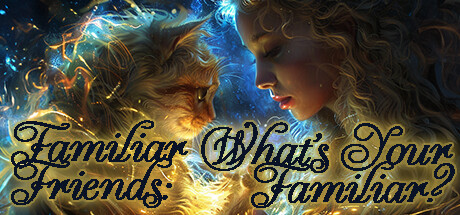
A cute and cozy Visual Novel experience with plenty of choices to make! Come find the Familiar truly meant for you by feeding The Conjuring Cauldron with a multitude of choices, all to a relaxing Original Soundtrack!
Revenue comes from in-game items and microtransactions, which our price-based model doesn't estimate. Copies below reflect the player base, not paid sales.
Media

About


Genres
Stats
Languages: English**languages with full audio support
Engagement
Reviews
Themes across 40 recent reviews and how positive each mention is. A keyword signal, not full sentiment analysis.
Reviews
[h1] "А ФАМИЛЬЯРА КОГДА УЖЕ ЗАВЕДЕШЬ СЕБЕ? ЧАСИКИ-ТО ТИКАЮТ" (С)[/h1] [code] [b] Границы жанров и само понятие игры как таковой буквально каждый год становится все шире и необъятнее. И в этом океане постоянных расширений все сложнее становится понимать, где заканчивается грань между реально допустимыми вещами, а где начинается то жуткое поле, которое можно именовать "недобросовестностью разработчиков". Сегодняшний обзор, пожалуй, этому и посвящается. [/b][/code] [u] [b] ๑۩۩๑ В ТЕОРИИ ๑۩۩๑ [/b] [/u] Судьба заносит Вас в дерби дремучего волшебного леса. Красивые деревья самых разных видов преграждают Вам путь, и буквально каждый шаг дается с трудом. Однако, кругом царит волшебство и красота, и о прочих неурядицах герой как-то не задумывается. Минуя заросли и буреломы, в какой-то момент мы выходим на поляну, посреди которой, о чудо, стоит одинокая, но очень уютная избушка. Нет, не из пряников и без птичьих лап, в общем-то, вполне стандартная сказочная недвижимость многоэтажной застройки с пыхтящим камином, небольшим двориком, и хозяином в виде... живого кота! Едва завидев наше приближение, пушистый разбойник, спешно поправляя полы своей мантии и удерживая на макушке шляпу колдуна, начинает уверять нас, что все, в общем-то, не случайно, и сама судьба направила нас сюда, дабы подобрать нам... своего фамильяра! Для тех, кто в танке, новый фамильяр - это не взять фамилию жены, а завести себе самого настоящего магического питомца. А-ля ворон у колдунов, кот у ведьм или дети у чайлдфри. Али кто похлеще. Вот только выбора как такового нам не дадут. За все придется попотеть. [u] [b] ๑۩۩๑ НА ПРАКТИКЕ ๑۩۩๑ [/b] [/u] Зачем люди делают бесплатные игры? Если студия-разработчик дебютирует на площадке, то ей наверняка с одной стороны важно попробовать свои силы, с другой - заявить о себе и собрать обратную связь, дабы потом, проанализировав полученную инфу, двигаться в верном направлении уже с учетом накопленного опыта. С начинающими, вроде бы, все понятно. А вот как быть с вполне себе не новичками? Теми, кто уже далеко не первый год создает игровые проекты, и, среди прочего, выпускает бесплатные поделки? Казалось бы, денег никто не просит, играть не заставляют, не хочешь - иди дальше. И в этом есть резон. Однако, все ли так честно, как пытается казаться? Ребята из Randumb Studios - товарищи весьма забавные. Признаться честно, я не знаком с их платными проектами, и, вполне возможно, что вот именно там дела обстоят несколько иначе, однако, мои впечатления в рамках данного обзора базируются исключительно на знакомстве с тремя бесплатными работами данной студии, на два из которых я уже оставлял обзоры ранее. В чем, собственно, проблема? На первый взгляд, Familiar Friends выглядит как вполне себе стандартная визуальная новелла, и теги Steam, услужливо "подливая масло в огонь", только усиливают это впечатление. Мы заходим в игру, проматываем несколько страниц незамысловатого текста, любуемся фонами, после чего попадаем в самый настоящий... отдел по допросу. Серьезно. Привычный по ВН-кам игровой процесс в играх Randumb Studios очень быстро сводится к проведению... банального опроса. Причем, всего с двумя вариантами ответа: "да" или "нет". Вопросами на Вас сыплют как из рога изобилия, и происходит это в совершенно хаотичном порядке. - Вы любопытный? Да/Нет - Любите ли Вы сладкое? Да/Нет - Убили бы Вы человека, если бы Вам за это ничего не было? Да/Нет И вот в таком словесном потоке пройдет 90% всей игры. Отвечая на первый взгляд на довольно разнобойные и слабо связанные между собой вопросы, в итоге игрок получает определенный результат. В предыдущих играх студии нам выдавали ключевые слова, здесь же пошли несколько дальше, и нам присваивают магическое (или не очень) животное, которое, по мнению игры, наибольшим образом подходит для нас. "Имейте в виду, что фамильяр вовсе не обязательно должен обладать теми качествами, которые Вы цените. Иногда он может и вовсе быть Вашей полной противоположностью, чтобы удачно дополнять и балансировать своего хозяина". Как-то так стелется соломка под конечный результат. К слову, Вашему покорному слуге по результатам 20-минутного допроса достался... магический хомяк. Знаете почему? Потому что он знает толк в запасах еды на зиму. Вот оно, оказывается, какая у меня главная-то проблема. Ну, буду знать. Шутки-шутками, но за всей вот этой вот мишурой, на деле, скрывается банальное желание лишний раз себя пропиарить. Едва мы пройдем местный тест, игра беззастенчиво начнет советовать нам обратить внимание не прочие (читай - платные) проекты студии, после чего не менее нескромно попросит оставить отзыв. За последний обещают эфемерный бонус в виде возможности назвать своим именем одного из персонажей в будущих играх студии. В общем, замануха для пиара. И, по объему положительных откликов, надо заметить, работает это дело на отлично. А что по факту? А по факту перед нами - просто огрызок ВН-ки, размером меньше чем стандартная бета-глава любой полноценной новеллы. Никакого сюжета, просто опросник, завернутый в арты и присыпанный скудным звуковым сопровождением. Сделано это все не весьма устаревшем игровом движке, где не предусмотрен функционал для работы с текстом, да и в целом смотрится все крайне архаично. [u] [b] ๑۩۩๑ ПЛЮСЫ И МИНУСЫ ๑۩۩๑ [/b] [/u] + Тест "Выбери себе фамильяра" + Доступно бесплатно +/- Арты красивые, но скорее всего, без нейронки тут не обошлось +/- Скудный звуковой набор - Устаревший игровой движок - Нет функционала для работы с текстом - Нет поддержки функции снимков экрана - Функции профиля ограничены - Нет русского языка (уровень английского - средний) [u] [b] ๑۩۩๑ СТОИТ ЛИ ИГРАТЬ? ๑۩۩๑ [/b] [/u] "Familiar Friends: What's Your Familiar?" проходится за 20 минут и так же успешно забывается. Что имеем по факту? Опросник с хаотичным набором вопросов и ограниченной вариативностью ответов. С таким же успехом можно просто зайти на любой сайт с опросами и клацать там все подряд. Можно ли это назвать визуальной новеллой в узком смысле и вообще игрой в широком? В моем понимании - определенно нет. Имеет ли продукт ценность? Для кого-то - возможно, лично я в очередной раз вижу лишь попытку по-дешевому пропиарить себя, маскируясь благими намерениями. Нужны ли такие "игры" в Steam? Оставлю этот вопрос открытым, но про себя уже знаю ответ. [code] Ищете интересные игры, но боитесь выбрать то, что не понравится? Вступайте в [url=https://steamcommunity.com/groups/bythefireplace] Таверну "У камина" [/url] и подписывайтесь на [url=https://store.steampowered.com/curator/39473538/] страничку куратора. [/url] Выберем правильные игры вместе! [/code]
Related
Related
Trends
Concurrent players on Steam, sampled daily since tracking started.
Hours played at review time, across 40 reviews with recorded playtime.
positive critical· bar length = how often the theme comes up
I wouldn't bother with this one. I enjoyed the Test series from this developer but this one was of very little interest and the art style in the trailer and some of the screenshots looks wildly different from the game, presumably because it's just whatever the AI they used spat out. On that note, the use of AI art left a really sour taste. They clarify that the AI only used art they had the rights to, and I don't have any evidence to contradict this, but it just looks ugly. The little cat thing who asks you questions looks like a mascot for a cheap internet provider. It's extremely disappointing that this trend is going to continue with the devs next games, and I can say pretty confidently I will not be buying them.
⠀
I have no clue how this game has any positives. It's AI slop. It just asks you a series of random questions like "Are you a morning person?" and you answer yes or no and it generates an AI animal for you. Then the game ends.
Hi, Randumb. you guys know i've been a fan for a while, and this like many others of your games is a delight. I will say though, the AI art makes me... uncomfortable, i guess. i know you guys say that you're using artwork that you have the rights to for the AI you're using, but it still has that classic, plastic-y feel of AI art that makes me uncomfortable, personally. That aside though, i think this is one of my favorite soundtracks from you guys. i wish Steam has other options than just no and yes sometimes because i think this is a nice, short and sweet game, it's just that the art puts me off a bit.
[quote][url=https://en.wikipedia.org/wiki/AI_slop][b]Warning: AI Slop[/b][/url] This game is partially or completely made with talentless, soulless AI generated content.[/quote] "Familiar Friends: What's Your Familiar?" isn't a game, it's a cringey non-game high school anime club dropout fan-fiction that's been dumped on Steam into the games section. As a visual novel, it doesn't have any gameplay. It's just a lot of clicking through bad, cringe dialogue that no real publisher would ever accept. When people can't get their work published in print, they pay the $100 fee to dump their fan-fiction here instead, where we have to put up with it when looking for things that are actual PC games. This e-book is a cringey mess, basically a CYOA where you answer questions and get an e-book CYOA ending that tells you what magical familiar you get. I hope you can get a familiar that can carefully explain why badly written cringey e-books aren't games. The e-book visuals are all AI slop, trained without permission on copyrighted works... whenever a developer, or in this case really bad author, uses AI Slop, they are directly, wilfully committing contributary copyright infringement. Visual novels/e-books are the worst way to try read a book (and they're always written far worse than real books too). Imagine reading your favorite book, be that War and Peace or The Davinci Code (are you ok??), but you have to click the mouse for every single sentence that appears. You'd hate it. It's a garbage way to try read a book... and even if it wasn't, this still isn't a game. Now take that annoying clicking and add utterly cringey high-school anime club dropout writing to it. Real authors are published in print and found in Barnes & Noble. This garbage only ended up on Steam because they paid $100 to self-publish, because let's face it, professional publishers would not only reject this garbage they saw it, they'd take out restraining orders. E-books are technically simple, and don't require any of the heavy features that actual cutting edge PC games need... in fact, the whole thing can be done in a web browser. There's no justification for charging money on Steam for what might as well be a webpage. We don't buy gaming rigs to spend money on something Chrome or Firefox could do. Despite having no cost, this failed to appeal to gamers. SteamDB shows it peaked at only 7 concurrent readers. This is a dismal public reception. They couldn't even give it away. To satisfy the global demand for this book, you'd only ever need to print 7 copies. While this garbage cringe e-book has no up-front cost, you can find genuinely professionally written novels and comics at a public library or through websites like Project Gutenberg. Your PC isn't a Kindle, and I can't recommend non-game e-book visual novels to people looking for PC games.
Familiar Friends: What’s Your Familiar?, developed and published by Randumb Studios, is a small-scale, choice-driven visual novel that leans more toward a personalized, introspective experience than a traditional story-heavy game. Instead of focusing on a structured narrative with clear conflicts and resolutions, it builds itself around the idea of self-expression, inviting players to explore their own preferences and personality through a series of guided choices. The result is something that feels closer to an interactive personality exercise wrapped in a gentle fantasy setting than a conventional visual novel. The core of the experience is built around decision-making. Players are presented with a sequence of scenarios, questions, and prompts that gradually shape the outcome of their journey. These choices are not framed as branching story paths in the usual sense, but rather as inputs that define the kind of magical familiar the player will ultimately receive. This design removes the pressure of “right” or “wrong” decisions, instead encouraging players to respond naturally. The appeal lies in the anticipation—watching how each choice contributes to a final result that is meant to reflect something about the player themselves. The tone of the game is deliberately soft and inviting. It avoids heavy conflict or dramatic tension, focusing instead on warmth, curiosity, and light introspection. Dialogue is simple and approachable, often leaning into a whimsical or comforting style that reinforces the game’s relaxed pacing. This creates an experience that feels easy to engage with, particularly for players looking for something calm and undemanding. Rather than challenging the player mechanically or narratively, it offers a space to unwind and reflect, even if only briefly. The reveal of the familiar serves as the centerpiece of the entire experience. After progressing through the sequence of choices, players are presented with a magical companion that represents the culmination of their decisions. This moment is satisfying in a personal way, as it ties together the various inputs into a single, tangible outcome. However, this also highlights one of the game’s main limitations. Once the familiar has been revealed, there is little left to explore beyond replaying the experience to see different results. The game’s structure does not extend much further, making it feel more like a short activity than a fully developed system. Visually, the game complements its tone with a clean and approachable aesthetic. The art style is simple but pleasant, using soft colors and straightforward designs to create a welcoming atmosphere. The interface is easy to navigate, ensuring that players can focus entirely on the choices being presented. The soundtrack supports this environment with calm, unobtrusive music that enhances the overall sense of relaxation without drawing attention away from the experience. Despite its charm, Familiar Friends: What’s Your Familiar? is limited by its scope. The lack of mechanical depth and the absence of a strong narrative arc mean that engagement depends almost entirely on the player’s interest in the concept. While the idea of a personalized familiar is appealing, the journey toward that outcome is relatively short and does not evolve significantly. Replayability exists, but it relies on curiosity rather than meaningful variation in gameplay or storytelling. In the end, Familiar Friends: What’s Your Familiar? succeeds as a light, focused experience that prioritizes comfort and personalization over complexity. It offers a brief but pleasant diversion, especially for players who enjoy introspective or choice-driven content without the pressure of traditional gameplay systems. While it may not leave a lasting impact or provide long-term engagement, it delivers a charming and accessible experience that knows exactly what it aims to be. Rating: 6/10
Not a fan of the AI art, but at least I got a cutie rat familiar. me and rodion against the world frfr.
I got a squirrel :)
A lovely, short game that was clearly a work of love from the Randumb Studios to their fans. A cute, fun experience offered for free, just to give people with hectic enough lives a little treat. Absolute win.
Audience
Estimated from the language of this game's reviews — a proxy for where players are, not official Steam demographics.