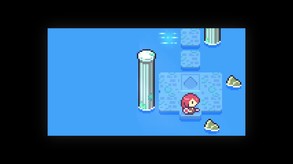
Fairune Collection includes four games in one package – Fairune, Fairune 2, Fairune Origin and Fairune Blast!
Modeled estimate, not a reported figure. How we estimate →
About
Stats
All-time low is the lowest price we've recorded for this game since we started tracking it.
Languages: English, Japanese, Simplified Chinese, Traditional Chinese
Engagement
Hours played at review time, across 40 reviews with recorded playtime.
Reviews
Themes across 40 recent reviews and how positive each mention is. A keyword signal, not full sentiment analysis.
positive critical· bar length = how often the theme comes up
Reviews
[h1] カラフルでレトロ、見た目はカワイイが中々にシビア [/h1] 始めに、当作品は4つのコレクションであるが、このレビューはフェアルーン1&2のみの評価である。 カジュアルな印象とはうって変わり、ノーヒントによる謎解きや隠し通路の数々はプレイヤーを存分にふるいにかけることだろう。 一言で言えば「不親切」なのだけど、かといってヒントが多くてあからさまだと、自力で解いたときのカタルシスに欠ける。 そこは加減や塩梅の問題だと断じようにも、プレイヤーやクリエイターの数だけ基準や尺度はあるもので、これまた言い切るのにためらいを覚える。 だから問題は"導線"なのだ。このゲーム導線が上手くない。 開拓済みエリアと新たなエリア、ヒントと謎解き、アイテムとその使用先など、導線が確立されたゲームは一連の手掛かりと繋がる先が即座に思い起こされ、流れるようなプレイ感覚を与えてくれる。 言うなればこのゲームは手掛かりだけを一気に手渡され、繋がる先をしらみ潰しに探してこいとケツを靴べらで叩かれるようなものだ。 なのでプレイ時間の大半をあてもなくフィールド徘徊するハメになる。 それでも1はその適度なボリュームと控えめなフィールドの広さで、ちょうどよく楽しめた。 実のところ前述した不親切さと導線の貧しさが噛み合ったバランスで、このレビューのオススメにした理由でもある。 しかし2はダメ。ハッキリとつまらない。 なんとかして謎解きをして突破し新しいエリアへ→行き止まり がんばってゲットしたアイテムを使用して新しいエリアへ→行き止まり こういうプレイヤーの出鼻をくじくようなゲームデザインにほとほと呆れ途中で投げた。 フィールドは広いだけでなく迷路のように入り組んでるし、ファストトラベルの配置も行き届いてない。 とはいえ、むかしのフリーゲームのような懐かしい感触は味わえたかな。 繰り返しになるけど1は不親切さと絶妙に噛み合った良作です。 ジャンルはちがえど、過去にプレイした『トランシルビィ』と『神巫女』のご先祖様的ゲームだが、後継は正当な進化を果たしたのだと安堵した。
very interesting
令人力竭的俯视角RPG,不但有纯粹浪费时间的刷子养成系统,还在主线流程中内置大量隐藏道路,设计十分邪道 建议开发者先把类塞RPG的理念搞懂...
Fairune Collection is a deliberately minimalist anthology that captures the essence of early adventure RPG design, presenting it through a modern lens while preserving its simplicity and charm. Developed by SKIPMORE and ESQUADRA,inc. and published by Flyhigh Works, the collection brings together four interconnected titles—Fairune, Fairune 2, Fairune Origin, and Fairune Blast—each offering a slightly different perspective on the same core ideas. Rather than aiming for complexity or scale, the games focus on exploration, pattern recognition, and gradual progression, creating an experience that feels both nostalgic and intentionally restrained. The original Fairune sets the tone with a compact world that encourages careful observation and experimentation. Progression is driven less by combat and more by understanding how the environment works—solving small puzzles, unlocking pathways, and piecing together the logic of the world. Combat itself is reduced to a basic system where outcomes are determined by level rather than skill, allowing players to defeat enemies simply by colliding with them once they are strong enough. This stripped-down approach shifts the focus away from mechanical mastery and toward discovery, giving the game a relaxed and almost meditative pace. The satisfaction comes not from overcoming difficult battles, but from gradually uncovering how everything fits together. Fairune 2 builds on this foundation with a broader scope, introducing a larger map, additional mechanics, and a slightly deeper progression system. The increased scale provides more opportunities for exploration and extends the overall playtime, but it also highlights the limitations of the core formula. As the world expands, backtracking becomes more frequent, and the simplicity that initially feels refreshing can begin to feel repetitive. Despite this, it remains the most substantial entry in the collection, offering the fullest expression of the series’ design philosophy and the most content for players to engage with. The inclusion of Fairune Origin and Fairune Blast adds variety, though in more experimental ways. Fairune Origin serves as a short precursor, offering a condensed version of the gameplay that feels more like a prototype or early iteration than a fully developed experience. It provides context for the series’ evolution but is limited in scope. Fairune Blast, on the other hand, diverges entirely from the established formula, presenting a brief shoot-’em-up experience that acts as a bonus rather than a central feature. While neither of these additions carries the depth of the main entries, they contribute to the overall package by showcasing different interpretations of the core concept. Visually, the collection embraces a clean pixel-art style that echoes classic handheld and early console RPGs. The environments are simple but effective, prioritizing clarity and readability over detail. This approach works well within the context of the gameplay, ensuring that important elements stand out and that puzzles remain easy to interpret once understood. The soundtrack complements this aesthetic with light, chiptune-inspired compositions that reinforce the game’s relaxed tone without becoming repetitive or intrusive. Together, these elements create a cohesive presentation that feels both nostalgic and polished. The gameplay loop across the collection is consistent, emphasizing exploration, item collection, and gradual progression. This consistency is one of the collection’s strengths, as it creates a clear identity and a sense of continuity between the different titles. However, it is also where some of its weaknesses emerge. The lack of mechanical variety means that once players become familiar with the core systems, there are few surprises left to discover. Puzzle design, while often clever, can occasionally be overly obscure, requiring players to notice subtle environmental cues that are not always immediately apparent. This can lead to moments of frustration, particularly for those who are not accustomed to older design philosophies that favor experimentation over guidance. Another notable limitation is the relatively short length of each individual game. While this makes the collection easy to approach in short sessions, it also means that none of the entries fully develops its ideas to their maximum potential. Even the larger titles can be completed relatively quickly, and while there is some incentive to revisit them for completion or optimization, the overall replay value remains modest. Despite these shortcomings, Fairune Collection succeeds in delivering a cohesive and enjoyable experience that captures a specific style of game design. It does not attempt to modernize or complicate its mechanics, instead embracing their simplicity and building an experience around them. This makes it particularly appealing to players who appreciate slower-paced, exploration-focused gameplay and are willing to engage with its understated approach. In the end, Fairune Collection feels like a deliberate throwback to an earlier era of game design, one that values discovery and simplicity over depth and spectacle. It may not offer the complexity or variety of more modern titles, but it provides a charming and accessible experience that is easy to appreciate on its own terms. For those who enjoy retro-inspired adventures and are looking for something relaxed and methodical, it offers a satisfying journey that reflects a clear and consistent vision. Rating: 8/10
I love these games sm I used to play Fairune 1 & 2 on the 3DS but I just bought it on PC and I love it :3
A few years ago, I found Kamiko by the grace of the YouTube Algorithm. That game was short, fun and to the point, with a simple, yet serviceable story, solid gameplay and nice chiptune music. It also marked the start of me liking the Skipmore games. From there, I went to Transyruby, which is Skipmore's best game to date, a fun Metroidvania indeed. But then there is Fairune. Blending in the best of classic NES Zelda puzzles, a polished version of Ys I & II's "bump fighting" mechanic (THIS is what Falcom should've done back in the day, I swear), great chiptune music and an intricate, interconnected world where the clues literally stare you in the face. To say I loved this collection is an understatement. To say I'm as hyped to play Fairune Isles as I am the next Trails game... is an exaggeration, but I will admit I loved the puzzles in Fairune 1 and 2. Heck, even Fairune Origin, the likely Itch.io game that made the whole thing possible is a design masterpiece for any aspiring Dev. No, seriously. Despite its simplicity, Fairune Origin is an amazing, tight, complete Proof-of-Concept Alpha game that I wish I had as a reference back when studying Game Design. It was, therefore, a great joy to play the next two installments (Fairune 1 and 2, of course) to see how Y. Kimura, a great solo Dev, evolved the concept. Makes me truly hyped for Fairune Isles For anyone wanting a true clever puzzle game or collection. Fairune Collection is for you. You'll spend some good hours scouring the map and asking yourself what obvious detail you overlooked. The collection even has a bonus Shooter game in Fairune Blast, which is another nice game, though you have to beat the other three games first to be able to play it. Same as Kamiko and Transyruby, I will replay this collection again and again, because it is so much fun, and now I want to do the speerun achievements. Now I only have Picontier from the Skipmore catalog left to finish until Fairune Isles is released :(.
いいところと悪いところがはっきりあり、おそらく悪いところが気にならない人にとっては楽しめると思うが、自分はどうしても無理だった。 ひょっとするとおま環なのかもしれないが、「自キャラの動きが速すぎる」のだ。 とにかくめちゃくちゃ速いし、1ブロック単位での移動しかできないので行き過ぎも1ブロック単位。なんでもない1ブロックごとの移動に失敗しまくって、おそるおそるキーをちょんちょん突っつく作業がこのゲームの大部分を占めてしまう。 しかもこのゲーム、オールドゲームをリスペクトしていることから察せられるように「全部のブロックをとりあえず歩き、全部の壁をとりあえず押してみる」が非常に有効な攻略法。なのに行き過ぎが頻発するのであまりにもストレスフル。 探索以外の要素は無きに等しいのだから移動の手応えにはもっと気をつかってほしかった。 あと、細かいことだが、移動先が壁だといちいちテケテケ音が鳴るのもやめてほしかった。SEが攻略のヒントになる可能性を考慮して音量をゼロにできなかったが結果的にSEは特に意味を持たないので(少なくとも1のクリアまでと2の途中までは)、煩わしいと思ったら迷わず音量をゼロにしましょう。
Ya like Hydlide? No? Then Fairune 1 isn't for you. More to come as I beat the games.
A great collection of games!
Amazing games <3
Related
Related
Trends
Modeled estimate over time, reconstructed from Steam's monthly review histogram.
Momentum
Pace estimated from the game's recent review growth (our daily snapshots) at its own sales-per-review ratio — a momentum signal, not booked sales.
Audience
Estimated from the language of this game's reviews — a proxy for where players are, not official Steam demographics.
Related
| Neuroshima Hex | $27.2K | 98 | 72% | $9.99 |
| The You Quiz | $27.2K | 98 | 94% | $9.99 |
| BORIS THE ROCKET 🚀 | $27.2K | 97 | 98% | $9.99 |
| Ragdoll: Fall Simulator | $27.2K | 96 | 73% | $9.99 |
| Zero Chastity: A Sultry Summer Holiday | $27.2K | 97 | 81% | $19.99 |
| VELUCITY | $27.2K | 97 | 42% | $14.99 |