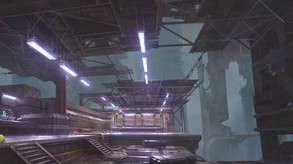
An Interactive graphic novel and a Kinetic Graphic novel to enjoy, Set within a cyber punk dystopian future. With full professional voice acting for every line and steam achievements.
Modeled estimate, not a reported figure. How we estimate →
Media

About
Stats
All-time low is the lowest price we've recorded for this game since we started tracking it.
Languages: English**languages with full audio support
Engagement
Hours played at review time, across 40 reviews with recorded playtime.
Reviews
Themes across 40 recent reviews and how positive each mention is. A keyword signal, not full sentiment analysis.
positive critical· bar length = how often the theme comes up
Reviews
It's a pretty weak story aswell as being fairly short. I'd pass on it.
It's uh... okay I guess? Wish Steam had a neutral recommend option for these kind of cases. This seems to be a VN aiming to provide some context/intro to Echo Tokyo: Phoenix, which I haven't played so I won't be reviewing how good ET:AI does its job. What I can say however is that it feels lacking in content, even for an intro, since you can easily finish all of its paths and get all achievements in around half an hour (0.6hs according to my steam records). Besides this, there's not much really memorable from this VN (the few choices and endings don't feel like anything remarkable, nor does anything from the soundtrack or anything at all really stand out, except some of the voice acting but only because it comes out as somewhat cringeworthy). [b]Would I recommend this? Eh, I guess... as long as you got some money to spare, get it on sale and only if you're planning to play Echo Tokyo: Phoenix, since playing this one just for the experience it provides in itself could very well be one of the most bland experiences available for you on Steam.[/b]
no !! because after this okish intro the game went into deep ♥♥♥♥ because of terrible devs and many lies!! dont waste your money there's many and many other VN way better that this DONT SUPPORT ECHO GAMES !!!
Juste pour les succès
this VN has a pretty straight forward linear path depending on the options chose, however I would still recommend it as IMO it's one of the best i've played so far. Graphics and photos are similar to what you would see in a comic book from the 90's/2000s, but there are HD versions available as DLC
Good short game. Voice acting is good, story seems intriguing. Don't know how or why I have this game in my library, but it was easy achievements at least. I think people hate on this game because they expected lots of nu*e and hor*y scenes, which is what this game was probably advertised as to begin with in 2016. They did release spiky version in 2024 tho. Other reviewers also talk about dev being very irresponsible, so I'd consider that as well when deciding on buying. I'd say - buy this game if you find on sale and want some easy achievements. Otherwise - don't bother.
Easy Achievements 100% / 7min.
5/10
ES GEHT NICHT SO SCHON UND KURZ--NOTE(--C--)---!!!!!!
Echo Tokyo: An Intro, developed and published by Dharker Studios, is a short cyberpunk visual novel designed to introduce players to the broader Echo Tokyo universe. Rather than functioning as a complete narrative experience, the game acts as a prologue that establishes the tone, characters, and themes that would later be explored in the series. Set in a dystopian version of Tokyo, the game blends elements of crime fiction, cyberpunk storytelling, and supernatural transformation into a brief but intriguing narrative introduction. Although its runtime is limited, the game attempts to lay the groundwork for a darker world filled with violence, conspiracies, and individuals struggling to survive in a hostile futuristic society. The game presents its story through two separate narrative routes, each focusing on a different protagonist whose fate becomes intertwined with the darker forces operating within the city. The first storyline centers on Shizume, a young woman whose life takes a dramatic turn after she becomes entangled in a dangerous encounter with a gang. What begins as a desperate attempt to escape a threatening situation quickly evolves into a transformative event that grants her unusual abilities. Her story highlights themes of survival and personal transformation, portraying a character forced to adapt to circumstances far beyond her control. As her narrative unfolds, hints emerge about a much larger conflict taking place within the city’s criminal underworld. The second storyline focuses on Keiji, whose experiences represent the darker side of the game’s world. Keiji’s narrative follows his capture by a secretive organization that subjects him to experimentation and brutal treatment. Through these events, the game explores themes of human experimentation, manipulation, and the psychological impact of extreme circumstances. Unlike Shizume’s storyline, which includes occasional choices that allow players to influence the outcome, Keiji’s story progresses in a mostly linear fashion, presenting a grim and predetermined sequence of events. Together, these two narratives offer contrasting perspectives on the same dystopian setting, showing how different characters are shaped by the dangerous environment around them. Gameplay follows the traditional format of a visual novel, where the player primarily reads dialogue and advances the story through text and illustrated scenes. Interaction is limited to occasional decision points, particularly in Shizume’s route, where choices can lead to alternate outcomes and endings. These decisions add a small element of replayability, encouraging players to explore different narrative paths. However, the game remains largely focused on storytelling rather than interactive gameplay mechanics, making it more comparable to an illustrated digital novel than a traditional game. One notable aspect of Echo Tokyo: An Intro is its use of full narration for the dialogue. Instead of relying solely on text or character-based voice acting, the entire story is read aloud by a narrator. This presentation gives the experience a style that resembles an audio drama or narrated storybook. For some players, this approach enhances immersion by giving the narrative a cinematic quality. Others may find it somewhat unusual compared to the typical visual novel format, where characters usually speak their own lines. Regardless, the narration adds a distinctive layer to the storytelling and helps convey the dramatic tone of the events. Visually, the game adopts an anime-inspired art style that fits naturally within its cyberpunk setting. The backgrounds depict a futuristic Tokyo filled with neon lights, shadowy alleyways, and urban decay, capturing the atmosphere commonly associated with cyberpunk fiction. Character portraits are expressive and stylized, helping convey emotion during key moments in the story. While the artwork is generally appealing, the quality can vary between scenes, with some illustrations appearing more detailed and polished than others. This inconsistency reflects the game’s relatively small production scale but does not significantly detract from the overall presentation. The sound design complements the visual style with a subdued soundtrack that reinforces the dark tone of the narrative. Background music tends to be atmospheric rather than energetic, emphasizing the tension and unease present throughout the story. The limited number of tracks means that the music can feel repetitive during extended reading sessions, but it still serves its purpose in maintaining the mood of the dystopian setting. Combined with the narrator’s voice and environmental sound effects, the audio helps create a sense of immersion within the world of Echo Tokyo. The most significant limitation of Echo Tokyo: An Intro is its short length. Each storyline can be completed fairly quickly, and the entire experience often lasts less than an hour depending on reading speed and branching choices. Because of this brevity, the game does not have enough time to fully develop its characters or explore its world in great detail. Many plot elements feel more like hints or setup for future stories rather than complete narrative arcs. Players expecting a full-length visual novel with extensive character development may find the experience somewhat unsatisfying. However, when viewed as a prologue rather than a standalone title, the game succeeds in establishing an intriguing foundation for a larger narrative universe. The brief glimpses into the characters’ pasts and the hints of a wider conspiracy within the city create a sense of mystery that invites curiosity about what might happen next. The themes of transformation, corruption, and survival provide fertile ground for deeper storytelling in future installments. Another aspect that may divide players is the uneven balance between the two storylines. While Shizume’s route includes branching decisions that allow players to influence events, Keiji’s storyline is mostly linear, offering little opportunity for interaction. This difference can make the overall experience feel slightly unbalanced, as one route provides more agency than the other. Despite these limitations, Echo Tokyo: An Intro still offers an interesting glimpse into a cyberpunk world filled with potential. The writing shows promise, and the combination of dark storytelling, stylized artwork, and narrated presentation gives the game a distinctive identity. For players who enjoy visual novels and are curious about narrative experiments within the genre, the game provides a brief but atmospheric introduction to its fictional universe. Ultimately, Echo Tokyo: An Intro is best understood as a narrative teaser rather than a complete story. Its purpose is to introduce characters, themes, and worldbuilding elements that could later be expanded in future titles. While the short runtime and limited interaction prevent it from feeling like a fully realized visual novel, it still offers a compelling glimpse into a dystopian cyberpunk setting. For those willing to approach it as a short prologue rather than a full experience, the game provides an intriguing starting point for the Echo Tokyo series. Rating: 6/10
Related
Related
Trends
Modeled estimate over time, reconstructed from Steam's monthly review histogram.
Momentum
Pace estimated from the game's recent review growth (our daily snapshots) at its own sales-per-review ratio — a momentum signal, not booked sales.
Audience
Estimated from the language of this game's reviews — a proxy for where players are, not official Steam demographics.
Related
| Orion: A Sci-Fi Visual Novel | $14K | 82 | 54% | $4.99 |
| Tennis in the Face | $14K | 123 | 89% | $4.99 |
| Gym Simulator | $14K | 465 | 40% | $0.99 |
| S.P.A.T. | $14K | 173 | 50% | $4.79 |
| Erotica | $14K | 86 | 87% | $9.99 |
| Bug Heroes: Tower Defense | $14K | 52 | 92% | $9.99 |
Related
| Euro Truck Simulator 2 | $421.6M | 932.3K | 97% | $19.99 |
| Human Fall Flat | $109.3M | 225.6K | 95% | $19.99 |
| American Truck Simulator | $103.7M | 194.2K | 97% | $19.99 |
| Slime Rancher | $73.8M | 155.4K | 98% | $19.99 |
| DAVE THE DIVER | $67.1M | 158.8K | 97% | $19.99 |
| House Flipper | $65.8M | 110.8K | 94% | $24.99 |