Modeled estimate, not a reported figure. How we estimate →
Media

About


Stats
All-time low is the lowest price we've recorded for this game since we started tracking it.
Engagement
Reviews
Themes across 40 recent reviews and how positive each mention is. A keyword signal, not full sentiment analysis.
Reviews
Surprisingly well made game, much more involved combat than expected, lot's of customisation and even the story is interesting. Recommend.
[h1]You Can't Fire Me, I'm Overthrowing You! (8/10)[/h1] [h2]Story[/h2] This is a game about living with the consequences of your actions, both in terms of mutually exclusive player choices and in Morgalia's villain arc. This means some choices can result in certain characters joining, the another choice could have those very same characters die or become enemies. This can lead to some interesting possibilities, though it can also be hard to make a logical connection between the choices and the outcome for certain characters, such as [spoiler]Virgo becoming a boss[/spoiler]. Like in the Trails of Cold Steel series, the majority of character development will take place in bonding events, but since you have a limited number of activity points during each town/camp segment, you'll need to save and reload in order to see them all, but that shouldn't be too hard and it's worth it IMO. Though both possible final party members to join technically only gets very few bonding events to flesh them out. However, each individual character ending changes based on their final link level, which means someone you didn't bond with will likely have a less satisfying ending. That makes me feel somewhat bad for the people I neglected though. As for the elephant in the room, [spoiler]yes, the bad guys are corporate fascists, but I do think it's interesting that the major villains have a fair amount of individuality compared to some of the other antifa-coded games I played. They all have their own backstories and even their role in Zeta's dystopian state differs. Zazz is one of the most unusual fascist villains I've ever read about, since while he's a human supremacist who wants to make non-humans into third-class citizens, he's also the only human currently alive and that means he can't just immediately build a cult of personality around his master race until he can revive the rest of humanity. Instead, he has to rely almost entirely on capitalism and imperialism as tools to conquer, control, divide (based on economic class), and impoverish non-humans while manipulating them into aiding with their own oppression. I think this is partially the point: the party can't let Zazz succeed in his plan to revive and indoctrinate humanity to follow his hateful views, or they'll be trapped in an unwinnable battle against full-power fascism.[/spoiler] I feel like the inciting incident to motivate the protagonist uses some plot convenience. [spoiler]Basically, Aries shows up and puts the party in critical condition, but after syncing with Barbados, Barbados/Aries apparently have enough stamina to wipe out Pon Pon, but not enough to get past Libra to finish off the weakened party. That seems hard to believe considering that Akira took enough damage to be reduced to gas form.[/spoiler] The story's darkest section is when [spoiler]Morgalia blows up the mines and frames Akira's party, or it would have been if we could actually see the citizens' reaction and actually have people visibly turn on the party. Instead, the party almost immediately goes to Aquarius Temple for the next plot macguffin. I feel like this is a missed opportunity to make Akira question if their journey is really worth it now that they see the risks that they bring upon themselves and others by rebelling. The closest we get to this is during dialogue that occurs specifically if you recruit Kael, who explains that change needs to happen despite the risk of bringing the Zodiacs to Zazz's doorstep, or Zazz will just keep exploiting people for the rest of eternity. Even then, the whole situation smells of tell, don't show.[/spoiler] There are some unclear or loose ends in the story, such as [spoiler]what happened to the Kolfos during Zeta's occupation of Vulcanite. Zeta's records don't mention them at all, which implies that Zeta did something so horrible to them that they were wiped from history as stage 10 of genocide. There's also the conflict between the angels and the demons, as well as the God of Cycles punishing humanity for ruining the environment. The last point was either added very recently or a new game plus only detail, but I really think such an important point should be accessible on all playthroughs. Additionally, I feel like we need more specifics on how Akira's party is going to change society. While it's implied that Vulcanite will return to its collectivist roots or at least something resembling it, it's unknown what exactly changes in Zeta's government system where the corporation and state are nigh indistinguishable. Additionally, I have no idea what Akira's party plans to do in regards to the environment, since they have to avoid harming it or the God of Cycles will retaliate against them too[/spoiler]. Hopefully, the sequel will expand on these points. I feel unsatisfied by the Evil Runi route. For one thing, [spoiler]I don't see how it's supposed to change the overall fate of Zeta as advertised in the Steam page, since the reformation of Utopya, Vulcanite, and Pon Pon happens anyway. Maybe the sequel will allow us to choose which outcome is canon? Maybe the world will become a worse place without Runi to help reform it? Additionally, Akira blames the demons for this situation, which while mostly true, makes it seem like they're ignoring their own role in isolating Runi. The whole thing just seems really out of character for Akira, since even disregarding the very act of unfriending Runi, you'd think Akira would have a moment of self-reflection in the ending. To me, the choice for Akira to befriend Runi should be the canon one.[/spoiler] TLDR, if you plan to do multiple playthroughs for the sake of achievements, I recommend doing the objectively worst route first so that every playthrough afterwards feels better. Edit: The updated version of the ERR actually does have dire consequences now. [h2]Gameplay[/h2] The game uses a Hype system, where MP upkeep is difficult unless you hit enemy weaknesses in order to steal Hype from them, and enemies can do the same to you. This means you'll have to tailor your team to the enemy weaknesses in order to win efficiently, which works for most enemies except those without weaknesses. For the most part, I found the combat balanced, though they do take a decent amount of time on hard mode because of the lower active party headcount, which makes the party cover fewer weaknesses while having less DPS. Additionally, some enemies and bosses have no weaknesses, which kills your resource loop pretty hard. Fortunately, those are usually reserved for a handful of endgame and optional bosses. As for regular encounters, they're pretty balanced for the most part if you figure out the best party for the majority of enemies in an area, but the bonus dungeon really mixes up their weaknesses. Since you can't run away from battle, this can potentially put you in a bad situation if you're unlucky with enemy weaknesses. Note that you can't revisit most dungeons after you complete them, but I feel like the game is balanced so that even on hard mode, you can win even if you don't pick up every single piece of unique gear, though it certainly helps. Related to that is a romance system, where certain characters can get romance endings with Akira if you always go for their bonding events. Like with Tales of Symphonia, one of of the characters is mechanically easier to pair with the MC than the others. Note that if you're like me and you like evenly distributing everyone's sync levels to ensure everyone has more skills on rotation, it will be very hard to commit to a relationship other than Eliza and maybe Setzuna. Yes, I have commitment issues.
Related
Related
Trends
Modeled estimate over time, reconstructed from Steam's monthly review histogram.
Languages: English**languages with full audio support
Hours played at review time, across 40 reviews with recorded playtime.
positive critical· bar length = how often the theme comes up
Dyztopia is a fun but complex RPG. I adored the story and characters, and felt that the writing was excellent all the way through. I personally don't think there are any huge surprises along the way, but it makes sense and is just incredibly enjoyable. The script is funny and charming, while also just tells a genuinely wonderful story. It gets pretty intense, is a little dark, and also even gets pretty emotional. I thoroughly enjoyed and there are even some branching decisions and alternate paths available that I'm interested in seeing. I'd also say it's short enough where multiple playthroughs aren't unreasonable at all. The combat, in my opinion, was extremely complex. So complex, that I didn't really understand it completely. I was kinda just hitting spells and things usually worked out. Once I found out what worked, I just used it on repeat. On normal difficulty, only the bosses really gave a challenge (which is not a complaint or issue) but I really can't speak too much on the "objective" quality of the combat system because a decent amount of it just went over my head. I understood enough to succeed in most battles without issue, but there is undoubtedly some more complex mechanics I did not process that you probably have to take advantage of on the harder difficulty. For me, Shotgun of Cards did a ton of heavy lifting. Overall, this game was totally awesome and I recommend it to anyone looking for an indie RPG and a really enjoyable story. Big shoutouts to Bass; your game is awesome and I am really looking forward to the sequel!!
I liked what I played so far. Game has a unique and interesting style. The gameplay was a bit on the easy side. Wanting to see more of the story. Definitely give it a try.
A great and replayable RPG in almost every way conceivable. The most I can levy against it is that it lacks subtlety in its storytelling.
Adding character costumes made this game so much cooler. Fredek as an 80s Hair Metal band player? Instant classic Good amount of characters and skills to try out. Also low-key I love the character overworld sprites. I could listen to "It's Sho Time" and "I'M SO BIG" over and over again.
I do not typically play side-scrollers, but this game is definitely a great introduction! I immediately felt invested in the world building and story, without it being overly-complicated or challenging to follow. The sprites are really cute, and the characters are quirky and fun! The level designs are interesting visually and mechanically, and the more you play the game the more you begin to understand how each section works. I played on Easy Mode, and there are lots of helpful tips and tutorials to help get your bearings in this demonic world. The music is also really fun and had me bopping along as I demolished my foes! I look forward to seeing how the story ends. May the mythical duck guide you!
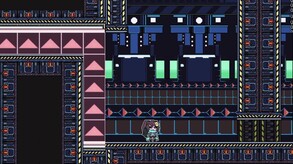
Dyztopia: Post-Human RPG is an unconventional indie role-playing game developed by Bass and published by Bass and Eufree that blends retro aesthetics, side-scrolling exploration, and tactically demanding turn-based combat into a surprisingly layered experience. At first glance, it may appear modest in scope due to its pixel-art presentation and minimalist interface, but beneath that exterior lies a thoughtfully constructed RPG that emphasizes strategy, character growth, and thematic storytelling centered around identity and personal agency in a post-human world. The game distinguishes itself immediately through its side-scrolling exploration system. Instead of the traditional top-down overworld often associated with classic JRPGs, Dyztopia presents towns, fields, and dungeons along horizontal planes. Enemies are visible within environments, allowing players to choose whether to engage or avoid encounters, which adds a sense of control and tactical planning. This structure creates a more immediate connection between exploration and combat, as transitions feel seamless rather than abrupt. While movement and environmental interaction can occasionally feel rigid, the format contributes to the game’s distinct identity and reinforces its experimental approach to genre conventions. Combat is the centerpiece of Dyztopia’s design philosophy. Battles operate on a turn-based system, but depth emerges through mechanics that reward careful observation and calculated decisions. Central to this is the “Hype” system, which amplifies the importance of exploiting enemy weaknesses and managing resources effectively. Striking vulnerabilities builds momentum, while inefficient actions can quickly turn the tide against the player. Each encounter demands attention to party composition, ability synergy, and timing. Boss fights in particular function as strategic puzzles, often requiring experimentation and adaptation to uncover optimal tactics. This emphasis on learning and mastery elevates the combat beyond routine menu navigation, giving it a satisfying layer of complexity. Narratively, Dyztopia explores themes that resonate beyond typical fantasy tropes. The story’s underlying concept—often summarized as being about quitting one’s job and rejecting societal expectations—serves as both literal plot motivation and metaphorical commentary. The protagonist’s journey through a fragmented post-human society is shaped by personal dissatisfaction and the search for purpose. Dialogue blends humor with introspection, creating a tone that alternates between playful satire and earnest reflection. Party members are more than combat companions; they represent differing perspectives within the world, and their evolving relationships add emotional texture to the overarching narrative. Character progression supports this narrative depth. As players advance through chapters, they unlock new abilities and customization options that allow experimentation with different builds. Updates introduced additional content, balance adjustments, and even post-game material, expanding both replayability and strategic variety. Optional costumes with unique moves and expanded difficulty settings further diversify gameplay. These additions demonstrate a commitment to refinement and long-term support, enhancing the overall value of the experience. Visually, Dyztopia leans into pixel-art simplicity while maintaining expressive character animations and distinctive environments. Towns and dungeons are designed with personality, and enemy sprites possess memorable silhouettes that help differentiate encounters. While the graphical style may appear rough compared to large-scale productions, it achieves a cohesive charm that complements the game’s indie roots. The soundtrack and sound effects reinforce the mood, shifting appropriately between lighthearted moments and intense battles. The game is not without its challenges. The interface and skill iconography can initially feel unintuitive, requiring players to learn abilities through trial rather than clear visual communication. Tutorials are minimal, leaving much of the system to be discovered organically. For some players, this learning curve can feel steep. However, those willing to engage deeply with its mechanics often find that the complexity becomes part of the appeal, rewarding patience with increasingly nuanced strategic possibilities. Ultimately, Dyztopia: Post-Human RPG stands as a distinctive and ambitious indie project that prioritizes tactical depth and thematic exploration over broad accessibility. It offers a combat system that demands engagement, a narrative that blends humor with introspection, and a world that feels thoughtfully constructed despite its modest presentation. For players who appreciate strategic turn-based battles and unconventional storytelling within a retro-inspired framework, it delivers a memorable and surprisingly rich role-playing experience. Rating: 7/10
Dyztopia is like a buffet table so long I'm not sure if anyone has managed to taste all of the dishes. It's hard to convey just how much content is crammed in a 10 dollar game; I'm already 15 hours in, but I feel like the game is only now picking up speed. It's not perfect, but it's a whole lot of fun. [b]Gameplay[/b] The meat of the game. I don't usually play jrpgs without a grid, but with the amount of mechanics at play here, I feel like I would get lost with one. Even now, the game tries to explain the layers of the combat piecewise, but some of the depth is lost on me. At the same time, being thrown in a such a chaotic system is incredibly fun. Trying out new skills just to see how they interact with all these seemingly invisible rules makes the combat feel fresh and new even 100+ battles in. The overworld also offers you logic puzzles in the form of level traversal. Roads not taken are blocked off until you trigger the right combination of buttons and switches. Looping around and getting that sweet loot at the other side feels very rewarding. I saw another review complaining about how the treasure is not well hidden, but my experience is the opposite. I feel like I have found items very few people have, which is the best feeling you can have in a game. In the same way, secret content is scattered throughout the game for the player to find. Easy to miss, but very satisfying to find. [b]Story[/b] So far it's good. It's mostly character driven, and while not all characters are likable (nor should they be), they are varied and interesting. The overarching plot is my main drive towards the end; I really like it. [b]Music[/b] You can tell by the credits that this part was a very collaborative effort, and it shows. Lots of tracks, all of them great! [b]Visuals[/b] This game takes visual inspiration from well known sources, but manages to make it their own. I think it's a very charming style, high marks across the board. If there's anything standing out to me, it's the enemy design. There are an incredible amount of different designs, and every enemy is instantly recognizable and unique. The different sprites per enemy for their 'hype' often cracks me up. All in all, it's a gem of a game, go buy it!
Neat character designs, extremely fun and challenging combat mechanics and rewarding to minmax to see big dmg numbers go brr
Momentum
Pace estimated from the game's recent review growth (our daily snapshots) at its own sales-per-review ratio — a momentum signal, not booked sales.
Audience
Estimated from the language of this game's reviews — a proxy for where players are, not official Steam demographics.
Related
| Lunar Nightmare | $4.5K | 54 | 81% | $3.99 |
| 100 Pumpkins 2 | $4.5K | 60 | 97% | $3.99 |
| City Siege: Faction Island | $4.5K | 255 | 67% | $0.79 |
| Absorber | $4.5K | 85 | 80% | $3.00 |
| Party of Lust | $4.5K | 81 | 86% | $2.99 |
| My Cute Pagangirl | $4.5K | 126 | 79% | $2.99 |