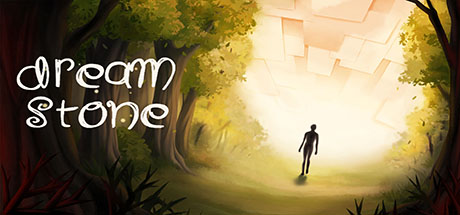
Dream Stone is a compact and surreal indie experience developed by QuickSave and published by SA Industry, designed for players who appreciate atmosphere and quiet exploration over complexity or challenge. At its heart, it is a first-person adventure that transports you into an abstract dream world divided into three chapters—Dark, Colorful, and Dazzle—each one representing a distinct emotional and visual tone. The game’s premise is simple: you must explore these surreal spaces, uncover hidden paths, and collect three mystical “Dream Stones” that will allow you to awaken from your strange dream. Though brief, Dream Stone aims to immerse the player in a contemplative, otherworldly state, using its environments and music to evoke the feeling of wandering through a vivid and unstable dreamscape.
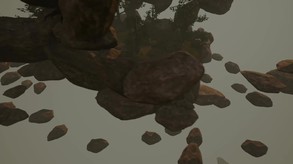
Visually, the game is striking in its use of minimalism and color. Each chapter is crafted around a different aesthetic identity—the “Dark” world plays with heavy contrast and shadow, the “Colorful” world bursts with brightness and geometric shapes, while the “Dazzle” world feels like an ethereal synthesis of light and abstraction. The environments appear intentionally sparse, creating a sense of both serenity and isolation. There’s an odd beauty to the simplicity of the landscapes: vast empty halls, floating platforms, glowing stones, and distant silhouettes that never quite resolve into clear forms. The overall design captures the unstable logic of dreams, where scale and proportion shift unpredictably and the familiar becomes uncanny. The soundtrack complements this atmosphere beautifully with ambient melodies and soft, echoing tones that fade in and out like distant memories. The result is an experience that feels meditative and mysterious, even when the gameplay itself is quiet and straightforward.
Mechanically, Dream Stone keeps things minimal, aligning with its walking-simulator design philosophy. The primary interaction involves exploration and light puzzle-solving, such as finding keys, activating switches, or reaching hard-to-access areas through basic platforming. While the game presents these activities as puzzles, they rarely require deep thought or experimentation—most are navigational challenges rather than logical ones. The controls are simple, though the movement and jumping can sometimes feel clumsy, especially in areas that demand precision. This lack of polish might frustrate some players, yet it unintentionally adds to the dreamlike awkwardness of the world, as though your movements themselves are part of the dream’s instability. The pace is unhurried and deliberate, encouraging players to take in the environment rather than rush to completion.
Each of the three chapters feels distinct but interconnected, creating a rhythm that mirrors the phases of a dream: disorientation, discovery, and awakening. The progression is linear—you collect one Dream Stone per chapter before returning to the hub area—but the act of uncovering these spaces carries its own quiet satisfaction. The lack of dialogue or explicit storytelling means that interpretation is left entirely to the player. There are no cutscenes, voiceovers, or narrative text; instead, the meaning is communicated through imagery and sound. The game’s design choices reflect a kind of minimalist storytelling, relying on environmental cues and mood to evoke reflection rather than explanation. This open-endedness works in its favor, allowing players to project their own emotions and interpretations onto the dream worlds they traverse.
However, Dream Stone’s strengths are also its limitations. Its brevity—it can be completed in under two hours—means that it often feels more like an interactive art piece than a full-fledged game. Once you’ve experienced its three dream worlds, there’s little incentive to return. The simplicity of its mechanics and the absence of any real challenge can leave some players feeling unsatisfied, particularly those who prefer a sense of progression or narrative closure. The game’s technical aspects also show its small-scale nature, with occasional rough edges in collision detection, text prompts that linger too long, and sparse options for controls or audio settings. Yet these flaws are easy to forgive when viewed in the context of its creative intent—it’s clearly the work of a small team prioritizing mood and atmosphere over mechanical sophistication.
As a piece of interactive art, Dream Stone succeeds in what it sets out to do: create an immersive dream experience that evokes emotion through simplicity. Its world design, though limited, feels cohesive and purposeful, and its music and pacing cultivate a calm, meditative tone that few games manage to sustain. It’s a reminder that video games can function as reflective, sensory journeys rather than purely mechanical ones. For players who enjoy titles like Proteus, Shape of the World, or even short indie walking simulators that favor mood over gameplay depth, Dream Stone offers a tranquil and introspective escape.
In the end, Dream Stone is a fleeting but memorable experience—a dream you explore, understand briefly, and then wake from, carrying with you only the impression of its colors and sounds. It’s not for those seeking challenge, story, or replay value, but for anyone drawn to surreal landscapes and quiet exploration, it delivers a pocket-sized world of wonder. Though modest in scope, its sincerity and atmosphere make it stand out as a humble yet evocative indie gem that celebrates the artistry of dreams.
Rating: 6/10