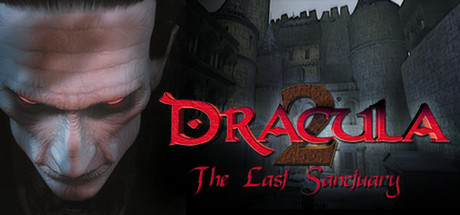
Dracula 2: The Last Sanctuary is a dark, atmospheric continuation of Microids’ gothic adventure series, firmly rooted in the traditions of late-1990s and early-2000s point-and-click design. Developed and published by Microids, the game serves as a direct sequel to Dracula: Resurrection, expanding its moody interpretation of Bram Stoker’s universe while doubling down on environmental storytelling, puzzle-driven progression, and a slow-burn sense of dread. It is a title that prioritizes atmosphere and mystery over accessibility, making it a distinctive, if sometimes demanding, experience for fans of classic adventure games.
The story resumes with Jonathan and Mina Harker attempting to rebuild their lives after surviving Dracula’s earlier schemes, only to find that the Count’s influence has not been eradicated. A mysterious relic known as the Dragon Ring becomes the catalyst for renewed horror, pulling Jonathan back into a world of secret cults, corrupted followers, and supernatural threats lurking beneath seemingly ordinary locations. The narrative unfolds across a series of gothic locales, from shadowy London streets and cemeteries to ancient abbeys and hidden sanctuaries, reinforcing the idea that Dracula’s evil is no longer confined to distant Transylvania but has seeped into the heart of civilization itself.
Gameplay adheres closely to the classic first-person point-and-click formula. Players navigate through pre-rendered, static environments presented as 360-degree panoramic scenes, clicking to move between viewpoints, examine objects, and collect items. Interaction is deliberate and methodical, emphasizing observation and patience. Progression is driven almost entirely by puzzle solving, with players required to interpret visual clues, decipher environmental logic, and combine inventory items in precise ways. This design fosters a strong sense of investigation and immersion, but it also reflects an era when adventure games were unapologetically obtuse, sometimes relying on experimentation and persistence rather than clear guidance.
The puzzles themselves are a mixed but defining element of the experience. At their best, they reward careful attention to detail and a willingness to think within the game’s gothic logic, reinforcing the role of Jonathan as a determined investigator navigating an arcane world. At their weakest, puzzles can feel opaque or overly reliant on pixel-hunting and inventory trial-and-error, which can stall momentum and test player patience. The lack of modern quality-of-life features, such as clear item descriptions or hint systems, means that progress can occasionally hinge on stumbling upon the correct interaction rather than deducing it naturally.
Visually, Dracula 2: The Last Sanctuary is one of the stronger examples of pre-rendered adventure design from its era. The environments are richly detailed and carefully composed, filled with gothic architecture, candlelit interiors, crumbling ruins, and eerie natural spaces. Lighting and color are used effectively to create a constant sense of unease, with shadows and fog often obscuring as much as they reveal. While the static nature of the scenes and the low resolution are unmistakably dated by modern standards, the artistry and mood still hold considerable power, especially for players accustomed to classic adventure aesthetics.
Sound design plays a crucial role in maintaining tension. Ambient audio, subtle musical cues, and environmental effects work together to sustain an oppressive atmosphere, often making exploration feel tense even when nothing overtly threatening is happening on screen. Voice acting is present but uneven, with performances that range from serviceable to melodramatic. While the delivery can sometimes feel stiff or exaggerated, it also contributes to the game’s old-school charm, echoing the theatrical tone often associated with gothic horror adaptations.
Narratively, the game leans heavily into traditional vampire mythology and occult symbolism. Cultists, ancient rituals, and cursed artifacts populate the story, creating a sense of escalating menace as Jonathan delves deeper into Dracula’s network of influence. The pacing is slow and deliberate, with long stretches devoted to exploration and puzzle solving, occasionally interrupted by scripted story moments. This structure reinforces the feeling of isolation and investigation but can also make the overall experience feel drawn out, particularly when players become stuck on a single puzzle for extended periods.
Playing Dracula 2: The Last Sanctuary today is very much an exercise in appreciating retro design. Modern players may struggle with its interface conventions, static navigation, and sometimes unforgiving puzzle logic, while veterans of the genre are more likely to view these elements as part of its identity. The Steam version preserves the original experience largely intact, making it less an updated remaster and more a digital archive of a specific era in adventure game history.
Ultimately, Dracula 2: The Last Sanctuary is a game defined by its atmosphere and ambition rather than mechanical elegance. It offers a richly imagined gothic world, a continuation of a classic literary narrative, and a methodical investigative experience that rewards patience and immersion. While its dated mechanics and occasional frustrations may limit its appeal to a niche audience, players who enjoy traditional point-and-click adventures and brooding horror themes will find it a compelling, if imperfect, journey into the lingering shadow of Dracula’s legacy.
Rating: 5/10