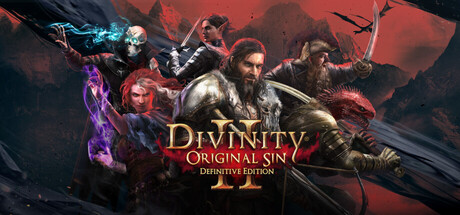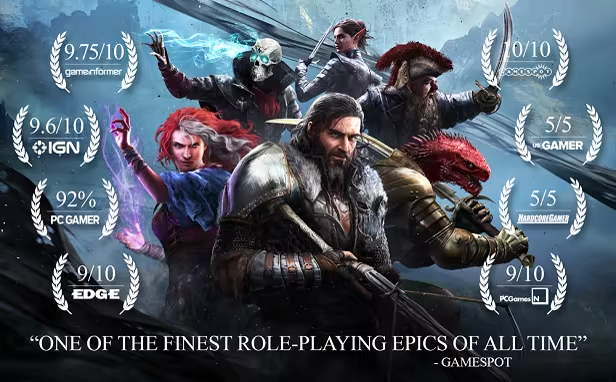
The critically acclaimed RPG that raised the bar, from the creators of Baldur's Gate 3. Gather your party. Master deep, tactical combat. Venture as a party of up to four - but know that only one of you will have the chance to become a God.
Modeled estimate, not a reported figure. How we estimate →
Media

About

Genres
Stats
All-time low is the lowest price we've recorded for this game since we started tracking it.
Languages: English*, French, German, Russian, Polish, Spanish - Spain, Simplified Chinese, Traditional Chinese, Italian, Korean, Czech, Portuguese - Brazil +1 more
Add-ons
Each DLC is estimated with the same model as a game, then summed — a modeled figure, not reported DLC sales.
Updates
Build ids and update times come straight from Steam's PICS — the same source SteamDB reads. Patch history grows as we record new builds.
Engagement
Hours played at review time, across 686 reviews with recorded playtime.
Reviews
Themes across 680 recent reviews and how positive each mention is. A keyword signal, not full sentiment analysis.
positive critical· bar length = how often the theme comes up
Reviews
Perfeição
敢不敢再闪退多几次
Man darf nicht das gleiche erwarten, wie von Baldurs Gate 3, aber es ist trotzdem ein unfassbar gutes Spiel
非常好游戏,必玩
Just the best! Play it if you haven't done sone before.
背包没有批量选择有点麻烦,好像也没有bg3那种战斗日志?但是游戏很好玩
best game ever after act one
Ifán está entero de rico.
After spending roughly 150 hours with Divinity: Original Sin 2, I can confidently say that it is a game of extremes. The world, writing, companions, and overall story are genuinely excellent, and it's easy to see why so many people consider it one of the greatest RPGs ever made. Unfortunately, despite all of its strengths, I found the actual experience increasingly frustrating, and by the end I was simply relieved that it was over rather than satisfied. One of the biggest problems is the game's act structure. Once you leave an act, there is no way to return to it. While this might make narrative sense, it creates a huge problem for anyone who enjoys exploring everything or completing every quest. Many items and quests appear unimportant when you first encounter them, only to reveal their significance dozens of hours later. it's incredibly easy to miss important content. In my case, I discovered nearly 50 hours later that I had missed an entire armor set, and by then there was absolutely nothing I could do about it. A simple fast-travel system between completed acts would have solved this issue without hurting the story. The quest design can also be incredibly punishing. During Act 2, one companion's personal quest asked me to murder one of my allies. I refused because it didn't fit the choices I wanted my character to make, and I continued the game assuming there would be another way to resolve the situation later. More than 100 hours afterwards, I reached what seemed like the natural conclusion of that storyline. Instead of another choice or even a difficult but fair battle, I was suddenly thrown into a fight against an enemy with roughly 20,000 armor that becomes completely invulnerable after only three turns if certain conditions were not met many hours earlier. Once that happens, there is no legitimate way to finish the encounter or complete the companion's quest. The game doesn't warn you that a decision made over a hundred hours earlier can lead to this outcome, nor can you return to previous acts to fix it. My only options were to abandon the quest entirely, reload an ancient save, or exploit the party system by dismissing the companion, hiring a mercenary, and completing the fight that way. Even then, I permanently lost the companion's story conclusion and its rewards. For me, this wasn't an example of meaningful consequences—it was an example of the game painting the player into a corner with no reasonable way out. Another disappointment was the legendary weapon earned through one of the game's longest questlines. Throughout the story, it is built up as a one-time-use blade capable of slaying even gods, and collecting all of its pieces requires a significant amount of exploration across multiple acts. After finally forging it, however, the reward felt surprisingly underwhelming. Its base damage was only modestly higher than the best two-handed swords I already owned, and it even shared the same weapon skill that every other two-handed sword already provides. Considering that the weapon is permanently destroyed after using its signature attack and is treated throughout the story as a legendary artifact, I expected a far more memorable payoff. After so much buildup and effort, the reward simply didn't feel worthy of its reputation. Combat is another area where I think the game takes a step backward from the first Divinity: Original Sin. The introduction of separate Physical Armor and Magic Armor sounds interesting at first, but in practice it heavily encourages building an entire party around either physical or magical damage. Since crowd-control effects only work after the corresponding armor is removed, mixed parties become much less effective. I chose to play mages because I enjoy flashy spellcasters, but I constantly felt like the game was working against me. Enemies rarely stand close enough together for powerful area-of-effect spells, yet my own party naturally stays grouped, making friendly fire a constant problem. Nearly every powerful spell creates elemental surfaces that damage allies as well as enemies, and the AI has no problem turning those same surfaces against you. Throughout my playthrough I felt like I was constantly standing in fire, poison, cursed fire, or some other dangerous surface that I had created myself. Crowd-control spells such as freezing or stunning are also much harder to use because enemies must first lose all of their Magic Armor, and the payoff rarely feels worth the effort. Meanwhile, melee characters feel dramatically stronger than spellcasters. Rogues in particular are incredibly powerful thanks to guaranteed critical backstabs, extremely high burst damage, and multiple teleportation abilities that let them instantly reach vulnerable targets. Many fights began with enemy assassins jumping directly onto my mages and killing them almost immediately. Their strongest attacks don't punish them with friendly fire, while mages constantly have to worry about damaging their own team or creating hazardous terrain that enemies can exploit. Compared to the first game, where I felt archers dominated combat, this time it felt like almost every physical build had a clear advantage over magic users. Crafting is another major disappointment. The system offers very little meaningful customization, most crafted equipment is weaker than what merchants sell, and it isn't even an effective way to earn money. Considering how many ingredients and recipes exist throughout the game, I expected crafting to become an important part of progression, but instead it felt almost completely pointless. It is one of the weakest crafting systems I have encountered in a modern RPG. In the end, I completely understand why people praise Divinity: Original Sin 2 for its writing, world-building, and freedom of choice. Those strengths are real, and they deserve recognition. However, the restrictive act structure, punishing quest design, frustrating armor mechanics, imbalance between physical and magical combat, and underwhelming crafting system gradually overshadowed those strengths for me. After 150 hours, I wasn't excited to see the credits—I was simply ready for the experience to end. Final Score: 6/10 A brilliantly written RPG with memorable characters and excellent storytelling, but one whose gameplay systems often punished experimentation, role-playing, and long-term investment instead of rewarding them.
Goog game if you want freedom, to experiment with builds and have a lot of free time to discover new things.
Related
Related
Trends
Modeled estimate over time, reconstructed from Steam's monthly review histogram.
Engagement
DAU/MAU are modeled from peak concurrent players (≈×8 and ×28) — Steam publishes no active-user counts, so treat these as rough estimates, not reported figures.
Audience
Audience
Estimated from the language of this game's reviews — a proxy for where players are, not official Steam demographics.
Games most often reviewed by the same players — an audience-affinity signal from our review sample, not full ownership data.
Related
| Squad | $166.4M | 240.5K | 81% | $39.99 |
| Don't Starve Together | $164.7M | 539.6K | 95% | $14.99 |
| Satisfactory | $164.4M | 276K | 97% | $27.99 |
| Sid Meier's Civilization® V | $163.6M | 210.2K | 96% | $29.99 |
| RimWorld | $176.7M | 243.3K | 98% | $34.99 |
| Subnautica | $162.4M | 377.1K | 97% | $29.99 |
Related
| Shadow Gambit: The Cursed Crew | $1.4M | 6.4K | 91% | $9.99 |
| Pathfinder: Wrath of the Righteous - Enhanced Edition | $15.6M | 43.5K | 84% | $19.99 |
| Solasta: Crown of the Magister | $12.8M | 22.3K | 87% | $29.99 |
| Solasta II | $3.6M | 3K | 76% | $39.99 |
| Warhammer 40,000: Rogue Trader | $48.8M | 46.5K | 88% | $49.99 |
| Divinity: Original Sin - Enhanced Edition | $31.5M | 32.6K | 89% | $39.99 |