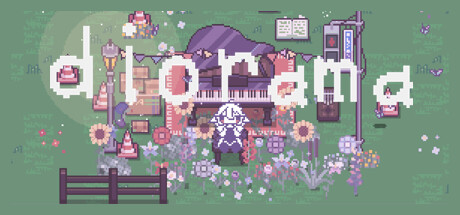
diorama, developed by mel and published by Another Home, is a calm, creative sandbox experience that places personal expression and visual design above all else. Rather than presenting players with objectives, progression systems, or challenges to overcome, the game functions more like a digital hobby space—an interactive canvas where you can build, decorate, and refine small environments at your own pace. From the moment you start, it becomes clear that diorama is less concerned with being “won” and more interested in giving players a place to relax, experiment, and create something that feels uniquely theirs.
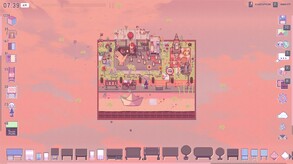
The core of the experience revolves around placing and customizing objects within compact scenes. Players are given a broad selection of furniture, decorative items, plants, structural elements, and environmental details that can be freely arranged. Objects can be moved with precision, recolored, resized, and layered to create depth, allowing even small spaces to feel detailed and intentional. The controls are intuitive and unobtrusive, making the process of building feel natural rather than technical. This ease of use encourages experimentation, as it’s just as enjoyable to tweak a single room for minutes as it is to completely redesign an entire space from scratch.
What truly distinguishes diorama from more traditional simulation or building games is its complete lack of pressure. There are no goals pushing you forward, no economy to manage, and no penalties for changing your mind. You can undo, redo, rearrange, and revisit creations endlessly, which creates a meditative rhythm to the experience. The game encourages a slow, thoughtful approach, where satisfaction comes from visual harmony and atmosphere rather than completion. This makes it particularly appealing for players who enjoy cozy games or creative tools that double as a form of relaxation.
Atmosphere plays a significant role in shaping each creation. The ability to adjust lighting, weather, and time of day dramatically changes how a scene feels, transforming the same layout into something warm and inviting, eerie and mysterious, or calm and melancholic. These options give players a powerful way to tell visual stories without text or dialogue, using mood and composition instead. Combined with the pixel-art style, which strikes a balance between charm and clarity, the game’s presentation feels cohesive and expressive without being overwhelming.
The art direction leans into softness and warmth, with clean pixel work that keeps objects readable while still offering plenty of personality. Items feel thoughtfully designed, and while the overall catalog isn’t enormous, there is enough variety to support many different themes and aesthetics. Whether you’re building a cozy bedroom, a cluttered workshop, a peaceful outdoor nook, or something more surreal, the available assets allow for creativity without feeling overly restrictive. That said, extended play may reveal some repetition, especially for players who like to build very specific or highly detailed scenes.
Community engagement adds another layer of enjoyment. The game encourages sharing creations and participating in themed building challenges, which helps inspire new ideas and provides motivation beyond solo creativity. Seeing how others use the same tools in wildly different ways highlights the flexibility of the system and reinforces the idea that diorama is as much about personal interpretation as it is about the tools themselves. While multiplayer interaction is limited, the shared creative space fosters a sense of connection without needing real-time collaboration.
There are areas where diorama still feels like a growing project. Certain quality-of-life features—such as more advanced rotation options, finer layering controls, or a larger object library—could significantly enhance the building process. Minor visual quirks and interface limitations occasionally interrupt the otherwise smooth creative flow. However, these issues rarely undermine the core experience and instead feel like opportunities for future refinement rather than fundamental flaws.
Ultimately, diorama succeeds by understanding exactly what it wants to be. It is not a management sim, a city builder, or a narrative-driven experience. It is a quiet, flexible creative space designed for players who find joy in arranging details, setting moods, and bringing small scenes to life. For those who enjoy decorating, pixel art aesthetics, and low-pressure sandbox creativity, diorama offers a gentle and rewarding experience that feels less like a game and more like a personal creative retreat.
Rating: 6/10