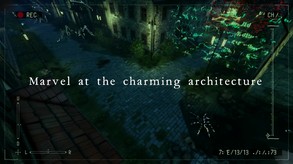
In collaboration with Corpse Party scenario writer Makoto Kedouin, this horror RPG follows Mai Toyama’s search for her sister in a quiet lakeside town. She’ll unravel clues to the town’s past by day, and battle Shadow Matter by night. Can you uncover the truth before reality is consumed by darkness?
Modeled estimate, not a reported figure. How we estimate →
Media

About
Stats
All-time low is the lowest price we've recorded for this game since we started tracking it.
Languages: English*, Japanese*, Simplified Chinese, Traditional Chinese*languages with full audio support
Engagement
Hours played at review time, across 40 reviews with recorded playtime.
Reviews
Themes across 40 recent reviews and how positive each mention is. A keyword signal, not full sentiment analysis.
positive critical· bar length = how often the theme comes up
Reviews
[h1]A Colossal Disappointment[/h1] I went into DERQ 2 (Death end re;Quest) expecting answers from DERQ 1, perhaps some gameplay improvements and another compelling story to boot. DERQ 2 has none of that. It is written nothing like DERQ 1 and gameplay suffers from most of the same issues as DERQ 1. Which is to say, this game is tortuous to play. Monotonous gameplay, nothing burger story + characters + everything. The game does add some plot points for DERQ 1, but it’s literally less than an hour of content, you’re much better off reading the wiki, watching a YouTube video, save yourself the time commitment and money. [hr][/hr] [h2]Story[/h2] This game is written NOTHING like the first. DERQ 1 had characters which engaged with their own story, the world they were in, they felt authentic and not a generic trope dialed up to 11. In contrast, DERQ 2 feels like it was written by a COMPLETELY different person with absolutely no care for the original source material. You play Mai, she kills her dad and moves into a town to find her lost sister. You get two whole party members. Your goal is basically to investigate the “fishyness” of the town and that’s it, which is to say, the plot is entirely aimless for its entire run time. Nothing happens until the final chapters. The interim is filled with repetitive “slice of life” with side characters that are as one-note as the main cast. It’s all girls who repeat “OH EM GEE, YOU SO CUTE” or overly pleasant “oh my dear maiden” scenes over and over and over again. Interim scenes building up to the final chapter are just scenes [spoiler]of these girls dying[/spoiler]. Characters question nothing. LITERALLY NOTHING. The first nightfall in the game, the town goes all spoopy and your main character is just fighting beasties of the night on day one, setting up camp with a mysterious shopkeeper. The game progresses, you even unlock your glitch forms. Does she question or react to anything about this? NOPE. She just casually murders beasties of the night like it’s just a thing she does every morning on a stroll to the supermarket. There’s no mention of how she can fight them, use magic spells, transform into her glitch form, why she or her scooby gang have buggies. None of her two forthcoming party members even question this either. It’s almost as if the gameplay portions don’t even exist in the context of the story. DERQ could’ve got away without mentioning this either, since it’s in a literal video game world, but they engage with it. DERQ 2 takes place in the real world as far as the characters are aware anyway. The best reaction you get from any character is usually “oh mer gerd, what is that thing. Man knew this town was funky”, THAT’S IT. Beyond them questioning nothing, they’re also personality-less. Despite having only 3 characters there’s no meat on the bones of their backstories. Your main motivational friend, Rotten (fitting name), boils down to every interaction being “I LOVE YOU MAI”, “Oh, you reject my love so”, “Hug me!”. Basically, imagine a typical girl in a harem after a dude, only it’s for a girl instead. I’m not even kidding when I say every interaction is her being jealous, ignored by Mai or lovey dovey. No nuance, no variation, no nothing. Lilliania is your other companion, she’s just boring. A pleasant, formal girl who is shy, frail and scared, sees Mai as a mother figure. That’s it. She plays the “awkward 3rd wheel” friend between Mai and Rottie very well, which is to say, why is she here!? All 3 characters have zero chemistry. Even side conversations at camp are mundane, empty “banter”. These aren’t even given dedicated VN sections, just tiny auto-scrolling text boxes that even start to loop after a bit. Returning DERQ 1 characters play very minor roles, however they have all taken their fair share of plot stupidity pills. All of them going to this suspicious town one by one, taking no one with them. All lining up like ducks crossing the road, one by one, waiting for a car to run them over before the next duck gets in line. Some characters are wildly out of character. Take Iris for example, she meets Shina and given how Iris literally wanted to end the world for her, they act as if they don’t even know each other. I’m sure you could riff your way out of this saying “the degrade made it so it never happened”, trivialising even more the events of the first game. There are some positives at least. This game feels more “finished” than DERQ 1. Death ends, of which there are few, are mostly voice-acted and have unique CGs which are nice. There are no “I eat frog and I die” death ends which end the game in two seconds. They’re still fairly stupid though, usually “I see a pit of sharks. Jump in!? Yes/No”, you see the death end a mile away. DERQ 1 had this too, but they still have this looney tune “CONK” sound effect. They play it during emotional scenes??? People die in scenes with this sound effect or get majorly hurt and it feels like they’re being hit with a squeaky hammer. Bizarre. All in all, not worth your time. Most of the story is inconsequential to the events of the first game, even more largely so because the characters don’t even acknowledge it. [hr][/hr] [h2]Gameplay[/h2] Probably the most improved part of the game, with some more unique problems. It is largely the same as DERQ 1, only a lot more polished. Menus look nicer, you have more abilities, more quests (they’re still mundane though). There’s even small QoL like you auto-sprint now, you can press left or right to go through pages of saves, death ends have a “return to last decision” option, the camera doesn’t look 180 degrees AWAY from the enemies by default. Good stuff. However, the gameplay is still trivial. Most battles end in 1 turn, the ping pong system of knocking enemies across the arena is still present, which contributes largely to this problem. In DERQ 1 you could use all your SP in one turn, in this game SP costs have been reduced DRAMATICALLY. Skills only cost 2 to 10 SP per move on average. Mai recovers some of your SP after each battle and battles last one turn usually, so that just means SP management is irrelevant now. DERQ 1 had some damage sponges, they weren’t that bad though, but DERQ 2 takes this to the next level. Enemies with 1 MILLION HP popping up at like chapter 4, taking forever to kill, you have zero risk of dying, boring. They added a fun instant death enemy that can randomly appear in fights that makes a massive red AOE where if you're in it at turn end, you die. It seems this guy DOES NOT disappear. It makes fights extremely un-fun, since a good 60 percent of the area is just a moving instant death zone that wastes your time. I found myself just running from these fights since it wasted so much time. Equipment is a downgrade. The shopkeeper frequently has straight up linear upgrades to weapons. Money is never an issue. Which gives load-outs no brainer decisions, at least when it comes to weapons. They do still have accessories and bracelets which have unique stat distributions for some build-diversity and decision making. [hr][/hr] [h2]Exploration[/h2] Largely the same as DERQ 1 again. Character abilities in the world are still stiff. Environments are more uninspired, you’re stuck in a town or a forest. They’re all highly linear corridors, even more so than DERQ 1. They added an extra fun instant kill enemy, you touch it, you die. Yes in addition to the in-battle instant kill enemy. So that basically means you need to run around and wait for 15 seconds until it disappears. Or risk losing all your progress until your last save. Very fun. [hr][/hr] [h2]Conclusion[/h2] Conclusion? Just don’t. It’s bad. Really bad. There’s not one part of this game worth playing. It’s just a bit of homework to get some broader context for the events in DERQ 1. Which is better sought by reading the wiki or watching YouTube videos. [hr][/hr]
1947年的一天,由哈佛大学制造的大型计算机MarkⅡ突然停止了运行,工程师在检查后终于在计算机内部一组继电器的触点之间找到了一只飞蛾尸体,从此BUG就变成了程序错误的代名词。 游戏性: 死亡终局系列想做成一个meta游戏,把玩家也算在游戏内,虽然meta游戏不是主流,但这个设定还是让人着迷。不过本作和前作比起来代入感降低很多。前作椎菜在游戏中进行探索,朝通关为目标进行攻略,现实中新调查事件,为游戏中的椎菜解除BUG,代入感拉满。但是本作只一到晚上就变成副本模式,太突兀了!完全没有代入感! 前作里,地图动作不多,但每个都很关键,比如椎菜的蜘蛛,柯丽雅的螳螂,艾尔的蜈蚣等,适当的加入可以增加趣味性。本作中增加了无意义的地图动作,跑半张图拿个棒球,只为了一个装有回复道具或属性很低武器的宝箱?舞的能力也就看看箱子,我一周目没注意,二周目看小地图,不用舞的能力也能穿过伪装墙。虽然本作增加了很多地图动作,但只是纯粹增加游戏时间罢了。 剧情: 剧本作家祁答院慎是《尸体派对》的原作者,擅长写出猎奇恐怖的故事。氛围上塑造的挺不错的,但是剧情上漏洞百出,猫头蛇尾。前作6个人物背景刻画鲜明,都有自己的故事,人物刻画很棒。本作只有3个新角色,人数不够,前作来凑。在毫无征兆的情况下,前作6个角色就入队了。。。。这偷懒太严重了吧!!! 第六章支线选项,维多利亚死亡,但是后面几天剧情中完全没有对她的死亡(或失踪)进行剧情的描写。 还有就是强迫症噩梦,第六章邮件的对象5选1,虽然不影响主线剧情和CG获取,想获得全部记忆碎片的话这5个人每个都要选一遍并玩上一段时间(应该到第8章)。 艺术: BGM中规中矩,没留下太多印象,画风还是地雷社一贯的画风,质量很高没的说,3D建模也还行,不过前作怎么说也是送了一套泳衣DLC,本作有换装功能,但是没有可换的服装?付费服装DLC也只有部分几个人有服装。。。感觉游戏没做完就拿出来卖。。 综上: 一周目根本虎头蛇尾,故事根本就没讲完,强迫非要打二周目才能看到真结局,但是真结局让人无语,噩梦空间难度和重复度很高,很无趣,哪怕练到满级,简单模式下和第五层BOSS青鬼打也要花上一段时间。 玩游戏的时候我已经尽量不带着脑子去玩了,但这剧情还是让我忍不住吐槽,无论是想体验剧情的人,还是想体验战斗元素的人,我都不推荐这个游戏。
Save yourself the trouble and play it on easy mode, it's not worth it. From chapter 5 onwards bosses and even normal enemies have way too much health, making the game difficult in a non-entertaining way. At least in DERQ1 you could form certain strategies around the genre change and the summons, but DERQ2 has none of that. Just try to make use of field bugs and defeat your enemies before they run out, otherwise you will not win. I'm still not sure why the previous game's cast randomly decided to go investigate a town in the middle of nowhere, but I guess they needed something to justify the sudden plot twist. If you like DERQ1, don't play this game. If you like yuri, don't play this game. Annoying.
they took out all the sauce that made the first game good Mai's cool at least
After playing **Death end re;Quest 2**, I came away with mixed feelings. While it is still a good game overall, it feels more like a spin-off than a true continuation of the previous title. One of the biggest positives is the gameplay. Combat mechanics feel more refined compared to the first game, with improvements that make battles smoother and more engaging. From a gameplay standpoint, it definitely shows progress and polish. The story is still interesting and maintains the dark tone the series is known for, but it doesn’t reach the same level as the previous game. The original had a stronger narrative and more memorable moments, whereas this one feels slightly less impactful. However, the biggest disappointment is the drastic reduction of fan service. In the first game, fan service was part of the series’ charm alongside the story and gameplay. In this sequel, it has been severely toned down. While some players may not mind this change, it removes a key element that helped give the original its unique personality. Because of that, the game ends up feeling like it steps away from part of the soul that made the first entry stand out. Even though the gameplay improvements are welcome and the story is still good, it ultimately doesn’t match the overall appeal of the previous game. In the end, **Death end re;Quest 2** is still a good game, but since such an important aspect of the original experience was reduced so heavily, I can’t fully recommend it.
Death end re;Quest 2, developed by Idea Factory and Compile Heart and published by Idea Factory International, is a rare kind of JRPG that doesn’t just flirt with horror elements but fully embraces them as a core part of its identity. Set in the seemingly quiet town of Le Choara, the game follows Mai Toyama, a young woman with a deeply traumatic past who arrives at a secluded girls’ dormitory while searching for her missing sister. What begins as a subdued, character-driven mystery slowly unravels into something far more disturbing, blending psychological horror with traditional role-playing mechanics in a way that feels both deliberate and unsettling. The game’s structure is built around a stark division between day and night, and this duality defines the overall experience. During the day, it plays like a visual novel, emphasizing dialogue, character interactions, and narrative development. These sections are dense with exposition, often delving into the emotional struggles and histories of the cast. There’s a deceptive calm to these moments, with an almost slice-of-life tone that allows players to become familiar with the characters and their relationships. This sense of normalcy, however, is constantly undercut by subtle hints that something is deeply wrong beneath the surface. When night falls, the game shifts dramatically into dungeon-crawling territory, transforming the town into a twisted, hostile environment filled with grotesque enemies and oppressive atmosphere. This transition is not just a gameplay change but a thematic one, reinforcing the idea that the characters are confronting hidden fears and buried trauma. The contrast between the relatively grounded daytime sequences and the surreal horror of nighttime exploration gives the game a unique rhythm, though it can also lead to pacing issues. Players who are more invested in gameplay may find the lengthy dialogue segments slow, while those drawn to the story may feel the dungeon sections interrupt the narrative flow. Combat introduces a distinctive positional system that sets it apart from more conventional turn-based RPGs. Characters can launch enemies across the battlefield, chaining attacks by knocking them into walls, hazards, or other enemies in a way that resembles a controlled, strategic pinball effect. This mechanic adds an extra layer of planning, encouraging players to think about spacing and momentum rather than simply selecting the strongest attack available. While this system is creative and initially engaging, it doesn’t evolve significantly over time, which can make later encounters feel somewhat repetitive. Even so, it remains one of the game’s more memorable gameplay features. Narratively, Death end re;Quest 2 is unafraid to explore heavy and uncomfortable themes, including abuse, psychological damage, and the long-lasting effects of trauma. The story leans into these elements with a seriousness that distinguishes it from many other anime-inspired RPGs, though it occasionally relies on familiar tropes in its character archetypes. Mai herself is a compelling protagonist, shaped by her past in ways that influence both her actions and her relationships with others. The supporting cast adds further layers to the story, each bringing their own struggles into the larger narrative, though not all of them receive equal depth or development. From a presentation standpoint, the game reflects its mid-tier production values. Character illustrations are expressive and polished, particularly during dialogue sequences, helping to convey emotion effectively. In contrast, the dungeon environments can feel repetitive and somewhat lacking in detail, which slightly undermines the oppressive atmosphere the game aims to build. The soundtrack does a solid job supporting the tonal shifts, moving between softer, more reflective pieces during the day and darker, tension-filled tracks at night, though few compositions stand out as particularly memorable on their own. One of the more divisive aspects of the experience is its pacing and balance. The heavy emphasis on story can lead to long stretches with minimal gameplay, and while this works well for players invested in the narrative, it may test the patience of those looking for a more action-driven experience. Difficulty spikes, particularly during certain boss encounters, can also disrupt the flow, sometimes requiring grinding or careful preparation to overcome. These moments can feel at odds with the otherwise steady progression of the game. Despite these shortcomings, Death end re;Quest 2 succeeds in delivering a distinctive and emotionally charged experience. It doesn’t aim to compete with larger-scale JRPGs in terms of mechanical depth or technical polish, but instead focuses on crafting a cohesive blend of storytelling and atmosphere. Its willingness to tackle darker subject matter and its commitment to maintaining a consistent tone help it stand out in a crowded genre. In the end, Death end re;Quest 2 is a game that will resonate most with players who value narrative depth and aren’t deterred by slower pacing or unsettling themes. It offers a unique combination of visual novel storytelling and RPG mechanics, anchored by a strong sense of mood and purpose. While it doesn’t fully realize the potential of all its systems, it leaves a lasting impression through its ambition and its willingness to explore the darker corners of its world. Rating: 7/10
Игра развила некоторые элементы оригинала. Некоторых персонажей можно потерять по ходу сюжета. Персонажи лучше раскрываются, сюжет сам по себе менее скомканный и не мешает научную фантастику и мистику, здесь именно мистика с вишенкой в виде научной фантастики. 2-е прохождение открывает новые сюжетные вставки и даёт новую линию сюжета, в отличие от 1 части. Игра не вылетала и не крашилась, к счастью.
Лучшая часть из серии на данный момент которая не вызывает совершенно никаких ванизмов и вопросов! Музыка имбуличка прям слушать в машине или же так на балдеже самое оно, уровень истории и визуала ну прям тихий туман прям огого, геймплей даже менее напряжен чем в первой части, длс не роляют и не напрягают от слова совсем! А минусы будут? да маловато показалось (хоть и закончено) Резюмируя выше облизывания, игру стоит брать как минимум ради музыки как максимум тем кому надоела петуния и он хочет жесткача от той же студии.
[h2]全女宿舍的每个X压抑成员都想推倒我? [/h2] 地雷社的游戏素以某种方面和程度上的精神变态而闻名,这代也是沿袭了前作血腥猎奇,以及,百合的标签,又是一部相当变态的…JRPG。 女主名字叫东山舞,有着标准的小说主角、抑或是风尘女子的开局,酗酒的爸、生病的妈、无助的妹妹还有破碎的她,爹妈感情不和离婚以后把她又丢给了老爹。老毕等酒量不行,酒品更不行,人品更是烂完了,喝了想起往日种种就不开心,不开心了就喝,喝多了就打女儿,想来酒是老英雄,越喝越奋勇,总之女儿成了他的撒气筒。继承了基因的女儿也绝非等闲之辈,某日老登兴头上来想给女儿改改花刀cos地雷妹,女儿直接一手愤然夺刀跟老登爆了,这女侠平日也没少打熬筋骨,只见那女娃娃手起刀落,老登血溅当场。 叔叔来了以后认为女主是正当防卫,给女主无罪释放了。然而女主老冯早就驾鹤西去,妹妹也不知所踪,没办法,就去了边境的一所寄宿学校。 学校是个全女学校,在现在来看端的是十分前卫,女主认识了很多各种形态的妹子,除了每个都像性压抑一样对她有着狂热的怪异癖好以外一切正常。 是的,我感觉该游戏至少百分之九十的内容都是河豚在做,游戏里好多发言完全可以直接翻译成“我想扣你”,对百合爱好者来说可以说是十分的合适,但我不是河豚,我只能说真的味大。 那么本作RPG的部分还是非常符合地雷社的一贯尿性,喜欢吃的怎么都能吃,不喜欢这类的大概也不会接受。唯一有点说法的就是这个一回合三动和把敌人当台球打的设定吧。 总而言之,本作是一款百合味溢出屏幕的JRPG,相当精神变态,适合河豚游玩。 嗯,我觉得只适合河豚游玩。 [quote]关注鉴赏组:[url=https://store.steampowered.com/curator/45134494]浮生评测[/url] ←"浮生若梦,一鉴倾心,邀您共赏人间烟火" 加入Steam组:[url=https://steamcommunity.com/groups/LLFLLFF]浮生评测[/url]←“一起追寻'浮生若梦'般的游戏体验” 开始“浮生若梦”鉴赏组的奇幻之旅![/quote]
Death end re;Quest 2 is a surprisingly gritty JRPG that blends visual novel storytelling with turn-based combat, and it doesn’t shy away from heavy themes. The game throws you into an unsettling setting early and leans hard into horror tension, which makes it feel different from a lot of more traditional anime-styled RPGs. If you like story-driven games that aren’t afraid to get dark, this one commits to the mood. The narrative is the main hook. It’s structured like a visual novel with lots of dialogue and character moments, and the pacing alternates between slow-burn mystery and sudden bursts of danger. The cast is easy to get invested in, and the game does a good job of making you want answers, even when the plot turns weird in a very “Compile Heart” way. Combat is turn-based with positioning and knockback mechanics that can turn a normal fight into a satisfying chain of hits. When you understand how to set up combos, battles become faster and more tactical than they first appear. It’s not the deepest system in the genre, but it’s engaging enough that regular encounters don’t feel like pure filler. Exploration adds a different flavor compared to the first Death end re;Quest. Moving around the town and its eerie locations at night gives the game a more survival-horror vibe, and it helps the setting feel grounded instead of purely “game world” fantasy. That said, some areas can feel a bit repetitive, and the navigation can be more functional than exciting. Visually, it’s a mix of strong character art and mood-driven environments with some rough technical edges. The character designs are expressive and fit the tone, but animations and certain assets can look a little stiff. Still, the overall presentation works because the game’s atmosphere carries a lot of weight. Audio does a lot of heavy lifting. The soundtrack supports both the creepy tension and the emotional story beats, and the voice acting helps sell the characters’ fear and vulnerability. Even when scenes get melodramatic, the sound design usually keeps it immersive. Overall, Death end re;Quest 2 is best for players who want a dark, story-forward JRPG with a horror twist and a combat system that rewards learning its tricks. It’s not polished in every area, but it’s memorable, unsettling, and hard to put down once the mystery takes hold. If you’re okay with lots of reading and mature themes, it’s an easy recommendation for the right audience.
Related
Related
Trends
Modeled estimate over time, reconstructed from Steam's monthly review histogram.
Momentum
Pace estimated from the game's recent review growth (our daily snapshots) at its own sales-per-review ratio — a momentum signal, not booked sales.
Audience
Estimated from the language of this game's reviews — a proxy for where players are, not official Steam demographics.
Related
| DAIMON BLADES | $354.6K | 748 | 71% | $19.90 |
| Botanicula | $354.5K | 6.7K | 95% | $2.99 |
| Fallout 4 Vault-Tec Workshop | $354.4K | 3.1K | 37% | $4.99 |
| Tour de France 2025 | $354.4K | 248 | 76% | $39.99 |
| SIMULACRA 2 | $354.9K | 1.7K | 87% | $7.99 |
| A-Train PC Classic | $355.1K | 151 | 79% | $59.99 |