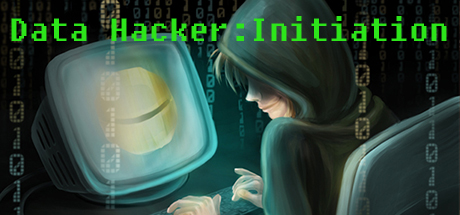
Data Hacker: Initiation is an ambitious indie RPG that immediately signals its love for old-school design philosophies and dense systems, offering a sprawling cyber-themed adventure that feels deliberately uncompromising in both scope and structure. Developed and published by New Reality Games, the game positions itself as the opening chapter of a much larger saga, and it plays very much like a prologue that is more concerned with establishing ideas, mechanics, and themes than delivering a tightly streamlined experience. It draws heavy inspiration from early-2000s virtual-world narratives, blending classic turn-based RPG mechanics with a meta-story about online identity, power, and obsession, resulting in a game that feels simultaneously nostalgic and unusually dense for its presentation.
The story follows Jay, a former elite player who has been forcibly banned from Online World, a massive virtual environment that has grown to become a cornerstone of society. Rather than quietly accepting his exile, Jay becomes consumed by resentment and curiosity, choosing to infiltrate the system as a “data hacker” in order to dismantle it from within. What begins as a revenge-driven premise gradually unfolds into something more abstract and philosophical, as the narrative explores the nature of artificial worlds, the ethics of control, and the psychological dependency people develop toward digital spaces. The storytelling is intentionally opaque at times, favoring cryptic dialogue and fragmented lore over clear exposition. This approach can be compelling for players who enjoy piecing together meaning from subtle hints, but it can also feel alienating early on, as the game expects patience and attentiveness before its broader themes fully coalesce.
Gameplay is rooted firmly in traditional turn-based combat, but Data Hacker: Initiation distinguishes itself through the sheer complexity and flexibility of its progression systems. Battles are methodical and often demanding, encouraging players to think carefully about party composition, skill synergies, and long-term growth rather than relying on brute force. One of the game’s most distinctive mechanics is the ability to “hack” enemies and NPCs, converting them into playable allies with unique classes and abilities. This system opens up an enormous range of customization, with dozens of classes and hundreds of skills available, allowing players to shape their party in highly specialized ways. The depth here is impressive, especially for an RPG Maker-based title, and it rewards experimentation and strategic planning rather than straightforward optimization.
Outside of combat, the game offers a variety of side systems that further emphasize its old-school sensibilities. Exploration often involves long dungeon crawls, resource management, and careful navigation of interconnected areas that can feel labyrinthine by modern standards. Optional activities, including a collectible card-style minigame, provide moments of diversion from the main quest while reinforcing the idea that Online World is a fully realized digital ecosystem rather than a simple backdrop. However, these layers of content also contribute to pacing issues. Progression can slow dramatically in the mid to late stages, and grinding becomes more noticeable as experience gains taper off and enemy difficulty spikes. Managing an ever-expanding roster of party members—some of whom leave after certain story milestones—adds another layer of micromanagement that can feel rewarding or exhausting depending on the player’s tolerance for complexity.
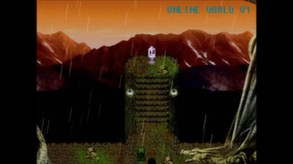
Visually, Data Hacker: Initiation embraces a utilitarian pixel-art aesthetic that mixes custom assets with familiar RPG Maker elements. While the art direction has a certain nostalgic charm, it is also one of the game’s most uneven aspects. Sprite scaling inconsistencies, stiff animations, and occasional presentation quirks can break immersion, reminding players of the game’s indie origins. That said, the visual simplicity also serves a functional purpose, keeping the focus on systems, mechanics, and narrative rather than spectacle. The soundtrack complements this approach with atmospheric tracks that reinforce the digital, slightly melancholic tone of the world, even if it rarely pushes beyond ambient support into memorable standout pieces.
What ultimately defines Data Hacker: Initiation is its refusal to cater to modern expectations of accessibility and polish. It is a game that demands commitment, curiosity, and a willingness to engage with imperfect systems in exchange for depth and ambition. The narrative does not provide immediate payoff, the mechanics are dense and occasionally unwieldy, and the presentation shows its limitations openly. Yet for players who enjoy sprawling RPGs built around customization, theory-crafting, and slow-burn storytelling, these rough edges become part of the experience rather than fatal flaws.
In the end, Data Hacker: Initiation stands as a bold and earnest first entry in a larger series, one that prioritizes ideas and mechanical depth over refinement. It is best suited for players who appreciate retro RPG design, complex progression systems, and stories that unfold gradually through implication rather than exposition. While it may test the patience of those looking for a more streamlined or visually polished experience, it offers a surprisingly rich and thoughtful journey for anyone willing to immerse themselves fully in its digital world and embrace its unapologetically old-school design ethos.
Rating: 6/10