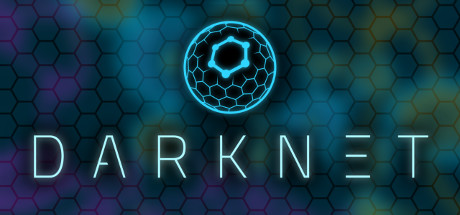
Darknet is a strategy/puzzle game in which you play as an elite hacker in the Net. Plug into cyberspace, using viruses, worms, and exploits to steal the data before your signal gets traced. Includes both VR and non-VR versions.
Modeled estimate, not a reported figure. How we estimate →
About
Stats
All-time low is the lowest price we've recorded for this game since we started tracking it.
Languages: English*, French*, German*, Spanish - Spain*, Korean*, Simplified Chinese**languages with full audio support
Engagement
Hours played at review time, across 40 reviews with recorded playtime.
Reviews
Themes across 40 recent reviews and how positive each mention is. A keyword signal, not full sentiment analysis.
positive critical· bar length = how often the theme comes up
Reviews
( Re-modifier ) Darknet est un jeux puzzle avec un méchanique Complex mais amusant ! vous avez plusieur outil comme les virus,hydre,vers,exploit et le Dataview qui est le ( Meilleur Outils dans ce jeux ) si vous savez comment il marche ! et croiyé moi, c'est plus satisfaisant le jeux est merveilleux a l'acheté il vaux prix !
There's nothing not to love or at least like about this game. A total of over 7 hours in, I still happily go back for a mission or 2 and 'stick it to the man'. As often in hacking games, it narrates the hacking concept, without getting too technical. A mission drops you into a network, a network contains nodes to hack and each node is a (variations on the same) mini-puzzle to take over the node's core. The challenges themselves are easy (and with enough resources) trivial enough, but the time-limit for a mission is what makes the game challenging. All in all a well-balanced setup. I like the fact that each mission has a short description of what you're hacking into for what, and then after completing the mission, a new news-item will reflect this. Nice touch. The graphics are simple enough, but the contrast is perfect and effects are impressive. I'm pretty sure that, (since there's literally elements that are marked as not yet available and there's stuff to unlock) there's depth's in the gameplay I haven't seen yet. So I can't think of stuff I'd want to add or change. All in all: Definitely worth the money for a fun and engaging bit of cyberpunk gameplay. :)
I love this game! I can play this for hours on end, learning new patterns! Haven't gotten too far, but the difficulty is already starting to ramp up quick.
Deceptively simple on the visual front, and with a relatively simple set of rules, Darknet's difficulty scales along with your skill in a very satisfying and natural way. It's a quality of classic puzzle design: Easy to learn, difficult to master. I come back to this one over and over, really addictive stuff.
Very simply in design, but it works beautifully. It will get a repetitive rather quickly, but then again, this kind of games always gets repetitive quickly. At least, the puzzles seems to be fairly random :)
A truly cyberpunk hacking experience
Hi, I play Darnet on my laptop in 3D (not VR) and really enjoy the game. Eventually the data view became unlocked. At first, it did not make sense, only the streams of numbers rush at an insane speed. However, forum posts and YouTube video made it all clear, and when I hacked my first node with money using Hexpad, I was truly amazed and fascinating. So, thank you, guys, and big thanks to you, Mr. McNeill. P.S. Quick tip: I used the magnifying glass to read digits in the data view.
A fun if fairly straightforward hacking-themed puzzle. Playing in VR gives some extra flavor but adds nothing to gameplay; the controller is only used as a basic pointing device.
Years later the dev is yet to fix the game going into auto VR mode, locking you out of non-VR making the game unplayable for non VR players. If you click the wrong option using alt key on load it will forever lock it in VR mode even if you uninstall the game.
Darknet is a sleek, cerebral hacking experience that blends abstract strategy with a strong sense of cyberpunk atmosphere, delivering a game that feels both minimalist and intensely focused. Developed and published by E McNeill, Darknet distills the fantasy of elite hacking into a series of tightly designed node-based puzzles that reward foresight, efficiency, and careful risk management. Rather than relying on narrative exposition or flashy mechanics, it builds tension and satisfaction through structure, pacing, and the constant pressure of an unseen digital adversary. The premise places the player in the role of a highly skilled hacker infiltrating secured networks, represented visually as circular grids of interconnected nodes. Each network is a puzzle in itself, with a central objective that must be captured before defensive systems trace your signal and sever the connection. This framing immediately establishes stakes without relying on traditional storytelling, allowing the act of play to communicate urgency. Every move feels consequential, as actions consume limited turns and poorly planned advances can quickly spiral into failure. The result is a gameplay loop that feels methodical yet tense, encouraging players to pause, analyze, and commit to decisions rather than reacting impulsively. At the mechanical core, Darknet functions as a turn-limited strategy puzzle. Players expand control by capturing nodes, which in turn unlock access to neighboring areas of the network. Along the way, defensive elements such as firewalls, trace programs, and locked pathways force players to think several steps ahead. Tools like viruses, worms, and special exploits can be deployed to manipulate the grid, disrupt defenses, or gain extra reach, but these resources are finite. The elegance of the design lies in how quickly simple rules combine into complex situations, where the optimal solution is rarely obvious on first glance. Progression adds a subtle layer of long-term strategy. Successful hacks reward currency that can be spent on upgrading tools, unlocking new abilities, and expanding your tactical options. This meta-progression does not overpower the puzzle aspect but instead enhances it, allowing players to tailor their approach. Some upgrades favor aggressive expansion, while others emphasize safety and trace resistance, encouraging experimentation and replay as different playstyles emerge. Importantly, progression never trivializes the challenges; later networks scale in complexity to match the player’s growing toolkit. Visually, Darknet commits fully to a clean, cyberpunk-inspired aesthetic. Glowing nodes, sharp vector lines, and a restrained color palette create a digital space that is both stylish and highly readable. Information is conveyed through light, motion, and geometry rather than cluttered interfaces, making it easy to understand the state of the network at a glance. This clarity is crucial, as the game often asks players to process multiple threats and opportunities simultaneously. The visual design also reinforces the thematic idea of navigating a hostile digital environment, where beauty and danger coexist. Sound design plays a supporting but important role. Subtle audio cues signal node captures, defensive activations, and the advancement of trace timers, providing constant feedback without overwhelming the player. The ambient soundtrack leans toward understated electronic tones that enhance concentration rather than distract from it. Together, sound and visuals create a focused atmosphere that encourages immersion and sustained attention, particularly during longer sessions. One of Darknet’s most notable features is its optional virtual reality support, which transforms the abstract grid into a spatial environment surrounding the player. In VR, networks feel like floating structures that can be observed from multiple angles, reinforcing the sensation of being inside a digital construct. While the core mechanics remain the same, the added spatial awareness can make planning routes and understanding node relationships feel more intuitive. At the same time, the game remains fully enjoyable without VR, and its design translates cleanly to traditional screens, ensuring accessibility for a wider audience. The difficulty curve is well-considered, gradually introducing new mechanics and defensive systems without overwhelming the player early on. Failures often feel instructive rather than punishing, as mistakes are clearly traceable to specific decisions. This encourages learning through iteration, making eventual success deeply satisfying. However, players seeking fast-paced action or constant novelty may find the deliberate pacing and abstract nature of the puzzles less immediately engaging, as Darknet demands patience and careful thought. Ultimately, Darknet succeeds by committing fully to its concept. It does not attempt to simulate hacking in a realistic sense, nor does it rely on narrative spectacle. Instead, it delivers a refined puzzle experience that captures the feeling of hacking—planning under pressure, exploiting weaknesses, and racing against an invisible clock. For players who enjoy strategic thinking, minimalist design, and cyberpunk aesthetics, Darknet offers a deeply rewarding experience that remains memorable long after individual puzzles are solved. Rating: 7/10
Related
Related
Trends
Modeled estimate over time, reconstructed from Steam's monthly review histogram.
Momentum
Pace estimated from the game's recent review growth (our daily snapshots) at its own sales-per-review ratio — a momentum signal, not booked sales.
Audience
Estimated from the language of this game's reviews — a proxy for where players are, not official Steam demographics.
Related
| The Artifact | $28.7K | 213 | 64% | $7.99 |
| D-topia | $28.7K | 80 | 89% | $17.99 |
| Loot & Ledger | $28.7K | 62 | 74% | $11.99 |
| Rising Army | $28.7K | 63 | 73% | $11.99 |
| The Reason My Wife Has Gotten More Beautiful | $28.7K | 62 | 85% | $11.99 |
| Parry Nightmare | $28.7K | 178 | 85% | $6.99 |