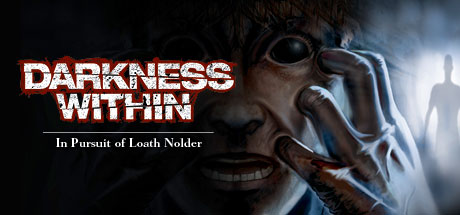
Explore disturbing corners of the human psyche. Delve into a dimension of nightmares, the occult and a tense psychological world created in classic Lovecraftian style. As police detective Howard E. Loreid, you are tasked to solve the murder of Clark Field, a wealthy man involved in the occult.
Modeled estimate, not a reported figure. How we estimate →
Media

About
Stats
All-time low is the lowest price we've recorded for this game since we started tracking it.
Languages: English*, French*, Italian*, German*, Polish*, Russian**languages with full audio support
Engagement
Hours played at review time, across 40 reviews with recorded playtime.
Reviews
Themes across 40 recent reviews and how positive each mention is. A keyword signal, not full sentiment analysis.
positive critical· bar length = how often the theme comes up
Reviews
This has been one of the most frustrating gaming experiences of my recent life! There is a great premise and some really great potential but if I were to sum up this game in one word it would be "obtuse". While I THINK there may be a reasonably decent story running in the background of this hair-pulling experience I couldn't possibly say for sure because I'm not entirely sure what has just happened. I believe that the person we play as may have as many as THREE multiple personalities (as in named individuals in the game that are represented in one physical body) but the game never makes this clear... To risk mild, potential spoilers; I'm not sure there even IS a Loath Nolder, nor am I sure there are several other characters named, mentioned or even shown in the game. The trick here (and it is very on brand for Lovecraftian lore) is that we spend the entire game unclear on how much of what we see is real and how much is not. Some of it may be madness, some of it may be external stimuli, some may be eldritch, there are no answers. As I say, this kind of makes sense, since this is the narrative we often see in Lovecraft. The main character is often an investigator or explorer of some kind who slowly loses their sanity as they delve ever deeper into the Eldritch horrors and progressively lose touch with reality. We often experience these stories as journals, recordings or other found footage following the death or madness of the main protagonist. I pointed out earlier today that while that's fine for a story, when you're playing a GAME you want to be exploring the story of the mad and departed, not actually be placed in their role. On top of major storytelling issues, the game mechanics and interface are insanely confusing. This game employs something akin to the 'Mind Palace' of more recent detective games which is commendable given it's age. It does it in a hideously clumsy and confusing way though which makes the game incredibly frustrating pretty much from start to finish. I had to resort to following a guide pretty much word for word a little way into this game as the 'underlining' mechanic is even worse than the 'brain space' and combining the two results in one of the most unfun and counterintuitive games I've ever played. Even at the end of the game, nothing is made clear. Who are we? When are we? What is real? What the hell just happened?! Just ugh...
Darkness Within: In Pursuit of Loath Nolder, developed by Stormling Studios and published by Iceberg Interactive, is a first-person point-and-click psychological horror game that delves into the shadowy depths of madness, guilt, and the occult. It places players in the role of Howard E. Loreid, a weary detective investigating a mysterious murder linked to the disappearance of a once-renowned private investigator named Loath Nolder. What begins as a routine case slowly unravels into a journey of existential dread, as Loreid’s grasp on reality starts to weaken the deeper he ventures into forbidden knowledge. The game draws heavy inspiration from the works of H. P. Lovecraft, emphasizing the erosion of sanity and the terror of the unseen over conventional scares. It’s a slow-burning descent into darkness that demands patience and an appreciation for atmosphere, detail, and introspective horror. From its very first moments, Darkness Within exudes a thick sense of unease. The environments are soaked in dim lighting, their details often half-revealed by flickering lamps or the soft glow of a lantern. The game’s visual design, though dated by modern standards, serves its purpose well, turning mundane places—like an abandoned office, a derelict mansion, or a quiet graveyard—into unsettling spaces filled with a constant feeling of dread. The muted colors and heavy shadows complement the story’s themes of decay and mental collapse, while the ambient sound design amplifies the tension. The faint creak of floorboards, distant whispers, and eerie silence between footsteps make every location feel alive with unseen presence. Even when nothing overtly frightening happens, the player is gripped by the sense that something is always watching. This emphasis on psychological horror, rather than sudden shocks, allows the game to cultivate a sustained, suffocating tension that lingers throughout the experience. What distinguishes Darkness Within from other point-and-click titles of its time is its cerebral approach to investigation. Rather than simply collecting objects or solving logic puzzles, the game asks players to think like a detective in a decaying mental state. Documents and notes can be examined closely, with players underlining key phrases that become leads in Loreid’s evolving thought process. These thoughts are stored in a “mental inventory,” where ideas can be combined to unlock new conclusions or clues. It’s a clever system that mirrors the protagonist’s struggle to make sense of the chaos around him, blurring the line between rational deduction and paranoid delusion. Yet this same mechanic also exposes one of the game’s frustrations—its puzzles often veer into the overly cryptic. Progress can sometimes depend on pinpointing a single phrase in a lengthy document or returning to a location only after a specific mental link has been made. While the intent is to immerse players in Loreid’s unraveling psyche, it can occasionally leave them feeling lost and aimless. The story unfolds gradually through fragments—letters, symbols, nightmares, and conversations that often feel detached from logic. The deeper Loreid digs into the mystery of Loath Nolder, the more his world begins to twist, with hallucinations seeping into the real world and time itself losing coherence. This disorientation serves the narrative well, echoing the cosmic horror themes that define Lovecraftian fiction. The game’s writing captures an intellectual horror rather than an emotional one, focusing on the dread of revelation and the fragility of human sanity. As the boundaries between dream and reality dissolve, players are never sure whether they are uncovering hidden truths or simply descending into madness. The pacing is deliberate, requiring players to absorb information slowly, but for those who appreciate narrative density and atmosphere, it becomes an engrossing experience that rewards attention to every cryptic detail. Despite its strengths, Darkness Within does struggle with certain technical and design limitations. The node-based movement system—where the player hops from one static viewpoint to another—feels restrictive, especially to those accustomed to free exploration. The controls and interface are clunky, occasionally breaking immersion with their dated design. Character models and animations lack expressiveness, and while the voice acting carries a somber tone, it sometimes falls short of fully conveying emotional nuance. The puzzles, while thematically fitting, can also verge on obtuse, leading to moments of frustration that interrupt the otherwise haunting rhythm. Yet even these flaws contribute to the game’s old-fashioned charm. It feels like an artifact from an earlier era of PC adventure games, one that values patience, observation, and atmosphere over speed or convenience. In essence, Darkness Within: In Pursuit of Loath Nolder is less about overt horror and more about the slow, creeping realization that something within you has started to fracture. It’s a game that rewards players who appreciate mood, mystery, and psychological tension over conventional scares or action. Its storytelling is fragmented but deliberate, its atmosphere thick with dread, and its themes rooted deeply in the human fear of losing control. For those who love literary horror, particularly the works of Lovecraft, it captures that haunting blend of curiosity and terror that defines the genre. While its mechanics may feel dated and its pacing too slow for modern tastes, its mastery of tone and its unique investigative system make it a standout example of psychological horror done with intelligence and restraint. For patient players willing to immerse themselves in its shadowy world, Darkness Within remains an unsettling and memorable descent into the unknown. Rating: 7/10
Если коротко и по делу: 1. Логика далеко не всегда присутствует в этой игре. 2. Излишняя заскриптованность. Пример: игрок нашел зацепку, на его взгляд, подчеркивает ее - ничего. Через какое-то время срабатывает скрипт, триггер, пара кат-сцен и вуаля - это действие уже доступно и, более чем, уже необходимо. 3. Некоторые найденные даже в самых неожиданных местах предметы далее по сюжету вообще не будут нужны. Есть и есть, молодец, что нашел. 4. Фишка с подчеркиванием некоторых слов в документах. Идея - отличная, реализация - не очень. Ведь подчеркивать нужно только те слова, который выбрал разработчик, а не те, которые показались зацепкой для игрока. По итогу после нескольких неудачных попыток игрок вынужден просто подчеркивать чуть ли не все подряд, дабы угадать мысли разработчиков. 4. Помните про предметы? То же самое и с некоторыми закрытыми локациями. Они либо остаются закрытыми, либо там по итогу не находится ничего нужного, от чего после цепочки разгадок наступает разочарование, а не удовлетворение. 5. Сюжет. Может, из-за того, что я сделал огромный перерыв в прохождении игры (после того, как узнал как открыть органайзер через Лавкрафта желание играть пропало), то ли потому что он хреново сшит, но пришлось лезть в интернет за объяснением вообще всего, что происходило в игре. Итог: был бы сейчас год 2005, то норм, но в 2025-м полно альтернатив лучшего качества. Игре более 15 лет и проверку временем она, на мой субъективный взгляд, не прошла.
There are a few points you might have to resort to a walkthrough, but otherwise a fantastic point and click game. The story is fun to read through and experience, and the soundtrack pairs perfectly with the intended ambience. To get all the details from the story make sure to have the difficulty option enabled that lets you underline whilst reading ANY document - this lets you get a lot of extra hidden clues.
Первый хоррор, который привлек моё внимание к творчеству Г.Ф. Лавкрафта. Игра пропитана мотивами произведений Лавкрафта и через эти мотивы получается очень хорошо передать ту напряженную атмосферу мистики и ужаса. Окружение в игре прекрасно детализировано, квартира и офис главного героя, а также дома, которые он исследует, кажутся подлинными и обжитыми, и создают ощущение уюта, но в то же время заставляют испытывать напряжение и дискомфорт за счет посторонних звуков и эмбиента. В игре достаточно сложные, но интересные головоломки. Необходимо внимательно и вдумчиво изучать тексты, совмещать подчеркнутые в документе строки в мыслях Говарда, чтобы получить ответ для решения большинства головоломок. Персонажи, диалоги, повествование, озвучка - все в этой игре сделано на высшем уровне и с душой.
Без гайдов абсолютно неиграбельно. Одним глазом читаешь записочки, другим руководство по прохождению. Атмосфераааа мммм прям.
Одна из моих любимых игр. И музыка, и графика, атмосфера просто неповторимы. Ночной кошмар со стуком в дверь один из самых криповых моментов, что я вообще видел в играх. Воспринимается игра больше как интерактивный рассказ, где ты путешествуешь от записки к записке, распутывая интригу. Что касается визуального ряда - норма, стиль выдержан.
Amazing how much can be achieved with static pictures and great sound design. This game oozes atmosphere and it's creepy as hell. The story, however, is like the protagonist's dreams - disjointed and hard to follow and the ending is abrupt, weird and buffling. Maybe things will clear up after playing the second game... Use DGVoodo2 with Magpie to make this game playable. A great game for any fan of Lovecraft. These guys get it.
An older style point-and-click Lovecraft-inspired mystery puzzler , that can be too difficult for its own good at times. Despite this, I thoroughly enjoyed the plot, the voice acting, the visuals, and the brilliant audio and dark atmosphere. [h3]PROS[/h3] +++ Amazing atmosphere, appropriately dark, moody and mysterious +++ You can manually save at any time, name your saves and there are 50 different slots available +++ Runs smoothly even on newer computers and I didn’t encounter any bugs +++ Fast travel options for every available place ++ Really good visuals ++ Soundtrack and audio in general is very fitting ++ Professional voice acting ++ Lots of interesting achievements and secrets ++ Good game length considering the asking price ++ There are video, audio and mouse options available on the main menu screen ++ There are hints available for when you get stuck on standard and detective difficulty + Smooth navigation despite the old style movement mechanic. Moving around freely (like in DW2) would have been better, but still it works with no problems + Good variety of puzzles + Fairly good story that keeps your interest, without being anything groundbreaking [h3]CONS[/h3] --- A good amount of the puzzles are overly difficult and will often require a guide (there are a couple excellent ones on Steam) --- The underlining clue system can be quite confusing, as sometimes key words/phrases can’ be underlined unless you’ve completed a specific action, and the game doesn’t let you know when that happens -- Combining clues is often difficult and requires a lot of brain power and luck -- You can miss a lot of story pieces and lore if you play the game on standard difficulty - Some achievements are missable because you need specific actions and timing in order to get them - The visuals are too dark sometimes [h3]VERDICT[/h3] As you can see, the game’s main shortcomings have to do with the puzzling aspect, but don’t let that discourage you, especially if you’re in it for the story and the atmosphere. I definitely recommend the game to players who love older style point-and-clicks and appreciate a good, Lovecraftian atmosphere. Don’t hesitate to use a guide if you get stuck and you’ll see that as you progress in the game and become more accustomed to the mechanics, you will need the guide less and less. I also recommend playing this on detective difficulty and turning the underlining to “always” in the difficulty options mid-game.
Крутой квест в полностью лафкратианском стиле
Related
Related
Trends
Modeled estimate over time, reconstructed from Steam's monthly review histogram.
Momentum
Pace estimated from the game's recent review growth (our daily snapshots) at its own sales-per-review ratio — a momentum signal, not booked sales.
Audience
Estimated from the language of this game's reviews — a proxy for where players are, not official Steam demographics.
Related
| 7Days Origins | $89.1K | 353 | 86% | $8.99 |
| Beyond Sunset | $89.1K | 352 | 79% | $9.99 |
| Metal: Hellsinger VR | $89.1K | 129 | 67% | $11.99 |
| Fantasy Tavern Sextet -Vol.1 New World Days- | $89.2K | 355 | 90% | $12.99 |
| Taffy Tales Redux : The Morning After | $89.2K | 185 | 52% | $24.99 |
| Critadel | $89.1K | 238 | 78% | $19.99 |