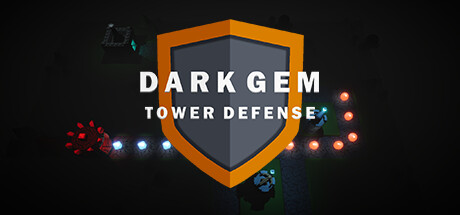
Atmospheric tower defense. How many waves can YOU defend? Basic tower defense in a fantasy setting with gems.
Modeled estimate, not a reported figure. How we estimate →
Media

About
Genres
Stats
All-time low is the lowest price we've recorded for this game since we started tracking it.
Languages: English
Reviews
nice chill TD game,hope for more updates
Entertaining and addictive. Good job.
Dark Gem Tower Defense, developed and published by Lukas Haupt, is an indie strategy game that embraces the traditional mechanics of the tower defense genre while presenting them within a dark fantasy atmosphere. The game revolves around defending a central stronghold from waves of hostile creatures that emerge from mysterious gem-like formations scattered across the battlefield. While the premise is simple, it creates a clear objective that defines every mission: build effective defenses, manage resources wisely, and survive increasingly difficult enemy assaults. The game does not attempt to radically reinvent the tower defense formula, but instead focuses on delivering a solid and focused strategic experience built around careful planning and tactical positioning. The fundamental gameplay loop follows the classic tower defense structure. Enemies advance toward the player’s base along predetermined paths, and players must construct towers at strategic points along these routes in order to eliminate them before they reach their destination. As waves of enemies are defeated, players earn gems that serve as the main resource for building new towers and upgrading existing ones. Because resources are limited, every decision about tower placement and upgrades carries significant weight. A poorly placed tower or an inefficient upgrade path can quickly lead to gaps in the defensive network, allowing enemy units to slip through and damage the base. One of the more interesting aspects of Dark Gem Tower Defense is its tower upgrade system. The game offers several different tower types, each with unique characteristics and potential upgrade paths. Instead of allowing players to unlock every possible enhancement, the game requires them to commit to specific upgrade branches. Once a tower evolves along certain paths, other upgrades become unavailable, forcing players to think carefully about how each defensive structure should develop. This branching upgrade system adds an additional layer of strategy, as different enemy waves may require specialized towers designed for specific combat roles. Enemy variety also contributes to the strategic challenge. While early waves introduce relatively simple enemies, later stages begin to feature more complex threats. Some enemies move quickly and attempt to outrun defensive fire, while others possess higher durability that allows them to withstand sustained attacks. Certain enemy types may even require players to focus their firepower more carefully or build towers capable of slowing them down. This diversity ensures that players cannot rely on a single defensive strategy for the entire game. Instead, they must continually adjust their approach as new threats appear. The campaign consists of a series of levels that gradually increase in difficulty. Early stages serve as an introduction to the mechanics, allowing players to experiment with tower placement and understand how different towers interact with enemy waves. As players progress, the difficulty rises steadily, introducing tougher enemies and more demanding defensive scenarios. Environmental settings also shift between different locations, such as forest areas and desert landscapes, which provide some visual variety as the campaign unfolds. In addition to the main levels, the game includes an endless survival mode where players attempt to defend their base against an unlimited number of enemy waves. This mode functions as a test of endurance and strategic mastery, challenging players to refine their defensive layouts in order to survive as long as possible. Endless mode adds replay value by encouraging players to experiment with different tower combinations and attempt to beat their previous records for wave survival. Visually, Dark Gem Tower Defense uses a top-down perspective that prioritizes gameplay clarity over elaborate graphics. Towers, enemies, and pathways are clearly visible, allowing players to quickly understand what is happening across the battlefield. The environments feature dark fantasy elements that help reinforce the game’s theme of defending against mysterious gemstone-based creatures. While the graphical presentation remains relatively simple compared to larger strategy titles, it effectively communicates the necessary information without overwhelming the player with visual distractions. Another small but notable feature of the game is its adjustable lighting system. Players can modify the lighting intensity on the battlefield, allowing them to create darker or more atmospheric environments during gameplay. Although this feature does not significantly affect the mechanics, it helps enhance the mood of the game and gives players some control over the visual atmosphere of their defensive encounters. The audio design supports the overall theme with simple but effective sound effects. Towers fire projectiles with satisfying impact sounds, while enemies produce distinct audio cues when they are defeated. Background music and ambient sounds maintain a tense atmosphere that reflects the ongoing struggle to protect the fortress from invasion. While the soundtrack and sound effects remain relatively minimal, they complement the gameplay without distracting from the strategic focus. Despite its solid foundation, the game does have some limitations. The overall scope of Dark Gem Tower Defense is relatively modest, with a limited number of maps and tower types compared to larger entries in the genre. Experienced tower defense players may eventually discover optimal strategies that work across multiple levels, reducing the challenge over time. Additionally, the presentation and interface reflect the scale of an indie project rather than a large commercial production. Even with these constraints, the game manages to provide an enjoyable and engaging strategic experience. The combination of tower placement, branching upgrades, and evolving enemy waves creates a satisfying tactical puzzle in each level. Players who enjoy carefully planning their defenses and experimenting with different strategies will likely find the gameplay loop rewarding. Overall, Dark Gem Tower Defense stands as a competent and focused entry in the tower defense genre. It does not attempt to revolutionize the formula, but it delivers a well-structured experience that captures the essential appeal of defending against increasingly difficult enemy waves. With its dark fantasy theme, strategic upgrade system, and replayable endless mode, the game offers a solid challenge for fans of tower defense games who enjoy refining their tactics and perfecting their defensive layouts. Rating: 6/10
Related
Related
Trends
Modeled estimate over time, reconstructed from Steam's monthly review histogram.
Bone numbingly bland and boring. Even the music sounds like a lullaby. I also felt the title a bit misleading, I expected more of a Gem Craft feel, but is neither here not there. There is also nothing to do during a wave, as you almost never have enough money for an upgrade until the wave ends. There are no tactical actions at all. There is also no strategic upgrade tree, nothing. The monsters are bland, mostly ants with a gem on the back, and the boss looks like a loaded baked potato. I only did one map, and it was okay, but the best map in the world wouldn't add action and fun to the base the game offers. Eight towers, Two arrow towers (one super expensive), Two cannons that are supposed to do AOE, but if it does it isn't a wide AOE (also one super expensive) . A poison, and a slow tower. A fontain tower (probably meant fountain) that shoots in all directions, and one that makes a few coins at the end of each wave, which can't be upgraded at all. Not a lot of upgrades, there are three categories, but when you click one, on of the others closes. I think you can upgrade three times total per tower. None of them very interesting. You can pick your target, but that's a small point in the games favor. Also no fluff, my pet peeve, doesn't bother a lot of people, but I find it adds to engagement, and you get more from it than it takes in effort to add it. Also no pathing, for those who want that. One thumb down, I got it on a sale, and even at whatever I paid, it was too much.
Momentum
Pace estimated from the game's recent review growth (our daily snapshots) at its own sales-per-review ratio — a momentum signal, not booked sales.
Related
| Clash of Clans | $2.6B | 61.4M | 90% | Free |
| Plants vs. Zombies™ | $1.9B | 5.7M | 75% | Free |
| Clash Royale | $1.9B | 41.6M | 89% | Free |
| Lords Mobile: Kingdom Wars | $1.9B | 9.2M | 90% | Free |
| Stick War: Legacy | $1B | 3.2M | 96% | Free |
| Evony: The King's Return | $644M | 826.6K | 80% | Free |
Related
| Art of Beauties | $482.9 | 78 | 74% | $0.49 |
| Defense high | $481.6 | 50 | 68% | $0.49 |
| Where Foxes 狐狸在哪里 | $487.7 | 64 | 95% | $0.49 |
| Zodiac Girls | $489.2 | 79 | 84% | $0.49 |
| Cute Girls: Find Secrets | $476.8 | 77 | 65% | $0.49 |
| Circularity | $490.5 | 66 | 61% | $0.49 |