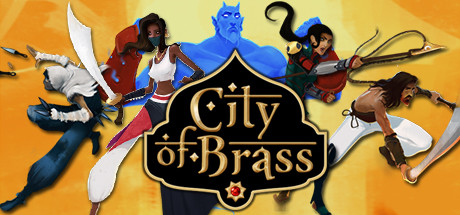
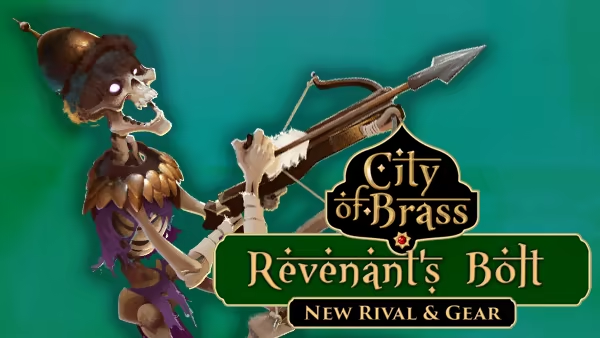
City of Brass, developed and published by Uppercut Games, is a striking and inventive first-person roguelike that combines the mystique of Arabian folklore with the punishing rhythm of procedural dungeon crawling. It thrusts players into a cursed city filled with traps, treasures, and vengeful spirits, challenging them to survive its shifting labyrinths while mastering an unconventional combat system built around agility, timing, and precision. Unlike most first-person action games that rely on ranged combat or brute force, City of Brass emphasizes fluid movement, environmental awareness, and improvisation. Every encounter feels like a dance of risk and reward, with every room presenting a new opportunity for death or discovery.
The game opens with a simple premise: you are a thief lured by the promise of riches into the lost city of brass, a mythical metropolis doomed by its own greed. What begins as a straightforward treasure hunt quickly turns into a desperate struggle for survival. Each level is procedurally generated, meaning no two runs are identical. Corridors twist unpredictably, traps are repositioned, and enemies lurk in new combinations. This constant variation keeps players alert, demanding adaptability rather than rote memorization. The city itself feels alive—walls gleam with gold, flickering lanterns illuminate dark hallways, and the hum of supernatural energy seems to follow your every step. Yet beneath this beauty lies relentless danger: spike pits, swinging blades, collapsing floors, and explosive urns all conspire to end your journey at any moment.
At the heart of City of Brass lies its distinctive combat system, built around two key tools—a scimitar and a whip. The sword delivers close-range strikes, while the whip functions as both a weapon and a traversal device. You can use the whip to disarm enemies, pull them toward you, trigger traps from a distance, or swing across gaps to reach hidden treasures. This dual-weapon design is what sets the game apart from its peers; combat is not simply about hitting harder but about manipulating the battlefield to your advantage. The whip in particular encourages creative play. You can trip a charging undead soldier, lure him into a pit, or yank a weapon out of his hands before closing in for a finishing blow. The interaction between the player, enemies, and environment creates a dynamic combat rhythm that rewards skill and experimentation.
Despite its engaging mechanics, the combat can feel inconsistent at times. Hit detection occasionally falters, with strikes that appear to connect failing to register. The whip, while versatile, can be tricky to control in tight spaces, and its aim-assist system sometimes targets the wrong object in chaotic encounters. These small issues accumulate in a game that punishes mistakes harshly; every run is bound by a strict time limit, pushing players to keep moving forward rather than cautiously clearing each room. This timer adds urgency but can also feel restrictive, cutting short the pleasure of exploration. Death is permanent, meaning that one misstep can erase significant progress. Yet this unforgiving structure is part of the game’s identity—it’s a roguelike built on the thrill of risk, the satisfaction of surviving just one room longer than before.
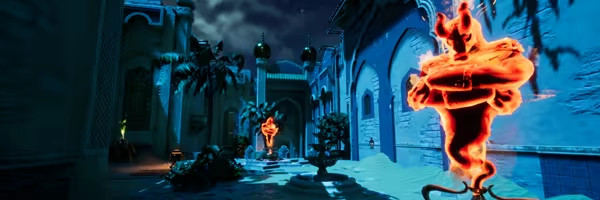
The city’s design deserves special recognition for how it melds atmosphere with function. Uppercut Games crafts a world that feels simultaneously ancient and hostile, inspired by tales from One Thousand and One Nights. The architecture glitters with wealth and decay; golden statues line crumbling halls, and ornate fountains sit beside cursed relics. The lighting and color palette shift subtly between areas, moving from dusky courtyards to glowing catacombs, lending each stage a distinct tone despite procedural generation. Still, over time the repetition of modular assets becomes noticeable. As you push deeper into the city, the sense of mystery diminishes, and the once-magical environments begin to feel familiar. This repetition extends to enemy variety as well—while the game introduces new foes gradually, many share similar attack patterns, which can make longer sessions feel predictable.
The sound design complements the visuals beautifully, creating an auditory layer that heightens immersion. The whisper of wind through the streets, the clinking of distant chains, and the faint echoes of your own footsteps make the city feel alive. The music swells during combat, fusing traditional Middle Eastern melodies with modern percussive beats to evoke both wonder and tension. Audio cues also play a functional role, warning players of traps, approaching enemies, or hidden dangers. This reliance on sound encourages careful listening, turning every faint noise into a potential clue for survival.
Progression in City of Brass operates on a roguelike framework: each death resets your progress but unlocks new blessings, curses, and relics that gradually expand your capabilities. These modifiers let you tailor your experience—some make traps deadlier, while others boost your health or increase treasure rewards. This meta-layer gives the game longevity, encouraging repeated runs and experimentation. However, the structure also exposes the game’s limited variety. After several hours, new modifiers and items start to blend together, and the loop of explore-loot-die-repeat loses some of its tension. The difficulty curve is sharp but fair, relying more on player learning than grinding, and reaching the final stages demands mastery of both movement and trap manipulation.
City of Brass is as much about atmosphere as it is about action. Its blend of mythological storytelling, high-stakes gameplay, and exotic visuals create an experience that feels both timeless and fresh. It channels the spirit of classic adventure tales while grounding itself in the modern roguelike tradition. For all its repetition and occasional technical stumbles, it remains an original and rewarding challenge. Few games capture the feeling of being both hunter and prey so vividly—the thrill of cracking a whip in a collapsing corridor, dodging blades while grabbing glittering loot, and escaping a cursed tomb with seconds to spare.
Ultimately, City of Brass succeeds because of its vision. It isn’t just another roguelike dungeon crawler—it’s a game about rhythm, reflex, and reckless courage set against the backdrop of a city that punishes greed. Each run tells a small, self-contained story of hubris and survival, driven by tension and discovery. While it may not have the polish or variety of bigger-budget titles, its heart lies in its creativity and charm. Uppercut Games has built a world that invites players to dance through danger, to improvise their way through a living labyrinth of beauty and death. City of Brass rewards boldness, punishes hesitation, and stands as one of the more distinctive entries in the roguelike genre—a dazzling, dangerous journey through a city that gleams with both treasure and peril.
Rating: 8/10