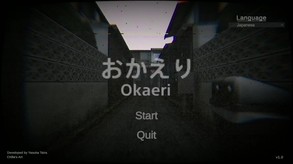
Okaeri is a first-person psychological horror title developed and published by Chilla’s Art, a studio recognized for crafting unsettling horror experiences inspired by Japanese urban legends, ordinary life, and subtle psychological tension. Rather than relying on fast action or constant jump scares, Okaeri focuses on atmosphere and slow-building fear, delivering a horror experience that thrives on discomfort, isolation, and the feeling that something is quietly wrong beneath familiar surroundings.
The game centers around a simple but effective concept. Players take control of a student returning home after finishing another ordinary day. The setup sounds harmless, even comforting, but Okaeri quickly transforms everyday life into something deeply unsettling. Familiar places become threatening, routine moments begin to feel unnatural, and small details slowly create growing anxiety. The title itself carries emotional meaning, referring to a traditional Japanese phrase spoken to welcome someone home. Chilla’s Art cleverly twists that warmth into something eerie, creating horror from spaces that are supposed to feel safe.
One of the game’s strongest qualities is its environmental design. Okaeri embraces a retro-inspired visual style featuring grainy textures and low-resolution presentation that intentionally resembles older horror experiences. Instead of appearing outdated, the visual direction becomes a major tool for creating tension. Dim hallways, poorly lit rooms, and visual imperfections constantly keep players uncertain about what they are seeing. The game builds fear through suggestion rather than showing everything directly, encouraging players to imagine threats before fully understanding them.
Chilla’s Art has built a reputation for understanding how silence can be just as frightening as loud scares, and Okaeri demonstrates that skill effectively. The audio design creates an oppressive atmosphere where even ordinary environmental sounds carry weight. Quiet footsteps, subtle background noises, and long stretches of uneasy silence force players to remain alert at all times. Rather than overwhelming players with nonstop horror moments, the game allows tension to grow naturally. When frightening moments do occur, they feel stronger because the game spends time carefully preparing the atmosphere.
The pacing follows a slower structure that emphasizes immersion and observation. Exploration becomes an important part of the experience as players move through environments while piecing together narrative details. Okaeri avoids rushing players from scare to scare, choosing instead to create emotional pressure through anticipation. This approach may not appeal equally to everyone. Players looking for combat systems or highly interactive mechanics might find the gameplay relatively straightforward. However, players who enjoy psychological horror built around atmosphere and suspense will likely appreciate the deliberate pacing.
Narratively, Okaeri succeeds because it keeps players curious without overexplaining everything immediately. The mystery unfolds gradually, encouraging attention to environmental details and subtle storytelling clues. Chilla’s Art trusts players to connect pieces together rather than delivering every answer directly. That restraint adds to the game’s psychological impact, allowing imagination to fill gaps and deepen tension.
What makes Okaeri particularly memorable is how grounded its horror feels. Many horror games rely on elaborate supernatural threats or extreme scenarios to create fear. Okaeri approaches horror differently by corrupting normality itself. Simple routines become uncomfortable. Familiar places lose their safety. The game creates unease by making players question environments they would normally consider harmless. That approach gives the horror stronger emotional staying power because it feels connected to recognizable experiences.
The shorter runtime ultimately benefits the experience. Okaeri remains focused on its central ideas without extending beyond what its concept can support. Horror experiences built on atmosphere sometimes lose effectiveness when stretched too long, but Okaeri maintains its momentum by delivering a concentrated and carefully paced experience. Every moment contributes toward maintaining tension and reinforcing mood.
Some players may find limitations in its minimal gameplay systems or intentionally rough presentation style. The retro aesthetic remains a creative choice that will not resonate equally with everyone. Similarly, players expecting constant intensity may find the quieter sections slower than anticipated. Yet those design decisions reflect the game’s artistic priorities rather than weaknesses. Okaeri knows exactly what kind of horror experience it wants to deliver and remains committed to that vision throughout.
Chilla’s Art continues to demonstrate a strong understanding of psychological horror by focusing on emotional discomfort rather than spectacle. Okaeri captures fear in a way that feels personal and unsettling, transforming ordinary life into something oppressive without losing its emotional authenticity. It may not be the longest horror experience available, but it effectively leaves a lingering impression through atmosphere, restraint, and carefully constructed tension.
Okaeri delivers a focused psychological horror experience that succeeds through atmosphere, sound design, and slow-building unease. Players who appreciate subtle horror and immersive storytelling will likely find it both memorable and unsettling in exactly the ways great psychological horror should be.
Rating: 7/10
![[Chilla's Art] Okaeri | おかえり](https://shared.akamai.steamstatic.com/store_item_assets/steam/apps/1147960/header.jpg?t=1662351711)