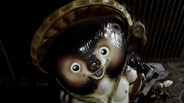
Jisatsu delivers another unsettling psychological horror experience from Chilla’s Art, a developer recognized for crafting slow-burning Japanese horror games built around realism, discomfort, and atmosphere rather than excessive action. Acting as both developer and publisher, Chilla’s Art once again leans into its signature style, presenting players with an unnerving story that unfolds gradually and rewards patience with mounting tension. Instead of depending on relentless jump scares or fast-paced survival mechanics, Jisatsu creates fear through careful environmental design, psychological pressure, and a lingering sense of vulnerability.
The story centers on a member of a small documentary production team assigned to investigate an abandoned property connected to disturbing rumors. What begins as a straightforward exploration slowly transforms into something far darker. The isolated setting becomes the foundation for the game’s strongest qualities. Empty rooms, forgotten belongings, narrow hallways, and subtle visual details quietly build unease. Every area feels intentionally designed to encourage curiosity while simultaneously making players question whether they should continue moving forward.
Chilla’s Art excels at creating believable environments, and Jisatsu benefits heavily from that approach. The abandoned house feels grounded in reality rather than exaggerated horror fantasy. The realism makes every strange event more effective because the world initially feels ordinary. Small details scattered throughout the environment tell pieces of the story without interrupting gameplay with constant dialogue or exposition. Players uncover information naturally through observation, allowing tension and mystery to develop at a steady pace.
The visual presentation embraces an analog-inspired style that resembles found-footage horror productions and older videotape recordings. This aesthetic strengthens immersion while giving the game its own identity. The slight visual distortion and documentary-like presentation contribute significantly to the atmosphere, making exploration feel uncomfortable in ways traditional horror visuals often fail to achieve. Players who enjoy horror inspired by Japanese cinema and psychological storytelling will immediately recognize familiar influences woven throughout the experience.
Sound design plays an equally important role in building fear. Silence becomes one of the game’s most powerful tools. Small noises carry unusual weight, and environmental sounds create constant uncertainty. Footsteps echo strangely. Quiet spaces feel oppressive rather than calming. The audio design frequently leaves players wondering whether they actually heard something or simply imagined it. This psychological manipulation elevates the horror considerably and maintains tension even during slower sections.
Gameplay itself remains intentionally simple. Exploration forms the core experience, with players investigating locations, discovering clues, and gradually uncovering disturbing truths hidden within the abandoned property. There is little emphasis on mechanical complexity or traditional survival systems. Instead, the focus remains firmly on immersion and storytelling. Players seeking action-heavy horror may find the pacing slower than expected, but those who appreciate atmospheric horror will likely find the deliberate progression rewarding.
Narrative delivery deserves particular praise because Jisatsu avoids overexplaining its mysteries. Information emerges gradually through environmental storytelling and discovered evidence. The game trusts players to interpret events and connect pieces themselves. This restraint strengthens the psychological horror elements because uncertainty becomes part of the experience. Rather than presenting obvious answers, the game leaves room for interpretation, allowing tension to linger even after the final moments.
One of the title’s greatest strengths lies in its commitment to psychological horror traditions. Fear comes from anticipation rather than constant confrontation. The game creates anxiety by making players feel vulnerable inside a place that slowly becomes increasingly hostile and unfamiliar. Moments where seemingly nothing happens often become more frightening than direct scares because the atmosphere keeps players anticipating danger at every turn.
The mature themes explored throughout the experience contribute to its heavy tone. Jisatsu deals with disturbing subject matter and emotional darkness that reinforce the horror while making the overall experience feel more serious and grounded. The game does not aim to provide light entertainment. Instead, it commits fully to creating discomfort and emotional tension that remains memorable long after completion.
Some players may find the slower pacing difficult to embrace, especially if they prefer horror games built around constant movement or aggressive enemy encounters. Certain sections prioritize atmosphere over momentum, which can occasionally make progression feel methodical. However, this deliberate pacing ultimately serves the game’s psychological focus. The horror depends heavily on immersion, and faster gameplay could have weakened the tension Chilla’s Art works so carefully to build.
Jisatsu stands as another strong addition to Chilla’s Art’s growing catalog of Japanese horror experiences. It demonstrates confidence in atmosphere-driven design and reinforces the studio’s understanding of psychological horror fundamentals. Through environmental storytelling, strong audio design, unsettling visual presentation, and carefully controlled pacing, the game delivers an experience that feels deeply uncomfortable in the best possible way.
Players who appreciate atmospheric horror, found-footage presentation styles, and slow-building psychological tension will likely find Jisatsu highly rewarding. It does not reinvent horror design, but it executes its vision with precision and confidence. The result is an eerie experience that lingers long after the credits roll, leaving players with lingering uncertainty and the unsettling feeling that some places are better left unexplored.
Rating: 7/10
![[Chilla's Art] Jisatsu | 自撮](https://shared.akamai.steamstatic.com/store_item_assets/steam/apps/2716110/header.jpg?t=1708152942)