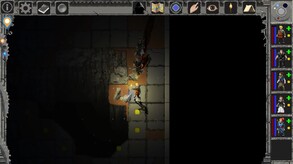
I created Caves of Lore because of my deep love for RPGs. This project took me 6 years to make and I learned a lot about coding, art, and storytelling. If you reach the end then be sure to let me know! Caves has deep combat, classic-styled pixel art, and (of course) LORE! 📖
Modeled estimate, not a reported figure. How we estimate →
About
New Game Plus Mode
Caves of Lore is now updated with New Game Plus Mode, giving you more ways to continue, rebuild, and replay after completing the game.
After finishing the game, you can restart with bonuses from your last game or continue the game without restarting. New Game Plus lets you carry forward permanent stat increases, some memorized abilities and spells, previously unlocked traits, and equipped necklaces and rings.
You may choose to reuse your stats or re-roll them for a fresh approach while keeping permanent gains.
This update also adds new equipment options. Necklaces now have Resonance, which increases damage when worn with other items made from similar materials. Enchantments can now be destroyed, giving you more control over your gear and builds.
MY JOURNEY MAKING THIS GAME
I'm a self-taught solo-dev who built this passion project over 6 years while holding down a full time job and raising a family. I dedicated myself to work 5 minutes a day no matter what, and built the game piece by piece, not really knowing where I was going or how it would all end.
CAVES OF LORE
Caves of Lore is a turn-based, pixel-art, fantasy CRPG that combines elements of environmental exploration and character interaction with tactical, grid-based combat.
Fun and weird adventures await as you progress through a world full of monsters and humor. Hidden secrets and strange powers abound, allowing for a highly customizable party. Vast amounts of loot and treasure constantly increase your power, while dialogue, books and lore are waiting for those who want to be drawn into the world further.
Dark themes and ancient horrors don’t keep this game from remaining upbeat and funny, with a story that unfolds in unexpected ways. Tactical combat, endless magical item combos, and a vast array of spells, abilities and traits make for great replay value.
6 character capacity party, 65+ spells, 65+ abilities, 65+ traits, 50+ monsters, 40+ NPCs , 30+ quests, and 20+ areas to explore. Hundreds of items and tens of thousands of enchantment combinations make for all manner of powerful items.
Stats
All-time low is the lowest price we've recorded for this game since we started tracking it.
Languages: English
Engagement
Hours played at review time, across 41 reviews with recorded playtime.
Reviews
Themes across 41 recent reviews and how positive each mention is. A keyword signal, not full sentiment analysis.
positive critical· bar length = how often the theme comes up
Reviews
[h1] "Not all those who wander are lost.” [/h1] Caves of Lore (2023) represents a turn-based role-playing game (RPG), developed and published by Mike Robins. The developer took more than 6 years to complete this solo project. [i] Pros & cons: [/i] ++ All these pixels form a deceptively homogeneous layer, but once you break through the surface tension, the tactical depth will leave a lasting imprint on your mortal mind. Each opponent has specific weaknesses, both physical and magical; flying and extradimensional monsters add to the variety. The more often you use a weapon type or spell, the better you will become with it. Formation and initiative play a major role in your strategy. I know it sounds a lot, but the system allows it to be played relatively quickly once you have immersed yourself in its splendour. + The dialogues between the various characters are superbly composed; the best moments I experienced were undoubtedly those with the most lovable of dogs and an oddly fragile fairy. It really feels like an old-school RPG adventure with a group of six. + I appreciate the attention to detail in the world-building and the musical background; both are well interwoven. Every time I started the game, the soundtrack in the main menu alone motivated me to delve deeper into the forgotten realm beneath that mysterious village. [i] Summary: [/i] The laser-focused dedication and crystal-clear vision of the solo developer have created a unique experience that I consider one of the greatest indie RPGs in the genre. A prime example of a lean game with impeccable resource management: no fat, all muscles. “But… but my most sumptuous ruler… is it truly the holy grail of RPGs?”, I hear you stutter my dashingly beautiful reader. And my proclamation: My loyal subject, your long search has come to an end. I would like to convey the following words to the self-taught solo-dev Mike Robins: The twisted gods of this legendary realm have bestowed an incredible gift upon your soul, one that only a select few can boast. Therefore, as the sovereign of this fleshy pocket dimension, I demand the continuation of your epic saga! [i] Achievements: [/i] Estimated time for 100% completion: +100 hours Singleplayer achievements: 36 Multiplayer achievements: none
I have played the game on android and I have enjoyed it so much that I have also bought it on steam. The game is awesome, you can clearly feel the passion (not to talk about the hard work) of the one-man army developer who's behind this little gem of a game. I'm not going to dive much into the technical aspects of it. Overall the system is quite solid, it may need some refinements here and there, but it works quite well and I really appreciate that the dev has created a discord channel where he talks with players and works on improvements consequently. That said, the best part of this amazing work is by far the world-craft and its lore. This guy is not a dev, he is a story teller! There's plenty of huge games out there with entire teams behind that lack the depth that caves of lore brings. The fact that the game does not bring you around hand in hand, and that you have to look into books to find relevant information about the world around you is simply great! Amazing job Mike, I hope this game gets the credit it deserves, and I will wait for more of your work!
I'm giving this a positive review, even though I ultimately didn't like it. And God I wanted to like this game. I know it's made by a solo-developer, I realise the time and effort that must have gone into it. I have to - i mean, HAVE TO - credit the very obvious love and passion and that went into making this. This is the kind of game that inspires other solo-devs. It's just... not hitting for me. I liked the world, and i liked the characters I met within it. The writing is fine (a couple of prompts actually caused a chuckle) and the combat is pretty good too, though i certainly have my gripes. I think the main things that ultimately bought me down were the nasty UI and the obtuse progression. Credit where credit is due, which is why I'm giving this a positive review. Making games aint easy. The dev has done an admirable job that I'm sure will garner better results with those more tolerant than I. I gave it what I feel was a solid go and left feeling inspired but I have no intention of completing it. I was looking for something more, but I get it. A solid effort from a solo developer. 5/10
I really wanted to like this, but the systems in this game are range from rough to terrible. - Leveling up doesn't actually give much player power, yet takes forever. - The resistance system means that you'll just run into enemies you can't damage. So you need to change your gear and spells, except now you need to go grind to bring them up to a decent level. The character progression forces specialisation, and then the encounter system expects you to be able to do every kind of damage. - The shops have a wide range of stuff they sell, so wide in fact that the odds of getting the item your build needs is next to zero. See vendors have pages and pages of stock that in no way applies to your party is certainly one way to handle gearing. - The enchanting system takes a material which doesn't respawn. Excellent work implementing an enchanting system and then walling it off and making sure your players can't use it? - Gold is pointless. Everything you actually need can't be bought. - Spells are terrible until you level them up. Every single spell needs to be leveled individually. - Enemy resistances are crazy. It's not like 10% here or 20% there: you routinely encounter enemies that turn an 80 damage attack into single digits. - Enemy scaling means that the rat you encounter in the next cave probably has more hp than your frontliner. - Melee is suicide. Enemy groups will focus on whatever you put in front, and the damage of an individual enemy is often a problem: a group's worth just flat out kills your melee character in a round. This hasn't changed in 10 hours of play. - There's a severe lack of defensive options everywhere. It's hard to build a tank unless you roll your main character as one. - The people you recruit into your party are completely underdeveloped compared to the ones that have been with you for a while. - The game's quests are basically left up to your imagination. Need a key? Could be anywhere. NPC says he left it in the bathroom? It's not there. Because after that it was stolen by a cat who traded it for milk so obviously the key is at the ancient fish temple. Duh. How did you not figure that out, player? It's so obvious! - Resting to get your party back up is tedious: instead of just skipping to the end of the rest you have to sit there watching hp bars slowly fill. It ends up being tedious, grindy and unfulfilling. I might as well just fire my entire party and recruit a squad of whatever the hell the newest enemy is since I know it'll have more hp, do more damage and probably be 90% resistant to slashing, blunt, piercing, fire and psychological damage.
The (solo) dev clearly played some D&D, likely including some of the older CRPGs, and I can see some of the older Ultima IV-VI in here, as well. It feels a lot like that older kind of CRPG that tries its best to emulate the actual tabletop experience, but it uses an unique rules set. The game has levels, but it's mostly a train-through-use skill and spell system. Spells in particular are gained by equipping items that let you use the spell, then casting it until you learn to cast the spell yourself, which is reminiscent of some of the job-system Final Fantasy games. I'll admit that "Gotta Learn 'em All" has been a powerful distraction to my playtime. The plot is something of a mixed bag. On the one hand, you start with amnesia. However, unlike the typical cliche cold opens on amnesia, there's an amnesia fog that has covered basically the whole world you know about besides one village, and you start off falling down a rabbit hole after chasing a white rabb- I mean black cat. The main character finds a magic book that makes him/her the only person left in the "whole world" who can read, and sets him/her off to recover the lost knowledge of the world. The "whole world" (or what you're able to reach) has no idea what is going on or even how long this has been happening, and you can find both ancient ruins and recent remains, so it's very murky when any of the events whose aftermath you stumble across actually took place. That part, and the lore about things like the moon that bleeds silver are really interesting... but then you learn that all the problems in the world, including the fog and why normally-peaceful races turn to evil is all caused by a "dark lord" and... oof. It really kills the enthusiasm to uncover the lingering mysteries when you find out it turns out all bad things are caused by Lord Bad Guy. (Who does bad because he's the bad guy, and makes other creatures bad guys by making them drink "bad guy juice.") Yes, there's more nuance than that, but it really does deal a blow to the story. To go back to something that feels Ultima-inspired, there are three moons, and there are many secrets in the game world that only unlock when one or more moons are in their zenith, denoted by the presence of runes on the ground that light up when that moon is active. There's a camping system that notably has a "rest until the next moon is in its zenith" button just to deal with literally camping a spot until the path opens up, sometimes being a magical light bridge that only forms during the zenith of a particular moon. Piecing together what all the runes mean is one of the fundamental mysteries, although it's one of those things where you can't add notes yourself or unlock the text saying what a rune means in your info screen even if you've figured out which rune correlates to which moon on your own, you have to progress to a point where the plot tells you. I don't normally comment on graphics, but there's something notable here: The graphics may be pixels, but the animation is way more detailed than you'd expect from a game that looks like this. Creatures run onto the battlefield, make a battlecry, flinch from damage, and have animated death sequences, while heroes raise their weapons in triumph. There is a [i]lot[/i] of effort animating what is hand-made pixel art, here. Combat can be tense, but also very swingy. You get into new areas, and you're still facing some of the rats you were fighting at level 1. They have 40 HP now, but they're still just rats, and you do 40 damage now, so... Meanwhile, you just randomly walk into a giant seahorse-dragon thing in the middle of all the rats, and it's suddenly doing some weird "I went underwater, so that lets me teleport" thing where it pops up behind your lines and nearly one-shots a mage character. It's not the sort of game to play blind on Ironman Mode. At the same time, this game is advertising it has a new game +, but I feel this is the sort of game you can only truly play once. It has hand-designed areas, so you can only discover the secrets for yourself once. The system's balance is also questionable, as I've found it's much easier to just not be a melee and rely upon summons while hoarding all the MP regen items I can gather so I can spam bigger summons that eat damage so I don't have to. The game is very "rocket tag," so staying at standoff distance, using spells that control movement or push enemies away, and tossing out bait summons seems a much better way to survive than trusting armor will save you.
very enjoyable experience that scratched the party, turn based CRPG itch I had. Love the worldbuilding and mystery, the combat is decent and entertaining, character progression is solid. Overall, a strong recommend for fans of the genre. My only real negatives was a bit too many fights, especially in the latter part of the game. Also, it isn't too hard to break the game balance if you want to. My suggestion for a sequel (which I truly hope for) would be to reduce the number of fights by about 25-30% and reign in the enchanting/smithing systems. Also, wouldn't hurt to add more variety/power to martial character abilities as well.
Caves of Lore to klasyczny cRPG na silniku Unity. W grze wcielamy się w pasterza, który goniąc za uciekającą owieczką gubi się w tajemniczej mgle i spada w czeluść ogromnego kompleksu jaskiń. Gra przykuwa do ekranu aurą tajemniczości, bo zarówno bohater jak i spotykani bohaterowie neutralni cierpią na problemy z pamięcią. Nikt nie potrafi przypomnieć sobie, jak zrozumieć tekst pisany. Wyjątkiem jest protagonista, który na początku gry wchodzi w posiadanie pewnego kodeksu, którego jest w stanie częściowo odczytać. Zwykła walka o przetrwanie i ucieczkę z jaskini zamienia się w porywającą podróż w poszukiwaniu odpowiedzi związanych z pochodzeniem i przeznaczeniem tajemniczej księgi. Z góry uprzedzam, że gra nie najlepiej tłumaczy swoje mechaniki i ma raczej nieintuicyjny interfejs. Całą przygodę zaczynamy oczywiście od stworzenia postaci. Ustalamy wysokość sześciu atrybutów głównych, które wpływają np. na wyższe obrażenia, szansę trafienia, zdrowie, manę czy możliwość rzucania potężniejszych czarów. Atrybuty modyfikują też początkowy poziom umiejętności, wybieramy dwie zdolności aktywne i jakąś cechę – ta ostatnia jest odpowiednikiem atutów znanych z D&D czy też profitów z Fallouta. Rozwój postaci w grze jest bezklasowy i oparty na umiejętnościach. Co poziom dostajemy określoną pulę punktów do rozdysponowania na dowolne skille. W zależności od poziomu atrybutów i naszych preferencji względem walki będziemy rozwijać inne umiejętności – a wszystkie z nich są przydatne. Warto przeczytać opis każdej, bo dowiemy się nie tylko o działaniu danej umiejętności, ale również w jaki sposób obliczana jest jej wartość, bo niektóre powinniśmy rozwijać u wszystkich bohaterów aby zapewnić większe korzyści. Co kilka poziomów wybieramy nową zdolność aktywną oraz nową cechę. Większość cech jest niedostępnych, póki nie osiągniemy odpowiedniego poziomu skilla Monster Lore. W grze spotkamy sporo postaci, które będą chciały dołączyć do drużyny, ale ta liczyć może co najwyżej sześciu członków. Gra skłania jednak do rotowania składem, bo niektórzy napotkani bohaterowie neutralni dysponują pewnymi unikalnymi zdolnościami, które pozwolą rozwiązywać zagadki. Nieaktywnych członków drużyny można odsyłać na specjalne treningi, które mogą trwać dowolną ilość czasu, powoli lecz trwale podnosząc poziom umiejętności, cech lub czarów. Z punktu widzenia rozgrywki gra jest dość standardowym turowym cRPG. Walka rozgrywa się na mapach, które przypominają mi najbardziej plansze bitewne z serii Heroes of Might & Magic. Uczestnicy potyczki zajmują stanowiska po obu stronach pola bitwy – co ciekawe, to w którym rzędzie ustawimy naszych bohaterów ma wpływ na ich inicjatywę. Każda akcja podjęta w walce podnosi korespondujące umiejętności – zupełnie jak w serii Elder Scrolls czy chociażby w Tyranny. W walce mamy zarówno ruch jak i akcję, ale warto pamiętać, że niektóre zdolności i czary mają w opisie zaznaczone, iż nie kończą akcji, więc można je wykorzystać bonusowo np. przed wyprowadzeniem ataku albo użyciem akcji, która zakończy turę. Bardzo spodobał mi się system magii w grze. Nasz bohater umie czytać, w związku z czym jest w stanie odkrywać księgi czarów, które następnie może wyekwipować dowolnym członkom drużyny. Woluminy mają pewną liczbę zaklęć, które można rzucać w walce – chociaż sporo dostępnych jest także w czasie eksploracji. Początkowo jednak każda księga pozwala rzucać co najwyżej jeden z zapisanych w niej czarów. Aby odblokować potężniejszą formułę z danej księgi trzeba najpierw praktykować tę początkową – bo czar rzucony kilka razy odblokuje możliwość rzucania kolejnego. Ponadto praktykując magię możemy nauczyć się danego zaklęcia na pamięć (fioletowy pasek postępu) i aby je rzucać, nie będziemy potrzebować już księgi. Jednocześnie każde zaklęcie można levelować aż do 15 poziomu (biały pasek postępu). Niemagiczne zdolności aktywne również zwiększają swoją skuteczność wraz z treningiem praktycznym. Również spodobała mi się itemizacja. W grze znalazło się zatrzęsienie magicznych przedmiotów i całkiem sporo unikalnych egzemplarzy, a nawet całych zestawów, które na wzór H&S dostarczają dodatkowych korzyści z każdym kolejnym elementem. Bardzo ważny jest materiał, z jakiego wykonana została broń. Niektórzy przeciwnicy są np. odporni na ataki orężem, który nie został wykuty ze srebra. Inni otrzymują wyższe obrażenia, jeśli atakujemy ich bronią z korundu, żelazną czy drewnianą. Bardzo ważne jest uzupełnianie bestiariusza, bo poza niezbędną wiedzą o potworach, przyznaje również pewne premie w walce z nimi. Ponadto brakujące wpisy w bestiariuszu można odblokowywać korzystając z Monster Summonera w pierwszym odwiedzonym mieście. Przedmioty wypada również zaklinać. Otóż gra pozwala ściągną z ekwipunku zaklęcie, tworząc w ten sposób pewien wzorzec, którym można zaklinać dowolny inny przedmiot. Jest też możliwość wzmocnienia tego wzorca lub efektu na już zaczarowanym wyposażeniu. Sam bardzo późno się za to wziąłem, ale miało to kolosalny wpływ na walkę. Podbicie głównego atrybutu o 3 punkty za każdy element pancerza sprawiło, że moje obrażenia zostały niemal podwojone i np. rzucając magiczny pocisk zadawałem ponad 800 obrażeń, one-shotując większość bossów. Rzeczą unikalną dla Caves of Lore jest system księżyców. Grałem magiem, więc musiałem dość często odpoczywać, by zregenerować manę. Zauważyłem wówczas, że gra wyświetla nie tylko ruch słońca, ale również położenie trzech księżyców. Fazy księżyca (np. zenit) wchodzą w całą masę interakcji z cechami bohaterów. Ponadto w grze jest mnóstwo zagadek, które bazują na wykorzystaniu run księżycowych, które reagują na pozycję określonego satelity. Jeśli sekret wymaga jednej księżycowej runy, wystarczy odpoczywać dostatecznie długo, aż dany księżyc wejdzie w odpowiednią fazę. Są jednak zagadki, które wymagają czasem odpowiedniego ustawienia wszystkich trzech księżyców – pomaga wówczas zaklęcie, które blokuje aktywowane runy. Później można nawet zdobyć czar, który przywołuje wszystkie księżyce do zenitu. Szukanie sekretów było bardzo wciągające, jednak niektóre są tak ukryte, że samemu nigdy bym raczej nie wpadł na metodę ich odblokowania. Co ciekawe, developer, który wyprodukował Caves of Lore (to gra zrobiona przez jednego człowieka) powtarza, że wszelkie informacje ukryte są w książkach – warto więc wszystko czytać, aby zrozumieć różne mechanizmy rozgrywki. On sam z kolei jest niesamowicie pomocny. Błyskawicznie odpisuje zarówno na redditcie, reaguje na zgłaszane błędy, przedstawia rozwiązania problemów, a na założonym przez niego discordzie można znaleźć różne poradniki i pogadać z nim o grze. Ogólnie bardzo polecam Caves of Lore. Spędziłem z grą przyjemne ponad 40 godzin i mam ochotę zagrać w nią ponownie, tym razem na najwyższym poziomie trudności. Jeśli tylko jesteście odporni na taki rodzaj pikselartowej grafiki, to raczej gwarantuję dobrą zabawę – aczkolwiek przez pewien czas w początkowych etapach rozgrywki miałem wrażenie, że walki jest za dużo. A, muzyka wpada w ucho!
It went from [i]amazing[/i] to [i]dissapointing[/i] in a few hours. ✔ varied, hand-crafted world ✔ no hand-holding, you have to read what NPCs say where the environment pushes you to go ? increasing damage comes mostly from using the same skill over and over. Have fun using a weak spell to level it up. You can also force a party member to train, but they leave your party! Why would I do that? ? exploration is rewarded with secret paths and stashes... except that I never found anything actually cool or useful (except a few spellbooks at the beginning to learn magic from) so there is no payoff ✘ so much pointless, repetitive combat ✘ the only viable strategy is to stun-lock as many enemies as you can and deal maximum damage before you run out of mana. Tanking damage is not viable. I couldn't even wear any plate armour, because I made a spellcaster and other PCs aren't good at anything in particular. I doubt that would help much though, there is too much damage coming your way. Special abilities are also a waste of a turn ✘ wasting my time with breaking camp to regen in a safe place after almost every fight. Or having NPCs oversleep so even when you go to an inn, sleep until morning and go back to see that the person is still in their bed and cannot be talked to! Could have been good. 80-90% less combat, but with each encounter designed to be interesting. Better rewards for progress and exploration. Things that seem to be promised at the start, before the game devolves into its worst components.
Caves of Lore feels like a love letter to traditional role-playing games, but it is not content with simply copying ideas from the past. Instead, it takes familiar foundations and builds an adventure that captures the spirit of classic CRPG experiences while adding enough personality and flexibility to stand on its own. From its pixel-art presentation to its tactical combat systems and exploration-focused design, the game clearly aims for players who appreciate slower, more thoughtful adventures where curiosity and preparation matter as much as combat strength. The first thing that becomes apparent is how strongly the game values exploration. Many role-playing games treat exploration as little more than movement between objectives, but Caves of Lore appears to make discovery itself a major part of the experience. Moving through caves, settlements, and dangerous environments is not simply about reaching the next destination. The world seems filled with hidden locations, strange encounters, optional discoveries, and secrets waiting to be uncovered. This approach creates a feeling that every area could contain something meaningful, encouraging players to pay attention rather than rushing toward the next quest marker. The setting itself contributes heavily to the overall appeal. The game embraces a fantasy world filled with mystery and danger, but it avoids becoming relentlessly dark or serious. Ancient threats, dangerous creatures, and larger conflicts exist beneath the surface, yet moments of humor and unusual encounters help prevent the world from becoming emotionally repetitive. This balance gives the adventure more personality because players are never entirely sure whether the next interaction will involve danger, strange humor, or an unexpected discovery. Combat also appears to contain more depth than its retro presentation initially suggests. Battles rely on turn-based tactical systems where positioning and planning become important factors. Success is not achieved by simply charging into encounters and relying on stronger equipment. Players are encouraged to think about party composition, skill usage, and tactical choices. Encounters seem designed to reward careful decisions and strategic thinking, giving battles a sense of involvement rather than functioning as routine obstacles between story moments. Character customization appears to be another major strength. With a large collection of spells, abilities, and traits available, the game offers room for experimentation and varied playstyles. Instead of restricting players to narrow character paths, the systems seem designed to allow different combinations and strategies to emerge naturally. Building a party becomes an ongoing process of adjusting roles, discovering synergies, and finding approaches that suit personal preferences. For players who enjoy creating unique character setups, this flexibility adds significant replay value. Equipment and progression systems further strengthen this sense of experimentation. Loot does not appear to exist simply as a sequence of constantly increasing numbers. Enchantments and item combinations create opportunities for meaningful changes in character performance and strategy. Discovering an unexpected item or finding a combination that dramatically improves a party setup often becomes one of the most satisfying aspects of role-playing games, and Caves of Lore seems interested in preserving that feeling throughout the adventure. Visually, the pixel art style successfully reinforces the game's identity. Rather than appearing outdated, the visuals feel deliberate and nostalgic. The environments and character designs create an atmosphere that recalls older role-playing games while still maintaining enough detail and personality to feel appealing today. The visual presentation understands that style and mood often matter more than technical complexity, especially in games focused on imagination and exploration. Of course, the game's old-school structure may not appeal to everyone. Players accustomed to modern action-oriented RPGs and heavily streamlined systems might find the pace slower than expected. Tactical combat, inventory management, and exploration-heavy progression require patience and attention. Newcomers to classic CRPG design may also feel overwhelmed by the number of systems available. The same depth that appeals strongly to genre fans can create a learning curve for players unfamiliar with this style of game. Despite that, Caves of Lore succeeds because it understands exactly what kind of experience it wants to deliver. It does not attempt to become a giant open-world spectacle filled with cinematic presentation and endless distractions. Instead, it focuses on creating a carefully designed adventure where exploration, strategy, and discovery remain central to the experience. For players who enjoy traditional role-playing games and appreciate adventures that reward curiosity and thoughtful decision-making, Caves of Lore offers a surprisingly rich experience beneath its retro appearance. It captures the feeling of classic CRPG design while adding enough charm and depth to feel relevant on its own merits. Rating: 9/10
Początkowe godziny z grą sprawiły, że miałem mieszany odbiór. Na starcie było całkiem fajnie – trochę czasu zabrało tworzenie postaci, potem pierwsze kroki, poznawanie mechanik gry. Później właśnie pojawiła się irytacja – na każdym kroku walka i walka, mało innych rzeczy, motywu księżyców do końca nie rozumiałem. Jednak gdy już dotarłem do wioski na powierzchni i mniej więcej wiedziałem co i jak, tak gra pochłonęła mnie na wiele kolejnych godzin, okazując się bardzo dobrą produkcją. Fabularnie nie mamy tutaj rozmachu i oryginalności. Nasza postać w poszukiwaniu owcy wchodzi w dziwną mgłę, wpada do podziemnej jaskini, traci przytomność, po przebudzeniu orientuje się, że niewiele pamięta. Próbuje przypomnieć sobie przeszłość, rozwiązać tajemnicę mgły a także tajemniczego „Dark Lorda”, który z czasem zaczyna przewijać się w odnajdywanych zapiskach i ma związek z tajemniczą istotą, którą co jakiś czas napotykamy wraz z postępami. Niby nic ciekawego, ale wątek główny przewija się przez większość rozgrywki i potrafi angażować, bo nie prowadzi za rączkę, nie informuje wprost, co należy zrobić, tylko sami musimy wywnioskować z odnalezionych zapisków lub zdobytych informacji, co jest kolejnym krokiem. Na starcie tworzymy własną postać. Mamy do rozdysponowania punkty między kilka standardowych atrybutów jak siła, zwinność, umysł, duch, odporność i szybkość. Będą one stałe, wraz z kolejnym osiągniętym poziomem nie dostaniemy punktów na ich rozwój, dlatego trzeba sobie je dobrze przemyśleć, szczególnie pod kątem rzucania zaklęć w grze, jeśli chcemy stworzyć maga. Nawet jeśli tworzymy łucznika, czy wojownika, to warto dać minimum 10 punktów w umysł, czy ducha (mind/spirit), aby móc korzystać przynajmniej z podstawowych zaklęć z poszczególnych ksiąg magicznych. Pozostałe statystyki jak uzbrojenie, obrona, inicjatywa, ruch, inicjatywa, uderzenie zależy od noszonej broni i wyposażenia oraz ustawienia drużyny (na ruch i inicjatywę ma jeszcze wpływ szybkość). Wpływają też na wszelkie odporności na obrażenia fizyczne, cięte, miażdżone, na kwas, lód, ogień i kilka innych. Ogólnie solidne podstawy RPG. Wraz z osiąganiem kolejnych poziomów, które zdobywamy poprzez doświadczenie z pokonanych wrogów i wykonanych zadań, dostajemy punkty, za które możemy zakupić cechy (co 3 level) lub zdolności (co 5 level) lub przeznaczyć je na konkretne skille (co level). Pierwsze to po prostu umiejętności, które dodają % do odporności, do konkretnych obrażeń fizycznych, magicznych itd. Drugie z kolei to konkretne umiejętności do wykorzystania w starciach. Na przykład ja stworzyłem sobie łucznika (w sumie był to dobry wybór, bo później wśród napotkanych postaci nie ma takowej postaci) i miałem w zdolnościach fajne rzeczy jak przeszycie (w linii prostej każda postać dostaje obrażenia od strzały), potrójne lub podwójne uderzenie, masowe rażenie konkretnego obszaru ognistymi strzałami itd. Coś na wzór zaklęć, ale jeśli wpadło uderzenie krytyczne, to zabierało nawet kilkaset punktów życia przeciwnikowi (czego brak zaklęciom). Do wyboru do koloru. Skilli mamy z tuzin do rozwijania, jak: wiedza o potworach, rozbrajanie pułapek i otwieranie zamków, skradanie się, bronie dystansowe, broń jednoręczna, broń dwuręczna, czy targowanie się lub identyfikacja itemów. Wraz z używaniem ów skilli w trakcie gry wbijają one na kolejne poziomy, ale z punktów doświadczenia możemy sobie przyśpieszyć rozwój konkretnych. Zaklęć w grze uczymy się ze znalezionych ksiąg magicznych. W danej księdze mamy kilka zaklęć do poznania. Część jest zablokowanych, bo dopiero kiedy użyjemy wiele razy podstawowych zaklęć, zyskamy dostęp do kolejnych. Im częściej rzucamy konkretne zaklęcie, tym bardziej staje się ono potężniejsze, jak i z czasem je zapamiętamy, dzięki czemu nie musimy być wyposażeni w konkretną księgę. Bardzo fajne rozwiązanie obecne w starszych grach RPG, teraz rzadko stosowane. W trakcie swojej wędrówki napotkamy wiele postaci, z którymi można rozmawiać, wybierając słowa kluczowe. Niektóre będą mieć dla nas zadania, część oferuje swoje usługi jak handel, identyfikacja przedmiotów, podnoszenie swoich umiejętności, zdejmowanie czarów z przedmiotów jak i zaklinanie wskazanych a niektóre będziemy mogli dołączyć do drużyny. Tacy jak wróżka będą wymagani, aby móc odblokować dany sekret (oznaczony odpowiednim symbolem w konkretnym miejscu), psisko z kolei może w danym miejscu szukać zakopanych przedmiotów, dopóki nie wyposażymy się w łopatę. W sumie każda ma swoje plusy i minusy. Eksploracja jest ciekawa. Nie mamy wskaźników, do wszystkiego dochodzimy sami. Jeśli zwiedzimy daną lokację, to mamy mapę, na której są wskazane zasoby do zebrania lub które się odnawiają, albo zaznaczone skrzynie, których jeszcze nie otworzyliśmy, ale byliśmy w ich pobliżu. Oprócz tego natrafimy na wiele sekretów, które są zakopane w pobliżu, prowadzi do nich niewidzialna ścieżka lub można się do nich dostać, jeśli konkretne księżyce będą w zenicie lub w tzw. w grze nadirze. Jest ich w grze trzy i interfejs informuje jaki lub jakie w danej chwili rozświetlają swoją mocą okolice. Jeśli natrafimy w okolicy na dany symbol księżyca, to już jest informacja dla nas, że coś tu jest ukryte i warto wrócić do tego miejsca o odpowiedniej porze lub odpocząć w tym miejscu odpowiedni czas, by od razu uzyskać dostęp do sekretu lub ukrytego przejścia. A warto, bo przedmioty tak znalezione są niepowtarzalne z wieloma dodatkowymi bonusami. Jeśli czegoś nie jesteśmy pewni jeśli chodzi o księżyce, warto zajrzeć do menu i FAQ albo do steamowych poradników. Oprócz sekretów, spotkamy na swej drodze multum wrogów. Walki jest tutaj naprawdę dużo. Może ona z czasem męczyć, ale na szczęście różnorodność wrogów jest na tyle duża, że niekiedy warto żonglować bronią, na którą nie są odporni. Mają też swoje charakterystyczne ataki. Walka toczy się turowo na siatce, jednak nie jest jakaś taktyczna, nie trzeba nie wiadomo jakich strategii, by rozprawić się z danym rodzajem przeciwnika. Grunt to sensowny rozwój postaci i dobrze dobrana broń oraz wyposażenie. „Caves of Lore” to bardzo dobry erpeg. Pixel artowa grafika nie odpycha, można się do niej przyzwyczaić, dźwięki i muzyka to podstawy podstaw. Bardzo fajnie można z nią spędzić czas. Do minusów zaliczyłbym jednak kiepsko zaprojektowany, mało intuicyjny interfejs, ekwipunkiem też się słabo zarządza. W ogóle z początku gra może wydawać się nieintuicyjna, ale z czasem poznamy to i owo. Niemniej twórca mógł to rozwiązać lepiej. To samo dotyczy kart z umiejętnościami, zaklęciami itd. – to wszystko można było zrobić ładniej. Jest wiele gier, które ten element mają zrobiony świetnie i czytelnie i na nich się wzorować. Minusem może być też czytelność wejść/wyjść. Na mapie są one niekiedy mało widoczne i z początku możemy się przyblokować, bo nie odróżnimy schodów od elementów środowiska. Gra też nie ma konkretnego zakończenia – jest po prostu częścią pierwszą większej przygody. Ale gra jest warta poznania, bo i cena jest bardzo atrakcyjna. Ja polecam. Mocne 8/10
Related
Related
Trends
Modeled estimate over time, reconstructed from Steam's monthly review histogram.
Audience
Estimated from the language of this game's reviews — a proxy for where players are, not official Steam demographics.
Related
| Sugardew Island - Your cozy farm shop | $98.8K | 362 | 74% | $7.64 |
| Warfare | $98.8K | 247 | 86% | $12.99 |
| Blood Card 2: Dark Mist | $98.8K | 321 | 86% | $14.99 |
| The Game of Annie 安妮的游戏 | $98.9K | 461 | 62% | $7.99 |
| Peregrino | $98.9K | 194 | 70% | $16.99 |
| Meiji Tokyo Renka Full Moon | $98.9K | 203 | 92% | $29.99 |
Related
| 7 Days to Die | $425.3M | 403.5K | 87% | $44.99 |
| Mount & Blade II: Bannerlord | $309.8M | 293.9K | 88% | $49.99 |
| Don't Starve Together | $164.6M | 539.5K | 95% | $14.99 |
| Mount & Blade: Warband | $101.9M | 171.6K | 98% | $19.99 |
| Darkest Dungeon® | $83.5M | 160.7K | 92% | $24.99 |
| Slay the Spire | $80.1M | 216.5K | 97% | $24.99 |