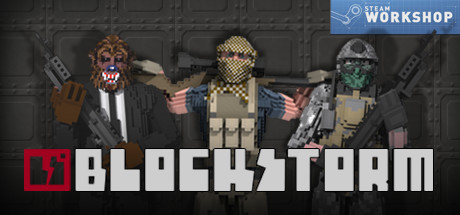
Blockstorm is a voxel-based first-person shooter developed by GhostShark and published by IndieGala, offering a mix of creative freedom and competitive action within fully destructible environments. Built around the idea that every block can be destroyed, rebuilt, or reshaped, it gives players the same tools the developers used to craft the game’s worlds. This combination of shooter mechanics and sandbox creativity makes it a unique experiment in the genre, one that straddles the line between fast-paced gunplay and freeform construction. The premise is simple but compelling: players battle across blocky maps that can be demolished in real time, while also having the option to create custom levels, characters, and weapons using an intuitive editor. The result is a game that encourages not just competition, but imagination—though the balance between those two elements is not always seamless.
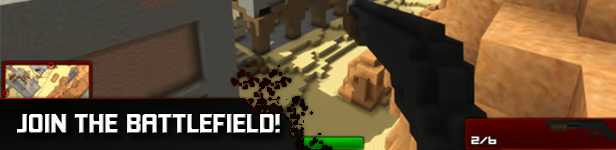
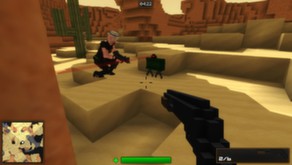
From the first moments of play, Blockstorm’s presentation stands out. The voxel aesthetic, while reminiscent of games like Minecraft, carries a distinct tone. Its visuals are surprisingly detailed for a block-based world, enhanced by thoughtful lighting effects and crisp shading that add texture and depth to every structure. The blocky terrain is not just decoration; it is a living part of the battlefield. Players can dig tunnels to ambush opponents, blast open new lines of sight, or collapse buildings to eliminate cover. Every bullet, grenade, and explosion leaves its mark, transforming once orderly maps into chaotic landscapes of craters and debris. This destructibility is both exhilarating and strategic, making every round unpredictable. No two matches unfold the same way, and success often comes down to how creatively players can manipulate the terrain to their advantage.
The core gameplay structure takes inspiration from classic arena shooters, featuring modes like Deathmatch, Team Deathmatch, Capture the Flag, and Assault. Each mode feels familiar, but the destructible environments redefine the flow of combat. A fortified bunker may be a safe haven one moment and a death trap the next once its walls crumble under gunfire. This constant evolution of the battlefield creates a sense of tension and dynamism rarely seen in traditional shooters. The arsenal is straightforward—rifles, shotguns, pistols, explosives, and melee tools—but their utility changes depending on the environment. Players can also equip a shovel or block tool to reshape terrain mid-fight, giving them the means to build defensive walls or dig escape routes on the fly. The combination of destruction and construction makes matches feel organic and improvisational, where adaptability is often more important than raw reflexes.
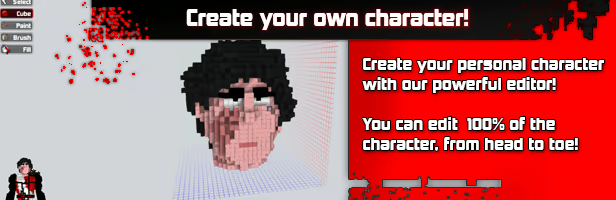
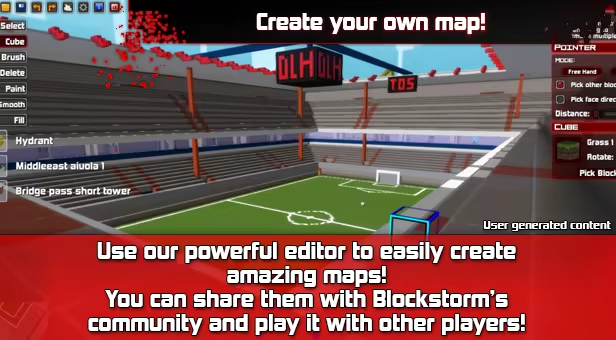
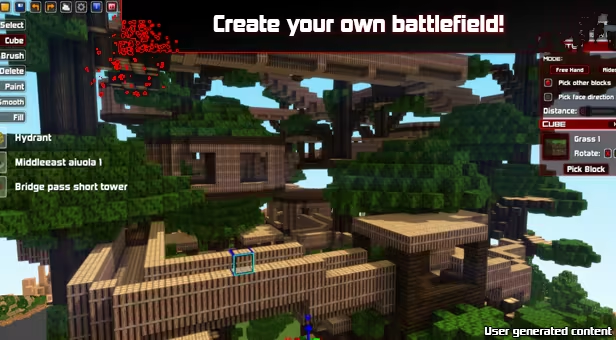
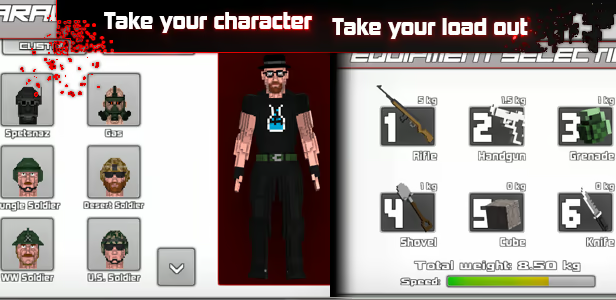
A major component of Blockstorm’s appeal lies in its customization systems. The game includes a robust set of editing tools that allow players to create their own maps, characters, and even weapons. The map editor is particularly powerful, offering nearly limitless creative potential for those willing to invest the time. It allows for everything from small skirmish arenas to sprawling battlefields filled with hidden passages and destructible towers. The ability to share these creations with the community gives the game a sense of longevity beyond its default content. Likewise, the character customization is entertainingly flexible, letting players build blocky avatars that range from soldiers and robots to bizarre, comedic creations. For a game so focused on mechanical destruction, there is a surprising amount of personality and humor in the creative side of its design.
However, despite its strengths, Blockstorm struggles with some of the challenges that often plague indie multiplayer titles. Chief among them is its dwindling player base. While the game launched to positive reception and an enthusiastic community, the number of active players has sharply declined over time, making it increasingly difficult to find populated servers or competitive matches. The developers’ decision to make the game permanently free-to-play was a commendable effort to revive interest, but it has not completely solved the issue of empty lobbies. The lack of a single-player campaign or substantial offline content means that without a community, much of the game’s appeal is lost. For players with friends or dedicated groups, the game remains highly enjoyable, but newcomers may find it frustrating to experience its full potential in isolation.
On a technical level, Blockstorm performs admirably given its complexity. The game runs smoothly on modest hardware, and its simple art style allows for consistent performance even during heavy destruction sequences. Controls are responsive, and movement feels solid, with a sense of weight that grounds the player in the environment. The shooting mechanics, while basic compared to modern tactical shooters, are snappy and satisfying, especially when paired with the chaos of collapsing structures. Sound design plays its part effectively—gunfire echoes through corridors, explosions rumble convincingly, and the minimalist soundtrack underscores the frenetic energy of combat. However, the map editor and creation tools come with a learning curve. Building and navigating complex maps can initially feel clunky, and some interface quirks can interrupt the flow of creation until you grow accustomed to the system.
What truly defines Blockstorm is its underlying philosophy of creativity in destruction. It invites players not just to fight but to shape their battlegrounds, rewarding experimentation and resourcefulness. It offers moments of pure improvisational joy—when you tunnel beneath an enemy stronghold to surprise them, or when an explosion reshapes the map in an instant, forcing everyone to adapt. It is a game about control and chaos, about using the tools of creation to dominate in combat. That said, its success depends heavily on the presence of other players to bring its systems to life. Without an active community or friends to share it with, the game can feel empty, its vast creative possibilities stranded in solitude.
In its best moments, Blockstorm captures the excitement of classic multiplayer shooters while layering it with the ingenuity of sandbox construction. It may not have the polish or popularity of major titles, but its blend of creativity, destruction, and competition gives it a distinct identity. The freedom to shape and destroy the world around you elevates even the simplest firefight into a chaotic spectacle. Though its community has faded over time, it remains a fascinating experiment—a reminder that even in the familiar landscape of first-person shooters, there is room for innovation. For players who appreciate the thrill of building as much as battling, Blockstorm stands as a forgotten gem, one that rewards imagination as much as precision.
Rating: 7/10