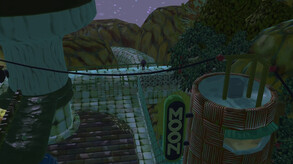
A science fiction farming simulation game set in a small community at the base of a space elevator during the days and seasons leading up to your departure for the moon.
Modeled estimate, not a reported figure. How we estimate →
Media

About
Genres
Stats
All-time low is the lowest price we've recorded for this game since we started tracking it.
Languages: English
Engagement
Hours played at review time, across 40 reviews with recorded playtime.
Reviews
Themes across 40 recent reviews and how positive each mention is. A keyword signal, not full sentiment analysis.
positive critical· bar length = how often the theme comes up
Reviews
Loved it. A total master class in "show, don't tell" story and design. Also how has nobody mentioned "The Dispossessed" by Ursula K LeGuin as a clear touchstone for the story? I mean really phenomenal in so many ways. Constantly subverts your expectations by offering opportunities to reevaluate what you're doing... what are you actually working towards and why?? Also, just lovely characters and small story arcs throughout. Someone said it looks like games should look and I agree. Lastly - I've bounced off every "farming" RPG over the last decade or so but this one hits different. Longest review I've ever written. ++
the days are shorter when you work hard. makes you learn to appreciate the moments when time seems to flow a little slower. but don't lose sight of why you came here. really enjoyed this one. before the green moon has full faith in the player to let the slow burn play out. the character writing is what drew me in; your encounters will be brief and mostly inconsequential and occasionally curt because they're [i]busy[/i], man--it's not just you working here--but over time the social snowball builds up into something real and memorable. the farming mechanics are simple and effective. i'm inexperienced with the genre, so i have to bring up stardew valley as my only point of contrast: this is not the maximalist plate-spinning efficiency puzzle of that game. the productivity-poisoned player will find themself quickly maximizing their output for the day and moving on to the more difficult challenge of deciding how to spend the evening, and later, figuring out when enough is enough. the world of the game feels like it was here before you and it will remain after you leave. it, like the characters, is not in any hurry to explain itself to you, but builds up into a cohesive, somber view of a community keeping itself going after being left behind by the economy. i miss it, and hope that it misses me a little bit, too. sorry, pony.
I am.. unsure how to rate this game. The crusty rundown vibe is on point. Some of the (very brief) dialogue also - perhaps unexpectedly - connected with me. And the whole farming loop is satisfying, if on the simpler side. But I'm not sure I agree with the game. Even after moving out of my own crusty rundown hometown to my own green moon. Consider this a spoiler warning, but: the name of the game is there for a reason. It is [i]before[/i] the green moon. The green moon will [i]have to[/i] come after. Nothing of what you're doing is there to stay. You are meant to move on. [spoiler]There is only one ending.[/spoiler] Well, I disagreed. I did not go to the moon. Even if that meant leaving the game drift off back into the depths of backlog, never to be touched again, never fully finished. NPCs will continue running around with uncleared dialogue lines and incomplete quests. And I will not know how much more (or little) they had left to say. I don't [i]have to[/i] see all the [b]content[/b]. And I think there's something to that. Hmmm.
I'd describe Before The Green Moon as a character-driven, narrative-first experience about personal connections—because that's how it felt the most impactful to me. It's a very special game. In the best of ways. The worldbuilding is excellent, and it's masterfully exposed through small interactions and by exploring the feelings of the people living in it, instead of being dumped on you via diary entries or out-of-place monologues. The setting isn't by any means ordinary, yet they made it feel living and familiar. The pacing is mostly left up to the player, but despite having a rather tight day clock mechanic, I felt like the game strongly signaled me to take it slowly. In no small part because of how immersive and atmospheric it felt to me. The rather slow and straightforward farming loop, the weather effects, the design of the town and its odd corners, the small things happening all around—It all came together and created this immersiveness that convinced me to take things in. And this is all elevated by a soundtrack that felt nostalgic already the first time I heard it. I strongly recommend Before the Green Moon, especially to anyone looking for meaningful narrative in games.
It starts with an evocative monologue that sets the tone for what is expected of you: go up, to the moon. This will become your ultimate goal but it is instead a great set-up: by the time you are familiar with the people of the village, you won't want to leave. And you probably won't: if paying the ticket to hop on the lift is the "win condition", I will never do that on purpose. I want to stay. The game plays with the conventions of the genre and twists them, grounds them: the day is so short that if you are trying to maximize your output, by the time you finish working the day will be over - so, no socializing. Dry season is tougher. Also, in this environment where everybody is sharing, why shouldn't you be doing the same? Do not expect any reward for sharing; sharing is the reward itself, as it should be. And it feels good. Obviously politically charged, it's also not complacent or idealistic about what it depicts: it is tough to live in the village, and luxuries are scarce. But isn't good company the true essence of life? Isn't that more than enough? I really liked Before the Green Moon.
laid back experience of getting to know people in a small community. good art, writing and music. it's light on gameplay, and honestly that's what gives you space to get to know the characters. it's a great game to unwind with. play it before bed and you'll have sweet dreams
As good as Story of Seasons: Grand Bazaar is, it isn't trying to bring back the vibes and atmosphere of the old Harvest Moon games that captivated generations of players. Nothing ever came close to the feelings and moods these blends of social, life and farming sims offered: not the more recent games in the series, especially considering that even the remakes of some of the most iconic titles completely departed from the aesthetics and charm of the originals; not Stardew Valley itself, despite taking all its ideas from several Harvest Moon and Rune Factory titles; not the wannabes that followed it; and certainly not Natsume's morally illegitimate continuations. Well, you know where this is going. Before the Green Moon makes me feel like I'm playing a forgotten title in the series, without ever parading as an enjoyable but blatant pastiche. Its inspirations are obvious to veterans, but deeply honored, and its identity is still extremely strong and unique. I usually don't like to compare works of art to their generally well-known predecessors. I feel like it minimizes or even eclipses in some manner the qualities and merits of the reviewed œuvre. It's highly pertinent to do so in the framework of art history and other analytical contexts, but when it comes to a casual critique, more often than not, it seems highly performative and uninteresting to me. Well, this time, I'm gonna do what I chastise, because this game was, according to its developers, highly influenced by older Harvest Moon titles and "doing something like this" was the modus operandi. Specifically, Harvest Moon 64 and the original A Wonderful Life, two of my favorite games in the franchise. So, what made these cute-looking RPGs so special in the first place? Personally, I'd say how experimental, strange and atmospheric they were. With little to no guidance, you had to integrate a small, idiosyncratic community of strangers, in an unknown land, trying to prove yourself useful to the villagers and earn your daily bread by working (super hard!) on a derelict farm. That's the usual premise. Modern titles can still be very qualitative, with a challenging, strategic and addictive gameplay; but they're friendlier. Making sure that you feel welcomed in this new life, that you understand everything ASAP, everyone's nice and affable, or at least doesn't really mind talking to you, and they have these warm, uplifting, positive BGMs and graphics that are really keen on making you be… at ease. Which is great if that's exactly what you're looking for. But, as a result, they're not as "real" anymore. Old Harvest Moon games used to feel like real life. They had it all; drama, family, love, friendship, friction, rivalry, happiness, complexity, simplicity, opulence, scarcity, depth, death. At the beginning, before you accustomed yourself to your surroundings and understood what this software wanted you to do—which would take several hours—, you could feel extremely isolated, lost, and confused. There was some sort of animosity in the air, but also a lot of mystery. The world could feel morose and uninviting, and in some games, it was actually very gloomy and melancholic. The days were slow and contemplative. The villagers avoided you or didn't have much to say. It made you want to know them better, to belong, to be busy, to be useful, to look for moments of warmth and conviviality. It always took time, these games are infamous for testing your patience: but any progress you made felt deeply rewarding and deserved, because it had required actual work, some form of betterment of your avatar as an individual. You ended up becoming an indispensable part of this community by working alongside everyone. Nothing major is ever just handed to you. Grand Bazaar's remake understood how important these components were and revived them, but its ambiance is still very… cosy (gosh I hate that marketing buzzword so much now). While I radically enjoyed it, I was still starved for the game feel of an older Harvest Moon title. Until I discovered BTGM. Sure, compared to the insane longevity of its inspirations, it's short, but it does have it all, which is an impressive feat in my eyes, even if the "all" in question is served in bite-sized pieces. There aren't many characters, but they're all unique and intriguing, and, for the most part, feel like actual people you could meet. Getting close to them takes time, trust and understanding, as it always should. Relationships don't feel meaningful when everyone likes you without even knowing you, and you shouldn't be able to be friends with everyone to begin with. It's something that some video game series that were celebrated for their realistic and engaging social sim aspects seem to have forgotten. Seeing characters being turned into mere aesthetic contraptions with little to no personality, only existing to serve and please the player, pose, look pretty, say nice things... really weirds me out. Anyway. During my first two hours with this game, while I was impressed by how it looked and sounded, I felt strangely alienated, perplexed, and a little bit disheartened. Yes, the spleen and quiet poetry of both the story and setting worked really well for me. It's been a while since a game made me feel exactly like this, I think the last time was with Innocent Life on the PSP—which is, naturally, a Harvest Moon spin-off. BTGM is similar in its exploration, ambiance, the ability to "camp" in various spots outside the farm, and its potpourri (pun intended) of scifi and fantasy. I'm still not sure if I'll end up going to the Moon, as the life I made for myself on this version of Earth ended up being much more satisfying than I imagined it would be. This is a perfectly executed dilemma. Managing to create a world that ends up being so special for the player that they won't even chase after an exciting feeling of novelty or impulsively reach for what seemed like the logical and desirable conclusion to the narration is no small feat. I love how this miniature world looks. Low poly, vibrant but desaturated, with earthy tones and grimy, naturalistic textures. Admittedly, it's an art style I'm very nostalgic for. The 3D models have some sort of physicality to them, as if you could pick them up and play with them with your own hands. It also seems like solarpunk and afrofuturism had a huge influence on the visual development and the thematics, which is honestly a breath of fresh air. It's saudade in video game form. The houses reminded me of earthships, and felt like places that were, indeed, constructed right where they stand and that you could actually inhabit. There are a lot of thoughtful details in this game that truly elevate it. The characters are basically Blobs too, which completely desexualizes and even, in some cases, degenders them. Another thing I really appreciated is that you don't need to pick a "body type" when you create your avatar... going on a tangent here but, come one, this contemporary binary is a speciously inclusive approach to character creation, as you're still basically limited to "boy/man" or "girl/woman" with the usual gender bias, and unable to create, for example, a truly androgynous character. And don't even get me started on the ridiculous gendered animations... well, all in all, you can't exactly make characters that truly reflect how diverse humanity is. Although there are a few exceptions out there, like this game, but definitely not in the mainstream. Let me just say that BTGM is great for marginalized people that aren't properly represented (if at all) in media. You don't need to be an old-school Harvest Moonie to enjoy BTGM. Even if you're not into agricultural sims, just wanting to try something a little different with an open mind is enough. I wish it was more popular. There are a lot of people out there that would absolutely resonate with it. (As a side note: it runs perfectly on the Steam Deck, with 1280×800 and 90Hz support.)
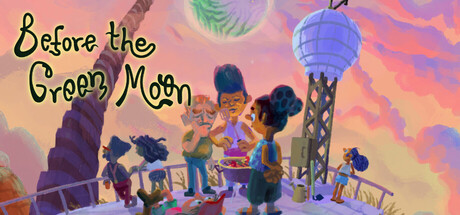
An interstitial game in many ways, Before the Green Moon has all the trappings of the farm sim genre -- it has a farm, it has mines (sewers), it has money to make and people to date. What sets this game apart is its willingness to not promise you a home. Your farmstead is company-owned, your job requisitions you seeds every day, and your character’s immediate goal is to pass over the town by your farm and go to the moon to meet up with your family. Play within the bounds of the game and you’ll slowly, monotonously make your way to the moon without a hitch. This is the first interstice. But you are invited to stay, and this is the second interstice, because the people of the adjacent, pool-tile-chlorine-evoking, rainy town come to like you as you interact with and give gifts to them, leading to whole town invitations to mountain campfire nights and moon viewings and even muffin picnics. There are events where only the clique of younger characters meet, and others where everyone is present, and that exclusivity is strangely intoxicating… the characters recognize their bonds with each other and talk about one another to you. There are four seats for a mountain campfire night and when those four seats are finally filled with your arrival, it’s a thing of magic knowing you kept your friends waiting. But you’re not the only one who talks about leaving, and all the anxiety you feel in real life of passing by people in your life can come surging back with only a few words, a suggestion that someone will leave before you. I have to confess: I did not care for these people initially. I did not feel like the characters presented enough of themselves for me to feel a connection even a few hours in, and the events felt stilted -- without meaning. I must have left off at just the wrong (or right?) point, because as soon as I started playing again, the events really started to click for me: the characters started to unfurl naturally. This is what you’re working hard for on your farm, these moments between monotony that affirm your devotion to your work and these once-strangers. Eventually these events end, moments pass, and the next day comes. I adore them. It’s where the down-to-earth (pun-intended) writing style seen throughout the whole game really shines. The second interstice has passed, and you must get back to your farm. Schedules begin anew, and that means your incredibly short days begin now within the third interstice: farming, which exists between play and boredom. Very intentional but still frustrating, the farming experience exists in short, focused bouts of planting, watering, and harvesting. And without better tools, you’re greatly handicapped by your energy, requiring you to run to the mess hall to get a meal, recharge, and get back to farming for what you have left of the day. It is an uncomfortable, monotonous thing that, by the end, can become something trivial, even negligible once you have money, or because of the rainy season, or because you have chickens doing the financial heavy lifting. It’s thematically sensible that, as your job, your farming work is not fun. When your crops funnel into money and there’s not much to spend that money on but more convenient tools and leaving, a portion of the sense of accomplishment of players will be to complete the game. I think Before the Green Moon is doing something incredible by asking players the hard question of staying or going, but much of that is supported by the characters and not the gameplay. The simple farming system detracts from the player forming a relationship with the land, as the farm customization is extremely limited even from the standpoint of the crops you plant. Every month there are visitors from the moon, and every month, without fail, they leave their litter all about your little town. It’s a moral (and minorly financial) reward to pick up this litter, and it will never end so long as you play the game. So, why not let us use that litter instead? Let us make plastic pots for flowers that we can place around our farm. The game already supports placing candles, and the ability to light them, so I feel there’s much more that could have been done here to make your farming go beyond your job. Pony’s arrival does a lot of work to start this sentiment, and I just want more of it. I understand the irony in asking a small indie team to implement more content, but I can’t help feel it could have felt much more fleshed out with only a little more effort. In the same vein, despite being your job, there’s not quotas to reach. You are evaluated at the end of every year, but truly you can leave before receiving your second evaluation. I think the job aspect of your farming could be emphasized via a crop quota in tandem with being required to plant the seeds you are given, leading to more intentional monotony followed by player freedom outside of your job to make your farming your own. Yes, you’re stuck at your job until you choose to leave, but your job doesn’t consume your entire being. You can make this labor your own just like you can make your life here your own via your relationships. To me, this is what the game already begins to say that I feel it can say better. As you make all the money you need to leave, the third interstice passes and we return to the dilemma of the first. This “in-betweenness” is the lens I’ve taken on while playing the game, as I feel it touches almost every facet within. Even the parents you’re hoping to meet on the moon aren’t your real parents. They’re a couple who raised you, and so it is the basis of life in this world to be between things -- even at its premise this world is somewhere at the early stages of space-travel, utilizing a moon elevator to leave Earth. Choosing to go the moon means no return. You can choose to stay with your people, or leave forever -- your game saving once you’ve entered the elevator. I went to the moon. When Int leaves through the portal, I may have picked the wrong options. I couldn’t know if Int would return, and I waited a long time hoping to be in a relationship with them. I felt the only way I could get closure was to leave for myself. I created my own story in this world of precious few words and polygons. And now -- though I’ve left -- I am stuck thinking about this game, writing a review to get me the closure going to the Green Moon couldn’t.
this game takes a lot from games like animal crossing/stardew valley but still manages to find ways to not feel like it's a clone of them the personality gone into each character in town and how they go about their day is really remarkable i loved each individual cutscene that occurs for the characters you meet. it feels like you've reached a new milestone with a character and in your friendship, with the direction of the custscene always being perfect. the way the camera is usually angled off showing the environment of this weird world they live on. a couple, or a group, of people just talking to each other about their day in the foreground. there was one particular character in this game whose story is way more mad than the others and i'd recommend this game solely for that and for you to experience it also highly recommend
New favorite farming/community game. Love the aesthetics and characters. Took me a moment to figure out where some things are but nothing impossible. Once you figure out a routine in game, time kind of just flies by. Also having issue with the one review not recommending the game as at least half of the problems found have simple solutions found by just paying attention.
Related
Related
Trends
Modeled estimate over time, reconstructed from Steam's monthly review histogram.
Momentum
Pace estimated from the game's recent review growth (our daily snapshots) at its own sales-per-review ratio — a momentum signal, not booked sales.
Audience
Estimated from the language of this game's reviews — a proxy for where players are, not official Steam demographics.
Related
| Yet Another Zombie Defense HD | $50.7K | 3.1K | 84% | $3.99 |
| Bohemian Killing | $50.7K | 206 | 63% | $12.99 |
| VORON: Raven’s Story | $50.7K | 241 | 90% | $5.89 |
| Sea Chronicles | $50.7K | 142 | 90% | $9.99 |
| Siralim | $50.7K | 201 | 83% | $9.99 |
| Theatre of War 2: Africa 1943 | $50.7K | 285 | 69% | $4.99 |