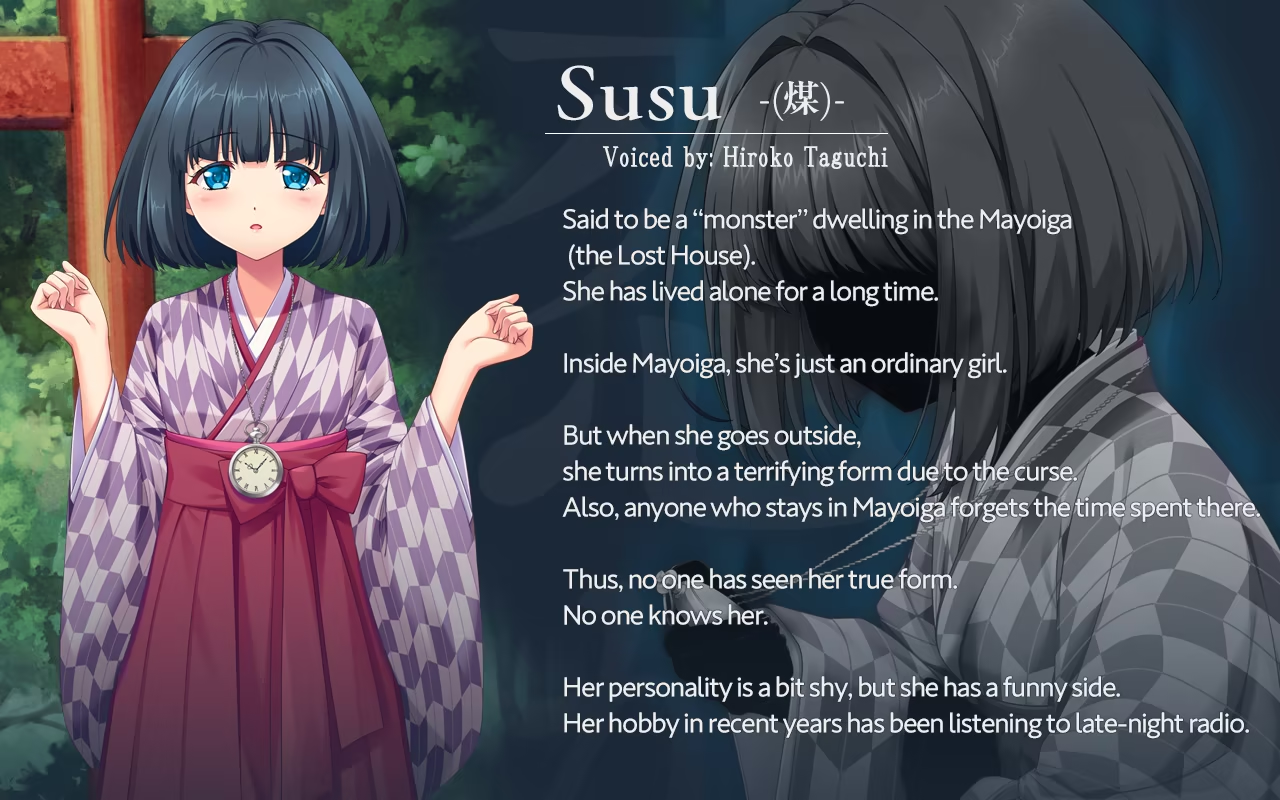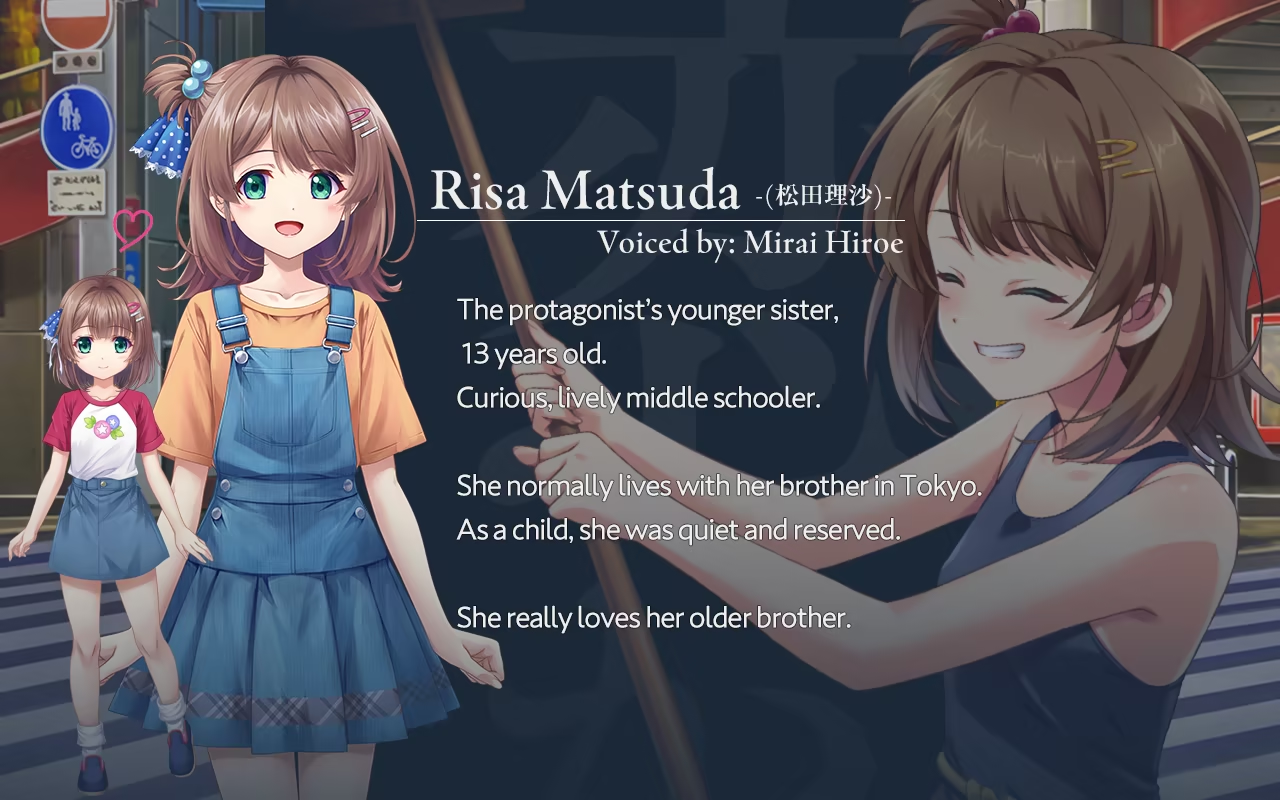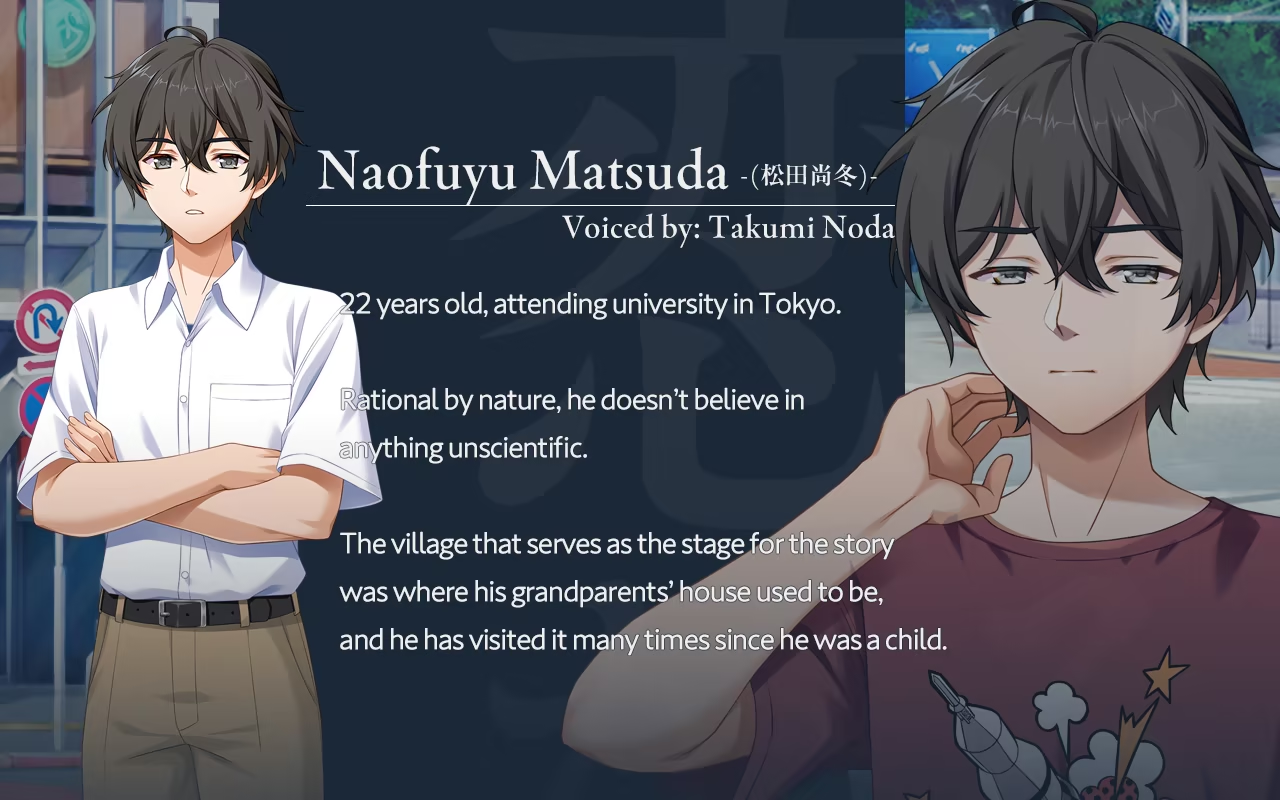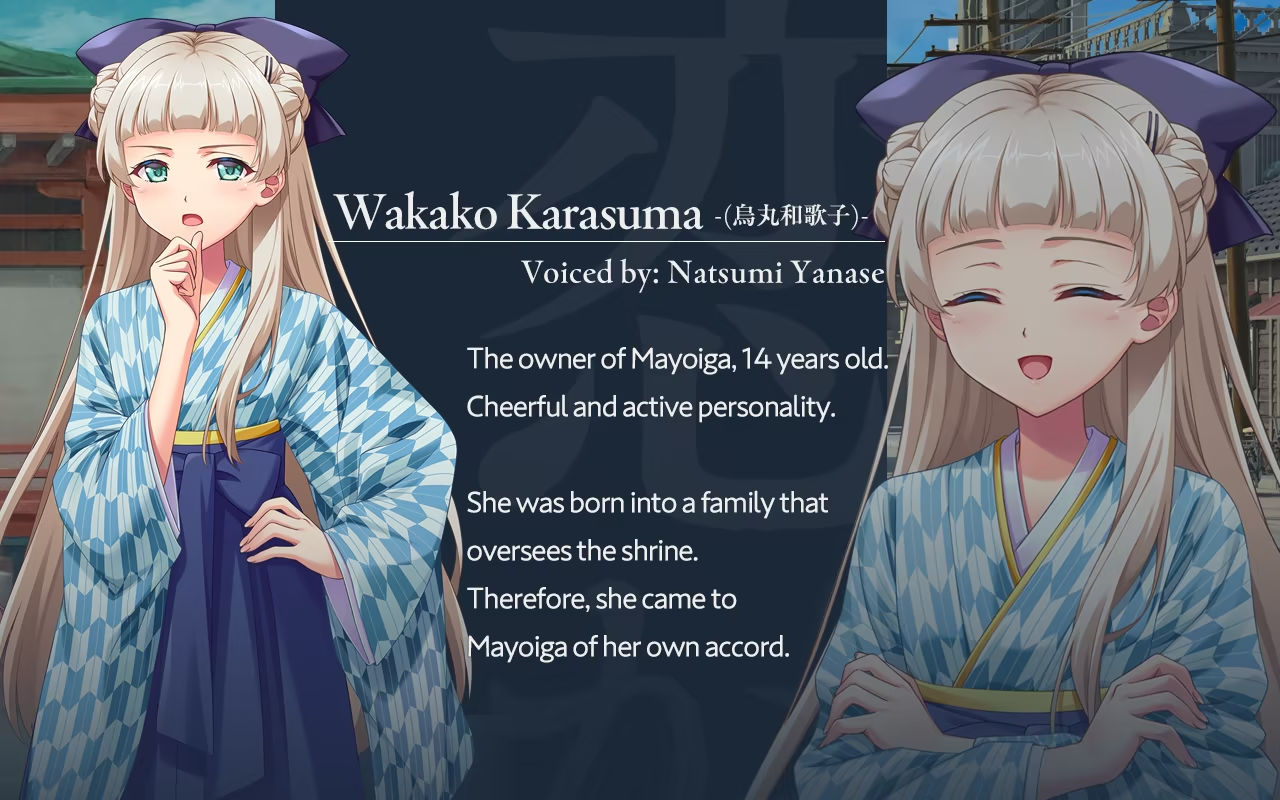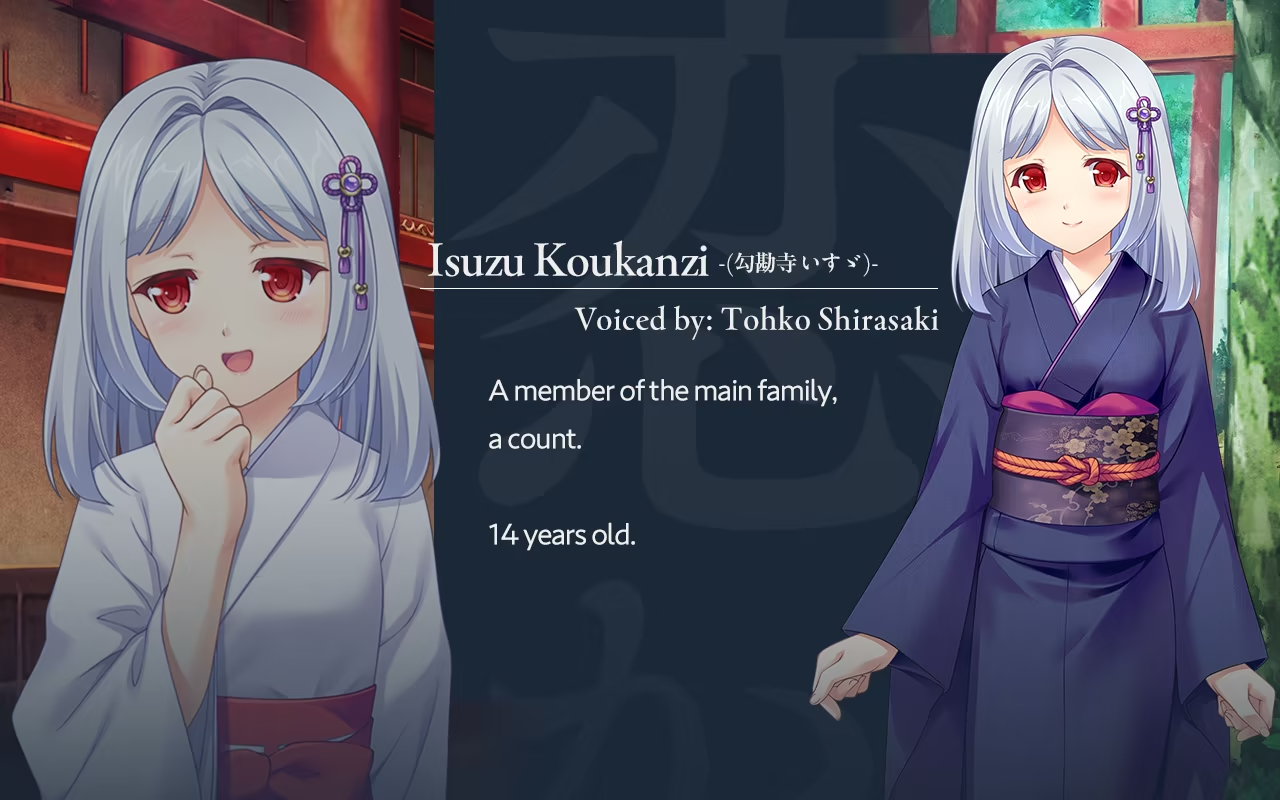
Set in 1972 (Showa 47), this story follows a high school student on his yearly summer visit to his grandparents’ rural home. Spending quiet, nostalgic days with his sister and the villagers, he begins to believe this peaceful summer might last… until an encounter in the mountains changes everything.
Modeled estimate, not a reported figure. How we estimate →
Media

About
Do you remember your childhood?
From Nekoneko Soft and OVERLAP GAMES comes a slightly bittersweet mythic tale.
- Story by Tomo Kataoka — the “prince of storytelling” known for narcissu.
- Character concepts by Werkbau of “Christmas Tina – 泡沫冬景 –”.
- Episodic storyline.
- Full Japanese voice acting.
- Total playtime: 7–10 hours.
- Tuned to a length that makes you want to binge straight through to the end.
- Streamlined controls for a smooth read.
- Once you finish the story, revisit your memories in Gallery mode.
- Experience an authentic Japanese folklore adventure set in a nostalgic 1970s summer.
Genre: Visual Novel
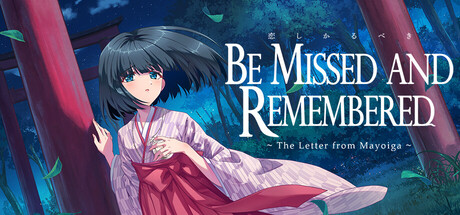
Title: Be Missed and Remembered: The Letter from Mayoiga
"If, against my wish,
In the world of sorrows still,
I for long should live;
How then I would pine, alas!
For this moon of middle-night."
— From the Hundred Poem Anthology by Sanjouin (No. 68)
Stage: The Lost House (Mayoiga) still exists in the modern world.
Q: Why has its existence never been known to anyone?
A: It is hidden from view — located in a remote mountain area, and typically submerged beneath a lake.
A: No one approaches it — the nearby village carries a terrible legend.
A: No one remembers — once you leave Mayoiga, all memories of the time spent there vanish.
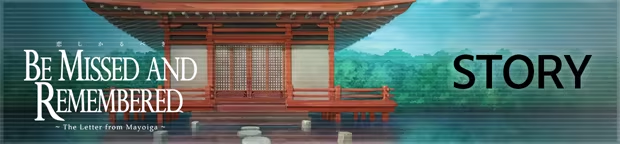
The setting is 50 years ago, 1972 (Showa 47).
The protagonist, a high school student, is heading to his grandparents’ countryside home.
A short trip taken during summer vacation, a yearly tradition.
Spending time with his sister, peacefully interacting with the villagers, but…
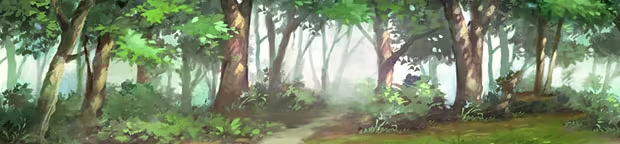
"Do not enter the mountains. You will be cursed."
There seems to be such a legend in the village.
People believed that monsters lived in the mountains, and if cursed, terrible things would happen.
“The era of moon rockets — it’s completely unscientific.”
The protagonist doesn’t believe it at all, but there’s another reason.
He had actually seen the monster’s lair before.
He knew it was just an old shrine.
Without hesitation, he set out again toward the forbidden place.
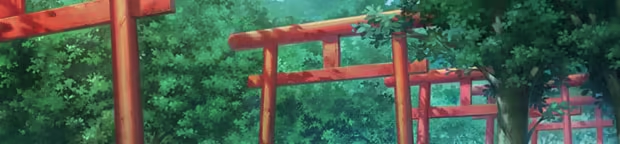
Walking through the countless torii gates that stood exposed in the mountains,
He finally saw the old shrine rising from the lake once more.
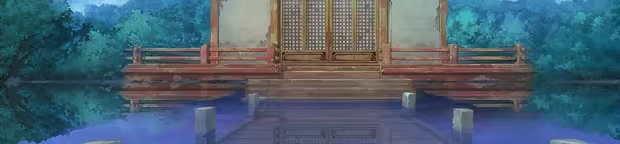
Without hesitation, he entered the shrine, but then a strange question arose.
…Why hadn’t I entered here before?
Having come this far, he should have gone inside,
but for some reason, he couldn’t remember anything from that time.
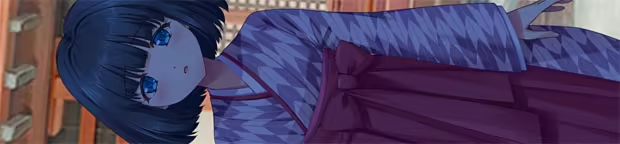
“Looks like you’ve grown taller?”
A voice rang out.
He recognized the voice’s owner.
More precisely, it was something he remembered once inside.
“…How many years have passed since then?”
“Five years and three days.”
We met again, after 1827 days.
Neither of us bothered to ask for names. We already knew each other.
But this “knowing”
wasn’t something guaranteed for the future…


Original Character Design: Werkbau / Zerui Su
Original Character Design Cooperation: Werkbau / Hua Juan
Original Visuals: Akino Takehiko / Ankoromochi
Scenario: Tomo Kataoka
Background Art: KyaruMii / Yumeji Miyoruno
CG Graphics: Asanegi Momiji / Ijiyama
SD Graphics: Hikanyan
Music: project lights
Logo Design: Nachi Kio
UI Design: KOME WORKS
Programmer: Juro Izumi
Producer: Tadafumi Kamioka (OVERLAP)
Assistant Producer: Ryoichi Terai (OVERLAP) / Yuichi Umezaki (Three Waves)
Director: Tomo Kataoka
Special Cooperation: Nekoday / YAMAYURI GAMES
Development: Nekoneko Soft
Stats
All-time low is the lowest price we've recorded for this game since we started tracking it.
Languages: English, Simplified Chinese, Japanese*, Traditional Chinese*languages with full audio support
Engagement
Hours played at review time, across 53 reviews with recorded playtime.
Reviews
Themes across 53 recent reviews and how positive each mention is. A keyword signal, not full sentiment analysis.
positive critical· bar length = how often the theme comes up
Reviews
[後半に日本語レビューあり] [h1]A Showa-Era Mythic Kinetic Novel Woven by Memory and the Girl of the Lost House[/h1] A folklore visual novel set in the summer of 1972 (Showa 47), where a high school protagonist visits his grandparents' countryside home and reunites with a mysterious girl named Susu in the forbidden mountains after five years. The central mechanic driving the story is that the girl is trapped in an ancient shrine called the "Lost House" (Mayoiga), submerged in a lake, and her memories vanish when she moves beyond a certain distance from the protagonist. A reunion with a being who cannot retain memories, forgotten promises, and the universal theme of eternity are quietly explored within a supernatural world set in rural Showa-era Japan. The use of a poem by Sanjouin from the Hyakunin Isshu as a structural motif also speaks to the scenario writer's careful attention to detail. The scenario is penned by Tomo Kataoka, known for narcissu. Based on his design philosophy that "humans can only focus on reading text for around four to six hours," the entire work is divided into short episodic chapters. Each chapter is kept brief, and the binge-reading tempo is intentionally crafted. Chapter selection allows revisiting any completed section, and a gallery mode unlocks after finishing the story. This is a linear kinetic novel with no choices, but that allows the reader to focus entirely on the narrative's emotional arc. Despite a title that may suggest romance, the story actually depicts the bonds between young people and the warmth of family -- something worth keeping in mind. Ultimately, the story [spoiler]leans toward a happy conclusion[/spoiler], so [spoiler]those concerned about that can rest assured[/spoiler]. On the visual front, the character designs by Werkbau of Christmas Tina fame are a notable highlight. The contrast between the main heroine Susu's classical hakama attire and the energetic younger sister Risa's design is memorable, and the period-accurate 1970s clothing and props reflect careful attention to historical detail. The background art is also impressive, with the torii-lined mountain paths and moonlit shrine scenes carrying a painterly atmosphere that harmonizes beautifully with the story's world. The contrast between sun-drenched rural landscapes and the serene moonlight enveloping the shrine at night is particularly striking -- the backgrounds alone are captivating enough to make you want to linger in this world. Music is another major strength. The BGM by project lights simultaneously evokes the quiet melancholy of the countryside and the warmth of everyday youth. The placement of tracks is thoughtful -- never overpowering a scene, yet unmistakably amplifying its emotional weight. Multiple review outlets have cited the soundtrack as the highest-rated element. The full Japanese voice acting also conveys emotional nuances that text alone cannot, supporting immersion in the story. If there is room for improvement, the handling of the time axis in the latter half feels somewhat rushed, and there may be moments where the resolution does not quite match the careful buildup of the earlier chapters. Some have noted that questions remain about certain details of the world's internal settings. The linear structure may leave players seeking greater interactivity or branching paths somewhat unsatisfied, but considering the price and what the game offers, I found this well within acceptable limits. As a bittersweet folklore tale exploring memory and eternity, this is a work that can be recommended to those who want to soak in Showa-era nostalgic atmosphere while enjoying a visual novel reading experience. Personally, the fusion of background art and BGM during the mountain torii path scene was particularly memorable -- that moment alone made the journey worthwhile. HHF-chan's comment: "The BGM on the moonlit torii mountain path gave me goosebumps -- pure atmosphere magic! Before I knew it, I was totally drawn into the story and read straight through to the very end!" [h1]記憶と「迷い家」の少女が紡ぐ、昭和伝奇キネティックノベル[/h1] 昭和47年の夏、祖父母の田舎を訪れた高校生の主人公が、村の禁忌とされる山奥で不思議な少女「煤(すす)」と5年ぶりに再会する伝奇ビジュアルノベルだ。湖の中に沈む古い祠「迷い家」に囚われた少女と、主人公から一定距離以上離れると記憶が消えるという設定が、物語を貫く中心ギミックとして機能している。記憶を保てない存在との再会、忘れられた約束、そして永遠性という普遍的テーマが、昭和の田舎を舞台にした伝奇的世界観のなかで静かに掘り下げられていく。百人一首の三条院の歌をモチーフに据えた構成にも、シナリオライターのこだわりが窺える。 シナリオは『ナルキッソス』で知られる片岡とも氏の書き下ろし。「人間が集中してテキストを読める時間は4〜6時間」という氏の設計思想に基づき、全編を短章に分割した構成が採用されている。各章は短めに区切られており、一気読みを誘うテンポ感は意図的に練られたものだ。章選択画面からの任意再訪も可能で、クリア後はギャラリーモードで振り返ることもできる。一本道のキネティックノベルであり選択肢は存在しないが、そのぶん物語の起伏に集中できる設計となっている。恋愛ものに見えるタイトルだが、実際には少年少女の絆と家族の温もりを描く物語であり、その点は念頭に置いておきたい。最終的には[spoiler]ハッピー寄り[/spoiler]の話なので、[spoiler]その辺が気になる人は安心[/spoiler]できる内容だと言える。 ビジュアル面では、『Christmas Tina ─泡沫冬景─』のWerkbau氏によるキャラクターデザインが注目ポイント。メインヒロイン煤の古典的な袴姿と、元気な妹リサの対照的なデザインが印象的で、1970年代の衣装や小道具にも時代考証の丁寧さが感じられる。背景美術の完成度も高く、鳥居が立ち並ぶ山道や月夜に浮かぶ祠の描写は絵画的な空気感を漂わせ、物語の世界観と見事に調和している。夏の日差しに照らされた田舎の風景と、夜の祠を包む静謐な月光のコントラストが特に美しく、背景だけでもこの世界に入り浸りたくなる魅力がある。 音楽もまた本作の大きな強みだ。project lightsによるBGMは、田舎の静寂と哀愁、そして少年少女の日常の温かさを同時に表現している。場面の空気を壊さず、しかし確かに感情を後押しする楽曲の配置は丁寧で、複数のレビューサイトでも音楽面を最高評価項目に挙げる声が見られる。日本語フルボイスの演技も、テキストだけでは伝わりにくい感情の機微を補い、物語への没入を支えている。 改善点を挙げるとすれば、終盤の時間軸の展開がやや駆け足に感じられ、序盤〜中盤の丁寧な積み上げに対して説得力がやや追いつかない部分があるかもしれない。世界観の内部設定についても細部で疑問が残る箇所があるという声も見られる。また、一本道構造ゆえにインタラクティブ性や分岐を求める層にはやや物足りなさが残る可能性もあるが、価格と内容を考えると問題ない範疇に感じた。 記憶と永遠性をテーマにした甘くほろ苦い伝奇物語として、昭和レトロの空気感に浸りながらビジュアルノベルの読書体験を楽しみたい層に勧められる一作だといえる。個人的には、鳥居の山道を歩く場面の背景美術とBGMの融合が特に印象深く、あのひとときだけでも本作に触れる価値はあった。 HHFちゃんコメント: 「月夜の鳥居山道のBGMで鳥肌が立ったワー!雰囲気の魔法ネー!気がついたら話に引き込まれてて、一気に最後まで読んでしまったワー!」 [quote][b]Check out our Steam curator ([url=store.steampowered.com/curator/36364102-Horny-Hentai-Festival/]link[/url]) , YouTube channel ([url=www.youtube.com/curatorhhf/]link[/url]), and X(Twitter) ([url=x.com/hhfcurator]link[/url])![/b][/quote]
Be missed and remembered ~The Letter from Mayoiga~ is a new short project from Kataoka Tomo, the creator of narcissu, that was developed in collaboration with Overlap Games. The success of Christmas Tina opened the doors to multiple collaborations like this over the past few years, but were they able to maintain the same high quality? While narcissu and Christmas Tina relied on a grounded approach to storytelling, Be missed and remembered is clearly a different beast that leans toward Japanese mythology, telling a story about a secluded cursed shrine in the middle of a dry lake. The locals stay away from it and claim to see a monster occasionally appear near the village, but curious Naofuyu discovers not a monster, but a young girl who, for some reason, can't leave. There are plenty of mystery games that feature the protagonist traveling to a small village or town only to meet some unexplainable or even horrifying mystery buried there in secret: Higurashi, Gore Screaming Show, Kusarihime, Tousui Kitan—there are plenty of stories like this, the 2000s were especially full of them. But Kataoka's project goes for a slightly different goal. Rather than scaring you by making a thriller, the team creates a drama about memories. One of the things I like most about Be missed and remembered is that Susu isn't actually physically tied to her shrine like you'd usually expect. She can freely leave at any moment, and it's some other circumstances that make it difficult for her to stay away for long with memories being one of them as you can already guess. Not the only one on top of that, so it creates a fresh yet nostalgic experience by combining recognizable core elements with other ideas. We tend to associate such dramatic stories with long buildups and tons of slice of life content that aim to make us fall in love with characters before hitting us with heavier scenes, but Be missed and remembered is a pretty short story that doesn't even take 10 hours to finish, especially if you don't tend to listen to voice acting fully. It makes the narration pretty tight, so you begin to see glimpses of emotional scenes early on, while everyday life scenes are short enough to feel like a side dish rather than a big part of the game. It's also worth mentioning the game's structure. The story is divided into 30 chapters and, given the short length, you can easily finish some of them in 10-15 minutes or something. Every time you finish a chapter, you're returned to the chapter selection screen which might sound weird, but I find it to be a pretty clever solution to keep you motivated. You constantly feel satisfied by finishing part of the story and then you see an intriguing description of the next chapter which makes you want to click on it rather than close the game. You could blame it on the short attention spam mentality often associated with zoomers, but it's actually not a new idea. Something like Extravaganza ~Mushi Mederu Shoujo~ used a very similar approach back in 2006 already. Meanwhile, Kataoka himself compares this project to his earlier visual novel, Sanarara, in terms of both structure and theme. Of course, some things tend to end up rough. When you create a short story with a heavy focus on drama, it's easy to lose track of its pacing. Be missed and remembered features quite a lot of scenes that end abruptly and could be fixed by being a bit longer. I appreciate that Kataoka doesn't want to waste your time and aims to get straight to the point, but this is exactly the case when the overall balance suffers because of that. Which is funny because the writing itself would become better by cutting some things off. Kataoka likes to repeat the same thing over and over again, which is kind of meaningless when the story is so short. Might be good for those of you who tend to put your games on hold for a year or two though. Even then, there are a few unintentionally hilarious moments when Kataoka repeats the same thought almost immediately after the previous time. As a result, this uneven fast-paced writing makes emotional scenes leave less impact than they could otherwise, but I wouldn't go as far as calling it a complete failure. The game still does a good job at keeping a captivating atmosphere, mixing summer days in the countryside, heavy rain, and a mysterious shrine together. Add to this a great soundtrack and it becomes hard not to get invested in this story of desperation and memories to some extent at least. Though, I still must mention that the technical side of this project clearly requires more work. The game runs on Unity, which means it's... serviceable, but still lacks some basic visual novel features. Risa's voice recording quality sounds like something from the early 2000s. Meanwhile, the English translation utilizes weird line breaks, suffers from occasional inconsistencies, and definitely could become better after a careful QA pass. Overall, Be missed and remembered ~The Letter from Mayoiga~ is a game that would probably appeal to a certain audience only. I'm a big fan of these mysterious countryside settings filled with curses, scary things, forgotten promises, and whatever else. This type of visual novel became somewhat rare in recent years, so I was pretty happy to see something like this appear once again. Will it make other people happy though? Let's be honest, not all of them. Especially not those who are disgusted by the idea of an adult man flirting with an underage girl, even though Be missed and remembered doesn't focus on romance, doesn't have R18 content, and doesn't even feature a single kiss or even a hug. Aside from this, it's still a cute little game for fans of such cute little games. For better or worse, it feels like a visual novel from the early 2000s. It most likely won't become the next Christmas Tina, but I definitely wouldn't mind seeing something like this again. Just make it more polished and we have a deal. [url=https://x.com/ErogeAreAlive/status/2075002204818116824]—Visual Novel News, @ErogeAreAlive[/url] [url=https://store.steampowered.com/curator/45863634-Visual-Novel-News/]Lists of various VNs: dark, hybrids, otome, and more[/url]
還行 比上一作《神之國的魔法使》要好
[h1]索然无味的平庸之作[/h1] [table] [tr] [th]游戏由SteamPY鉴赏家提供[/th] [/tr] [tr] [td]SteamPY鉴赏家[/td] [/tr] [tr] [td][h3]上SteamPY淘海量超低价游戏[/h3][/td] [/tr] [/table] 自从《泡沫冬景》之后,无论是中二的异世界穿越文《神之国的魔法使》,还是想写悬疑却草草收尾的《新宿葬命》,片冈智这几年的作品已经越来越拉胯了,我不要求达到《水仙》、《120日元》系列的水准,现在连《泡沫冬景》的水准都达不到了,这次的新作同样也没能实现这一目标,简单来说就是一部人设模板化、剧情草草收尾的平庸之作。 本作在人物设定、剧情桥段、叙事方式上与《神之国的魔法使》有很多相似之处,比如父母双亡的兄妹二人组、双线交错叙事、因为某些原因导致角色不会变老等等。相较于神之国前期的漫长种田生活描写,本作的叙事节奏快了很多,但也导致对于人物的刻画不够细腻,角色之间的羁绊建立过程没得到充分展现,最终的后果是很难让人产生情感上的共鸣。 神之国虽然在叙事上有很多大病,但仍然留下了一些令人印象深刻的片段:离开村子时公主的诀别、重访村子时三人吃到做法错误的冰淇淋等等,时代的变迁让曾经的好友都成为了历史,多少都会让人有所触动。可惜本作没办法实现这种效果,一方面是因为篇幅太短(大概只有神之国的1/3),另一方面是剧情过于模板化(为了制造离别强行拆散角色,又为了重聚强行包饺子),最后的结局也是草草收尾,既没有新意也没有亮点。 说实话,我觉得片冈智现在就是在吃老本,想搞点新花样但总是拿捏不好度,连续几部作品都出现了结局赶工的情况,我也懒得骂了,只希望下次的《世纪末之诗》别再犯病了。
这部视觉小说整体质量挺高的。 全篇全角色日文配音,音乐与画风都带着怀旧的氛围,沉浸感拉满,CG也是量大管饱,妹妹们也都十分的可爱,不过就是男主的鼻子老是看着有点别扭(这里要指出一处CG错误,在第14章的时候“煤/铃”开篇的CG有误,按时间线来说男主72年才与她相遇,留下了怀表,而剧情这个时候的她是在58年,但是CG画面中她身上却出现了男主给她的怀表)。 全文也分成了很多个章节,基本上用不上什么存档,不过在较后部分的章节,一章一个时空的视角较多,有点容易混乱,但作者的文笔还是挺吸引读者继续往下去看的。主角们在即将分别的时刻隐约想起了被遗忘的事,最后重新聚在一起,这大概就是友谊的魔力吧(有一说一,男主简直就是超人,两女孩一起说扛就扛)。美中不足的就是故事结尾有些略显仓促了,甚至有种不知所措的感觉。 总而言之,这是一部价格略有小贵,但是值得静下心来品尝的中短篇作品。
游戏全程配音,美术风格柔和,CG还算不错吧,故事围绕男主和废弃山中神社煤的重逢展开,有沉浸感。
在如今充斥着快餐式废萌与流水线工业糖精的旮旯game中,想要找到一部真正在用心讲故事的的泣系作品已是愈发困难。 好消息是,那个做出《水仙》与《泡沫冬景》的男人,片冈智回来了。 故事发生在一座只有特定时刻才会浮出水面的湖底神社,这里的女主角“煤”并非被物理意义上的困住,而是被一种规则束缚:无从得见,无人接近,终将遗忘。 任何踏出神社的人,都会彻底抹除关于她的所有记忆。 虽然一眼看上去给人一种“怎么又是民俗恐怖”的感觉,但随着剧情深入能逐渐品出一些不一样的地方。 在男主尚冬与妹妹理沙的一次次尝试中,“设定”的感觉越来越淡,“规则”的感觉越来越重,也能愈发理解那种被遗忘的绝望。 虽然有剧透的嫌疑,但还是打个预防针:[spoiler]本作虽然是HE,但并没有走恋爱线,男主和煤更像是一种介于挚友与家人之间的灵魂羁绊。[/spoiler] 再来谈谈剧情之外的事,美术选用了一种极度清新、简单且带有轻微褪色感的复古色调。 深山中长满青苔的鸟居、干涸湖底的破败神社,充满时代特征的矿石收音机…… 那种旧时光带来的年代感和轻微的落寞感完美的融入了故事时间线,每一张背景CG都能看出制作组的用心。 连NPC都有的全流程配音也比较难得,可能这也算流程短带来的好处? 总的来说,国区三十多的价位对于一款流程7h左右的旮旯game来说算是性价比适中,但考虑到本作的质量和水准的话,可以说是极具性价比了。 适合在尝腻了甜甜恋爱和无脑爽文的闲暇时间里当做下午茶一般填补下时间的空隙。 [quote]关注[url=https://store.steampowered.com/curator/36224058/]老实人鉴赏家 [/url] [url=https://steamcommunity.com/groups/laoshirenLSR]老实人评测[/url]:独立游戏爱好者聚集地,黄油绅士交流中心。 不错过游戏的亮点,不放过游戏的槽点,带给玩家最直观的测评感受。[/quote]
本作是片冈智执笔的日式民俗奇幻恋爱视觉小说,延续了章节式多线叙事的故事结构,讲述迷途之家神社的家主们与误入神社的外人之间的有笑有泪的感人故事。主线的松田兄妹跨越五年的遗忘与困在迷途之家中的铃重逢,而百年前上任的家主和歌子也与心爱的他再次相遇,只有500独自背负一切,一想到历史悠久的她是房地产公司社长就完全不伤感了…游戏在和歌子和铃线之间交替叙事,相似的遭遇与同样迎来的HE令人心安。美术、配音和音乐还是熟悉的味道,梦回神之国的魔法使。HE一定要看完两个后记~
复古,复古的不像是2026发行的游戏 光是BUG就足够逆天,很难想象简体中文会出现口口口的字样,灰色的字体描边让人看的着实不爽,切换繁中或是日语都是黑色描边,所以我选择了繁体中文体验游戏,这一点希望能改一下 整体故事性其实还可以,但如果你是奔着恋爱来的那就会大失所望了,严谨来讲这就是视觉小说,甚至连UI交互之类的功能都非常简陋,严格来说我认为42块的定价是绝对不合理的,很明显玩家在这个价位能够买到更好的游戏 相比片冈智老师前作《神之国的魔法试》来看,本作的叙事结构确实是有所增进,故事的逻辑合理,各种时间线和人物的心理描写都非常细致,整个故事的题材也是比较新鲜的那一档 但游戏的BUG和UI交互属实让我非常不满,游戏采用unity引擎肯定是没能很好的发挥引擎的功能,中途还有闪退BUG,中途还有文本显示错误如“我一把将理沙抱起来口,送到被窝里”,切换到繁中才知道这里是有一个多余的字符没有删掉。 UI的交互也是非常让人不满,整体非常简陋,有的地方有过度动画有的地方却没有,章节断篇堪称灾难,为什么我打完一章要让我跳出去?太影响沉浸感了。包括窗口化支持1080p和720p,我想用1600*900的分辨率窗口化是犯了什么天条吗? 总结一下,如果你是想当小说阅读,如果未来降价的话我还是非常推荐的,如果想获得一个较好的游戏体验,还是看后面会不会把程序给优化一下
とてもよかった。 特に時代背景と迷い家関連の設定が秀逸で、物語に引き込まれました。 [spoiler]分かりにくいかもしれませんが、エピローグは2つあります。 [/spoiler] [spoiler]和歌子…幸せになれ…[/spoiler]
Related
Related
Trends
Concurrent players on Steam, sampled daily since tracking started.
Momentum
Pace estimated from the game's recent review growth (our daily snapshots) at its own sales-per-review ratio — a momentum signal, not booked sales.
Audience
Estimated from the language of this game's reviews — a proxy for where players are, not official Steam demographics.
Audience
Games most often reviewed by the same players — an audience-affinity signal from our review sample, not full ownership data.
Related
| Decks of Dexterity | $22.5K | 50 | 100% | $14.99 |
| High On Racing | $22.5K | 275 | 45% | $3.99 |
| TAMASHII | $22.5K | 346 | 95% | $4.99 |
| Induction | $22.5K | 191 | 90% | $6.99 |
| Yury | $22.5K | 497 | 46% | $1.99 |
| Incubus - A ghost-hunters tale | $22.5K | 70 | 83% | $10.99 |