Modeled estimate, not a reported figure. How we estimate →
Media

About
Genres
Stats
All-time low is the lowest price we've recorded for this game since we started tracking it.
Languages: English
Engagement
Reviews
Themes across 43 recent reviews and how positive each mention is. A keyword signal, not full sentiment analysis.
Reviews
和《Rain World》一样,动画做得一级棒,低像素高帧数(自动生成的?)动画。对这个完全没有抵抗力呀
贼好玩 特别是鸭子武士那个,杀鸭子有一种让人上瘾的魔力!
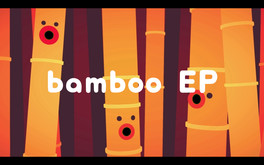
Bamboo EP, developed and published by Sokpop Collective, stands as a fascinating showcase of the studio’s signature experimental spirit—an anthology of miniature games unified by a whimsical bamboo theme. Known for their prolific monthly releases, Sokpop often explores quirky mechanics and fleeting concepts rather than grand narratives or expansive worlds, and Bamboo EP fits this mold perfectly. Rather than presenting a single cohesive experience, it offers three distinct games—Bamboo Ball, Bamboo Heart, and Bamboo Moon—each with its own personality and gameplay loop. Together, they form a peculiar and creative ensemble that blurs the line between game, toy, and interactive art, embodying the collective’s ethos of playful curiosity and minimalist design. From the moment the collection begins, the visual style makes its charm immediately known. The pixel-art aesthetic is stripped-down yet vibrant, bathing every scene in a warm, nostalgic hue that evokes both retro simplicity and modern indie sensibilities. Sokpop’s visual design has always been deliberately childlike, celebrating imperfection as a vehicle for character. In Bamboo EP, this results in a cozy world of hand-crafted charm—tiny snowmen, frogs, bamboo forests, and surreal skies. The atmosphere is underscored by soft, ambient music that ebbs and flows between each mini-game, creating a soothing rhythm that mirrors the cyclical theme of nature and seasons. Despite its low resolution and simple models, there is an undeniable artistry to the presentation, as if every pixel was placed with purpose. The first game in the trio, Bamboo Ball, introduces the player to Sokpop’s blend of absurdity and fun. Essentially a local multiplayer dodgeball game, it invites players to hurl balls across the screen in chaotic matches that shift through four seasonal arenas. Each match feels lighthearted and unpredictable, with playful animations and the occasional unexpected environmental twist. The physics are intentionally loose, giving the game a sense of silliness rather than precision. While it may lack the depth of a competitive sports title, its simplicity makes it ideal for casual play sessions or quick bursts of entertainment. The main limitation is its reliance on local multiplayer—without another player, the fun can fade quickly—but in the right company, it captures that joyous, almost childlike energy of playing games just to laugh and experiment. Bamboo Heart, the centerpiece of the collection, is where Sokpop’s creativity reaches its peak. This segment transforms the player into a lone swordsman whose heart has been replaced by a stalk of bamboo, embarking on a series of duels against a variety of foes. The gameplay is remarkably tight for its minimalist design, combining timing-based swordplay with a subtle rhythm that demands both precision and patience. The combat evokes a meditative quality—each swing and dodge feels deliberate, and victories are earned through understanding rather than brute force. There are even light progression elements, with new abilities and characters unlocking as you advance. What’s most striking is how much emotion and tension Sokpop manages to extract from such a sparse structure. Without a single line of dialogue, Bamboo Heart communicates themes of resilience, purity, and growth through its imagery and rhythm alone. It is a perfect example of how a small idea, handled with grace, can achieve unexpected depth. In contrast, Bamboo Moon serves as an ambient, exploratory interlude—a quiet, dreamlike space that functions more as a mood piece than a conventional game. Here, the player drifts through surreal landscapes under a tranquil moonlight, interacting with small secrets hidden in the environment. It invites curiosity rather than competition, asking the player to slow down and simply exist in the world. This segment feels like Sokpop’s ode to stillness, a reflective pause after the energy of the previous mini-games. While some might view it as slight or insubstantial, it captures the essence of the studio’s minimalist storytelling: creating emotional resonance through atmosphere, tone, and suggestion rather than explicit narrative. Taken together, the three mini-games form an eclectic yet cohesive whole. Each presents a different facet of play—competition, combat, and contemplation—and their contrast keeps the collection engaging throughout its brief runtime. The entire experience typically lasts only a few hours, but that brevity is part of its charm. Sokpop’s games are not designed to be epic undertakings; they are creative experiments, short bursts of inspiration meant to explore ideas that larger studios might never attempt. At a modest price, Bamboo EP offers excellent value for anyone seeking originality and variety in small doses. It also fits neatly into Sokpop’s broader catalog, serving as both a snapshot of their creative philosophy and an accessible entry point for newcomers to their work. Of course, Bamboo EP is not without flaws. Some players may find the controls occasionally imprecise, particularly in Bamboo Ball, where physics and movement feel intentionally loose but sometimes awkward. Others might crave more structure or narrative direction, as the game offers little guidance and expects players to explore and interpret on their own. These imperfections, however, are part of Sokpop’s charm—their games are designed more like handmade prototypes than polished commercial products. They embrace imperfection as a form of personality, inviting the player to appreciate spontaneity over polish. For those willing to accept that, the result is refreshing and oddly intimate. Ultimately, Bamboo EP is a testament to the beauty of small ideas well executed. It captures the playfulness and sincerity that define independent game creation, offering moments of laughter, challenge, and quiet reflection in a compact, artful package. Rather than striving for spectacle, it finds magic in the ordinary: a dodgeball game in a bamboo grove, a swordsman whose heart has turned to wood, and a moonlit dreamscape that invites silent wandering. It may not linger in your library for hundreds of hours, but it will linger in your memory for its simplicity, its warmth, and its gentle reminder that games can be both experiments and art. Rating: 7/10
Related
Related
Trends
Modeled estimate over time, reconstructed from Steam's monthly review histogram.
Hours played at review time, across 44 reviews with recorded playtime.
positive critical· bar length = how often the theme comes up
It's a very nice game collection. I personally love the Bamboo ninja sword one. Really polished and high replayability! 10/10
+1 有成就 没中文 竹韵合集 本作收录三款风格各异的游戏: 竹球 支持单人 / 双人游玩的数码躲避球游戏,设有四种季节场景,还有趣味摆拍雪人彩蛋。 竹心剑影 快节奏斩击类动作游戏,讲述一名剑客追寻本心的故事。内含多名首领强敌、可解锁技能,以及六位隐藏角色。 竹月幽境 趣味互动标题界面,暗藏诸多秘密彩蛋。 建议使用手柄游玩体验更佳!
I have no idea what I'm supposed to do in Bamboo Heart. Every attack I do gets deflected by the miniboss and it just kills me. Is there some tech I'm missing? It's so hard to see what's even happening.
You'll mostly play this for Bamboo Heart. Closest I would compare that with is 'Nidhogg, but with a story'. I do like it although the controls can feel a bit clunky. Haven't really figured out Bamboo Moon's secrets yet. Which gives this game some extra time to mess around with.
Bamboo EP is an interesting little collection of games! Although it comes with a nifty little interactive menu screen with some fun easter eggs to discover, alongside the equally charming Bamboo Ball, the heart and soul of the game is easily Bamboo Heart. As many have already said, it gives very Nidhogg vibes but with a distinct samurai twist. With its focus on single player, it makes for a nice alternative for people who like that style of game! Definitely helps with replay-ability with different characters to unlock. That being said, if you are still itching to fight your friends as a samurai rabbit, Bamboo Heart also has a multiplayer mode called Bamboo Dual that supports up to 4 players! A word of warning though for keyboard players, I really struggled to work out what buttons are needed and it definitely meant it took a long time for me to get a grips on pretty much everything this has to offer. As much as I love Sokpops minimalist approach, it would be good to see basic button controls displayed alongside a keybinding option.
This game is addictive. DO NOT BUY if you're allergic to a good time, I'm just at the start and haven't unlocked much yet but I love it, and I was able to grasp the Bamboo Heart mechanics pretty fast. I paid 5,99 € and for that price is a bargain.
This is 3 games in one (title screen game + bamboo ball + bamboo heart) Bamboo ball is a 2 player game the others are single player. The main attraction is bamboo heart. Had most fun with it. Controls are a bit weird: arrows + x,a for title screen game wasd + x,esc and arrows + space,p for bamboo ball tfgh + vb for bamboo heart
Momentum
Pace estimated from the game's recent review growth (our daily snapshots) at its own sales-per-review ratio — a momentum signal, not booked sales.
Audience
Estimated from the language of this game's reviews — a proxy for where players are, not official Steam demographics.
Related
| Pills4Skills | $3.7K | 54 | 87% | $2.99 |
| Déjà Vu: MacVenture Series | $3.7K | 72 | 64% | $2.99 |
| Omega Agent | $3.7K | 54 | 76% | $2.99 |
| Hollow Floor | $3.7K | 79 | 95% | $2.99 |
| Nyasha | $3.7K | 574 | 79% | $0.99 |
| VOYAGER | $3.7K | 166 | 95% | $0.79 |