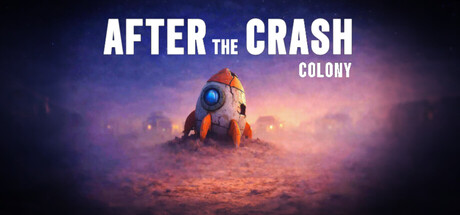
After the Crash : Colony is a science fiction survival management game that combines colony building, resource gathering, and long-term strategic planning within a hostile alien environment. Developed and published by Penche Software, the game begins after a devastating crash leaves a group of survivors stranded on a dangerous planet with limited supplies and little chance of immediate rescue. From that point forward, the player is responsible for transforming a fragile emergency camp into a functioning colony capable of surviving harsh conditions while slowly working toward rebuilding enough infrastructure to escape the planet entirely.
The core gameplay revolves around balancing survival with expansion. Players begin with only the most basic resources and must immediately focus on food production, shelter construction, and maintaining the safety of their colonists. Every early decision feels important because supplies are limited and mistakes can quickly spiral into larger problems. Expanding too aggressively can drain critical resources, while being overly cautious risks slowing development to the point where survival itself becomes difficult. This constant pressure creates a satisfying management loop where every successful improvement feels genuinely earned.
One of the game’s strongest qualities is how effectively it captures the vulnerability of being stranded in an unfamiliar world. The alien planet feels dangerous from the very beginning, not because of nonstop combat, but because survival itself constantly feels uncertain. Harsh terrain, scarce materials, and environmental dangers all reinforce the idea that the colony exists in a place completely hostile to human life. Even relatively small accomplishments such as stabilizing food production or building better shelter create a strong sense of progress because the game spends so much time emphasizing scarcity and survival pressure.
Resource management forms the foundation of nearly every system in the game. Players are constantly gathering raw materials, assigning tasks to colonists, constructing infrastructure, and improving efficiency in order to maintain the settlement’s growth. As the colony expands, additional systems and responsibilities emerge that require increasingly careful planning. The game encourages thoughtful decision-making because every building, expedition, and production chain affects the long-term stability of the colony.
The pacing is intentionally slower and more methodical than action-focused survival games. Progress happens gradually, with each expansion phase requiring preparation and resource investment before larger goals become achievable. This slower structure works well because it creates a rewarding sense of long-term development. Watching a struggling group of survivors slowly evolve into a functioning colony filled with defensive structures, production facilities, and organized systems becomes one of the most satisfying aspects of the experience.
Exploration also plays a meaningful role throughout the game. Venturing beyond the immediate colony reveals new resource deposits, environmental hazards, and opportunities for expansion. Exploring unknown areas introduces tension because players must carefully balance the need for valuable materials against the risks of exposing colonists to dangerous situations. These expeditions help break up the colony management loop while reinforcing the feeling of surviving on a mysterious and hostile planet.
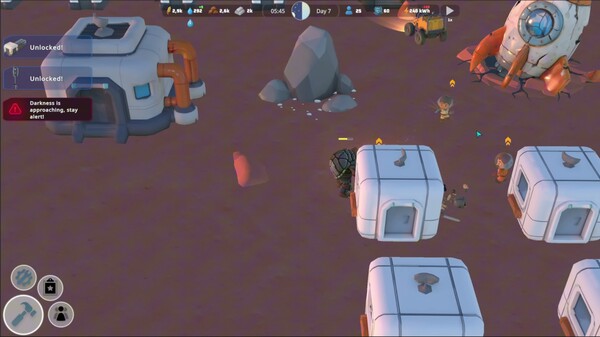
Visually, the game adopts a clean and functional presentation style that supports the management-focused gameplay effectively. Buildings, structures, and colonists are easy to identify even as the settlement grows larger and more complicated. While the graphics themselves are not especially advanced compared to larger strategy titles, the visual clarity helps make resource management and colony organization easier to follow. The science fiction art direction gives the world enough personality to maintain immersion without distracting from the strategic gameplay.
The atmosphere is another strong point. The isolated setting, combined with the constant pressure of survival, creates a persistent feeling of tension even during quieter moments. The colony never truly feels safe because there is always another shortage to solve, another area to explore, or another system requiring attention. This continuous sense of vulnerability keeps the experience engaging throughout much of the progression.
The sound design supports the atmosphere well. Ambient environmental audio, mechanical sounds, and subtle background music reinforce the loneliness of the alien world without overwhelming the gameplay. The soundtrack remains restrained for most of the experience, allowing the focus to stay on colony management and survival decisions rather than dramatic presentation.
However, the game also shows several limitations tied to its smaller production scale and early development state. Certain systems feel rough around the edges, and the interface occasionally lacks the smoothness and convenience found in more established colony simulators. Some mechanics are not explained particularly clearly, which can make the opening hours feel overwhelming for players unfamiliar with survival management games.
The pacing, while rewarding for patient players, may also feel too slow for others. Much of the experience revolves around collecting resources, waiting for production chains to stabilize, and carefully managing gradual expansion. Players looking for fast action or constant dramatic events may find the gameplay repetitive during extended sessions.
Another noticeable issue is the current lack of broader gameplay variety. Although colony management and survival mechanics remain engaging initially, many gameplay loops begin repeating themselves once the settlement becomes stable. More dynamic world events, environmental variety, or deeper colonist interaction systems could have helped maintain stronger long-term engagement.
The artificial intelligence and management systems also occasionally feel limited. Colonist behavior is functional overall, but there are moments where pathfinding or task prioritization can become inefficient, especially as the colony grows more complicated. These issues do not completely break the experience, but they occasionally interrupt the smooth flow of colony management.
Despite these flaws, After the Crash : Colony succeeds because it captures the addictive satisfaction that defines strong colony-building games. The gradual process of stabilizing a vulnerable settlement, overcoming shortages, and expanding into dangerous territory creates a rewarding cycle of constant improvement. The game consistently makes players feel as though they are fighting against impossible conditions while slowly becoming more capable over time.
What ultimately makes the experience enjoyable is the balance between pressure and progression. The hostile planet constantly threatens the colony’s survival, but every successful building project, resource chain, and expansion effort creates meaningful momentum. The game understands that colony simulators are at their best when players feel both vulnerable and empowered at the same time.
For fans of survival management games and science fiction colony simulators, After the Crash : Colony offers an immersive and satisfying strategic experience built around careful planning, exploration, and long-term survival. Its rough edges, slower pacing, and repetitive systems prevent it from reaching the depth of the genre’s best examples, but the strong atmosphere and rewarding colony progression still make it a compelling indie survival strategy game for players who enjoy methodical gameplay and steady growth.
Rating: 7/10