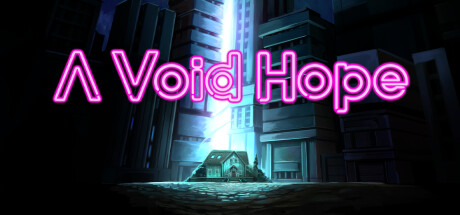
A Void Hope is a haunting and emotionally driven adventure that demonstrates how atmosphere and storytelling can carry an experience even when the gameplay itself remains relatively simple. Developed and published by Elden Pixels, the game abandons the colorful fantasy style many players may associate with the studio’s earlier projects and instead embraces a bleak dystopian world consumed by fear, disease, and mysterious shadow-like entities. The result is a slow-paced but deeply immersive experience that feels closer to a psychological horror film than a traditional retro-inspired platformer. From the opening moments, the game establishes a sense of loneliness and unease that rarely disappears throughout the journey.
The story centers around a couple trying to survive within a city that appears to be collapsing both physically and mentally. Strange creatures roam the streets, citizens disappear without explanation, and reality itself often feels unstable. Rather than delivering direct exposition, the narrative unfolds gradually through environmental details, fragmented conversations, and subtle visual storytelling. The game intentionally leaves many questions unanswered, creating an experience built around interpretation and emotional impact instead of straightforward explanations. This ambiguity becomes one of the game’s defining qualities because it allows players to project their own meaning onto the events unfolding around them.
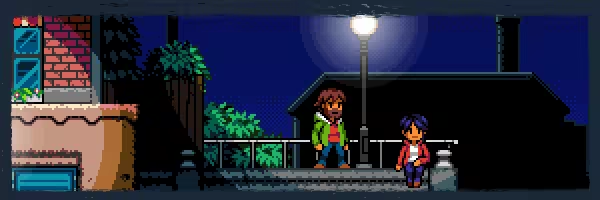
Visually, A Void Hope is remarkably effective despite its minimalist presentation. The pixel-art environments are beautifully crafted, filled with dimly lit buildings, abandoned streets, fog-covered forests, and decaying industrial areas that constantly reinforce the game’s oppressive atmosphere. Elden Pixels uses lighting exceptionally well, often allowing small light sources to contrast against overwhelming darkness in ways that make the environments feel both beautiful and unsettling. Every area feels carefully designed to evoke emotion rather than simply provide visual variety. Even quiet moments spent walking through empty locations manage to feel tense because the world itself constantly suggests danger and despair.
The soundtrack is easily one of the strongest aspects of the entire experience. Waveshaper’s music combines melancholic synth melodies with eerie ambient tones to create a soundtrack that perfectly supports the game’s emotional weight. Some tracks create sadness and isolation while others build quiet tension that slowly escalates during dangerous encounters. The sound design is equally impressive, with environmental noises, distant echoes, and moments of complete silence contributing heavily to immersion. There are sequences where the audio alone becomes responsible for maintaining suspense, and the game understands exactly when to use silence instead of overwhelming the player with constant music.
Gameplay focuses primarily on exploration, puzzle-solving, and survival rather than combat. Players guide the protagonists through dangerous environments while collecting items, unlocking pathways, and avoiding hostile creatures. The structure resembles a cinematic side-scrolling adventure with light metroidvania elements rather than a fast-paced action game. Exploration generally feels rewarding because progression constantly reveals new areas and story fragments that deepen the mystery surrounding the city. The puzzles are usually straightforward but effective enough to keep the pacing moving smoothly without interrupting the atmosphere.
One of the game’s most interesting strengths is how it uses vulnerability to create tension. Combat is intentionally limited and often awkward by design, reinforcing the feeling that the protagonists are ordinary people trapped in a hopeless situation rather than powerful heroes. Encounters with enemies feel dangerous not because of mechanical complexity but because the game constantly emphasizes fragility and uncertainty. Escaping danger or temporarily surviving an encounter often feels more important than actually defeating enemies. This design choice will appeal strongly to players who enjoy atmospheric horror experiences where tension matters more than action.
However, the gameplay mechanics are also where A Void Hope becomes less impressive. While the atmosphere and presentation remain consistently strong, the actual interactions can sometimes feel repetitive or underdeveloped. Combat lacks depth, enemy encounters occasionally feel clumsy, and some sections rely too heavily on simple trial-and-error progression. Players expecting tight platforming mechanics or deeper puzzle design may find the gameplay loop too simplistic compared to other narrative-focused indie games. Certain objectives can also become unclear, leading to moments of aimless wandering that disrupt the otherwise immersive pacing.
The game’s slower structure may also divide players. A Void Hope deliberately prioritizes mood and storytelling over constant excitement, which means there are long stretches focused entirely on exploration and atmosphere. For players willing to embrace this pacing, the game becomes emotionally absorbing and deeply immersive. Others may find the experience too slow or lacking in mechanical variety. The limited runtime ultimately works in the game’s favor because it prevents these slower sections from becoming exhausting, but patience is definitely required to fully appreciate what the game is trying to accomplish.
What makes A Void Hope memorable is how confidently it commits to its emotional tone. The game consistently creates a feeling of sadness, uncertainty, and quiet desperation that lingers long after completion. There are clear influences from psychological horror classics and dystopian science-fiction stories, yet the game still manages to feel unique because of its retro presentation and emotionally intimate focus. Instead of relying on jump scares or excessive violence, it creates discomfort through atmosphere, loneliness, and the fear of losing hope in a collapsing world.
Fans looking for a gameplay-heavy platformer may initially struggle with the slower and more narrative-focused direction Elden Pixels chose here. However, players who value atmosphere, emotional storytelling, and immersive world-building will likely find a great deal to admire. A Void Hope is not a perfect game, but it is an experience driven by strong artistic vision and emotional sincerity. Its haunting soundtrack, beautiful environments, and melancholic storytelling help elevate it far beyond its relatively simple mechanics.
In the end, A Void Hope succeeds because it understands that memorable horror does not always require constant danger or complex systems. Sometimes atmosphere, uncertainty, and emotional weight are enough to create something powerful. Even with its gameplay shortcomings and occasional pacing issues, the game delivers a haunting experience that remains emotionally resonant from beginning to end. It is a quiet, unsettling journey through a dying world that stays in the player’s mind long after the final scene fades away.
Rating: 8/10