A guard walks into a tavern is a surprisingly layered fantasy simulation game that manages to blend management mechanics, political intrigue, role-playing systems, and everyday survival into a single experience that feels both unconventional and deeply immersive. Developed by SuQing, the game initially presents itself as a simple tavern-themed management title, but it gradually evolves into something much more ambitious. Beneath the modest visuals lies a dark fantasy world driven by corruption, faction conflict, economic struggle, and difficult personal choices. It is a game where even the smallest decisions can ripple outward and shape an entire playthrough in unexpected ways.
Players step into the role of a city guard assigned to manage monster requests and bounty operations alongside an imp companion. At first, the gameplay appears relatively straightforward. Adventurers arrive looking for work, contracts need to be posted, and resources must be managed carefully to keep operations running smoothly. However, the deeper players progress, the more the game reveals its true complexity. Political factions begin competing for influence, underground organizations emerge from the shadows, and personal obligations start interfering with professional responsibilities. The game constantly pushes players into uncomfortable situations where survival often depends on compromise rather than heroism.
One of the strongest elements of the experience is its branching narrative structure. Instead of delivering a single linear campaign, the game uses multiple storylines, randomized events, and numerous endings to create a highly replayable experience. Every playthrough feels slightly different because relationships, faction alignments, and choices significantly alter how events unfold. Some decisions may strengthen alliances while others create dangerous enemies, and the game rarely makes it obvious which path is truly safe. This uncertainty creates genuine tension because players constantly feel the consequences of their actions shaping the world around them.
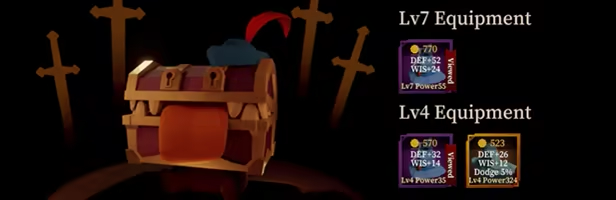
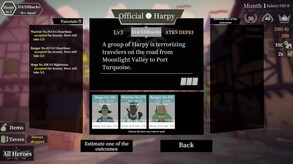
The management mechanics are surprisingly engaging and form the foundation of the gameplay loop. Players spend much of their time assigning heroes to dangerous missions, managing equipment, controlling finances, and balancing the needs of different groups within the city. Choosing the right adventurers for specific tasks becomes increasingly important as missions grow more dangerous. Poor preparation can lead to disastrous outcomes, while careful planning often produces valuable rewards and stronger reputations. The economic systems are also satisfying because players are forced to think strategically about spending, resource allocation, and long-term survival rather than simply chasing profits.
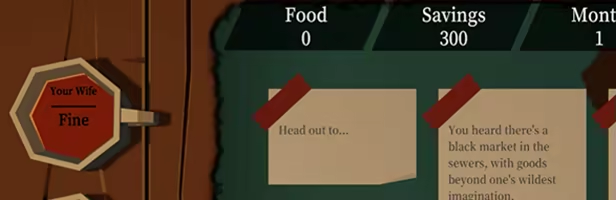
What separates the game from many other management simulators is the inclusion of personal and family responsibilities. Outside the workplace, players must support their household, maintain relationships, and find ways to survive within a society filled with instability and corruption. This combination of public duties and private struggles gives the game a surprising emotional weight. Players are not simply controlling systems from a detached perspective; they are trying to keep themselves and their loved ones alive in a dangerous environment where every mistake can have lasting consequences. The constant balancing act between morality, ambition, and survival becomes one of the game’s most compelling features.
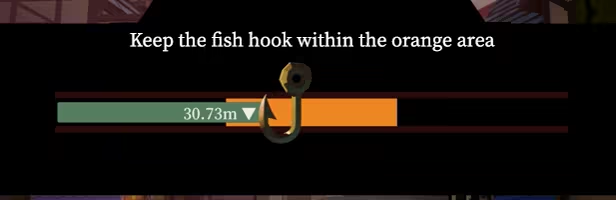
The fantasy world itself feels remarkably alive despite the game’s minimalist presentation. Beyond the tavern and bounty office, players can visit black markets, arenas, underground districts, gambling establishments, and hidden locations scattered throughout the city. These areas add variety to the gameplay while reinforcing the sense that the player exists within a functioning society filled with secrets and conflicting interests. Small side activities such as fishing, illegal dealings, and additional jobs further enrich the experience by making the world feel unpredictable and reactive rather than static.
The writing plays a major role in making the game memorable. Dialogue often combines dark humor with morally gray situations that force players to think carefully about their choices. The fantasy setting avoids the traditional heroic tone found in many RPGs and instead focuses on corruption, desperation, greed, and survival. Very few characters feel entirely trustworthy, and many interactions carry an underlying sense of danger even during seemingly ordinary conversations. This grounded approach to fantasy storytelling gives the world a unique atmosphere that feels more cynical and realistic than typical adventure games.
Another major strength is the replay value. Multiple story paths, randomized scenarios, unlockable bonuses, and numerous endings encourage players to experiment with different decisions across repeated playthroughs. No single run reveals everything the game has to offer, and discovering alternative outcomes becomes part of the appeal. Some players may align themselves with powerful factions, while others pursue independence or embrace morally questionable methods to survive. The flexibility of the narrative systems ensures that each playthrough develops its own identity.
Despite its many strengths, the game is not without flaws. The interface can occasionally feel clunky, and some systems are not explained particularly well during the early hours. Because much of the gameplay revolves around reading dialogue, navigating menus, and making decisions, players expecting fast-paced action may find the pacing slow at times. Certain mechanics also become repetitive during longer sessions, particularly when managing resources and repeatedly handling contracts. In addition, the game’s visuals are functional rather than impressive, and some rough edges remain noticeable due to the project’s indie development scale.
However, many of these shortcomings become easier to overlook because of the game’s ambition and originality. A guard walks into a tavern succeeds by offering an experience unlike most fantasy simulators currently available. It combines management gameplay, narrative role-playing, political strategy, and life simulation into a cohesive world where choices consistently matter. The game does not rely on flashy graphics or large-scale combat to remain engaging. Instead, it builds immersion through atmosphere, writing, and the constant pressure of surviving within a dangerous society.
The result is a deeply absorbing fantasy management RPG that rewards patience, careful decision-making, and experimentation. Players who enjoy story-driven simulators, morally complex narratives, and systems-heavy gameplay will likely find themselves completely absorbed by its world. While the game may not appeal to everyone due to its slower pace and menu-focused design, those willing to invest time into its mechanics will discover a uniquely rewarding experience filled with tension, unpredictability, and meaningful consequences.
A guard walks into a tavern proves that strong writing and intelligent design can create immersion even without massive production values. It stands out as a creative and highly replayable indie RPG that successfully blends fantasy politics, survival mechanics, and management gameplay into something genuinely memorable.
Rating: 8/10