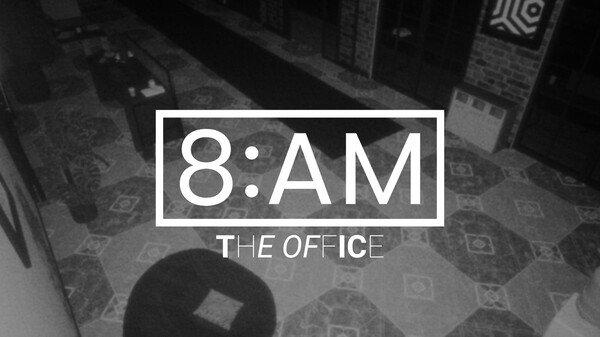
"8AM: The Office" is a suspense game set in a deserted office at night. Observe workers through security cameras and decide if their odd behaviors stem from fatigue or something sinister, aiming to survive until 8:00 a.m.
Modeled estimate, not a reported figure. How we estimate →
Media

About
"8AM" plunges the player into an enigmatic and tense game of observation and decision under an unfathomable veil of mystery. In this game, you find yourself in a stark room, devoid of any memory or knowledge of your purpose or how you arrived there. The only companions in your solitary vigil are a set of devices and a computer, your window to the outside world, connecting you exclusively to the security camera system of a seemingly ordinary house.
The house is inhabited by a family whose life appears to proceed normally until the clock strikes midnight. From that moment, as the hours slip towards dawn, you become a witness to a series of events that could be classified as ordinary or deeply disturbing. The nature of these occurrences varies widely, from ghostly figures slipping through the corridors in the darkness, manifestations of paranormal activity that defy all logic, to the strange behaviors of the family members, like sleepwalking, which could hide something more sinister.
Your task is simple yet immensely complicated: to determine whether what you are witnessing is a manifestation of the supernatural or mere coincidences and everyday events interpreted through a prism of isolation and tension. There are no clear answers, nor are you provided with tools to investigate or influence events. Your judgment is your only guide in this dark task.
Every correct decision you make brings you one step closer to your final goal: reaching 8:00 a.m. and, with it, your liberation. But what does "correct" truly mean in a world where reality intertwines with the incomprehensible? There are no truths to unravel, only the growing anxiety that each choice could be as right as it is wrong.
"8AM" is a challenge to perception, a game that forces you to question reality and face the uncertainty of the night. With each passing night and every decision you make, you not only draw closer to liberation but also delve deeper into the mystery of the human condition and the nature of reality itself. This game not only challenges you to observe but also to reflect on what it means to be a spectator of the lives of others, isolated yet intimately linked to their fate.
Stats
All-time low is the lowest price we've recorded for this game since we started tracking it.
Languages: English**languages with full audio support
Engagement
Hours played at review time, across 32 reviews with recorded playtime.
Reviews
very cool and exciting
бу
Much like the original, this game is a solid anomaly finder for such a low price. I'd still argue that the final achievement's anomaly count needs to be 60 or lower, because after having won on my second try I resorted to spending 15 minutes hitting YES then NO until I got it to pop.
Developed by David Gallardo and published by HeadArrow, 8AM: The Office is a psychological horror title that demonstrates how an ordinary workplace can become an unsettling setting when viewed through the lens of paranoia and isolation. Instead of relying on traditional survival horror mechanics, the game centers its experience around monitoring an office through security cameras during a lonely overnight shift. From the very beginning, it establishes a feeling of unease by turning familiar corporate surroundings into a place where every movement, shadow, and unusual action demands attention. Its premise is simple, yet it creates an engaging foundation for a horror experience built on suspense rather than spectacle. The gameplay revolves around careful observation and decision-making. Players are tasked with identifying strange occurrences that disrupt the normal rhythm of the office, requiring them to distinguish between harmless irregularities and potentially dangerous anomalies. This concept encourages patience and sharp attention to detail, rewarding those who carefully study every camera feed instead of rushing through the experience. The game succeeds in making even the smallest visual changes feel significant, creating tension from uncertainty rather than overwhelming players with constant threats. Every correct observation contributes to surviving the shift, while mistakes increase the feeling that something is steadily spiraling out of control. One of the game's greatest strengths is the atmosphere it creates. Offices are typically associated with routine, productivity, and familiarity, but 8AM: The Office transforms that everyday environment into an unsettling maze of silent corridors and dimly lit rooms. Watching events unfold through surveillance monitors adds an extra layer of helplessness, as players remain physically separated from whatever is happening on screen. This indirect perspective heightens anxiety because it limits interaction, forcing players to become observers rather than active participants. Combined with restrained visual design and carefully crafted ambient audio, the environment maintains a persistent sense of dread throughout the experience. The game's psychological approach also deserves praise. Rather than presenting obvious monsters or predictable horror sequences, it plays with perception and uncertainty. Strange employee behavior, unexplained environmental changes, and subtle visual distortions constantly challenge the player's confidence. It becomes increasingly difficult to determine whether unusual events are supernatural, psychological, or simply tricks of exhaustion after spending hours alone monitoring security cameras. This ambiguity keeps the narrative engaging and encourages players to interpret the events themselves instead of relying on direct exposition. Visually, the game embraces a minimalist presentation that complements its mechanics. The surveillance camera viewpoint naturally restricts visibility, making players examine every corner of each room for suspicious details. Lighting is used effectively to obscure information without becoming frustrating, while the office itself feels believable enough to reinforce immersion. The sound design is equally effective, relying more on quiet ambience, distant noises, and subtle audio cues than excessive jump scares. This measured approach allows tension to build gradually, making the occasional frightening moment far more impactful. Although the focused design is one of the game's defining qualities, it may also limit its appeal. Players looking for exploration, combat, or complex puzzle-solving may find the repetitive surveillance gameplay too specialized. Much of the enjoyment comes from recognizing environmental differences and remaining attentive for extended periods, making the experience more methodical than action-driven. Likewise, its intentionally mysterious storytelling leaves many questions unanswered, which enhances the psychological horror for some players while potentially frustrating those seeking a more definitive conclusion. Despite these limitations, 8AM: The Office successfully delivers a distinctive horror experience by proving that fear can emerge from subtle changes, uncertainty, and the discomfort of watching rather than acting. Its surveillance-based mechanics, oppressive atmosphere, and emphasis on careful observation combine to create a memorable psychological thriller that remains tense from the opening moments until the shift finally ends. Rather than depending on excessive scares or elaborate mechanics, it confidently builds suspense through restraint, making it an appealing choice for players who appreciate slower, more thoughtful horror experiences. Rating: 7/10
This game was a lot of fun to play. I started without the jump scares and they turned them on once we made it to 8 AM the first time. Chat loved helping me find the anomalies and watching me jump when I got scared. I definitely recommend checking this game out.
👍
The 8AM series is a fantastic collection of anomaly horror games. The black-and-white surveillance cameras and fixed camera angles create constant tension, making you question every detail on screen. Each map offers plenty of unique anomalies and a creepy atmosphere that keeps you engaged. If you're a fan of observation duty-style games, this series is well worth your time. Looking forward to the upcoming Graveyard, Subway, and Warehouse maps! Check out my playthrough: https://youtu.be/9INjEOR8Uts
Gray and boring. There are way better anomaly hunting games in Steam. Gameplay: https://youtu.be/caNBC46yyms
Porażka... O ile podstawowa 8AM miała klimat i sens to tutaj brak jednego i drugiego... Monitoring w ciemnym biurze nocą, ale z pracownikami.. Znajdowanie anomalii na zasadzie szczęścia i szukanie niemalże po pikselach. Męczy i wkoorffia. Nieczytelne i bardzo kiepskie.
Compared to the first game, at least this one has more differences to spot and a theme that leans more into the paranormal, instead of mostly asking you to report when someone gets out of bed or when some poor woman reaches “that time of the month”. The problem is that, while the differences in the first game were almost too obvious, here some of them feel designed to mentally break even someone who plays puzzle magazines every single day. Some details are tiny, hard to notice, and sometimes even hidden in the shadows, because apparently the real horror was slowly losing your eyesight while trying to spot an object moved by three pixels. The main issue, though, is the setting. It does not really make much sense, or at least it fails to build a believable theme around itself: people sitting in an office working from midnight to 8 AM. In the first game, the situation at least managed to create a bit of suspense. Here, the surreal nature of the setup just makes everything feel more strange than scary, and mostly more boring. On top of that, the series lore remains a complete mystery, leaving you with nothing but assumptions. The game throws out a few hints, but nothing feels properly developed or satisfying. Overall, yes, it is pretty much completely disposable. For the same money, you can definitely find games that respect your time, your eyes, and possibly your remaining patience a lot more.
Related
Related
Trends
Concurrent players on Steam, sampled daily since tracking started.
Audience
Estimated from the language of this game's reviews — a proxy for where players are, not official Steam demographics.
Related
| Euro Truck Simulator 2 | $421.6M | 932.1K | 97% | $19.99 |
| Stardew Valley | $243.2M | 1M | 98% | $14.99 |
| Garry's Mod | $228.7M | 1.3M | 97% | $9.99 |
| Factorio | $140.6M | 232.2K | 98% | $35.00 |
| Human Fall Flat | $109.3M | 225.6K | 95% | $19.99 |
| American Truck Simulator | $103.7M | 194.1K | 97% | $19.99 |
Related
| Project: R.E.B.O.O.T | $2.2K | 97 | 60% | $0.99 |
| Masky | $2.2K | 196 | 79% | $0.99 |
| Kochu's Dream | $2.2K | 52 | 88% | $2.49 |
| Deep Blue 3D Maze in Space | $2.2K | 109 | 63% | $0.99 |
| Aeon on Mosaic: Anemone 时间碎片:奇迹 | $2.2K | 87 | 93% | $1.99 |
| Math+Sticks - Coffee Break Club | $2.2K | 56 | 89% | $1.99 |