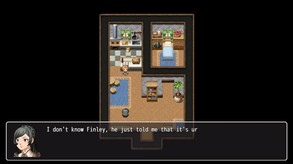
Enter the year 1914, which will mark the beginning of the Great War. This Indie adventure RPG will show you the glory of dying empires, death, despair and chaos that hasshaken the world and finally put an end to the ancient European monarchies.
Modeled estimate, not a reported figure. How we estimate →
Media

About
Genres
Stats
All-time low is the lowest price we've recorded for this game since we started tracking it.
Languages: English**languages with full audio support
Engagement
Hours played at review time, across 41 reviews with recorded playtime.
Reviews
Themes across 41 recent reviews and how positive each mention is. A keyword signal, not full sentiment analysis.
positive critical· bar length = how often the theme comes up
Reviews
Piece of ♥♥♥♥ 🤢🤢🤢
[h1][b]Not Recommended[/b][/h1]
Leo
💋
᠌ ᠌
anlamadım
Kart kasmak için uygun, rahatça kâr edebileceğiniz bir oyun. bunun gibi hesabımda 200+ oyun var incelemek isterseniz. - 𝐏𝐨𝐥𝐚𝐫
1914: Prelude to Chaos is a historical grand strategy game that attempts to recreate the political instability, military escalation, and global uncertainty surrounding the First World War. Developed and published by Amaterasu Software, the game places players into a large-scale conflict where diplomacy, economics, logistics, and battlefield strategy are all interconnected parts of survival. Rather than focusing on cinematic warfare or fast-paced combat, the experience embraces a slower and more methodical style of gameplay where long-term planning and careful management determine whether nations rise to dominance or collapse under the pressure of war. The game allows players to control major powers involved in the conflict while managing military campaigns, political relationships, industrial production, and territorial expansion. One of the strongest aspects of the experience is its commitment to portraying war as something larger than simple battlefield victories. Every decision carries consequences beyond immediate combat. Expanding too aggressively can destabilize the economy, weakening alliances can leave borders exposed, and failing to manage production properly may cripple military operations later in the campaign. This constant balancing act creates a strong sense of tension throughout the experience. Gameplay revolves around turn-based strategic planning across large maps representing Europe and surrounding regions during the early twentieth century. Armies are moved between territories while players oversee troop deployment, infrastructure, supply management, and technological development. Battles themselves emphasize positioning and preparation rather than simple numerical superiority. Terrain, logistics, and timing all influence combat effectiveness, making warfare feel deliberate and tactical rather than chaotic. The slower pacing rewards patience and strategic thinking, especially during larger campaigns where mistakes can take many turns to recover from. One of the game’s most impressive qualities is the scale of its geopolitical systems. Nations are tied together through alliances, diplomacy, trade, and political relationships that constantly shift depending on player actions. Managing these relationships becomes essential because war rarely stays isolated for long. Aggressive expansion or reckless declarations of war can quickly provoke neighboring powers and create multi-front conflicts that become difficult to contain. This interconnected structure helps the game capture the atmosphere of pre-war Europe, where political tension and military alliances pushed nations toward increasingly dangerous confrontations. Diplomacy systems add another layer of strategic depth. Alliances can be strengthened or weakened depending on political decisions, and maintaining stable international relationships often becomes just as important as military power. While the diplomacy mechanics are not as detailed as those found in larger grand strategy franchises, they still provide meaningful choices that influence the direction of campaigns. Political maneuvering often determines whether players survive long enough to fully mobilize military strength. Economic management also plays a major role throughout the game. Sustaining armies requires industrial production, stable finances, and effective infrastructure. Players must constantly monitor resources while balancing military spending against national stability. Expanding armies too quickly can damage the economy, while neglecting production leaves nations vulnerable during prolonged wars. This economic layer helps reinforce the realism of large-scale conflict because victory depends as much on industrial endurance as battlefield success. Visually, the game focuses more on functionality than spectacle. Maps are clear and readable, unit markers are easy to understand, and the interface prioritizes strategic information over flashy presentation. The graphics themselves are modest, but the historical atmosphere and military-themed design help maintain immersion during long campaigns. The presentation may not compete technically with major strategy franchises, but it supports the gameplay effectively enough for players invested in the strategic systems. The soundtrack contributes well to the serious tone of the experience. Orchestral military-inspired music and atmospheric audio effects create a sense of tension during campaigns and large-scale wars. The sound design remains relatively restrained but fits the slower pacing of the game, helping maintain focus during long planning sessions and major military operations. Replayability is strengthened by the game’s willingness to allow alternate historical outcomes. Players are not forced to follow the exact events of real-world history, meaning campaigns can develop in dramatically different ways depending on alliances, military strategy, and political choices. Different nations also provide unique strategic situations and challenges, encouraging experimentation with alternate approaches to warfare and diplomacy. Despite these strengths, the game also suffers from several major weaknesses. The most immediate issue is accessibility. The mechanics can feel overwhelming for newcomers unfamiliar with grand strategy or historical war simulations. Tutorials and explanations are somewhat limited, leaving players to learn many systems through trial and error. The complexity may appeal to dedicated strategy fans, but casual players could struggle with the steep learning curve. Artificial intelligence is another inconsistent element. Enemy nations occasionally make questionable decisions or fail to respond intelligently to obvious threats, which can reduce immersion during longer campaigns. Experienced players may eventually notice predictable AI behavior that weakens the strategic challenge over time. Pacing can also become extremely slow, particularly during extended campaigns where managing troop movements, infrastructure, and production consumes large amounts of time. Players expecting constant action or dramatic battlefield moments may find the deliberate structure exhausting. Much of the experience revolves around preparation, logistics, and positioning rather than immediate combat excitement. Technical polish is somewhat rough as well. Menus can occasionally feel clunky, interface navigation is not always intuitive, and certain systems lack refinement compared to more established strategy titles. While these issues do not completely undermine the experience, they do make the game feel less polished than larger grand strategy competitors. Even with those flaws, 1914: Prelude to Chaos succeeds because of its clear passion for historical strategy and large-scale warfare simulation. The game genuinely attempts to recreate the political complexity and military pressure surrounding World War I rather than reducing conflict to simplistic conquest mechanics. Its systems encourage players to think like political and military leaders rather than simple battlefield commanders. What ultimately makes the game memorable is its focus on uncertainty and strategic consequence. Every alliance, economic decision, and military movement contributes to a larger web of political instability that constantly threatens to spiral into disaster. The game captures the feeling of nations balancing on the edge of catastrophe remarkably well. 1914: Prelude to Chaos may lack the polish and accessibility of larger strategy franchises, but it remains an ambitious and rewarding experience for players who enjoy historical warfare, diplomacy, and slow-burning grand strategy gameplay. Beneath its rough edges lies a thoughtful simulation of one of history’s most turbulent conflicts. Rating: 6/10
да
+++
Related
Related
Trends
Modeled estimate over time, reconstructed from Steam's monthly review histogram.
Audience
Estimated from the language of this game's reviews — a proxy for where players are, not official Steam demographics.
Related
| Black Myth: Wukong | $794.9M | 1.2M | 97% | $59.99 |
| ELDEN RING | $680.4M | 1.1M | 93% | $59.99 |
| DARK SOULS™ III | $467M | 437.9K | 94% | $59.99 |
| 7 Days to Die | $425.3M | 403.5K | 87% | $44.99 |
| Hogwarts Legacy | $323.6M | 369.9K | 90% | $59.99 |
| Mount & Blade II: Bannerlord | $309.8M | 293.9K | 88% | $49.99 |
Related
| Obnulenie | $1.9K | 70 | 61% | $1.19 |
| TRISTOY | $1.9K | 63 | 65% | $1.39 |
| Lairchitect | $1.9K | 64 | 62% | $1.49 |
| Skarab | $1.9K | 78 | 85% | $1.04 |
| ILLUSION | $1.9K | 62 | 94% | $1.99 |
| YAPP: Yet Another Puzzle Platformer | $1.9K | 62 | 87% | $1.99 |